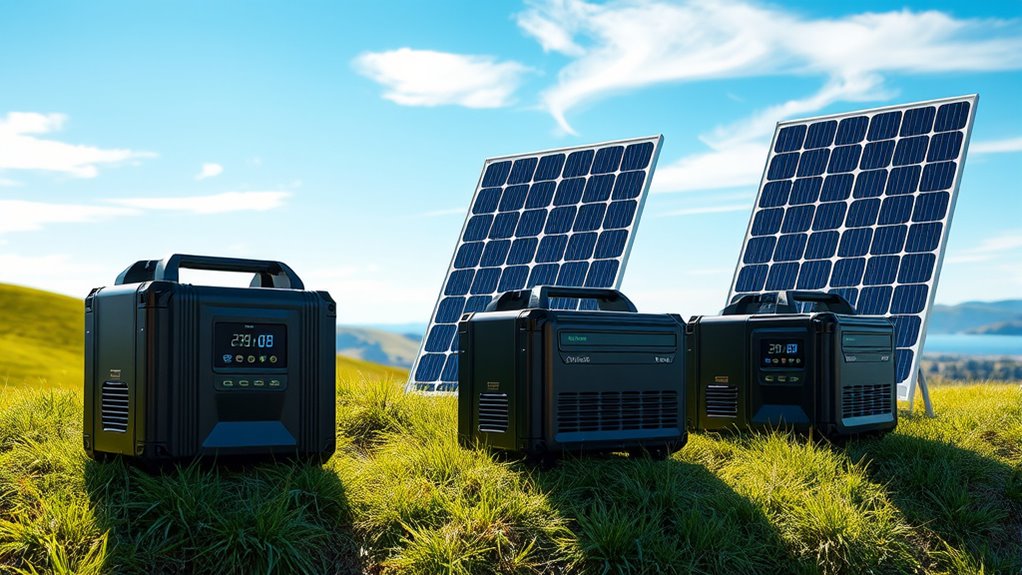
For a solar generator kit with a 2000W inverter, my best overall pick is the OUPES Mega 1 with a 240W panel, which pairs the target inverter class with a 1024Wh LiFePO4 battery and included solar charging. The Jackery Explorer 2000 v2 with two 200W panels stands out for buyers who want a larger, ready-to-charge setup, while the ABOK Ark2000 offers a 1536Wh battery in a 2000W package. The main tradeoff is between inverter output and usable stored energy: 2000W tells you what you can run at once, but battery capacity and panel input shape how long you can run it. Kit contents also vary widely, from small panels to larger arrays and even a wind hybrid system. Read on for the full comparison and recommendations by buyer type.

Turn the school run and nap time into listening time
- Thousands of audiobooks, podcasts and originals
- Listen on your phone, tablet or Echo — also offline
- Cancel anytime
Complete the kit


Key Takeaways
- OUPES Mega 1 with a 240W panel is the clearest match to the 2000W inverter brief, with a 1024Wh LiFePO4 battery and a panel included.
- The Jackery Explorer 2000 v2 kit includes two 200W panels, giving it a more substantial solar array than the single 100W and 200W panel bundles in this lineup.
- The ABOK Ark2000 pairs 2000W output with a 1536Wh battery, a notable capacity step up from the 1024Wh OUPES Mega 1 models.
- Several listings advertise 2400W output; buyers focused on a 2000W inverter should verify continuous output and surge ratings instead of relying on the headline number.
- The ECO-WORTHY kit has a 3000W inverter and two lithium batteries, while the wind hybrid kit uses a different system format; both suit buyers willing to look beyond an all-in-one portable power station.
| ECO-WORTHY 1170W Solar Kit with 3000W Inverter and 2 Lithium Batteries |  | Best for a Permanent Off-Grid Setup | Solar panel capacity: 6 × 195W (1170W total) | Battery configuration: 2 × 12.8V 314Ah lithium batteries | Stated energy storage: 8KWh | VIEW ON AMAZON | See Our Full Breakdown |
| OUPES Mega 1 Lite Solar Generator with 100W Solar Panel |  | Best for Lightweight Kit Portability | Battery capacity: 1024Wh | Battery chemistry: LiFePO4 | AC output: 2000W rated | VIEW ON AMAZON | See Our Full Breakdown |
| Jackery Solar Generator 1000 V2 with 200W Solar Panel |  | Best for Lower-Draw Portable Loads | Battery capacity: 1070Wh | AC output: 1500W | Surge peak: 3000W | VIEW ON AMAZON | See Our Full Breakdown |
| OUPES Mega 1 Lite Solar Generator with Two 240W Solar Panels |  | Best for Faster Solar Recharging | Included solar panels: 2 × 240W (480W total) | Maximum solar input: 800W | AC output: 2000W | VIEW ON AMAZON | See Our Full Breakdown |
| OUPES Mega 1 Solar Generator with 240W Solar Panel, 2000W, 1024Wh LiFePO4 Battery |  | Best for Expandable Backup | Battery capacity: 1024Wh | Battery chemistry: LiFePO4 | AC output: 2000W | VIEW ON AMAZON | See Our Full Breakdown |
| 2400W Portable Power Station with 1843.2Wh LiFePO4 Battery |  | Best for High Output | Battery capacity: 1843.2Wh | Battery type: LiFePO4 | Continuous output: 2400W | VIEW ON AMAZON | See Our Full Breakdown |
| ABOK Ark2000 1536Wh 2000W Portable Power Station with Asp200 200W Solar Panel |  | Best Expandable Kit | Battery capacity: 1536Wh | Battery chemistry: LiFePO4 | Output: 2000W | VIEW ON AMAZON | See Our Full Breakdown |
| 2400W Portable Power Station, 1843.2Wh LiFePO4 Solar Generator |  | Best for Home Backup | Battery capacity: 1843.2Wh | Battery type: LiFePO4 | Output wattage: 2400W | VIEW ON AMAZON | See Our Full Breakdown |
| EBL 2400W Portable Power Station with 200W Solar Panel |  | Best Ready-to-Charge Bundle | Battery capacity: 1843.2Wh | Battery type: LiFePO4 | Output wattage: 2400W | VIEW ON AMAZON | See Our Full Breakdown |
| 880W Solar Panel and Wind Turbine Hybrid System Kit |  | Best for Fixed Off-Grid Installations | Maximum power: 880W listed | Solar panels: 4 × 120W rigid panels | Wind generator: 400W, five-blade design | VIEW ON AMAZON | See Our Full Breakdown |
| Jackery Explorer 2000 v2 Portable Power Station with Two 200W Solar Panels |  | Best for Ready-to-Use Solar Backup | Battery capacity: 2042Wh | AC output: 2200W | Battery chemistry: LiFePO4 | VIEW ON AMAZON | See Our Full Breakdown |
| OUPES Mega 1 Solar Generator with 100W Solar Panel, 2000W, 1024Wh |  | Best for Expandable Backup | Battery capacity: 1024Wh | Expandable capacity: Up to 5120Wh with extra batteries | AC output: 2000W pure sine wave | VIEW ON AMAZON | See Our Full Breakdown |
| solar generator kits with 2000w inverter | Battery capacity | Weight | AC output |
|---|---|---|---|
| ECO-WORTHY 1170W Solar Kit wit | — | — | — |
| OUPES Mega 1 Lite Solar Genera | 1024Wh | 26.7 lb | 2000W rated |
| Jackery Solar Generator 1000 V | 1070Wh | 23.8 lb | 1500W |
| OUPES Mega 1 Lite Solar Genera | — | 26.7 lb | 2000W |
| OUPES Mega 1 Solar Generator w | 1024Wh | 27.8 lb | 2000W |
| 2400W Portable Power Station w | 1843.2Wh | 55.6 pounds | — |
| ABOK Ark2000 1536Wh 2000W Port | 1536Wh | — | — |
| 2400W Portable Power Station | 1843.2Wh | 55 pounds | — |
| EBL 2400W Portable Power Stati | 1843.2Wh | 55 pounds | — |
| 880W Solar Panel and Wind Turb | — | — | — |
| Jackery Explorer 2000 v2 Porta | 2042Wh | — | 2200W |
| OUPES Mega 1 Solar Generator w | 1024Wh | 27.8 lbs | 2000W pure sine wave |
More Details on Our Top Picks
ECO-WORTHY 1170W Solar Kit with 3000W Inverter and 2 Lithium Batteries
The ECO-WORTHY kit is the lineup’s most installation-focused option: six panels, two large lithium batteries, a 3000W inverter charger, an MPPT controller, and cables form the basis of a complete off-grid system. Its 8KWh stated storage and 1170W of panel capacity suit RV owners or cabins that need more reserve and generation potential than the portable OUPES Mega 1 kits provide. That scale comes with a real space and setup burden; the panels alone measure nearly 59 inches long, so this is a poor fit for buyers who need a grab-and-go station. The claimed 4680Wh daily generation also depends on sunlight and installation conditions. Choose it for a planned system with room to mount the panels, rather than for lightweight travel.
Pros:- Includes panels, batteries, inverter charger, controller, and cables for a system build
- Two 12.8V 314Ah lithium batteries provide stated 8KWh storage
- 3000W pure sine wave inverter charger combines inversion and battery charging
- Battery display shows charge level and system status
Cons:- Six panels measuring 58.86 × 26.18 inches each require substantial mounting space
- Installation is more involved than using a portable OUPES Mega 1 kit
- Daily generation figures are manufacturer claims and vary with conditions
Best for: RV owners or off-grid cabin users planning a fixed installation with room for six full-size panels
Not ideal for: Campers who need a compact, ready-to-carry power station or cannot accommodate large panels and batteries
- Solar panel capacity:6 × 195W (1170W total)
- Battery configuration:2 × 12.8V 314Ah lithium batteries
- Stated energy storage:8KWh
- Inverter:3000W pure sine wave inverter charger
- Inverter peak power:6000W
- Charge controller:60A MPPT
- Claimed daily generation:4680Wh
- Panel dimensions:58.86 × 26.18 × 1.18 inches
Our verdict“Choose the ECO-WORTHY kit for a spacious RV or off-grid installation where included system components and stated storage matter more than portability.”
OUPES Mega 1 Lite Solar Generator with 100W Solar Panel
The OUPES Mega 1 Lite with 100W panel keeps the kit simple to carry: the power station weighs 26.7 lb, and its foldable panel adds a basic solar charging option for campsites. Its 2000W rated output and 4500W surge figure give it more inverter headroom than the Jackery Solar Generator 1000 V2, whose AC output is rated at 1500W. The tradeoff is the small included panel: compared with the two-panel OUPES Mega 1 Lite bundle, this kit has much less solar input and may take longer to replenish in the field. A 1024Wh battery is useful for portable electronics and selected appliances, but it does not offer the reserve of larger systems. Pick this bundle when carrying ease and AC output matter more than rapid solar recovery.
Pros:- 2000W rated AC output with 4500W surge capacity
- 26.7 lb power station is easier to move than a large fixed system
- LiFePO4 battery rated for 3500+ cycles to 80% capacity
- Bluetooth and Wi-Fi app control with multiple device ports
Cons:- Included 100W panel provides limited solar input compared with the 480W OUPES bundle
- 1024Wh capacity limits extended use of energy-hungry appliances
- 26.7 lb station is still a substantial carry for backpacking
Best for: Car campers who want a manageable power station with a starter solar panel and the ability to run higher-wattage devices
Not ideal for: Travelers relying on solar to refill the battery quickly or run several appliances for extended periods
- Battery capacity:1024Wh
- Battery chemistry:LiFePO4
- AC output:2000W rated
- Surge output:4500W
- Included solar panel:100W foldable monocrystalline
- Battery cycle life:3500+ cycles to 80% capacity
- AC recharge time:46 minutes from 0 to 100%
- Weight:26.7 lb
Our verdict“Choose this OUPES bundle for car camping when portable 2000W output matters more than fast solar charging or long runtime.”
Jackery Solar Generator 1000 V2 with 200W Solar Panel
The Jackery Solar Generator 1000 V2 is the lineup’s lighter portable bundle, pairing a 23.8 lb station with a 200W panel and 1070Wh of capacity. That weight advantage over the OUPES Mega 1 kits makes it easier to move between a car, campsite, and home, while its 1500W AC output places it below the roundup’s 2000W options for demanding appliances. Its three AC outlets and two 100W USB-C ports support a mix of small appliances and electronics, and the LFP battery is rated to retain over 70% capacity after 4000 cycles. The tradeoff is clear for this 2000W-inverter roundup: it does not meet that output level. The fastest one-hour AC charge also requires emergency charging in the app; the default full charge is listed at 1.7 hours.
Pros:- 23.8 lb station is lighter than the OUPES Mega 1 models
- Includes a 200W solar panel
- LFP battery rated for over 70% capacity after 4000 charge cycles
- Three pure sine wave AC outlets and two 100W USB-C ports
Cons:- 1500W rated AC output falls short of the 2000W target for this roundup
- One-hour charging requires enabling emergency charging in the app
- Station and solar panel ship separately
Best for: Campers and home users who prioritize a lighter kit for electronics and moderate-load appliances over a full 2000W inverter
Not ideal for: Buyers who specifically need 2000W rated AC output or expect to run high-draw appliances
- Battery capacity:1070Wh
- AC output:1500W
- Surge peak:3000W
- Battery type:LFP
- Solar panel:200W
- Weight:23.8 lb
- USB-C ports:2, up to 100W PD
- AC charging time:1 hour with emergency charging enabled; 1.7 hours by default
Our verdict“Choose the Jackery for a lighter solar bundle if 1500W is sufficient and portability matters more than matching a 2000W inverter.”
OUPES Mega 1 Lite Solar Generator with Two 240W Solar Panels
For buyers who expect to recharge away from an outlet, the two-panel OUPES Mega 1 Lite is the more solar-ready portable pick. Its included panels total 480W, four times the panel capacity bundled with the 100W OUPES Mega 1 Lite, and the station accepts up to 800W of solar input. That can reduce dependence on wall charging, though the stated 2.5–3 hour solar time assumes optimal sun. The 2000W inverter and 4500W surge rating match the smaller-panel Lite, while UPS support with a transfer time under 20ms adds backup use at home. At 26.7 lb, the station is still a noticeable carry, and its 1024Wh battery gives less stored energy than the ECO-WORTHY kit. This bundle suits car-based trips better than weight-sensitive outings.
Pros:- Two 240W foldable panels provide 480W total solar capacity
- 2000W output and 4500W surge capacity
- Supports up to 800W solar input and app control
- UPS transfer time under 20ms and AC charging under 46 minutes
Cons:- Solar charging time depends on sunlight and the stated estimate assumes optimal conditions
- 26.7 lb station is a considerable carry
- 1024Wh battery stores far less energy than the ECO-WORTHY kit
Best for: Car campers and home backup users who want a portable 2000W station with more included solar input
Not ideal for: Backpackers or users needing large stored energy reserves for long outages
- Included solar panels:2 × 240W (480W total)
- Maximum solar input:800W
- AC output:2000W
- Surge output:4500W
- Battery chemistry:LiFePO4
- Solar charging time:2.5–3 hours under optimal sun
- UPS transfer time:<20 ms
- Weight:26.7 lb
Our verdict“Choose this OUPES bundle when included solar capacity and UPS support are more useful than a lighter station or larger battery reserve.”
OUPES Mega 1 Solar Generator with 240W Solar Panel, 2000W, 1024Wh LiFePO4 Battery
The OUPES Mega 1 with 240W panel balances a portable 2000W inverter with a path to more storage: it can expand from 1024Wh to a stated 5120Wh when paired with a B2 battery. That makes it a better fit for backup plans that may grow than the OUPES Mega 1 Lite bundle with two 240W panels, which includes more solar capacity but lists no expansion figure here. The standard kit includes one 240W monocrystalline panel and supports simultaneous solar and AC charging, useful when an outlet is available while daylight adds input. Solar recharge is listed at 5–8 hours depending on sunlight, slower than the two-panel Lite’s stated optimal-sun estimate. Expansion also requires buying the additional battery, and the station weighs 27.8 lb. Consider it when capacity growth matters more than quick solar replenishment.
Pros:- 1024Wh LiFePO4 battery with stated expansion up to 5120Wh
- Includes a 240W monocrystalline solar panel
- Supports simultaneous solar and AC charging
- Wi-Fi and Bluetooth app monitoring with 20ms UPS switching
Cons:- Reaching 5120Wh requires purchasing an additional B2 battery
- Listed solar recharge time is 5–8 hours and varies with sunlight
- 27.8 lb weight makes it less convenient to carry than the Jackery 1000 V2
Best for: Home backup planners who want a 2000W portable station now and the option to add battery capacity later
Not ideal for: Buyers who need a large battery reserve immediately or prioritize the fastest included solar charging
- Battery capacity:1024Wh
- Battery chemistry:LiFePO4
- AC output:2000W
- Included solar panel:240W monocrystalline
- Solar recharge time:5–8 hours, depending on sunlight
- Expandable capacity:Up to 5120Wh with B2 battery
- UPS switch time:20ms
- Weight:27.8 lb
Our verdict“Choose the Mega 1 if you want 2000W output with a defined battery expansion path and can accept slower solar charging.”
2400W Portable Power Station with 1843.2Wh LiFePO4 Battery
I’d choose this model when inverter headroom matters more than getting a panel in the box. Its 2400W continuous output exceeds the 2000W threshold and gives it more room for demanding appliances than the ABOK Ark2000, though that kit includes a 200W solar panel. The 1843.2Wh LiFePO4 battery and four AC outlets suit camping or limited home backup, while USB-C, DC, car, and wireless outputs cover smaller devices without tying up an AC socket. The tradeoff is portability: at 55.6 pounds, it is a heavy lift for frequent moves. Solar charging also requires an optional panel, so buyers seeking a ready-to-use solar kit should compare it with the EBL 2400W bundle.
Pros:- 2400W continuous output provides headroom above a 2000W inverter
- 1843.2Wh LiFePO4 battery supports substantial portable storage
- Multiple AC, USB-C, DC, car, and wireless charging outputs
- Built-in protection against overcharging, high temperatures, and low battery
Cons:- Solar panel is optional, adding a separate purchase for solar charging
- 55.6-pound weight makes frequent transport difficult
Best for: Campers and homeowners who need 2400W of AC output and already own, or plan to choose, a compatible solar panel
Not ideal for: Buyers who want a complete solar kit in one purchase or need a power station that is easy to carry between sites
- Battery capacity:1843.2Wh
- Battery type:LiFePO4
- Continuous output:2400W
- AC outlets:4
- Other outputs:2 USB-A, 2 USB-C, 2 DC, 1 car charger, 1 wireless charging pad
- Charging inputs:AC, DC car charger, optional 200W solar panel
- Weight:55.6 pounds
- Dimensions:16.95 × 11.9 × 11.1 inches
Our verdict“Choose it if you want 2400W output and flexible device charging, and can supply your own solar panel.”
ABOK Ark2000 1536Wh 2000W Portable Power Station with Asp200 200W Solar Panel
The ABOK Ark2000 is the clearest fit here for buyers who want a 2000W inverter and a solar panel together. Its included foldable 200W Asp200 panel gives it a stronger out-of-box solar setup than the 2400W EBL bundle’s power station alone might suggest from its title; the EBL listing also includes a 200W panel, while ABOK distinguishes itself with capacity expansion up to 4608Wh. The Ark2000 starts at 1536Wh, below the 1843.2Wh units from EBL and the two 2400W stations, so it offers less stored energy before expansion. Its stated 1200W maximum solar input can support a larger array, but added batteries are sold separately. I’d shortlist it for RV owners who expect their storage needs to grow, and skip it if you need the largest capacity without buying add-ons.
Pros:- Includes a foldable 200W solar panel
- 2000W output matches the roundup’s inverter target
- Supports up to 1200W of solar input
- Expandable to 3072Wh or 4608Wh with additional batteries
Cons:- 1536Wh starting capacity is lower than the 1843.2Wh options in this batch
- Expansion batteries are sold separately
- Power station and panel may arrive in separate packages at different times
Best for: RV travelers and off-grid users who want an included foldable panel and the option to add battery capacity later
Not ideal for: Buyers who need the largest listed starting battery capacity or want expansion batteries included
- Battery capacity:1536Wh
- Battery chemistry:LiFePO4
- Output:2000W
- Included solar panel:200W Asp200 foldable panel
- Maximum solar input:1200W
- Output ports:8: 3 AC, 2 USB-A, 2 USB-C, 1 12V car port
- Battery cycle life:4000+ cycles
- Expandable capacity:3072Wh or 4608Wh
Our verdict“Pick the ABOK if you want a 2000W solar kit with room to expand as your off-grid needs grow.”
2400W Portable Power Station, 1843.2Wh LiFePO4 Solar Generator
Among the two 2400W power stations in this batch, this one makes the stronger case for home backup because its UPS mode has a stated 0.1-second transfer time. That feature may help keep connected equipment powered through a brief outage, while the EBL 2400W model emphasizes its included 200W panel. Both have 1843.2Wh LiFePO4 batteries and weigh about 55 pounds, so neither is a light camping companion. This unit also lists 800W solar input and a 1.6–2.5-hour AC charging time, giving buyers more charging detail than the first 2400W station’s brief specifications. The limits are its substantial weight and slow stated car charging time of 12–19 hours. I’d favor it for backup flexibility, not for quick charging from a vehicle.
Pros:- 2400W output and 1843.2Wh LiFePO4 capacity
- UPS mode has a stated 0.1-second transfer time
- Supports AC, solar, and car charging
- Lists 12 outputs, including 100W USB-C ports
Cons:- At 55 pounds, it is cumbersome to carry often
- Car charging takes about 12–19 hours
- Solar charging time depends on access to the stated 800W solar input
Best for: Homeowners who want a portable 2400W power station with a stated fast-transfer UPS mode for connected equipment
Not ideal for: Road travelers who rely on car charging or campers who need a lighter unit for frequent carrying
- Battery capacity:1843.2Wh
- Battery type:LiFePO4
- Output wattage:2400W
- Battery cycle life:3500+ cycles
- UPS transfer time:0.1 seconds
- Solar input:800W
- AC charging time:1.6–2.5 hours
- Weight:55 pounds
- Total outputs:12
Our verdict“Choose this model for portable home backup and its stated UPS transfer time, provided its weight and car charging time fit your plans.”
EBL 2400W Portable Power Station with 200W Solar Panel
The EBL pairs a 2400W, 1843.2Wh power station with a 200W monocrystalline panel, making it a straightforward bundle for buyers who want solar hardware included. Compared with the ABOK Ark2000, EBL starts with more battery capacity and higher output, while ABOK offers expansion to as much as 4608Wh and a higher stated solar input ceiling. EBL’s panel is rated up to 23.5% efficiency, and its station supports AC, solar, and combined charging; the listing also describes connections for up to 12 devices. The tradeoff is a heavy 55-pound unit, and the panel ships separately, so the whole setup may not arrive together. I’d choose EBL for a bundled 2400W setup, but buyers prioritizing expandable storage should look at ABOK.
Pros:- Includes a 200W monocrystalline solar panel
- 1843.2Wh LiFePO4 battery with 2400W output
- Supports AC, solar, and combined charging
- Offers four AC outlets and multiple USB ports
Cons:- Power station weighs 55 pounds
- Solar panel ships separately from the power station
Best for: Campers and RV owners who want a 2400W power station with a matching 200W panel in the bundle
Not ideal for: Buyers who need a lightweight setup, or who want all kit components to arrive in one shipment
- Battery capacity:1843.2Wh
- Battery type:LiFePO4
- Output wattage:2400W
- AC outlets:4
- Total power outlets:12
- Included solar panel:200W monocrystalline
- Solar panel efficiency:Up to 23.5%
- AC charging time:1.6–2 hours
- Weight:55 pounds
Our verdict“Choose EBL if you want a bundled solar panel with a higher-capacity 2400W station and can manage its weight and separate shipments.”
880W Solar Panel and Wind Turbine Hybrid System Kit
This kit takes a different path from the portable power stations: it combines rigid solar panels, a wind turbine, batteries, and a 2000W inverter for a mounted system in an RV, boat, shed, or cabin. That makes it more installation-oriented than the ABOK Ark2000, which is a portable station with a foldable panel. The hybrid setup could draw on wind as well as solar, and the panels list wind and snow load tolerances. There is a specification gap to resolve before choosing it: four 120W panels total 480W, while the kit is labeled 880W maximum power. The listing also gives no battery runtime or installation requirements. I’d consider it for a fixed off-grid project where those details can be verified; buyers wanting a simpler portable kit should choose ABOK or EBL.
Pros:- Combines solar and wind generation in one system
- Includes a 2000W inverter, hybrid MPPT controller, and two LiFePO4 batteries
- Rigid panels have pre-drilled mounting and grounding holes
- Five-blade turbine has a stated 2.5 m/s startup speed
Cons:- Four listed 120W panels total 480W, which conflicts with the 880W kit label
- Battery runtime is not specified
- Installation requirements are not described
Best for: RV, boat, shed, or cabin owners planning a mounted solar-and-wind system with a 2000W inverter
Not ideal for: Buyers seeking a portable, ready-to-use power station or anyone who needs clearly stated runtime and installation details
- Maximum power:880W listed
- Solar panels:4 × 120W rigid panels
- Wind generator:400W, five-blade design
- Power inverter:2000W
- Charge controller:Hybrid MPPT
- Batteries:2 × 100Ah LiFePO4
- Output voltage:12V DC
- Panel load tolerance:2400 Pa wind; 5400 Pa snow
- Wind turbine startup speed:2.5 m/s
Our verdict“Consider this kit for a fixed off-grid installation only after confirming its panel rating, runtime, and installation requirements.”
Jackery Explorer 2000 v2 Portable Power Station with Two 200W Solar Panels
The Jackery Explorer 2000 v2 is the stronger fit for buyers who want substantial capacity and a useful solar bundle from the outset. Its 2042Wh battery and 2200W AC output give it more room for longer outages and larger loads than the 1024Wh OUPES Mega 1, while the included pair of 200W panels can replenish it faster than OUPES’s included 100W panel in suitable sun. Fast AC charging and 20 ms UPS switching add flexibility for home backup. The tradeoff is the kit’s weight and a confusing listing: the description says 39.5 pounds, while specifications say 66.8 pounds. The panels may ship separately, and the solar connection calls for a straight DC8020 plug, so buyers should check the included accessories and delivery details.
Pros:- 2042Wh capacity paired with 2200W AC output
- Includes two 200W solar panels
- AC charging reaches 80% in 66 minutes
- LiFePO4 battery and 20 ms UPS switching
Cons:- Weight is inconsistent between the description and specifications
- Power station and panels may ship separately
- Solar charging requires a straight DC8020 plug
Best for: Campers and households seeking a higher-capacity 2000W-class station with two solar panels included for outage and off-grid use
Not ideal for: Buyers prioritizing a clearly documented carry weight, a lightweight setup, or a simple solar connector without checking compatibility
- Battery capacity:2042Wh
- AC output:2200W
- Battery chemistry:LiFePO4
- Included solar panels:2 × 200W
- Solar charging time:6 hours with 400W panels
- AC charging time:80% in 66 minutes
- UPS switching time:20 ms
- AC outlets:3
- Listed weight:39.5 lbs in description; 66.8 lbs in specifications
Our verdict“Choose the Jackery if you want more battery capacity and a larger included solar array than the OUPES Mega 1, and can confirm the kit’s weight and connector details.”
OUPES Mega 1 Solar Generator with 100W Solar Panel, 2000W, 1024Wh
The OUPES Mega 1 suits buyers who want a 2000W pure sine wave inverter and a path to add battery capacity later. Its 1024Wh base battery is half the capacity of the Jackery Explorer 2000 v2, so it is a more compact starting point for shorter outages or lighter loads; expansion up to 5120Wh can change that equation if extra batteries are added. App monitoring, 13 total ports, and a UPS transfer time under 20 ms broaden its home and travel uses. The included 100W solar panel is modest beside the Jackery’s two 200W panels, and the 800W maximum solar input requires a larger array to make the most of solar charging. Buyers should also account for the extra batteries needed to reach the stated expanded capacity.
Pros:- 2000W pure sine wave AC output with 4500W surge output
- Expandable from 1024Wh up to 5120Wh with extra batteries
- AC charging reaches 80% in 36 minutes
- App monitoring and UPS transfer under 20 ms
Cons:- Included 100W panel is small compared with the 800W maximum solar input
- Extra batteries are required to reach maximum capacity
- Base capacity is lower than the Jackery Explorer 2000 v2
Best for: Buyers who want a portable 2000W station now and plan to expand storage for longer backup later
Not ideal for: Households needing long runtimes immediately or buyers expecting the included 100W panel to make full use of the station’s solar input
- Battery capacity:1024Wh
- Expandable capacity:Up to 5120Wh with extra batteries
- AC output:2000W pure sine wave
- Surge output:4500W
- Included solar panel:100W
- Maximum solar input:800W
- AC charging time:0–80% in 36 minutes
- Ports:13 total
- Weight:27.8 lbs
Our verdict“Pick the OUPES Mega 1 if you prefer a lighter 2000W starting setup with room to add storage, and are prepared to upgrade its solar array and battery capacity.”

How We Picked
I compared the 12 kits against the specific needs behind a 2000W inverter search: inverter output, battery capacity and chemistry where stated, included solar panel wattage, and how complete or portable the package appears from its listed components. A 2000W inverter is only useful if the battery and charging setup match the intended load, so I treated output, stored energy, and solar input as separate measures rather than interchangeable claims.
The ranking favors clear fit to the brief and useful balance across those measures. The OUPES Mega 1 with a 240W panel ranks ahead of its 100W-panel sibling because the included array offers more charging capacity, while the Jackery Explorer 2000 v2 bundle earns a place near the top for its two-panel kit. Higher-output systems and products with larger batteries can suit heavier loads, but receive less weight when their format or listed components make them less directly comparable to a portable 2000W solar generator kit. Where the listing provides limited detail, I avoid assuming capabilities that are not stated.
Factors to Consider When Choosing Solar Generator Kits With 2000w Inverter
Choosing a 2000W solar generator kit takes more than matching one number on a product page. I would check the appliance load, runtime, available sun, and the practical details of moving and recharging the system before deciding which package fits.
Match Inverter Output to Real Appliance Loads
A 2000W inverter describes the power the unit can supply at a moment, not how long it can sustain that output. Add together the running watts of devices you may use at once, then account for startup surges from motors in fridges, pumps, or compressors. Those short surges can exceed an appliance’s normal draw, so check the generator’s continuous and surge ratings in the detailed specifications. A product labeled 2400W may be more than sufficient, but the headline alone does not tell you whether that figure is continuous output. Avoid sizing the inverter to a single large appliance if several smaller loads will run alongside it.
Estimate Runtime From Battery Capacity
Battery capacity, often listed in watt-hours, gives a rough basis for estimating runtime: divide the capacity by the device’s watt draw, then allow for conversion losses and battery limits. A 1024Wh battery and a 1536Wh battery can both pair with a 2000W inverter, yet the latter generally stores more energy for sustained use. This distinction matters during an outage, when the inverter rating may be ample but the battery is the constraint. Make a short list of the devices you need to keep on and how many hours each must run. Do not treat watt-hours as a guaranteed usable amount, since specifications and operating conditions affect delivered energy.
Check Panel Wattage Against Your Recharging Window
The included panel total affects how quickly a kit can recover energy when sunlight is available. A 100W panel bundle is easier to carry and may suit occasional top-ups, while multiple panels such as the Jackery kit’s two 200W units provide a larger stated array. Actual charging depends on sun angle, shade, weather, and the station’s input limit, so panel wattage does not translate directly into a fixed charge time. For regular off-grid use, check maximum solar input and supported voltage as well as the panel count. A larger array is useful only if the station accepts its output and you have room to position it.
Read the Kit Contents Before Comparing Packages
“Solar generator kit” can describe very different bundles: a power station with one panel, a larger panel set, or a component system with separate batteries and an inverter. Confirm exactly which cables, panels, batteries, and controllers are included before deciding that two listings offer equivalent setups. The ECO-WORTHY package, for example, lists a 3000W inverter and two lithium batteries, which is a different configuration from the portable OUPES and Jackery power stations. A panel shown in a product name may be modest relative to the battery it must recharge. If you already own compatible panels or batteries, check connection standards and system compatibility rather than paying for duplicate components.
Choose Portability and Chemistry for Your Use
For car camping or moving power between rooms, weight, handles, and setup time can matter as much as capacity. A larger battery and a broader panel array can improve runtime and recharging options, but they also create more gear to lift, store, and deploy. LiFePO4 chemistry appears on several listings here and is commonly selected for long cycle life, though buyers should still check the manufacturer’s cycle and warranty terms. Fixed backup use can tolerate a bulkier setup more easily than a kit carried to a campsite. Consider where the unit will live and who may need to operate it during an outage.
Pay for Capability You Will Use
Extra inverter headroom makes sense for appliances with high startup demand or for several devices used at once, but it does not automatically add runtime. For longer backup, added battery capacity may matter more than a higher wattage headline; for faster solar recovery, panel input and compatible array size deserve more attention. Beginners often benefit from an integrated station and included panels because there are fewer separate components to match. Buyers with a fixed installation or existing equipment may find a component kit more adaptable, provided they can handle wiring and compatibility checks. Decide which limit you are trying to solve before moving to a larger system.
Frequently Asked Questions
Can a 2000W inverter run a refrigerator during an outage?
Often, but the refrigerator’s running draw and startup surge determine compatibility. Check both figures on its label or manual and compare them with the generator’s continuous and surge output ratings. A 2000W inverter may have enough output while the battery still limits how many hours the refrigerator can run. Add other devices to the load calculation, since simultaneous use reduces runtime and can raise the peak demand. For backup planning, test the refrigerator alone first and keep a margin for startup demand.
Is the 240W OUPES panel enough for the Mega 1 battery?
It can provide solar charging, but whether it is enough depends on how much energy you use and how much reliable sun you have. A 240W panel has less stated capacity than the Jackery bundle’s combined 400W of panels, so replenishing a depleted battery may take longer under comparable conditions. Cloud, shade, panel angle, and the station’s solar input limit all affect real charging. For frequent daily use, check whether the Mega 1 accepts additional compatible panels and what its maximum solar input is. For occasional backup charging, a smaller array may be an acceptable tradeoff for a simpler kit.
Should I choose a 2400W model if I searched for a 2000W inverter?
Possibly, if your appliance loads need the extra output and the unit’s rating is specified as continuous power. Product titles can emphasize different figures, and a 2400W headline may refer to a rating that needs closer inspection. Compare continuous and surge output, battery capacity, and panel input before deciding that the larger number is useful. If your loads remain comfortably below 2000W, added inverter capacity may not improve runtime. A larger battery or better-matched solar array could serve you more than unused output headroom.
How much battery capacity do I need for overnight backup?
Start with the watt draw of each essential device and the number of hours you want to run it. Multiply watts by hours for a rough energy total, then add allowance for conversion losses and devices that cycle on and off. A 1024Wh model and a 1536Wh model have different reserves even when their inverter output is similar. Include any recharge opportunity during the day if you plan to use solar between nights. Since real consumption varies, leave a margin rather than planning around the battery’s full stated capacity.
Is a separate inverter and battery kit better than an all-in-one station?
A component kit can suit a fixed setup or a buyer who wants to choose batteries and inverter capacity separately. It may also involve more installation work, wiring decisions, and compatibility checks than an integrated power station. Portable stations bundle core components into one enclosure, which can make them simpler to move and set up, though their expansion options vary. Compare the supplied charge controller, battery chemistry, protections, and documentation before choosing a component package. The best format depends on whether portability or system customization is the priority.
Conclusion
For most buyers seeking a portable kit centered on a 2000W inverter, I recommend the OUPES Mega 1 with its 240W panel as the best overall balance of stated output, LiFePO4 storage, and included solar charging. My best value pick is the OUPES Mega 1 with a 100W panel for buyers who prefer a smaller included array and can accept slower solar replenishment. The best premium-style bundle for buyers wanting more panel capacity is the Jackery Explorer 2000 v2 with two 200W panels; the larger stated array is its distinguishing advantage. Beginners should start with an integrated portable station whose ports, charge limits, and setup instructions match their comfort level, while backup buyers needing more stored energy should compare the ABOK Ark2000’s 1536Wh battery against the 1024Wh alternatives. For a fixed or expandable system, consider the ECO-WORTHY kit, and choose the wind hybrid package only if its separate system format fits your installation plans.
Halloween Picks
halloween
As an affiliate, we earn on qualifying purchases.