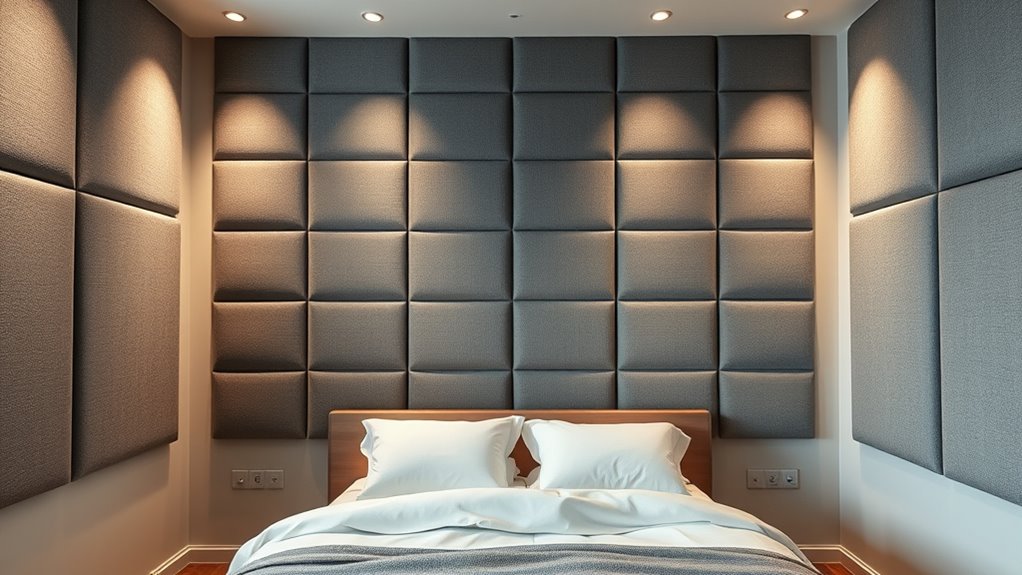

Soundproofing panels for quiet bedrooms can soften echoes and reduce reflected noise, but most surface-mounted acoustic panels will not block traffic, voices, or music from passing through walls. I’d name the UMIACOUSTICS 6-Pack the best overall starting point for its large decorative panels, while the Quieture SoundBoard 12-Pack stands out for broad stated coverage and NEPIS 20-Pack foam for a simple self-adhesive setup. The main tradeoffs are coverage versus thickness, appearance versus easy installation, and sound absorption versus actual sound blocking. A bedroom’s noise source and wall construction matter as much as the panel itself. Read on for the full comparison, ranking logic, and advice on choosing panels that fit your room and expectations.

Turn the school run and nap time into listening time
- Thousands of audiobooks, podcasts and originals
- Listen on your phone, tablet or Echo — also offline
- Cancel anytime
Complete the kit


Key Takeaways
- Large-format panels can cover a room with fewer pieces: UMIACOUSTICS panels measure 47.2 × 23.6 inches, while many foam picks are 12-inch squares that require more placement and seams.
- Adhesive installation is convenient, not risk-free: several NEPIS and TO-TH options skip separate mounting hardware, but adhesive compatibility with paint and wallpaper should be checked before covering a wall.
- Thin panels and thick panels solve different problems: the 6 mm Quieture boards offer broad stated coverage, while 2-inch foam is a more substantial absorber; neither specification alone proves sound will be blocked from entering a bedroom.
- Decorative finishes set some picks apart: walnut, navy, camel, snow white, and warm ivory options can suit a bedroom better than exposed black foam, though style should not substitute for checking coverage and construction.
- Pack size is not the same as usable wall coverage: compare listed dimensions and total square footage, then leave room for gaps, outlets, furniture, and placement around the main reflection area.
| UMIACOUSTICS Acoustic Panels, 6 Pack, 47.2 x 23.6 Inches, Walnut |  | Best for a Polished Bedroom Feature Wall | Quantity: 6 panels | Panel size: 47.2 x 23.6 inches | Thickness: 0.4 inches | VIEW ON AMAZON | See Our Full Breakdown |
| NEPIS Self-Adhesive Acoustic Foam Panels, 20 Pack, Black |  | Best for Quick, Small-Area Installation | Quantity: 20 panels | Panel dimensions: 11.8 x 11.8 x 0.36 inches | Coverage: About 20 square feet | VIEW ON AMAZON | See Our Full Breakdown |
| Lagom Atelier Decorative Acoustic Wall Panels, Navy Blue, 6 Pack |  | Best Decorative Pick for a Bedroom Accent | Quantity: 6 panels | Panel dimensions: 23.62 x 23.62 inches each | Coverage: 72 x 48 inches | VIEW ON AMAZON | See Our Full Breakdown |
| Waister Soundproof Wall Panels, 12-Pack, Camel |  | Best for a Small, Warm-Toned Echo Treatment | Quantity: 12 panels | Panel dimensions: 11.8 x 11.8 x 0.47 inches | Coverage: Up to 11.8 square feet | VIEW ON AMAZON | See Our Full Breakdown |
| TO-TH Self-Adhesive Acoustic Wall Panels, 24-Pack, Snow White |  | Best for Custom White-Tile Layouts | Quantity: 24-pack in title; description states 12 panels | Panel dimensions: 11.8 x 11.8 x 0.35 inches | Material: 100% polyester fiber | VIEW ON AMAZON | See Our Full Breakdown |
| Soundsbay Self-Adhesive Acoustic Wall Panels, 12 × 12 in, Black, 18-Pack | 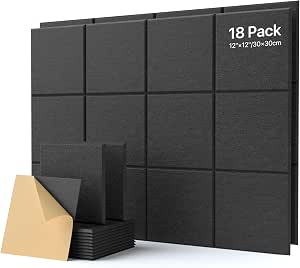 | Best for Quick, Small-Area Installation | Material: Polyester fiber | Color: Black | Panel dimensions: 12 × 12 × 0.4 inches | VIEW ON AMAZON | See Our Full Breakdown |
| Saiqiang Acoustic Foam Panels, 12 Pack, 1 × 12 × 12 Inches |  | Best for Flexible Foam Placement | Brand: Saiqiang | Quantity: 12 panels | Panel dimensions: 1 × 12 × 12 inches | VIEW ON AMAZON | See Our Full Breakdown |
| 4-Pack Acoustic Foam Panels, 48 × 24 × 2 Inches |  | Best for Covering a Broad Wall Section | Quantity: 4 panels | Panel dimensions: 48 × 24 × 2 inches | Material: Polyurethane foam | VIEW ON AMAZON | See Our Full Breakdown |
| Janasse Acoustic Wall Panels, 12-Pack, Warm Ivory |  | Best for a Bedroom-Friendly Wall Finish | Quantity: 12 panels | Panel dimensions: 11.81 × 23.62 inches | Product dimensions: 24 × 12 × 0.35 inches | VIEW ON AMAZON | See Our Full Breakdown |
| TEMGCUAM 54-Pack Acoustic Foam Wall Panels, 12 x 12 x 1 Inches |  | Best for Broad, Modular Coverage | Quantity: 54 panels | Panel dimensions: 12 × 12 × 1 inches | Material: High-density polyurethane foam | VIEW ON AMAZON | See Our Full Breakdown |
| NEPIS 12-Pack Self-Adhesive Acoustic Panels, 12 x 12 x 0.4 Inches, Black |  | Best for Quick, Small-Area Installation | Brand: NEPIS | Panel count: 12 | Panel dimensions: 12 x 12 x 0.4 inches | VIEW ON AMAZON | See Our Full Breakdown |
| Lagom Atelier Sound Absorbing Acoustic Wall Panels, 6 Pack |  | Best Decorative Bedroom Feature | Brand: Lagom Atelier | Panel count: 6 | Panel dimensions: 23.62 x 23.62 inches each | VIEW ON AMAZON | See Our Full Breakdown |
| Quieture SoundBoard Acoustic Fiberboard Panels, 12-Pack, 6 mm, Covers 96 sq. ft. |  | Best for Broad-Surface Coverage | Brand: MP Global Products | Panel count: 12 | Panel dimensions: 48 x 24 inches | VIEW ON AMAZON | See Our Full Breakdown |
| Focusound 52-Pack Acoustic Foam Panels, 1 x 12 x 12 Inches, with 300 Double-Sided Adhesive Pieces |  | Best for Small Recording Corners | Brand: Focusound | Panel count: 52 | Panel dimensions: 12 x 12 inches | VIEW ON AMAZON | See Our Full Breakdown |
| soundproofing panels for quiet bedroom | Panel dimensions | Color | Material | Quantity |
|---|---|---|---|---|
| UMIACOUSTICS Acoustic Panels | — | Walnut | — | 6 panels |
| NEPIS Self-Adhesive Acoustic F | 11.8 x 11.8 x 0.36 inches | Black | Polyester | 20 panels |
| Lagom Atelier Decorative Acous | 23.62 x 23.62 inches each | Navy blue | Polyester | 6 panels |
| Waister Soundproof Wall Panels | 11.8 x 11.8 x 0.47 inches | Camel | Polyester fiber | 12 panels |
| TO-TH Self-Adhesive Acoustic W | 11.8 x 11.8 x 0.35 inches | Snow white | 100% polyester fiber | 24-pack in title; description states 12 panels |
| Soundsbay Self-Adhesive Acoust | 12 × 12 × 0.4 inches | Black | Polyester fiber | 18 panels |
| Saiqiang Acoustic Foam Panels | 1 × 12 × 12 inches | Black | — | 12 panels |
| 4-Pack Acoustic Foam Panels | 48 × 24 × 2 inches | Black | Polyurethane foam | 4 panels |
| Janasse Acoustic Wall Panels | 11.81 × 23.62 inches | Warm ivory | High-density polyester fiber | 12 panels |
| TEMGCUAM 54-Pack Acoustic Foam | 12 × 12 × 1 inches | Black | High-density polyurethane foam | 54 panels |
| NEPIS 12-Pack Self-Adhesive Ac | 12 x 12 x 0.4 inches | Black | Polyester | — |
| Lagom Atelier Sound Absorbing | 23.62 x 23.62 inches each | — | Polyester | — |
| Quieture SoundBoard Acoustic F | 48 x 24 inches | — | Recycled synthetic fiber | — |
| Focusound 52-Pack Acoustic Foa | 12 x 12 inches | — | — | — |
More Details on Our Top Picks
UMIACOUSTICS Acoustic Panels, 6 Pack, 47.2 x 23.6 Inches, Walnut
For a bedroom where visible wall treatment matters as much as reducing room echo, I’d choose the UMIACOUSTICS panels over the smaller, brick-patterned NEPIS set. Six large panels create a more continuous, furniture-like surface, and the walnut-look veneer is less visually busy than exposed foam. Their flexible polyester core is intended to absorb reverberation and echoes, which can make a room sound less harsh; it does not block outside noise like traffic or voices passing through a wall. At just 0.4 inches thick, these are a slim decorative treatment rather than a deep absorber. They can be cut to fit, but installation hardware or adhesive is not included, so setup takes more planning than peel-and-stick alternatives. One key detail: the surface is veneer, not real wood slats.
Pros:- Large panels can create a more continuous wall treatment than small square tiles
- Flexible polyester fiber can be cut to fit around room features
- Walnut-look veneer offers a more furniture-like appearance than exposed foam
- Can be installed with construction adhesive, nails, or double-sided tape
Cons:- At 0.4 inches thick, it is a thin echo-control treatment, not a barrier to outside noise
- Veneer only looks like wood and is not actual wood slatting
- Adhesive or fasteners must be supplied separately
Best for: Bedroom owners who want broad, cut-to-fit wall panels with a wood-look finish to soften echo without a foam-panel appearance
Not ideal for: Sleepers trying to stop traffic, neighbors, or other sound from passing through a wall, or renters who need an easy-to-remove adhesive installation
- Quantity:6 panels
- Panel size:47.2 x 23.6 inches
- Thickness:0.4 inches
- Core material:100% polyester fiber
- Surface:Wood-look veneer; not wood slats
- Color:Walnut
- Item weight:22.1 pounds
- Installation:Construction adhesive, nails, or double-sided tape
Our verdict“Choose these for a large, walnut-look bedroom feature wall that softens echo, not for blocking noise from outside the room.”
NEPIS Self-Adhesive Acoustic Foam Panels, 20 Pack, Black
The NEPIS set is the most straightforward choice here when I want to cover a limited bedroom area without sourcing separate mounting supplies. Its peel-and-stick backing and 20 small tiles make it easier to arrange around a desk, headboard, or door than the large UMIACOUSTICS panels. The stated coverage is about 20 square feet, useful for taming reflections near a listening or work spot, but not enough to treat every wall in a typical bedroom. At 0.36 inches thick, it is a thin layer for reducing echo rather than a way to keep neighbors or street noise out. The brick texture also gives it a more studio-oriented look than Lagom Atelier’s decorative navy panels. I would treat the stated noise-reduction coefficient as a product claim, not proof of sound blocking or guaranteed bedroom quiet.
Pros:- Peel-and-stick backing avoids the need to buy separate installation supplies
- Twenty tiles provide about 20 square feet of stated coverage
- Small panels are easy to arrange around a desk, door, or headboard
- Polyester construction is described as odorless and non-toxic
Cons:- Panels are only 0.36 inches thick and are not a sound-blocking barrier
- Black 3D brick styling may feel visually harsh in a restful bedroom
- The stated noise-reduction claim is not accompanied by independent evidence in the supplied product information
Best for: Renters or bedroom workstation users who want a quick-to-apply treatment for echoes on a small wall area
Not ideal for: People seeking substantial sound isolation, broad room coverage, or a decorative finish that blends into a calm bedroom
- Quantity:20 panels
- Panel dimensions:11.8 x 11.8 x 0.36 inches
- Coverage:About 20 square feet
- Material:Polyester
- Color:Black
- Installation:Self-adhesive peel-and-stick backing
- Noise reduction coefficient:Over 0.95, as stated in product data
- Density:Up to 14.35 lb/ft³
Our verdict“Pick NEPIS for quick, limited-area echo control, but skip it if your main problem is sound entering through the wall.”
Lagom Atelier Decorative Acoustic Wall Panels, Navy Blue, 6 Pack
Among these options, Lagom Atelier is the one I’d shortlist when I want sound treatment to look intentional rather than like a studio add-on. The navy Spatial Line pattern gives it a stronger design presence than the plain black NEPIS tiles, while its six larger squares form a stated 72 x 48-inch arrangement. That makes the coverage easy to plan, but also sets a clear limit: this is an accent-sized treatment, not a whole-room solution. The polyester panels are intended to absorb sound and reduce echo, which may help a bedroom feel less reflective; they are not described as blocking sound transmission through walls. Peel-and-stick installation is simpler than mounting UMIACOUSTICS panels with separately sourced fasteners, though the supplied details do not specify panel thickness. I’d favor it for visible placement, not for maximum acoustic coverage.
Pros:- Spatial Line pattern gives the panels a deliberate decorative role
- Six panels form a defined 72 x 48-inch arrangement
- Peel-and-stick installation avoids separate mounting hardware
- One-year warranty is specified
Cons:- Stated coverage is limited to a 72 x 48-inch arrangement
- Product information does not specify panel thickness
- Echo absorption should not be mistaken for blocking outside or adjoining-room noise
Best for: Design-conscious bedroom owners who want a coordinated navy accent and a defined area of echo absorption
Not ideal for: Buyers who need large-scale wall coverage or are primarily trying to prevent noise from passing between rooms
- Quantity:6 panels
- Panel dimensions:23.62 x 23.62 inches each
- Coverage:72 x 48 inches
- Material:Polyester
- Color:Navy blue
- Pattern:Spatial Line
- Installation:Peel-and-stick
- Warranty:1 year
Our verdict“Choose Lagom Atelier for a decorative, clearly bounded bedroom accent rather than broad sound treatment or sound isolation.”
Waister Soundproof Wall Panels, 12-Pack, Camel
Waister suits a bedroom where a muted camel color and simple installation matter more than covering a large wall. Its 12 square panels provide up to 11.8 square feet of stated coverage, less than NEPIS’s roughly 20 square feet, but the Waister panels are slightly thicker at 0.47 inches. That makes them a modestly more substantial option for reducing room echo, not a fix for sound traveling through walls. Their self-adhesive backing keeps installation tool-free, and the product says gentle heat can help remove them—a useful detail for people planning to change the layout, though removal takes extra care. The camel finish may sit more comfortably in a bedroom than NEPIS’s black brick pattern. Still, the limited area means I’d reserve this set for a focused spot rather than expect it to quiet the whole room.
Pros:- Camel color offers a softer visual option than black acoustic tiles
- Self-adhesive backing needs no separate glue or installation tools
- At 0.47 inches thick, panels are thicker than the NEPIS tiles in this group
- Product information describes heat-assisted removal
Cons:- Covers up to 11.8 square feet per pack, less than the NEPIS set’s stated coverage
- Removing panels requires gentle heat and careful work
- Echo absorption does not amount to sound isolation
Best for: Bedroom users who want a small, warm-colored echo-control patch with peel-and-stick installation
Not ideal for: People treating a large bedroom wall or anyone expecting panels to block voices, traffic, or noise from adjoining rooms
- Quantity:12 panels
- Panel dimensions:11.8 x 11.8 x 0.47 inches
- Coverage:Up to 11.8 square feet
- Material:Polyester fiber
- Color:Camel
- Item weight:3.5 pounds
- Installation:Self-adhesive, peel-and-stick
- Density:150 kg/m³
Our verdict“Waister is a sensible pick for a small, warm-toned wall patch, but its coverage is too limited for treating an entire bedroom.”
TO-TH Self-Adhesive Acoustic Wall Panels, 24-Pack, Snow White
TO-TH stands out for bedroom buyers who want a light-colored, customizable pattern: the snow-white 3D brick panels can be cut and rearranged, while their self-adhesive backing simplifies placement on a wall or door. Compared with Waister’s camel squares, this set offers a brighter finish and more scope for a tiled layout. The panels are only 0.35 inches thick, however, so the stated benefit is reducing mid-to-high-frequency echo and reverberation—not stopping noise from reaching the bedroom. There is also a practical uncertainty absent from the Lagom Atelier listing: the title says 24 panels, but the product description reportedly says 12. I would confirm the delivered quantity before planning a full layout. These make more sense as a decorative echo treatment than as a dependable answer to noisy neighbors.
Pros:- Snow-white finish can suit a bright or minimal bedroom palette
- Self-adhesive backing simplifies installation
- Panels can be cut and arranged in custom patterns
- Designed to absorb mid-to-high-frequency sound and reduce echo
Cons:- At 0.35 inches thick, panels are a thin echo treatment rather than a sound barrier
- Product information conflicts on quantity: 24 in the title versus 12 in the description
- Coverage is not specified in the supplied product data
Best for: Bedroom decorators who want white, cuttable tiles for a custom echo-control pattern on a limited wall area
Not ideal for: Buyers who need verified coverage, thick sound absorption, or a product intended to block noise through a wall
- Quantity:24-pack in title; description states 12 panels
- Panel dimensions:11.8 x 11.8 x 0.35 inches
- Material:100% polyester fiber
- Density:9.6 lb/ft³
- Color:Snow white
- Design:3D brick
- Backing:Self-adhesive
- Item weight:6.89 pounds
Our verdict“Consider TO-TH for a custom white tile pattern, but verify the pack count and do not expect it to block bedroom noise.”
Soundsbay Self-Adhesive Acoustic Wall Panels, 12 × 12 in, Black, 18-Pack
Soundsbay’s peel-and-stick format makes it a practical choice for bedroom walls where echo is distracting but a tool-heavy installation is unwelcome. The 18 one-foot panels cover 18 square feet, giving you more coverage than a small sample pack while still letting you target a specific wall area. Compared with the Janasse Acoustic Wall Panels, Soundsbay has smaller square tiles rather than long grooved panels, so it offers more freedom to make a grid or scatter patches around a desk or bed. The tradeoff is its 0.4-inch thickness: these panels are intended to soften reflections inside a room, not block traffic, voices, or other noise passing through a wall. No measured absorption result is supplied, either. I’d choose it for a modest echo-control project, not as a fix for noisy neighbors.
Pros:- Peel-and-stick backing avoids extra adhesive and tools
- 18 panels cover 18 square feet
- Small squares allow flexible placement and layouts
- Polyester fiber construction is intended to reduce reflections and echo
Cons:- At 0.4 inches thick, it is a thin treatment for room reflections rather than sound blocking
- No measured sound-absorption or noise-reduction performance is provided
Best for: Bedroom renters or home-office users who want to cover a defined wall section with small, tool-free panels.
Not ideal for: People trying to stop outside noise or neighbor conversations from passing through a wall; the thin panels are described for echo control, not structural sound isolation.
- Material:Polyester fiber
- Color:Black
- Panel dimensions:12 × 12 × 0.4 inches
- Quantity:18 panels
- Coverage:18 square feet
- Weight:5.35 pounds
- Density:150 kg/m³
Our verdict“Choose Soundsbay for straightforward, small-area echo control, but not to keep bedroom noise from entering or leaving through the wall.”
Saiqiang Acoustic Foam Panels, 12 Pack, 1 × 12 × 12 Inches
Saiqiang’s wedge-shaped foam suits buyers who want to arrange small patches around a bedroom recording setup or other reflective spots. The 12 one-inch panels are thicker than the Soundsbay Self-Adhesive Acoustic Wall Panels, but Saiqiang supplies less information about total coverage and requires adhesive or the included nano tape rather than a peel-and-stick backing on each panel. That makes it a more hands-on choice, with a useful option to select the mounting method. The foam is meant to manage echo and reflections, not seal a wall against hallway noise or traffic. There is also a wait after opening: vacuum-packed panels may need 24–48 hours to expand. I’d favor this over larger sheets when a small, irregular layout matters, but skip it if you need immediate installation or broad wall coverage.
Pros:- One-inch wedge-shaped foam is thicker than the 0.4-inch Soundsbay panels
- Nano double-sided tape is included, with construction adhesive as another option
- Lightweight panels are suited to flexible placement
- Two-year warranty is specified
Cons:- Only 12 panels are included, and total coverage is not stated
- Panels may take 24–48 hours to expand after unpacking
- Echo treatment does not provide structural soundproofing
Best for: Bedroom streamers, musicians, or remote workers who want to place thicker foam panels selectively around a specific sound-reflective area.
Not ideal for: Light sleepers seeking to block noise through a shared wall, or anyone who needs full-wall coverage and installation on the same day.
- Brand:Saiqiang
- Quantity:12 panels
- Panel dimensions:1 × 12 × 12 inches
- Shape:Wedge
- Color:Black
- Installation:Construction adhesive or included nano double-sided tape
- Expansion time:24–48 hours
- Warranty:2 years
Our verdict“Pick Saiqiang for a small, customizable foam treatment, not for blocking noise through a bedroom wall.”
4-Pack Acoustic Foam Panels, 48 × 24 × 2 Inches
Large-format coverage is the main reason to choose these four foam panels: each measures 48 × 24 inches, so they can cover a broad area with fewer separate pieces than the TEMGCUAM 54-Pack Acoustic Foam Wall Panels. At two inches thick, they are also the thickest foam option in this batch, making them a better fit for treating a sizable reflective surface than small, one-inch tiles. That does not make them a sound barrier; the stated purpose is echo reduction and sound absorption, and the description gives no measured absorption rating. The panels arrive vacuum-packed and need 2–8 hours to expand, and their large dimensions may be awkward on a small bedroom wall or around furniture. I’d choose them when coverage matters more than a tiled layout, provided there’s a suitable mounting plan.
Pros:- Four large panels cover broad areas with fewer seams than small tiles
- Two-inch thickness exceeds the one-inch TEMGCUAM and Saiqiang foam panels
- Designed to absorb sound and reduce echoes
- Described as odorless and flame-retardant
Cons:- Large panels can be difficult to fit around doors, furniture, and narrow wall sections
- Requires 2–8 hours to expand after unpacking
- No measured sound-absorption rating is provided
Best for: Bedroom studio owners or home-theater users who want to cover a large, uninterrupted wall area with fewer panels.
Not ideal for: People with narrow or crowded bedroom walls, or buyers expecting foam to block voices and traffic from adjacent rooms.
- Quantity:4 panels
- Panel dimensions:48 × 24 × 2 inches
- Material:Polyurethane foam
- Weight:5.35 pounds
- Package dimensions:13.7 × 13.15 × 6.81 inches
- Color:Black
- Expansion time:2–8 hours
Our verdict“Choose this four-pack for broad echo treatment on an open wall, but not when you need a compact layout or actual sound isolation.”
Janasse Acoustic Wall Panels, 12-Pack, Warm Ivory
Warm ivory color and aligned grooves give the Janasse panels a more coordinated wall look than the black foam tiles elsewhere in this batch. Their long, narrow format can create a continuous pattern, while the peel-and-stick backing avoids drilling. Compared with the square Soundsbay Self-Adhesive Acoustic Wall Panels, Janasse is better suited to a deliberate decorative arrangement than a patchwork grid. The 12 panels are described as high-density polyester fiber intended to reduce echo and reverb, but the product supplies no quantified acoustic performance; the 0.35-inch listed thickness also points to surface treatment, not sound blocking. Adhesive mounting can limit repositioning, so planning the layout matters. For a bedroom where appearance is part of the decision, I’d favor Janasse over plain foam, while keeping expectations focused on room reflections.
Pros:- Warm ivory finish offers an alternative to black foam panels
- Grooves align across panels for a more continuous wall pattern
- Peel-and-stick installation requires no drilling
- High-density polyester fiber is intended to reduce echo and reverb
Cons:- Adhesive mounting may make repositioning difficult
- Sound-absorption performance is not quantified
- Listed thickness is only 0.35 inches, so these are not a wall sound barrier
Best for: Bedroom owners who want a lighter, coordinated wall treatment for echo control and prefer a warm neutral finish over black foam.
Not ideal for: Renters who may need to reposition panels, or sleepers who need to reduce noise transmitted through a wall.
- Quantity:12 panels
- Panel dimensions:11.81 × 23.62 inches
- Product dimensions:24 × 12 × 0.35 inches
- Weight:4 pounds
- Material:High-density polyester fiber
- Color:Warm ivory
- Installation:Self-adhesive, peel-and-stick
Our verdict“Choose Janasse when bedroom appearance and easy surface mounting matter alongside modest echo control, not when sound blocking is the goal.”
TEMGCUAM 54-Pack Acoustic Foam Wall Panels, 12 x 12 x 1 Inches
Fifty-four one-foot panels give TEMGCUAM the most modular layout in this group: you can spread coverage across a broad bedroom wall or focus it around a desk, without committing to the large slabs of the 4-Pack Acoustic Foam Panels. The one-inch wedge-cut polyurethane is intended to reduce echo and reverberation, and the 270 included adhesive pads make tool-free mounting possible on clean, dry, smooth surfaces. That scale brings a practical advantage over the smaller Saiqiang pack, but it also means more individual pieces to position. The adhesive may not hold well on unsuitable surfaces, where a more secure mounting method may be needed. Like the other foam options here, it addresses room reflections rather than sound traveling through walls. I’d choose it for flexible coverage, not as a substitute for bedroom sound isolation.
Pros:- 54 panels provide flexible coverage and layout options
- One-inch wedge-cut surfaces are designed to dampen echoes and reverberation
- Includes 270 adhesive pads for tool-free mounting on suitable surfaces
- Can be mounted on walls or ceilings
Cons:- Many small panels require more placement time than the four large panels in this batch
- Adhesive pads work best on clean, dry, smooth surfaces
- A more secure mounting method may be needed on unsuitable surfaces
Best for: Bedroom users who want to arrange a large number of small foam tiles across selected wall or ceiling areas.
Not ideal for: Buyers with textured, damp, or otherwise unsuitable mounting surfaces, or anyone trying to stop outside noise from crossing a wall.
- Quantity:54 panels
- Panel dimensions:12 × 12 × 1 inches
- Material:High-density polyurethane foam
- Color:Black
- Item weight:4.93 pounds
- Adhesive pads:270 included
- Mounting locations:Walls or ceilings
Our verdict“Pick TEMGCUAM for adaptable, wide-area echo treatment using small tiles, provided your mounting surface can support the adhesive pads.”
NEPIS 12-Pack Self-Adhesive Acoustic Panels, 12 x 12 x 0.4 Inches, Black
The NEPIS 12-pack suits bedroom owners who want to soften reflections without taking on a large installation. Its peel-and-stick backing and 12-inch squares make it easy to place a modest patch on a wall or door, while the 3D brick pattern looks more finished than plain foam. At about 12 square feet, it covers less than the Quieture SoundBoard’s 96 square feet, but it is simpler to apply and needs no large-scale panel layout. The key limitation is its 0.4-inch thickness: this is better treated as an echo-control accent than a barrier against outside traffic, voices, or other noise passing through a bedroom wall. The stated NRC is high, but the description supplies no independent evidence for noise-reduction claims. Choose it for a small reflective surface, not whole-room sound isolation.
Pros:- Peel-and-stick backing simplifies installation
- Brick texture gives the panels a more decorative appearance
- Pack covers about 12 square feet
- Lightweight panels can be placed on walls, doors, windows, or ceilings
Cons:- At 0.4 inches thick, it is a limited choice for substantial acoustic treatment
- The product description gives no independent support for its noise-reduction claims
- One pack covers only a small area compared with Quieture SoundBoard
Best for: Bedroom owners who want a decorative, adhesive treatment for a small wall or door area to reduce room echo.
Not ideal for: People trying to block street noise or sound from neighboring rooms, or anyone needing broad coverage from one pack.
- Brand:NEPIS
- Panel count:12
- Panel dimensions:12 x 12 x 0.4 inches
- Coverage:About 12 sq ft per pack
- Material:Polyester
- Installation:Self-adhesive peel-and-stick backing
- NRC:Greater than 0.95
- Color:Black
Our verdict“Choose NEPIS for a quick, decorative echo-control patch, but not as a solution for blocking noise through bedroom walls.”
Lagom Atelier Sound Absorbing Acoustic Wall Panels, 6 Pack
Lagom Atelier is the most display-friendly choice here: six large Hollow Frame polyester panels can form a 72 x 48-inch arrangement that reads more like a designed wall feature than scattered foam tiles. That makes this a stronger bedroom fit than the black, brick-patterned NEPIS 12-pack for buyers who want acoustic treatment to blend into the room’s decor. Peel-and-stick backing keeps the setup approachable, and the panels can be arranged to suit a chosen layout. The tradeoff is that the product is described as softening echo and everyday noise, with no sound-reduction rating supplied. Like the NEPIS panels, it should not be mistaken for a soundproofing barrier against noise traveling through walls. Its larger individual panels also offer less placement flexibility than small squares.
Pros:- Six large panels create a coordinated wall feature
- Peel-and-stick backing supports DIY installation
- Panels can be arranged in different layouts
- One-year warranty
Cons:- No specific sound-reduction rating is provided
- Designed to soften echo and everyday noise rather than block transmitted sound
- Large panels can be less convenient to fit around switches, trim, or narrow wall sections
Best for: Bedroom decorators who want a coordinated, large-format wall display that can soften room echo without a complicated installation.
Not ideal for: Sleepers seeking documented sound-blocking performance or those who need small panels to fit around tight wall obstacles.
- Brand:Lagom Atelier
- Panel count:6
- Panel dimensions:23.62 x 23.62 inches each
- Display area:72 x 48 inches
- Material:Polyester
- Installation:Peel-and-stick backing
- Pattern:Hollow Frame
- Warranty:1 year
Our verdict“Pick Lagom Atelier when bedroom appearance and a broad decorative arrangement matter more than a documented noise-blocking rating.”
Quieture SoundBoard Acoustic Fiberboard Panels, 12-Pack, 6 mm, Covers 96 sq. ft.
Quieture is the coverage-first option in this group: its 12 panels span 96 square feet, far more area than either the NEPIS 12-pack or Lagom Atelier’s six-panel display. That scale may suit a bedroom renovation where panels are being incorporated across walls, ceilings, or floors, rather than stuck up as a small decorative patch. The recycled synthetic fiber also provides thermal insulation, giving it a different role from the thinner, visible echo-control tiles. But 6 mm thickness is still modest, and the product’s sound-reduction outcome depends on the full assembly and installation. It is not a stand-alone promise of quiet from neighboring rooms or outdoors. Compared with adhesive panels, this is a broader building-material approach that may require more planning and finishing work.
Pros:- 12-panel set covers 96 square feet
- Suitable for walls, ceilings, and floors
- Recycled synthetic fiber also provides thermal insulation
- Lightweight construction at 4.4 lb per panel
Cons:- The 6 mm thickness may not suit every installation
- Sound reduction depends on the surrounding assembly
- A broad-surface installation may involve more planning than peel-and-stick tiles
Best for: Homeowners renovating a bedroom who need wide-area fiber panels for a wall, ceiling, or floor assembly and can plan the installation.
Not ideal for: Renters seeking removable, decorative panels or anyone expecting thin panels alone to stop external or neighboring-room noise.
- Brand:MP Global Products
- Panel count:12
- Panel dimensions:48 x 24 inches
- Coverage:96 sq. ft.
- Thickness:6 mm
- Material:Recycled synthetic fiber
- Weight:4.4 lb
- Recommended uses:Soundproofing and thermal insulation
Our verdict“Choose Quieture for planned, wide-area bedroom work, not as a quick adhesive fix or a stand-alone sound barrier.”
Focusound 52-Pack Acoustic Foam Panels, 1 x 12 x 12 Inches, with 300 Double-Sided Adhesive Pieces
Focusound is the most purpose-built choice for controlling echo and reverberation around a bedroom desk, microphone, or small recording corner. Its 52 one-inch foam squares provide more placement options than Lagom Atelier’s six large panels, and the included 300 adhesive pieces help cover a spread-out layout. Triangular grooves target reflected sound within the room; they do not turn a bedroom wall into a barrier against traffic or voices from next door. That distinction matters when quiet sleep, rather than cleaner recordings, is the goal. Compared with the NEPIS polyester panels, Focusound is thicker and more studio-oriented, but the adhesive can affect walls and its shape-restoring method requires soaking and 24 to 48 hours of air-drying. I would choose it for a defined recording zone, not a polished bedroom-wide treatment.
Pros:- Triangular grooves are designed to absorb echo and reverberation
- 52 panels allow flexible placement around a recording area
- Includes 300 pieces of double-sided adhesive
- Foam can be reshaped by soaking and air-drying
Cons:- Adhesive installation may affect bedroom walls
- Reshaping can require 24 to 48 hours of drying
- Echo-control foam is not a substitute for sound blocking between rooms
Best for: Bedroom creators setting up a small vocal, streaming, or recording area who want many one-foot squares for targeted echo control.
Not ideal for: People prioritizing a tidy bedroom finish, renters concerned about wall damage, or sleepers who need to block sound through walls.
- Brand:Focusound
- Panel count:52
- Panel dimensions:12 x 12 inches
- Panel thickness:1 inch
- Included adhesive:300 double-sided adhesive pieces
- Recommended uses:Home offices, recording studios, vocal booths, and control rooms
- Model number:FS0302F
Our verdict“Pick Focusound for targeted echo control around a bedroom recording setup, but skip it if your main need is quieter sound transmission through walls.”

How We Picked
I compared the 14 options by the factors that matter when a bedroom needs less audible echo or a more finished-looking treatment: panel dimensions and stated coverage, thickness and material type, mounting method, pack size, and appearance. I gave more weight to choices with clear, useful specifications and a practical fit for a bedroom than to a large piece count alone. I also separated decorative wall panels from foam tiles and thin fiberboard, since their formats and likely uses are not interchangeable.
The ranking reflects fit for a bedroom, clarity of the available specifications, and installation tradeoffs, not a claim that any surface panel makes a room soundproof. Large-format and versatile options rank ahead of picks that mainly offer many small tiles or limited detail. Adhesive convenience, stated coverage, and room-friendly finishes help a product stand out, but uncertainty about sound transmission and wall compatibility remains a reason to be cautious with every option.
| soundproofing panels for quiet bedroom | Color | Installation |
|---|---|---|
| UMIACOUSTICS Acoustic Panels | Walnut | Construction adhesive, nails, or double-sided tape |
| NEPIS Self-Adhesive Acoustic F | Black | Self-adhesive peel-and-stick backing |
| Lagom Atelier Decorative Acous | Navy blue | Peel-and-stick |
| Waister Soundproof Wall Panels | Camel | Self-adhesive, peel-and-stick |
| TO-TH Self-Adhesive Acoustic W | Snow white | — |
| Soundsbay Self-Adhesive Acoust | Black | — |
| Saiqiang Acoustic Foam Panels | Black | Construction adhesive or included nano double-sided tape |
| 4-Pack Acoustic Foam Panels | Black | — |
| Janasse Acoustic Wall Panels | Warm ivory | Self-adhesive, peel-and-stick |
| TEMGCUAM 54-Pack Acoustic Foam | Black | — |
| NEPIS 12-Pack Self-Adhesive Ac | Black | Self-adhesive peel-and-stick backing |
| Lagom Atelier Sound Absorbing | — | Peel-and-stick backing |
| Quieture SoundBoard Acoustic F | — | — |
| Focusound 52-Pack Acoustic Foa | — | — |
Factors to Consider When Choosing Soundproofing Panels For Quiet Bedrooms
Before choosing a panel, work out whether you want to control echo inside the bedroom or reduce sound entering from outside. That distinction shapes how much material you need, where it should go, and whether panels are the right solution at all.
Separate Echo Control From Sound Blocking
Acoustic panels mostly absorb sound reflections within a room, which can make speech and other sounds feel less harsh or reverberant. They usually do not stop much sound from passing through a wall, window, or door because they add little mass and do not seal gaps. If outside noise is the problem, inspect door gaps, window seals, and shared-wall openings before buying panels. A rug, heavy curtains, or door sweep may address a weak point more directly, depending on where sound enters. Treat panels as a room-acoustics tool unless the product provides credible evidence of sound-isolation performance. This distinction prevents spending on foam when the real issue is a leaky window or a thin partition.
Calculate Coverage Before Comparing Pack Counts
Count the wall area you actually plan to treat rather than comparing packages by tile quantity. Multiply each panel’s width by its height, then total the planned area and account for cuts, gaps, and obstructions. A pack of small squares can be easier to arrange around furniture, but it creates more seams and takes longer to place than a few large panels. Conversely, large panels may be awkward to carry, trim, or position alone. Avoid covering every wall automatically; start with the surfaces nearest the main sound source or the strongest reflections. This staged approach lets you judge whether more treatment is useful before filling the room.
Match Thickness and Material to the Sound You Hear
Panel thickness, density, and construction affect how a material absorbs sound, but a single dimension does not predict performance across every frequency. Thin boards may suit broad decorative coverage, while thicker foam is more appropriate when the goal is to absorb more room reflections. Neither should be assumed to block low-frequency traffic rumble or bass through a wall. Look for product information about material composition and tested acoustic performance rather than relying on a dramatic product name. If the main irritation is a low hum, panels alone may leave it largely unchanged. Set expectations around reducing room harshness, not creating silence.
Check Adhesive, Wall Finish, and Reversibility
Self-adhesive panels can save time and avoid separate mounting hardware, but the adhesive may not suit every painted, textured, or wallpapered surface. Test a small piece in an inconspicuous area and follow the manufacturer’s removal guidance before installing a full set. Weak or dusty paint can peel, while textured walls may prevent a reliable bond. Renters may prefer removable mounting strips or a freestanding treatment, even if installation takes longer. Plan around outlets, switches, and access panels so tiles do not make routine use awkward. A convenient mounting method is only convenient if it stays put without damaging the bedroom wall.
Balance Bedroom Appearance With Practical Placement
Panels remain visible, so color and finish can matter as much as the layout in a sleeping space. Decorative finishes can blend with furniture and wall colors, while exposed foam may look more like studio treatment. Place panels where they can help with the sound problem rather than spreading them evenly for appearance alone. Keep fabric, foam, and other materials clear of heaters, lamps, and other heat sources, and follow the product’s care and safety instructions. Check whether a surface collects dust or needs occasional cleaning, especially near the bed. A visually discreet treatment is easier to live with than a full wall of panels that feels out of place.
Know When a More Involved Fix Is Worth It
If voices remain clear through a shared wall or street noise enters strongly through a window, surface panels may not address the main path. Sealing gaps, adding a door sweep, improving window treatments, or consulting a building professional may offer more relevant results. More involved sound-isolation work can require changes to the wall assembly and may affect room space, finish, and ventilation. Start with the least disruptive fix that targets the source, then reassess before adding treatments. Panels make more sense when the bedroom sounds echoey or when you want to soften reflections after leaks and openings are addressed. Paying more for a decorative or larger panel is not a substitute for choosing the right type of fix.
Frequently Asked Questions
Will acoustic panels stop traffic noise or voices from the next room?
Usually not to a degree that makes a bedroom quiet on its own. Most panels in this roundup are surface treatments intended to absorb reflections, not heavy, sealed barriers that prevent sound from traveling through a wall. First check whether the sound comes through a window, door gap, vent, or shared wall, since each path needs a different response. Sealing leaks or improving a window may matter more than adding foam. Panels can still make indoor sound less echoey, but that is a separate benefit from blocking outside noise.
How many panels do I need for one bedroom wall?
Start by measuring the wall section you plan to treat and calculating its area, then compare that figure with the panels’ listed dimensions. Do not assume a larger pack automatically covers more area; tile size varies widely in this lineup, and some packs contain many small pieces. Leave space for outlets, switches, furniture, and the layout you want rather than buying for wall-to-wall coverage by default. A targeted first installation can help you see whether the room’s echo improves. Add more only if the result and remaining sound problem justify it.
Are self-adhesive panels a good choice for a rental bedroom?
They can be easy to install, but the adhesive may pull paint or leave residue when removed. Check the product’s removal instructions and test a small area in a hidden spot before applying panels across a wall. On textured, freshly painted, or fragile surfaces, the adhesive may also fail to hold securely. Removable mounting strips or a freestanding panel can be safer options, though they may take more setup or leave a different footprint. Ask the property owner if wall changes are restricted.
Should I choose large decorative panels or small foam tiles?
Large panels can cover a planned area with fewer pieces and may create a more finished bedroom look, while small tiles are easier to arrange around obstacles and in smaller patches. Compare actual dimensions and material rather than choosing by format alone. Small tiles require more careful placement and can leave a visibly segmented pattern; large panels may be harder to carry, cut, or mount. For a visible wall, finish and layout deserve extra weight. For a compact treatment area, flexible tile placement may be more useful.
Can I put acoustic foam behind my bed?
You can place panels behind a bed if the wall is a useful surface for controlling reflections, but avoid putting foam where it contacts bedding, blocks an outlet, or sits close to a heat source. A headboard or furniture may already cover much of the wall, reducing the practical area available for panels. Mounting also needs to be secure so pieces cannot fall onto the bed. Follow the manufacturer’s fire-safety and installation guidance, and check whether the material needs routine dusting. If your main aim is blocking noise through the wall, behind-bed foam alone is unlikely to solve that issue.
Conclusion
For most bedroom buyers who want a clear mix of coverage and a more finished wall, I’d start with the UMIACOUSTICS 6-Pack as best overall. The Quieture SoundBoard panels are my best value-style pick for broad stated coverage, while buyers who want a more decorative finish should compare the Lagom Atelier, Waister, TO-TH, and Janasse options by color and dimensions before choosing. For beginners, the NEPIS self-adhesive foam is a straightforward route to a small, simple installation, provided the wall finish can handle adhesive. If the priority is thicker foam, the 2-inch four-pack is the specific option to examine; if you need many small tiles, compare the TEMGCUAM and Focusound packs. For noise coming through a wall or window, prioritize sealing and sound-isolation work instead of expecting any of these panels to create a silent bedroom.