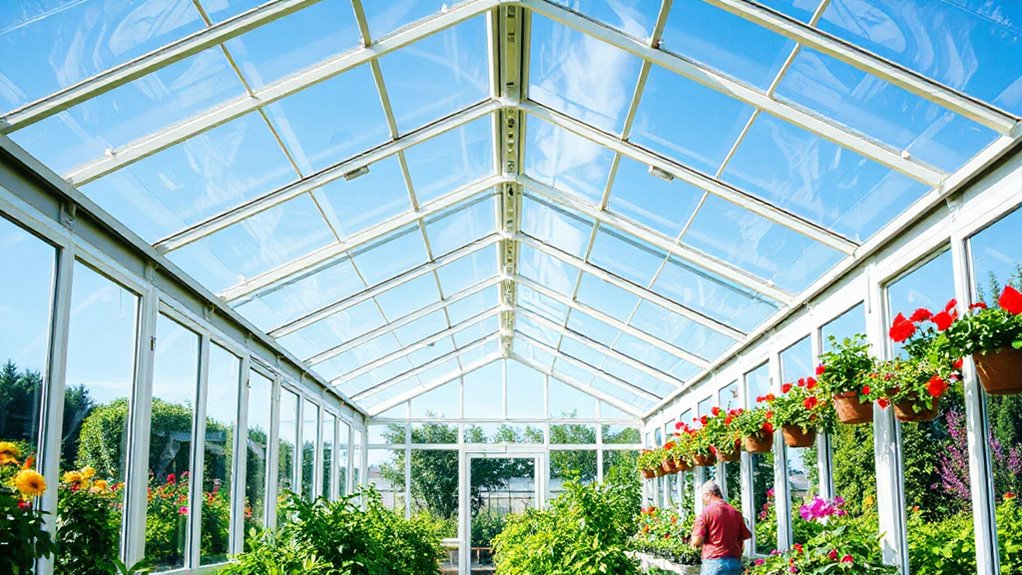

For year-round growing, I’d choose the Garvee 6 × 10 ft Walk-In Polycarbonate Greenhouse as the best overall balance of usable space and rigid panels. The Backyard Discovery Willow stands out for gardeners who want cedar construction, while the AMERLIFE 12 × 10 × 8 ft Hybrid suits those who need room for larger crops and equipment. The main tradeoffs are structure size, insulation, ventilation, and how much assembly and weather protection a greenhouse needs at your site. A walk-in greenhouse can extend the growing season, but its frame and covering alone do not promise frost-free conditions in every climate. Read on for the full comparison and guidance on matching a model to your space, crops, and winter conditions.

Turn the school run and nap time into listening time
- Thousands of audiobooks, podcasts and originals
- Listen on your phone, tablet or Echo — also offline
- Cancel anytime
Complete the kit


Key Takeaways
Rigid-panel models lead for extended use: Several options use polycarbonate panels and framed construction, a more substantial format than the portable pop-up and tunnel styles in this lineup.
More floor area is not automatically better: The AMERLIFE 10 × 44 ft tunnel offers an unusually long growing footprint, but buyers need room for anchoring, access, and ventilation as well as the structure itself.
Cedar choices trade convenience for material character: Yardistry Meridian, Backyard Discovery Willow, and INTER HUT bring wood construction into the lineup, while aluminum-frame models prioritize a different balance of upkeep and structure.
Compact products serve different purposes: Pure Garden’s shelf-based design suits container starts and limited spaces; a 6 × 6 ft walk-in model offers a different layout for people who want to enter the growing area.
Winter performance depends on the whole setup: No listed size or covering removes the need to plan for local wind, snow, ventilation, anchoring, and added heat where crops require warmer conditions.
| Garvee 6 × 10 ft Walk-In Polycarbonate Greenhouse |  | Best for Four-Season Structure | Dimensions: 6 × 10 ft | Frame: Reinforced dark grey matte-finish aluminum | Panels: 21 oz/yd² double-wall polycarbonate | VIEW ON AMAZON | See Our Full Breakdown |
| EAGLE PEAK 8 x 6 ft Pop-Up Walk-In Greenhouse, Green |  | Best for Temporary Season Extension | Dimensions: 8 x 6 ft; 98.4 L x 70.9 W x 91.7 H inches | Weight: 37.3 pounds | Frame material: Alloy steel | VIEW ON AMAZON | See Our Full Breakdown |
| Yardistry Meridian Cedar Greenhouse, 6.7 x 7.8 ft |  | Best for Low-Intervention Ventilation | Dimensions: 6.7 x 7.8 ft | Sidewall height: 6 ft | Base wall height: 32 in | VIEW ON AMAZON | See Our Full Breakdown |
| AMERLIFE 12 x 10 x 8 ft Hybrid Polycarbonate Greenhouse |  | Best for High-Capacity Growing | Dimensions: 12 x 10 x 8 ft | Usable space: 435 cu. ft. | Weight: 245 lb | VIEW ON AMAZON | See Our Full Breakdown |
| Backyard Discovery Willow 9 x 6 ft Cedar and Polycarbonate Walk-In Greenhouse Kit |  | Best Equipped for a Working Garden | Dimensions: 9 x 6 ft | Interior space: 54 sq ft | Frame material: Cedar wood | VIEW ON AMAZON | See Our Full Breakdown |
| Kingdura 6 x 12 ft Walk-In Polycarbonate Greenhouse |  | Best for Long, Productive Growing Rows | Dimensions: 6 x 12 ft | Panel material: 4.6 mm twin-wall polycarbonate | Frame material: Reinforced aluminum | VIEW ON AMAZON | See Our Full Breakdown |
| 6 x 8 ft Polycarbonate Greenhouse with Roof Vent – Dark Gray |  | Best for Straightforward Setup | Dimensions: 88.2 x 66.93 x 77 in | Size: 6 x 8 ft | Panel material: Double-wall polycarbonate | VIEW ON AMAZON | See Our Full Breakdown |
| Takywep 6 x 7 ft Walk-In Greenhouse with Polycarbonate Panels and Aluminum Frame |  | Best for Compact, Weather-Exposed Gardens | Dimensions: 6 x 7 ft | Frame: Rust-resistant aluminum alloy | Panels: 4 mm twin-wall polycarbonate | VIEW ON AMAZON | See Our Full Breakdown |
| Pure Garden Walk-In Greenhouse with 8 Shelves, 56.3 x 56.3 x 76.7 Inches |  | Best for Shelved Seedlings and Temporary Protection | Dimensions: 56.3 x 56.3 x 76.7 in | Frame material: Steel | Cover material: PVC | VIEW ON AMAZON | See Our Full Breakdown |
| 8×16 ft Polycarbonate Walk-In Greenhouse with Aluminum Frame |  | Best for Maximum Growing Capacity | Dimensions: 188.9 x 128.9 x 80.71 in | Size: 8 x 16 ft | Weight: 240 lb | VIEW ON AMAZON | See Our Full Breakdown |
| AMERLIFE 10 × 44 ft Walk-In Tunnel Greenhouse with Watering System |  | Best for High-Capacity Growing | Dimensions: 528 × 120 × 78 in | Size: 44 × 10 × 6.5 ft | Entry height: 6.1 ft | VIEW ON AMAZON | See Our Full Breakdown |
| 6’x6′ Walk-In Greenhouse with Hygrometer, Windproof Warm Plant House |  | Best for Monitoring a Compact Growing Space | Dimensions: 73 × 71 × 77 in | Size: 6 × 6 ft | Frame: Reinforced aluminum alloy | VIEW ON AMAZON | See Our Full Breakdown |
| INTER HUT 10 × 6 ft Cedar Wood Greenhouse with Polycarbonate Roof |  | Best for a Natural Wood Frame | Dimensions: 10.0 × 6.2 × 7.0 ft | Frame: Cedar wood | Panels: 6 mm twin-wall polycarbonate | VIEW ON AMAZON | See Our Full Breakdown |
| VEVOR Walk-In Tunnel Greenhouse, 9.6 × 6.4 × 6.2 ft |  | Best Lightweight Tunnel Pick | Dimensions: 9.58 × 6.43 × 6.23 ft | Weight: 31.3 lb | Frame: Galvanized alloy steel | VIEW ON AMAZON | See Our Full Breakdown |
| CABIHOME Walk-In Polycarbonate Greenhouse with Aluminum Frame |  | Best for Rainwater Management | Sizes: 6 × 8 ft and 6 × 10 ft | Frame: Heavy-duty rust-resistant aluminum | Panels: 720 g/m² UV-resistant polycarbonate | VIEW ON AMAZON | See Our Full Breakdown |
| walk in greenhouse for year round growing | Dimensions | Frame material |
|---|---|---|
| Garvee 6 × 10 ft Walk-In Polyc | 6 × 10 ft | — |
| EAGLE PEAK 8 x 6 ft Pop-Up Wal | 8 x 6 ft; 98.4 L x 70.9 W x 91.7 H inches | Alloy steel |
| Yardistry Meridian Cedar Green | 6.7 x 7.8 ft | Cedar lumber |
| AMERLIFE 12 x 10 x 8 ft Hybrid | 12 x 10 x 8 ft | Aluminum |
| Backyard Discovery Willow 9 x | 9 x 6 ft | Cedar wood |
| Kingdura 6 x 12 ft Walk-In Pol | 6 x 12 ft | Reinforced aluminum |
| 6 x 8 ft Polycarbonate Greenho | 88.2 x 66.93 x 77 in | Aluminum |
| Takywep 6 x 7 ft Walk-In Green | 6 x 7 ft | — |
| Pure Garden Walk-In Greenhouse | 56.3 x 56.3 x 76.7 in | Steel |
| 8×16 ft Polycarbonate Walk-In | 188.9 x 128.9 x 80.71 in | Alloy steel in listed specifications; product description says aluminum |
| AMERLIFE 10 × 44 ft Walk-In Tu | 528 × 120 × 78 in | — |
| 6’x6′ Walk-In Greenhouse with | 73 × 71 × 77 in | — |
| INTER HUT 10 × 6 ft Cedar Wood | 10.0 × 6.2 × 7.0 ft | — |
| VEVOR Walk-In Tunnel Greenhous | 9.58 × 6.43 × 6.23 ft | — |
| CABIHOME Walk-In Polycarbonate | — | — |
More Details on Our Top Picks
Garvee 6 × 10 ft Walk-In Polycarbonate Greenhouse
For year-round growing, I rank the Garvee as a strong fit for gardeners who want a more permanent enclosure without stepping up to the larger AMERLIFE 12 x 10 x 8 ft model. Its double-wall polycarbonate panels, reinforced aluminum frame, and stated snow load capacity of over 110 lb/sq ft point toward better cold-weather protection than the EAGLE PEAK’s polyethylene-cover pop-up design. A roof vent gives growers a way to release built-up heat, while integrated gutters help direct rainwater away for collection or drainage. The lockable sliding door and included anchors add useful day-to-day security and stability. The tradeoff is that no wind-resistance rating is provided, so buyers in exposed locations have less information for judging storm performance. It also arrives in two boxes, and tool-free panel installation does not mean the full build is effortless.
Pros:- Double-wall polycarbonate panels are designed to provide UV protection while admitting useful light.
- Stated snow load capacity exceeds 110 lb/sq ft.
- Roof vent, sliding door, and integrated gutters support ventilation and water management.
- Four ground anchors and mid-post supports add stability.
Cons:- No wind-resistance rating is provided for judging suitability in exposed sites.
- Ships in two boxes, which may arrive separately.
- Tool-free panel installation does not remove the work involved in assembling the full structure.
Best for: Gardeners seeking a compact, more permanent polycarbonate house for seasonal extension and protected year-round cultivation, especially where snow load matters.
Not ideal for: Growers in high-wind areas who need a stated wind rating, or anyone who wants a temporary greenhouse that can be moved and set up quickly.
- Dimensions:6 × 10 ft
- Frame:Reinforced dark grey matte-finish aluminum
- Panels:21 oz/yd² double-wall polycarbonate
- Snow load capacity:Over 110 lb/sq ft
- Ventilation:Adjustable roof vent
- Door:Lockable sliding door
- Water management:Integrated rain gutters
- Stability features:Four ground anchors and mid-post supports
- Assembly and shipping:Tool-free panel installation with pre-labeled parts; ships in two boxes
Our verdict“Choose the Garvee for a snow-conscious, permanent polycarbonate greenhouse, but look elsewhere if a published wind rating or portable setup is a priority.”
EAGLE PEAK 8 x 6 ft Pop-Up Walk-In Greenhouse, Green
The EAGLE PEAK suits growers who need a walk-in growing space quickly, rather than a fixed structure built to hold a steady climate through every season. Its pre-assembled pop-up frame is designed for one-person, tool-free setup, giving it a clear convenience advantage over the Yardistry Meridian Cedar Greenhouse, which arrives as a ready-to-assemble wood kit. The 8 x 6 ft footprint leaves room for plants and separate shelving, but shelves are not included. A polyethylene cover, roll-up zippered door, and two mesh windows provide basic access and airflow; they do not offer the same insulation-oriented panel construction as the Garvee or Yardistry. That makes this a better match for short-term protection, spring starts, and mild conditions than dependable winter growing. At 37.3 pounds, it is manageable to set up but not especially light to reposition.
Pros:- Pre-assembled pop-up frame is designed for tool-free, one-person setup.
- 8 x 6 ft footprint provides walk-in access and space for shelving.
- Roll-up zippered door and two mesh windows support access and airflow.
- Alloy-steel frame offers a structured alternative to a simple cover-only shelter.
Cons:- Polyethylene cover is less suited to insulated, dependable winter growing than double-wall polycarbonate panels.
- Shelving is not included, adding a separate setup need.
- At 37.3 pounds, it may be cumbersome to move frequently.
Best for: Beginners and seasonal growers who want a roomy, fast-to-assemble shelter for starts, tender plants, or mild-weather growing.
Not ideal for: Gardeners who need a rigid, insulated greenhouse for cold winters, or buyers who expect shelving to be included.
- Dimensions:8 x 6 ft; 98.4 L x 70.9 W x 91.7 H inches
- Weight:37.3 pounds
- Frame material:Alloy steel
- Cover material:Polyethylene
- Door:One roll-up zippered door
- Vents:Two mesh windows
- Setup:Pre-assembled pop-up frame; designed for one-person setup
- Warranty:One-year limited after-sale protection
Our verdict“Pick the EAGLE PEAK for quick, seasonal plant protection, not for the insulation and permanence expected of a year-round greenhouse.”
Yardistry Meridian Cedar Greenhouse, 6.7 x 7.8 ft
The Yardistry earns its place for growers who want ventilation to respond without relying on daily manual adjustments. Its automatic roof vent opener works alongside a louvered base vent to help release heat and move air, a useful pairing for managing changing greenhouse temperatures. That sets it apart from the Garvee, which has an adjustable roof vent but no automatic opener listed. Cedar framing, double-wall polycarbonate windows, and built-in shelves make this a more finished growing space than the EAGLE PEAK pop-up, though the Yardistry requires a full assembly project rather than quick setup. The 6-foot sidewalls and two shelf levels make the interior practical for standing access and organized plants. The tradeoff is that the provided specifications do not give a weather-load rating, so I would not choose it over the Garvee or Backyard Discovery Willow when quantified snow or wind capacity is a deciding factor.
Pros:- Automatic roof vent opener can respond to rising temperatures without manual adjustment.
- Louvered base vent complements roof ventilation for airflow.
- Double-wall polycarbonate windows and cedar framing suit a more permanent garden structure.
- Two built-in shelves use vertical space for organized growing.
Cons:- Requires assembly, even though the lumber is pre-cut, pre-drilled, and pre-stained.
- No wind-resistance or snow-load capacity is provided in the specifications.
- Smaller footprint than the AMERLIFE 12 x 10 ft greenhouse.
Best for: Home gardeners who want a cedar-framed greenhouse with automatic temperature-responsive roof ventilation and built-in plant staging.
Not ideal for: Buyers who need a published wind or snow-load rating, or who want a pop-up shelter with minimal assembly.
- Dimensions:6.7 x 7.8 ft
- Sidewall height:6 ft
- Base wall height:32 in
- Frame material:Cedar lumber
- Window material:Double-wall polycarbonate
- Shelves:16 in lower shelf and 8 in upper shelf
- Ventilation:Automatic roof vent opener and louvered base wall vent
- Assembly:Ready-to-assemble kit with pre-cut, pre-drilled, pre-stained wood
- Warranty:Five-year limited warranty
Our verdict“Choose the Yardistry for automatic ventilation and built-in staging, but favor a greenhouse with stated load ratings if local weather exposure is your main concern.”
AMERLIFE 12 x 10 x 8 ft Hybrid Polycarbonate Greenhouse
When growing space matters more than a compact footprint, the AMERLIFE is the clear capacity pick in this group. Its 12 x 10 ft footprint and listed 435 cu. ft. of usable space give growers considerably more room than the 6 x 10 ft Garvee or 9 x 6 ft Backyard Discovery Willow, making it easier to separate crops, propagation, and paths. Two adjustable roof vents and integrated gutters add practical climate and water-management features, while the aluminum frame and mixed clear and translucent polycarbonate panels balance light entry with UV protection. The tradeoff is that the listed weather limits are more modest than the Garvee’s stated snow capacity and Backyard Discovery’s wind and snow figures: AMERLIFE lists up to 18 psf of snow and 56 mph wind resistance. Assembly is also a substantial group task, described as about six hours for three people.
Pros:- 12 x 10 ft footprint and 435 cu. ft. of usable space support multiple growing zones.
- Two adjustable roof vents offer more ventilation points than the single vent on the Garvee.
- Integrated gutters support rainwater collection or drainage.
- Published wind and snow capacity provide concrete weather limits for planning.
Cons:- Snow load capacity is listed at up to 18 psf, below the Garvee’s stated capacity.
- Assembly is described as taking about six hours with three people.
- Its 245-pound weight makes it a substantial structure to position and build.
Best for: Gardeners with a large yard who need room for multiple crop zones, larger plants, or a dedicated propagation and work area.
Not ideal for: Small-yard owners, solo assemblers, or growers in heavy-snow regions who need a higher stated snow-load capacity.
- Dimensions:12 x 10 x 8 ft
- Usable space:435 cu. ft.
- Weight:245 lb
- Frame material:Aluminum
- Panel material:Polycarbonate, clear and translucent panels
- Doors:Two swing doors
- Ventilation and water management:Two adjustable roof vents and integrated gutters
- Assembly:Quick-connect system; about six hours with three people
Our verdict“Choose the AMERLIFE when growing capacity is the priority and its stated weather limits fit your site, but not for compact yards or high-snow locations.”
Backyard Discovery Willow 9 x 6 ft Cedar and Polycarbonate Walk-In Greenhouse Kit
The Backyard Discovery Willow is the most fully outfitted option here for gardeners who want the greenhouse to function as a daily work area, not just a protected growing shell. Its 13 linear feet of staging shelves, workstation, hose hookups, temperature-activated exhaust fan, and PowerPort bring useful tasks inside the structure. The four-wall polycarbonate panels and stated weather figures also make it more compelling for year-round use than the EAGLE PEAK’s polyethylene cover. Compared with the Garvee, the Willow offers far more integrated gardening equipment and a stated wind resistance of up to 100 mph when anchored as specified, while the Garvee lists a higher snow-load figure. That anchoring condition matters: the Willow’s published resistance depends on following the specified installation. Buyers must also supply a power source for the outlets and USB ports, and the pre-cut kit still requires assembly.
Pros:- Four-wall polycarbonate panels are designed to support year-round growing.
- Temperature-activated exhaust fan and easy-open window provide active and manual ventilation.
- Includes 13 linear feet of fixed staging shelves, a workstation, and interior and exterior hose hookups.
- Published wind and snow figures provide weather guidance when installation requirements are met.
Cons:- Stated wind resistance depends on anchoring the greenhouse as specified.
- Power source is not included for the PowerPort outlets and USB ports.
- Assembly is required, despite the pre-cut, pre-drilled, and pre-stained pieces.
Best for: Dedicated gardeners who want built-in staging, a workstation, watering connections, and powered accessories in a year-round growing space.
Not ideal for: Buyers seeking a simple greenhouse shell, those unable to anchor it as specified, or gardeners without a way to supply power to the PowerPort.
- Dimensions:9 x 6 ft
- Interior space:54 sq ft
- Frame material:Cedar wood
- Panel material:Four-wall polycarbonate
- Ventilation:Temperature-activated exhaust fan and one easy-open window
- Shelving and work area:13 linear feet of fixed staging shelves and a workstation
- PowerPort:Three electrical outlets and three USB ports; power source not included
- Warranty and assembly:Five-year warranty; pre-cut, pre-drilled, pre-stained pieces
Our verdict“Pick the Willow for an equipped, hands-on growing workspace, provided you can anchor it correctly and supply power to its built-in ports.”
Kingdura 6 x 12 ft Walk-In Polycarbonate Greenhouse
The 6 x 12 ft footprint gives this Kingdura more room for growing rows than the Jiliusure 6 x 8 ft, while staying less demanding on garden space than the EASYHAWK 8 x 16 ft. Its 4.6 mm twin-wall panels and reported light transmission above 92% balance insulation with strong natural light, a useful combination for extending the growing season. Adjustable skylights and sliding doors offer more ways to manage heat and humidity than a single roof vent. The stated resistance to winds up to 50 mph and a snow load of 160 lb/m² also give it a stronger weather-resistance case than the Takywep, whose listed snow-load figure is lower. The tradeoff is that assembly is still required, and the available details do not specify a setup time or anchoring method.
Pros:- 6 x 12 ft layout provides useful room for rows and garden access.
- 4.6 mm twin-wall polycarbonate panels combine insulation with over 92% light transmission.
- Adjustable skylights and sliding doors provide multiple ventilation routes.
- Specified wind and snow-load ratings support use in exposed or wintry settings.
Cons:- Assembly is required, with no setup time stated in the supplied details.
- The 12-foot length needs a substantial, level site.
- Anchoring requirements and included anchoring hardware are not specified.
Best for: Gardeners who want room for multiple growing rows and seasonal crops without committing to the larger EASYHAWK 8 x 16 ft structure.
Not ideal for: Buyers seeking a no-assembly shelter or those without space for a 12-foot-long greenhouse.
- Dimensions:6 x 12 ft
- Panel material:4.6 mm twin-wall polycarbonate
- Frame material:Reinforced aluminum
- Light transmission:Over 92%
- Wind resistance:Up to 50 mph
- Snow load:160 lb/m²
- Ventilation:Adjustable skylights and sliding doors
- Color:Black
Our verdict“Choose the Kingdura for a moderately spacious, well-ventilated growing house with stronger stated snow capacity than the smaller Takywep.”
6 x 8 ft Polycarbonate Greenhouse with Roof Vent – Dark Gray
The Jiliusure’s strongest distinction is its no-cut, no-drill assembly system: pre-cut, numbered panels are described as a two-adult, 4–6-hour project. That makes it a more approachable permanent greenhouse than the Takywep, whose assembly may take two people 6–7 hours, though both require hands-on setup. At 6 x 8 ft, it offers a practical balance of walk-in access and growing room, but it has less capacity than the Kingdura 6 x 12 ft or EASYHAWK 8 x 16 ft. Double-wall polycarbonate is intended to insulate while resisting breakage, and a lockable sliding door, adjustable roof vent, and rain gutters add useful control over entry, airflow, and runoff. Its main limitation for year-round use is the single vent; buyers in changeable climates may want more ventilation options.
Pros:- Pre-cut, numbered panels are designed for assembly without cutting or drilling.
- Double-wall polycarbonate panels provide insulation and UV protection.
- Lockable sliding door and adjustable roof vent support access and airflow.
- Integrated rain gutters help direct roof runoff.
Cons:- The 6 x 8 ft footprint has less growing capacity than the Kingdura and EASYHAWK.
- One listed vent provides fewer ventilation points than the EASYHAWK’s two vents.
- The large footprint still needs a suitable outdoor site.
Best for: Gardeners who want a permanent, mid-size greenhouse and value a clearly described, tool-free assembly process.
Not ideal for: Growers needing several growing rows, extensive winter capacity, or more than one listed ventilation opening.
- Dimensions:88.2 x 66.93 x 77 in
- Size:6 x 8 ft
- Panel material:Double-wall polycarbonate
- Nominal wall thickness:0.157 in
- Frame material:Aluminum
- Doors:1 lockable sliding door
- Vents:1 adjustable roof vent
- Color:Charcoal black
Our verdict“Pick the Jiliusure if you want a mid-size polycarbonate greenhouse with a more clearly specified assembly process than the Takywep.”
Takywep 6 x 7 ft Walk-In Greenhouse with Polycarbonate Panels and Aluminum Frame
The Takywep suits growers who want a walk-in, hard-panel greenhouse but have less room than the Kingdura 6 x 12 ft requires. Its 6 x 7 ft footprint keeps the site commitment modest, while 4 mm twin-wall polycarbonate and a rust-resistant aluminum frame offer a more permanent setup than the Pure Garden’s PVC-covered steel shelving house. An adjustable roof vent, rain gutters, and lockable door cover the basics for airflow, runoff, and access. The stated 50 mph wind resistance is useful context, but its listed snow load of 18 psf (40 kg/m²) is well below Kingdura’s 160 lb/m² figure, so I would not rank it as the stronger choice for heavy-snow locations. Assembly may take two people 6–7 hours, and the shipment may arrive in two separate boxes.
Pros:- Compact 6 x 7 ft size fits sites that cannot accommodate longer models.
- 4 mm twin-wall panels provide a more substantial cover than the Pure Garden PVC shelter.
- Roof vent, rain gutters, and lockable door support everyday climate and access management.
- Stated wind resistance reaches up to 50 mph.
Cons:- Listed snow-load capacity is lower than Kingdura’s stated rating.
- Assembly may take two people about 6–7 hours.
- The greenhouse ships in two boxes that may arrive separately.
Best for: Gardeners with a smaller outdoor site who want rigid polycarbonate panels, a lockable entry, and basic weather-management features.
Not ideal for: Growers in areas with heavy snow or anyone who needs a greenhouse ready without a lengthy two-person assembly.
- Dimensions:6 x 7 ft
- Frame:Rust-resistant aluminum alloy
- Panels:4 mm twin-wall polycarbonate
- UV protection:99.9%
- Wind resistance:Up to 50 mph
- Snow load:18 psf (40 kg/m²)
- Features:Adjustable roof vent, rain gutters, and lockable door
- Assembly:Quick-connect system with slide-in panels
Our verdict“Choose the Takywep for a smaller hard-panel greenhouse in a windy but not heavy-snow setting, rather than for maximum winter load capacity.”
Pure Garden Walk-In Greenhouse with 8 Shelves, 56.3 x 56.3 x 76.7 Inches
Unlike the rigid-panel Kingdura and Jiliusure, the Pure Garden is a lightweight, shelf-based shelter designed for seedlings, pots, and supplies rather than permanent year-round growing in harsh weather. Its eight shelves make better use of a compact footprint than the open floor space of the larger EASYHAWK, and its tool-free steel-frame assembly is simpler than the multi-hour construction described for the Takywep. The clear PVC cover and roll-up zippered door can help shield plants from frost and pests, while included stakes and guy lines offer basic anchoring support. That convenience comes with real limits: PVC does not provide the same rigid, insulated enclosure as twin-wall polycarbonate, and the supplied details give no wind or snow rating. I’d treat it as seasonal or sheltered-use protection, not a substitute for a durable winter greenhouse.
Pros:- Eight shelves organize seedlings, pots, and gardening supplies in a compact footprint.
- Tool-free assembly avoids the longer build process of rigid-panel models.
- Roll-up zippered door offers convenient access and some protection from pests and frost.
- Includes stakes, guy lines, and zip ties for anchoring and shelf security.
Cons:- PVC cover does not match twin-wall polycarbonate insulation or rigidity.
- No wind-resistance or snow-load rating is supplied.
- Shelving limits the open floor space available for larger plants.
Best for: Seedling growers and container gardeners who need compact, movable shelving for a sheltered patio, sunroom, or mild-season garden use.
Not ideal for: Year-round growers facing heavy snow, strong winds, or a need for an insulated, rigid structure like the Kingdura.
- Dimensions:56.3 x 56.3 x 76.7 in
- Frame material:Steel
- Cover material:PVC
- Shelves:8
- Assembly:No tools required
- Included accessories:Stakes, guy lines, and zip ties
- Model number:HC-4202
Our verdict“Choose the Pure Garden for compact shelving and temporary plant protection, but choose a rigid polycarbonate model for dependable year-round growing.”
8×16 ft Polycarbonate Walk-In Greenhouse with Aluminum Frame
For growers who need space above all else, the EASYHAWK’s 8 x 16 ft footprint is the largest hard-panel option in this batch, giving it substantially more room than the Kingdura 6 x 12 ft for separate crop zones, larger plants, or work space. Its 4 mm polycarbonate panels, two adjustable roof vents, and integrated drainage gutters support light, airflow, and runoff management across that larger enclosure. This capacity comes with a substantial setup commitment: the greenhouse weighs 240 lb, making assembly and relocation harder than with the smaller Jiliusure or Takywep. The supplied frame details also conflict, describing a black-coated aluminum frame in the product description but listing alloy steel in the specs, so buyers should verify the frame material before purchase. No wind or snow rating is provided here.
Pros:- 8 x 16 ft interior offers the most growing and work space among these five products.
- Two adjustable roof vents provide more ventilation points than the Jiliusure’s single vent.
- Polycarbonate panels admit natural light while providing weather protection.
- Integrated drainage gutters help manage roof runoff.
Cons:- At 240 lb, assembly and relocation are more difficult than for the smaller greenhouses.
- The 8 x 16 ft footprint requires a large, prepared site.
- Frame material is inconsistent between the description and listed specifications, and no wind or snow rating is supplied.
Best for: Experienced growers with a large, prepared site who need room for multiple crop zones and can manage a heavy, substantial assembly.
Not ideal for: Small-yard gardeners, frequent movers, or buyers who need clearly stated wind and snow ratings for winter exposure.
- Dimensions:188.9 x 128.9 x 80.71 in
- Size:8 x 16 ft
- Weight:240 lb
- Panel material:4 mm polycarbonate
- Frame material:Alloy steel in listed specifications; product description says aluminum
- Doors:1
- Vents:2 adjustable roof vents
- Drainage:Integrated gutters
Our verdict“Choose the EASYHAWK when growing capacity matters more than easy setup, but verify the frame material and plan for a large, fixed site.”
AMERLIFE 10 × 44 ft Walk-In Tunnel Greenhouse with Watering System
For a grower who needs room to work along long planting rows, the 44-foot length sets this tunnel apart from the more compact VEVOR 9.6 × 6.4 ft. Its built-in adjustable misting nozzles can make watering a large growing area less labor-intensive, while the galvanized steel frame and included stakes, ropes, and clamps help anchor the substantial structure. Three doors, mesh windows, and 24 vents give air more routes through the greenhouse than the single-door VEVOR design, a useful advantage when managing heat and humidity. The tradeoff is the footprint: at 10 × 44 feet, it needs a large, suitable site, and its 182.3-pound weight makes placement and setup a bigger undertaking. The PE cover also differs from the rigid polycarbonate panels on the Sylviera 6 × 6, so buyers should weigh a spacious tunnel format against a more enclosed panel structure.
Pros:- Built-in adjustable misting nozzles reduce the need to water a large growing area by hand.
- Three doors, mesh windows, and 24 vents offer multiple options for access and airflow.
- Galvanized steel frame is paired with included spiral stakes, tension ropes, and clamps.
- Long 44-foot layout gives room for extended planting rows.
Cons:- The 10 × 44 ft footprint requires substantial outdoor space.
- At 182.3 lb, moving and setting up the structure can take significant effort.
- PE cover is less like a rigid-panel enclosure than the polycarbonate construction on the Sylviera 6 × 6.
Best for: Growers with a large, level outdoor area who want long planting rows, built-in misting, and multiple ventilation routes.
Not ideal for: Small-yard gardeners or anyone seeking a compact, rigid-panel greenhouse that is easier to place and move.
- Dimensions:528 × 120 × 78 in
- Size:44 × 10 × 6.5 ft
- Entry height:6.1 ft
- Weight:182.3 lb
- Frame:0.6 mm galvanized steel
- Cover:UV-proof polyethylene
- Ventilation:24 vents; mesh windows
- Watering:Adjustable misting nozzles
- Anchoring:Spiral stakes, tension ropes, and clamps
Our verdict“Choose this tunnel for high-volume growing and built-in watering if you have room for its unusually long footprint.”
6’x6′ Walk-In Greenhouse with Hygrometer, Windproof Warm Plant House
The Sylviera makes a strong case for year-round growing when insulation and humidity monitoring matter more than a long tunnel layout. Its 4 mm double-wall polycarbonate panels and reinforced aluminum frame give it a more rigid, insulated build than the PE-covered VEVOR tunnel, while the included hygrometer gives growers a way to keep track of humidity inside. The 6 × 6 ft footprint is also easier to fit into a typical garden than the 10 × 44 ft AMERLIFE, though this model is still a sizable structure rather than a portable mini greenhouse. A single adjustable roof vent provides some airflow, but it offers fewer ventilation points than the AMERLIFE’s 24 vents or VEVOR’s six mesh windows. The panel gaps lack included silicone seal, so buyers seeking a tightly sealed setup should plan for that detail.
Pros:- Double-wall polycarbonate panels offer an insulated alternative to the PE covers on the tunnel models.
- Built-in hygrometer helps track humidity inside the growing space.
- Reinforced aluminum frame is designed for outdoor conditions.
- Lockable door and adjustable roof vent support access and basic airflow control.
Cons:- One vent may provide limited airflow during hot weather.
- Silicone seal for panel gaps is not included.
- Its 6 × 6 ft structure can be heavy to relocate once assembled.
Best for: Home gardeners who want a rigid, insulated 6 × 6 ft structure and a built-in way to monitor humidity.
Not ideal for: Gardeners in very hot climates who need many ventilation openings, or buyers who require a greenhouse with panel-gap sealant included.
- Dimensions:73 × 71 × 77 in
- Size:6 × 6 ft
- Frame:Reinforced aluminum alloy
- Panels:4 mm double-wall polycarbonate
- Ventilation:1 adjustable roof vent
- Humidity monitoring:Built-in hygrometer
- Door:Lockable
Our verdict“Pick the Sylviera for a manageable rigid-panel greenhouse with humidity monitoring, but look elsewhere if maximum ventilation is your priority.”
INTER HUT 10 × 6 ft Cedar Wood Greenhouse with Polycarbonate Roof
INTER HUT suits gardeners who want a cedar-framed walk-in greenhouse rather than the metal-frame look of the Sylviera 6 × 6 or the lightweight tunnel format of the VEVOR. Its 6 mm twin-wall polycarbonate panels transmit light while blocking UV rays, and the roof adjusts to three positions up to 30 degrees. That gives the grower some control over airflow and heat without adding multiple vents. The lockable door is a practical plus for keeping animals away from plants. Compared with the CABIHOME, which has an aluminum frame and integrated gutters, this model leans toward a natural cedar appearance but lists only one vent and a one-year limited warranty. Its 10 × 6.2 ft footprint also calls for a dedicated outdoor site, so it is less suited to small gardens.
Pros:- Cedar frame offers a natural alternative to the aluminum and steel frames elsewhere in this lineup.
- 6 mm twin-wall polycarbonate panels transmit light and block UV rays.
- Three roof positions, up to 30 degrees, allow adjustable ventilation.
- Lockable door helps limit animal access.
Cons:- One vent offers fewer dedicated airflow points than the AMERLIFE tunnel or VEVOR greenhouse.
- The 10 × 6.2 ft footprint needs a dedicated outdoor area.
- Listed warranty is limited to one year.
Best for: Gardeners who prefer a natural cedar frame and want a walk-in polycarbonate greenhouse with an adjustable roof.
Not ideal for: Small-space growers or buyers who prioritize multiple vents, integrated rainwater management, or a longer listed warranty.
- Dimensions:10.0 × 6.2 × 7.0 ft
- Frame:Cedar wood
- Panels:6 mm twin-wall polycarbonate
- Roof adjustment:3 levels, up to 30 degrees
- Vents:1
- Door:Lockable
- Use:Outdoor
- Warranty:1-year limited
Our verdict“Choose INTER HUT if cedar styling and an adjustable polycarbonate roof matter more to you than extensive ventilation or rainwater features.”
VEVOR Walk-In Tunnel Greenhouse, 9.6 × 6.4 × 6.2 ft
At 31.3 pounds, the VEVOR is the lightest listed tunnel-style option here, making it a more approachable choice than the 182.3-pound AMERLIFE 10 × 44 ft when a grower wants walk-in space without committing to a huge installation. Six mesh windows and a roll-up zipper door let air circulate, while the reinforced-seam PE cover and included stakes and tie-downs add practical support for outdoor use. Its 9.6 × 6.4 ft dimensions offer useful working room, but the frame’s 0.02-inch wall thickness is a meaningful limitation for buyers focused on long-term structural robustness. Unlike the rigid polycarbonate Sylviera 6 × 6, this cover-and-frame setup is a lighter tunnel format, not an insulated panel house. It also lacks the AMERLIFE’s built-in watering system.
Pros:- At 31.3 lb, it is far lighter than the AMERLIFE 10 × 44 ft tunnel.
- Six mesh windows and a roll-up door provide multiple access and ventilation points.
- Reinforced seams add strength to the polyethylene cover.
- Stakes and tie-downs are included for anchoring.
Cons:- The 0.02-inch frame wall is relatively thin.
- Polyethylene cover is a different, less rigid enclosure style than polycarbonate panels.
- No built-in watering system is listed, unlike the AMERLIFE tunnel.
Best for: Gardeners who want a walk-in tunnel with several mesh windows and a lighter structure than the large AMERLIFE.
Not ideal for: Buyers seeking rigid insulated panels, integrated watering, or a frame with a thicker listed wall specification.
- Dimensions:9.58 × 6.43 × 6.23 ft
- Weight:31.3 lb
- Frame:Galvanized alloy steel
- Frame pole diameter:1 in
- Frame wall thickness:0.02 in
- Cover:140 g/m² polyethylene
- Door:1 roll-up zipper door
- Windows:6 mesh windows
Our verdict“Choose VEVOR for a lighter, ventilated tunnel greenhouse, but favor a rigid-panel model if insulation is your main priority.”
CABIHOME Walk-In Polycarbonate Greenhouse with Aluminum Frame
CABIHOME earns its place for growers who want a rigid polycarbonate-and-aluminum greenhouse with rain handling built into the design. Its integrated gutters and water collection structure give it a clear practical distinction from the cedar INTER HUT, while the sliding door avoids the swing space a hinged entrance would need. UV-resistant panels, an adjustable roof vent, and a rust-resistant aluminum frame suit a season-extending garden setup. The stated load capacity of 110 lb per square foot adds useful structural context, though it does not replace checking local conditions and installation guidance. Buyers can choose between 6 × 8 ft and 6 × 10 ft sizes, unlike the fixed 6 × 6 Sylviera. The tradeoffs are assembly and delivery logistics: it ships in two boxes that may arrive separately, and the product details do not specify panel thickness or vent count.
Pros:- Integrated gutters and water collection structure support rainwater management.
- Sliding door saves the clearance space needed by a swinging door.
- UV-resistant polycarbonate panels pair with a rust-resistant aluminum frame.
- Available in 6 × 8 ft and 6 × 10 ft sizes.
Cons:- Assembly is required.
- The two boxes may arrive at different times.
- Panel thickness and vent count are not specified in the supplied product details.
Best for: Gardeners who want a rigid walk-in greenhouse with integrated gutters and a sliding door, and can accommodate assembly.
Not ideal for: Buyers who need a fully specified panel thickness or multiple listed vents, or who cannot manage a two-box delivery and assembly.
- Sizes:6 × 8 ft and 6 × 10 ft
- Frame:Heavy-duty rust-resistant aluminum
- Panels:720 g/m² UV-resistant polycarbonate
- Door:Sliding
- Ventilation:Adjustable roof vent
- Rainwater management:Integrated gutters and water collection structure
- Load capacity:110 lb per square foot
- Model number:LSLXL-15HN-G-tqe
Our verdict“Choose CABIHOME if gutters and a sliding entrance are priorities, and you are comfortable assembling a greenhouse delivered in two boxes.”

How We Picked
I ranked these greenhouses by how well their format, materials, and usable growing space suit year-round growing, not by size alone. I weighed the likely value of rigid polycarbonate panels, frame materials, walk-in access, ventilation details, and practical features such as shelving or a watering system. I also separated permanent-style structures from pop-up and tunnel designs because they serve different sites and growing plans.
The ranking favors options that appear to offer a useful balance of growing room and a more substantial enclosure, while noting that product dimensions and feature lists cannot establish how a greenhouse will perform in a buyer’s specific weather. Cedar models earn a distinct place for gardeners who prefer wood construction; compact and portable options rank for narrower needs rather than as universal year-round solutions. I also treated winter suitability as a setup question: anchoring, snow management, airflow, and supplemental heat can matter as much as the greenhouse itself.
Factors to Consider When Choosing Walk In Greenhouse For Year Round Growing
Before choosing a model, I’d match the greenhouse to the growing conditions it needs to support, not just the plants you hope to raise. These factors can help distinguish a useful season-extender from a structure that needs more protection or space than expected.
Match the Enclosure to Your Local Winter
Start with the lowest temperatures, typical wind, and snow conditions at the exact site where the greenhouse will stand. A panel greenhouse can moderate conditions, but it does not automatically keep plants above freezing without added heat. Buyers in cold regions should plan for insulation, a safe heating method, temperature monitoring, and a backup approach for outages. In milder climates, a season-extending structure may be enough for hardy greens and starts, though tender crops still have limits. A common mistake is choosing based on the word “greenhouse” rather than checking what protection the covering and frame can realistically provide. I’d match the structure and operating plan to the crops’ temperature needs.
Measure the Full Footprint, Not Just the Interior
Compare the greenhouse’s footprint with the space needed for anchoring, door access, maintenance, and airflow around the structure. Long tunnel models such as the 10 × 44 ft AMERLIFE require a very different site plan from a compact shelf house or a 6 × 6 ft walk-in design. Inside, leave room for pathways and working access rather than filling every square foot with benches or pots. Measure door openings and consider whether trays, soil bags, or larger containers can pass through them. Buyers often underestimate the space needed to work comfortably once plants mature. A slightly smaller greenhouse with a workable aisle can be more useful than a larger one packed edge to edge.
Treat Ventilation as a Year-Round Requirement
Winter growing still produces heat on sunny days, and enclosed spaces can overheat or collect excess moisture even when outdoor temperatures are low. Look for usable vents, doors that can provide airflow, or a plan to add ventilation if the design offers limited controls. The 6 × 8 ft listing specifically notes a roof vent, a feature that points to a practical concern beyond simply enclosing plants. Avoid assuming that opening a door is always enough, especially if your layout or weather makes frequent manual adjustments difficult. Humidity management also helps reduce the conditions that encourage plant disease. Before buying, decide how you will exchange air on warm days without exposing crops to damaging cold drafts.
Choose Materials With Maintenance in Mind
Polycarbonate, aluminum, cedar, and flexible greenhouse coverings call for different expectations around care and durability. Aluminum-frame and panel designs may appeal to buyers seeking a framed structure, while cedar models such as Yardistry Meridian, Backyard Discovery Willow, and INTER HUT offer a wood-focused alternative. Wood can bring a distinct appearance, but buyers should check care requirements and how the structure’s finish will hold up in their climate. Pop-up and tunnel formats can suit seasonal or flexible growing plans, though they are not interchangeable with a framed panel house. Read the assembly and maintenance details before treating any material as maintenance-free. Choose the format you can keep secure and cared for over time.
Plan Anchoring and Weather Exposure Before Assembly
A greenhouse is only as dependable as its installation and its fit with the site. Consider whether the ground is level, where water drains, how exposed the location is to wind, and whether nearby buildings or trees create shade or falling-debris risks. Check the manufacturer’s anchoring instructions and identify the foundation or tie-down approach before delivery. A “windproof” label in a product name should not replace a review of the actual anchoring method and local conditions. Snow can also collect on roofs or coverings, so buyers should know how the structure is meant to be cleared and maintained. Choosing a sheltered, well-drained position can reduce problems that extra square footage cannot solve.
Budget for the Growing System Around the Greenhouse
The structure is only one part of a year-round setup. Shelves, benches, containers, soil, irrigation, thermometers, ventilation controls, and heating may all affect how much usable growing space you get. Pure Garden’s built-in shelves make it a different proposition from larger open-floor models, while the AMERLIFE tunnel’s listed watering system may matter to buyers planning a long growing area. Check what is included and what must be purchased separately instead of assuming that an advertised feature covers the whole setup. A larger greenhouse can take more time and equipment to manage, while a compact layout may require careful vertical organization. I’d price the complete growing plan in effort and equipment, not just the enclosure.
Frequently Asked Questions
Can any of these greenhouses keep plants growing through freezing weather without a heater?
Not reliably for frost-sensitive plants. A greenhouse can buffer wind and capture solar warmth, but overnight temperatures may still fall near outdoor levels, especially in a small or lightly covered structure. Hardy crops can tolerate colder conditions than tropical plants, so the answer depends on what you plan to grow. Check the product’s construction and covering details, then compare them with your local winter lows. If your crops need warmth, plan for suitable heat and temperature monitoring rather than relying on the greenhouse alone.
Should I choose a polycarbonate greenhouse or a tunnel greenhouse for year-round growing?
A framed polycarbonate model is generally the better starting point for buyers who want a more permanent, rigid enclosure, while a tunnel format can provide a long growing area with a different installation and maintenance profile. The AMERLIFE 10 × 44 ft tunnel is especially distinct for its length, but that footprint asks more of the site than a compact panel greenhouse. Compare the actual covering, frame, anchoring instructions, and ventilation provisions rather than relying on the format name. Wind and snow exposure can change which design makes sense. For either type, match the structure to local conditions and a realistic plan for upkeep.
Is a compact greenhouse large enough for year-round vegetables?
It can be enough for a focused selection of crops, but limited floor area affects both harvest volume and airflow. Pure Garden’s shelf-based design is suited to organized containers and starts, while a compact walk-in model gives a different kind of access for pots and working inside. Tall crops, large containers, and wide aisles can quickly reduce the available growing space. Make a rough layout of the plants and shelves you expect to use before selecting a size. If you want a wide crop range or space to work comfortably, a larger structure may be more practical.
What should I check before placing a greenhouse on a patio or deck?
Check the available footprint, surface level, drainage, weight limits, and how the structure can be anchored without damaging the surface. Wind exposure can be greater on an open deck or rooftop than in a sheltered garden, so the location may affect whether a portable or framed model is appropriate. Confirm that doors can open fully and that there is room to reach the structure for watering and ventilation. Also account for runoff so water does not collect under containers or around the building. If the deck’s load capacity or anchoring options are unclear, get guidance before assembly.
How much extra equipment should I plan for beyond the greenhouse itself?
That depends on your climate and crops, but most year-round setups need at least a way to monitor temperature and control airflow. Cold-sensitive plants may call for safe supplemental heat, while containers and benches can make the interior easier to organize. Watering equipment can save time in a long structure, though a listed system still needs a compatible water source and ongoing checks. Think through power access, winter outages, humidity, and the time required to adjust vents. A compact greenhouse may need fewer accessories, but it can also leave less room to work around them.
Conclusion
For the broadest balance of usable space and a framed polycarbonate format, I’d start with the Garvee 6 × 10 ft Walk-In Polycarbonate Greenhouse as my best overall pick. The Pure Garden Walk-In Greenhouse is my best value for beginners focused on container starts and organized shelving, while the Backyard Discovery Willow is my premium-leaning choice for buyers drawn to cedar construction and a larger walk-in layout. For a very long growing area, consider the AMERLIFE 10 × 44 ft Tunnel if you have the room and are prepared to manage its site and weather needs. Gardeners who want a smaller walk-in footprint can compare the 6 × 6 ft model with Takywep’s 6 × 7 ft design; those seeking portability should look at the EAGLE PEAK pop-up. I’d make the final choice around climate, anchoring, ventilation, and the crops you want to keep growing through winter—not dimensions alone.
Halloween Picks

Haunted Hill Farm 4.6-Ft. Spinning Beatrix Halloween Animatronic

Spirit Halloween Scary Sitting Scarecrow Animatronic, 4 ft 6 in

Pumpkin Halloween Fog Machine with 12-Color LED Lights, Bluetooth Speaker, and Remote
As an affiliate, we earn on qualifying purchases.