
Shopping for wheelchairs for bariatric patients means paying close attention to three numbers before anything else: weight capacity, seat width, and the frame’s folded size. The Titus Heavy Duty Bariatric Wheelchair (500 lb, 26-inch seat) stands out as the best overall pick because it pairs the highest weight rating in this lineup with one of the widest seats, giving users room and structural margin at the same time. For buyers who need something lighter and easier to lift into a car, the Medline Heavy Duty Bariatric Transport Chair offers a 450 lb capacity at a fraction of the weight of a full self-propelled chair. The main tradeoff in this category is straightforward: wider seats and higher capacity almost always mean heavier, bulkier frames that are harder to transport and store. Read on for the full breakdown of all 14 models, including who each one is for and who should skip it.

Turn the school run and nap time into listening time
- Thousands of audiobooks, podcasts and originals
- Listen on your phone, tablet or Echo — also offline
- Cancel anytime
Complete the kit

Key Takeaways
- The Titus 26-inch models (picks 1, 6, and 13) dominated the top spots because they were the only chairs combining a 500 lb capacity with a 26-inch seat — every other 500 lb option in the lineup tops out at a 24-inch seat.
- Transport chairs (picks 7, 8, and 14) weigh dramatically less than self-propelled models but require a caregiver at all times — they make sense only when the user cannot or does not need to self-propel.
- Seat width, not weight capacity, is the most common buying mistake here: several 400-450 lb chairs have 20-22 inch seats that many bariatric users find too narrow even when the capacity is technically sufficient.
- Elevating leg rests (picks 3, 10, and 12) add real value for users with swelling, circulation issues, or post-surgery recovery, but they add cost and weight that ambulatory users don’t need.
- The Vive 28-inch seat model is the widest option in the roundup — wider than the Titus — but carries a 450 lb capacity, so the widest seat and the highest capacity never appear on the same chair.


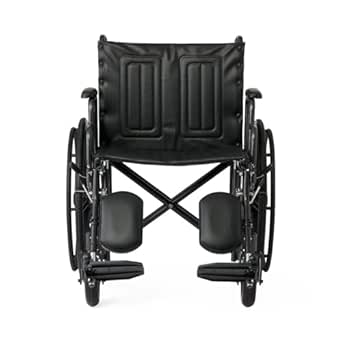


| wheelchairs for bariatric patient | Weight capacity | Seat width | Frame |
|---|---|---|---|
| Titus Heavy Duty Bariatric Whe | 500 lbs | 26 inches | Heavy-duty silver vein steel |
| Medline 22" Bariatric Wheelcha | 500 lbs | 22 inches | Heavy-duty with hammertone finish |
| Medline Excel Extra-Wide Wheel | 500 lbs | 24 inches | Chrome-plated carbon steel |
| Vive Extra-Wide Bariatric Whee | Up to 600 lbs | 28 inches | Powder-coated steel with dual crossbars |
| Vive Wide Bariatric Wheelchair | 450 lbs | — | Reinforced steel with double crossbar |
| Titus Heavy-Duty Bariatric Whe | — | — | — |
| Medline Heavy Duty Bariatric T | — | — | — |
| Vive Mobility Bariatric Transp | — | — | — |
| Vive Bariatric Wheelchair for | — | — | — |
| Medline 20" Bariatric Wheelcha | — | — | — |
| Medline Excel Extra-Wide Baria | 500 lbs | 24 in | — |
| Medline Extra-Wide Bariatric W | 500 lbs | — | Chrome |
| Titus Heavy-Duty Bariatric Whe | 500 lb (listed; description references 500–700 lb) | 26 in | Silver vein steel |
| Drive Medical Bariatric Foldin | 450 lbs | 22 inches | — |
More Details on Our Top Picks
Titus Heavy Duty Bariatric Wheelchair – 500 lb Capacity, 26″ Seat (K7)
The Titus K7 pairs a 26-inch seat with a 500 lb capacity, giving buyers more room than the 22-inch Medline model while stopping short of the 28-inch Vive’s broader footprint. Its tool-free elevating leg rests use pneumatic pistons for positioning, a useful distinction for people who need to adjust leg support without tools. Removable padded arms can make side transfers easier, and the adjustable front casters offer some flexibility for different setups. The tradeoff is its heavy steel construction: this is a poor match for frequent car loading or homes with tight turns. The wide frame may also limit access through narrow doorways. Choose it for seated space and leg positioning, but check room and doorway measurements first.
Pros:- 500 lb capacity paired with a roomy 26-inch seat
- Tool-free elevating leg rests allow flexible positioning
- Removable padded armrests can help with side transfers
- Adjustable front casters support setup flexibility
Cons:- Heavy steel construction can make transport and lifting difficult
- Wide frame may be cumbersome in tight rooms and doorways
Best for: Adults needing a 26-inch seat and adjustable elevating leg support for regular use at home or in care settings
Not ideal for: People who frequently load a wheelchair into a car or must maneuver through narrow doorways
- Weight capacity:500 lbs
- Seat width:26 inches
- Frame:Heavy-duty silver vein steel
- Upholstery:Heavy-duty nylon
- Armrests:Removable, padded
- Leg rests:Tool-free elevating with pneumatic piston
- Rear wheels:24-inch urethane with durable hand rims
- Brakes:Push-to-lock wheel locks
Our verdict“Choose the Titus K7 if leg positioning and a 26-inch seat matter more than easy transport or compact maneuvering.”
Medline 22″ Bariatric Wheelchair with Removable Desk-Length Armrests and Swing-Away Footrests
Among the 500 lb capacity options here, the 22-inch Medline favors access and easier care over a very broad seat. Its removable desk-length armrests leave room to pull closer to a table, while swing-away footrests help with positioning and transfers. That makes it a more practical fit for desk use than the Titus K7, whose 26-inch seat prioritizes extra width and whose leg rests elevate. The vinyl upholstery is easy to wipe clean, a helpful feature in shared or care settings. Its key limitation is fit: buyers who need more seat room may prefer the 24-inch Medline Excel or the 28-inch Vive, though both take up more space. Solid tires also trade some cushioning for flat-free simplicity.
Pros:- 500 lb capacity in a less wide seat than the 24- and 28-inch alternatives
- Removable desk-length arms allow closer access to tables
- Swing-away footrests can simplify transfers and positioning
- Easy-clean vinyl suits frequent wiping
Cons:- 22-inch seat may not provide enough room for some users
- Solid tires may absorb less shock than pneumatic tires
- Heavy-duty build can be difficult to lift into a vehicle
Best for: Adults or seniors who need a 500 lb capacity wheelchair for desk access, straightforward transfers, and easy-clean care
Not ideal for: Buyers who need a seat wider than 22 inches or expect more tire cushioning over uneven surfaces
- Weight capacity:500 lbs
- Seat width:22 inches
- Frame:Heavy-duty with hammertone finish
- Armrests:Removable desk-length
- Footrests:Swing-away
- Upholstery:Durable, easy-to-clean vinyl
- Tires:Solid
Our verdict“Pick this Medline when table access and wipe-clean upholstery matter more than a wider seat or a softer ride.”
Medline Excel Extra-Wide Wheelchair with 24″ Seat, Full-Length Arms, and Elevating Leg Rests
The Medline Excel sits between the 22-inch Medline and the 26-inch Titus K7 on seat width, while retaining a 500 lb capacity. Its defining choice is the combination of full-length padded arms and elevating leg rests, which suits buyers who want continuous arm support and raised leg positioning. The K7 offers removable arms and tool-free leg-rest adjustment, so it may suit transfer flexibility better; the Excel instead adds calf pads and a chrome-plated carbon steel frame described as resistant to rust and chips. Navy vinyl is straightforward to clean, but may feel warm during extended use. Its 24-inch seat also needs more maneuvering room than the 22-inch Medline, so measure tight hallways and doorways before choosing it.
Pros:- 500 lb capacity with a 24-inch seat between narrower and wider options
- Full-length upholstered padded arms provide continuous support
- Elevating leg rests and calf pads support leg positioning
- Chrome-plated carbon steel frame resists rust and chips
Cons:- Vinyl upholstery may feel warm during prolonged use
- 24-inch seat can make tight-space maneuvering harder
- Full-length arms may be less convenient for side transfers than removable arms
Best for: Adults needing a 24-inch seat, full-length padded arm support, and elevating leg rests for regular indoor use
Not ideal for: People in warm environments who dislike vinyl surfaces or homes with narrow doorways and tight turns
- Weight capacity:500 lbs
- Seat width:24 inches
- Frame:Chrome-plated carbon steel
- Armrests:Full-length, upholstered and padded
- Leg rests:Elevating
- Upholstery:Navy vinyl
- Additional feature:Rear chart pocket
Our verdict“Choose the Excel for a mid-wide seat with full-length padded arms and elevating leg rests, provided your home has room for it.”
Vive Extra-Wide Bariatric Wheelchair, 28-Inch Seat
With a 28-inch seat and capacity up to 600 lbs, this Vive is the lineup’s choice for buyers whose fit needs exceed what the 24-inch Medline Excel or 26-inch Titus K7 offers. The reinforced powder-coated steel frame uses dual crossbars, and the removable padded arms and swing-away, height-adjustable footrests support transfers and positioning. Wipe-clean nylon and PU tires suit regular indoor and outdoor use. Those advantages come with a large footprint: the product description warns that its extra-wide design may not pass through standard doorways. Compared with the narrower Medline 22-inch model, it prioritizes user space and capacity over access in compact homes. Measure every doorway and turning area on the intended route before committing.
Pros:- 28-inch seat offers the greatest width among these five picks
- Capacity up to 600 lbs exceeds the other listed models
- Dual-crossbar reinforced frame supports a heavy-duty setup
- Removable arms and swing-away adjustable footrests aid transfers
Cons:- Extra-wide design may not fit through standard doorways
- Large footprint can limit turning and access in smaller rooms
Best for: Adults who need a seat wider than 26 inches and a stated capacity up to 600 lbs, with clear routes through their home
Not ideal for: People whose daily routes include standard or narrow doorways, or who need a compact wheelchair for transport
- Weight capacity:Up to 600 lbs
- Seat width:28 inches
- Frame:Powder-coated steel with dual crossbars
- Tires:PU
- Armrests:Padded and removable
- Footrests:Swing-away and height-adjustable
- Upholstery:Nylon
Our verdict“Choose this Vive only when its 28-inch seat and higher stated capacity meet a clear need and the route through your home can accommodate its width.”
Vive Wide Bariatric Wheelchair for Adults (450 lb Capacity, 22″ Seat)
This Vive makes a different compromise from the higher-capacity Titus K7 and Medline Excel: it supports up to 450 lbs and offers a 22- or 24-inch seat, but folds to 11 inches wide and has quick-release wheels for storage and transport. That fold is useful for households that need to stow the chair or load it into a vehicle, though the reinforced steel frame still adds weight. Flip-up desk-length arms and swing-away leg rests help with transfers, while solid tires avoid inflation and punctures. The 32- to 34-inch overall frame width is a separate access constraint, even when folded; measure the wheelchair in use against doorways and turning spaces. Pick this for foldability when its lower capacity meets the user’s needs.
Pros:- Folds to 11 inches wide for storage
- Quick-release wheels support disassembly for transport
- Flip-up desk-length arms and swing-away leg rests help with transfers
- Solid tires need no inflation
Cons:- 450 lb capacity is lower than the 500 lb Titus and Medline models
- 32- to 34-inch overall frame width may block access through doorways
- Reinforced steel build can still be heavy to lift
Best for: Caregivers who need a foldable bariatric chair for occasional vehicle transport or storage and whose user is within its 450 lb limit
Not ideal for: Users needing a capacity above 450 lbs, or households where a 32- to 34-inch frame cannot pass through key doorways
- Weight capacity:450 lbs
- Seat width options:22 or 24 inches
- Seat depth:16 inches
- Overall frame width:32 inches with 22-inch seat; 34 inches with 24-inch seat
- Folded width:11 inches
- Frame:Reinforced steel with double crossbar
- Tires:Solid, no inflation required
- Warranty:1-year Vive guarantee
Our verdict“Choose this Vive for foldable storage and transport if its 450 lb capacity and wide in-use frame suit your requirements.”
Titus Heavy-Duty Bariatric Wheelchair, 26-Inch Seat Width, 500 lb Capacity
The 26-inch seat gives this Titus a distinct role for buyers who need more room than the 20- and 22-inch seats on the Vive Bariatric Wheelchair and Medline Heavy Duty Bariatric Transport Chair. Its 500 lb capacity pairs that width with a steel frame built for substantial support. Elevating leg rests with a pneumatic piston allow leg positioning to be adjusted, while removable padded armrests can make side transfers easier. Those features add flexibility compared with simpler transport chairs, but this is a manual wheelchair with a heavy-duty build, and the product data provides no overall chair weight. I would shortlist it when seat width is the main fit concern; buyers who need a folding attendant-pushed chair for car trips may prefer the Medline transport model.
Pros:- 26-inch seat offers more width than the other listed 20- and 22-inch models.
- 500 lb capacity supports buyers seeking a high-capacity manual chair.
- Elevating padded leg rests adjust without tools.
- Removable padded armrests can ease side transfers.
Cons:- Heavy-duty steel construction may be difficult to lift and transport.
- Overall chair weight and folded dimensions are not provided, making transport planning harder.
Best for: Adults who need a 26-inch seat and adjustable leg positioning for regular wheelchair use.
Not ideal for: Caregivers who frequently lift a chair into a vehicle or need a compact transport chair, since its weight and folded dimensions are not provided.
Our verdict“Choose this Titus when a 26-inch seat is the priority and you can accommodate a bulky manual wheelchair.”
Medline Heavy Duty Bariatric Transport Chair, 450 lb Capacity, 22″ x 18″ Seat, Blue Frame
This Medline is a folding transport chair for trips where a caregiver will do the pushing. Its 12-inch rear wheels and attendant-oriented design distinguish it from the self-propelled Titus Heavy-Duty Bariatric Wheelchair, which has 24-inch rear wheels and hand rims. The 22-by-18-inch seat and 450 lb capacity suit users who need a roomy transport option, while the seat belt adds a restraint feature for outings. Removable desk-length arms and detachable swing-away footrests can make transfers and storage less cumbersome. The tradeoff is that it depends on an attendant for movement, and its steel frame may take effort to lift. Compared with the similarly sized Vive Mobility Bariatric Transport Wheelchair, the supplied details do not state an overall weight or dual handbrakes.
Pros:- 450 lb capacity with a 22-by-18-inch seat.
- Folds for storage and transport.
- Removable desk-length arms and detachable swing-away footrests support transfers.
- Seat belt and rear wheel locks are included.
Cons:- Transport-chair design requires an attendant to push.
- Steel frame may be difficult to lift.
- Overall weight and folded dimensions are not provided.
Best for: Users who need a roomy chair for caregiver-pushed outings and a foldable frame for storage.
Not ideal for: People who want to propel themselves using large rear wheels or caregivers who need a specified lightweight chair for frequent lifting.
Our verdict“Pick this Medline for caregiver-pushed outings when a foldable, wide-seat transport chair is the right format.”
Vive Mobility Bariatric Transport Wheelchair for Adults – 450 lb Capacity
The pre-assembled frame gives this Vive an edge for buyers who want a quick setup: only the footrests need attaching. Like the Medline Heavy Duty Bariatric Transport Chair, it has a 22-by-18-inch seat, 450 lb capacity, 12-inch wheels, and a folding frame. Its stated 48 lb weight and 27-inch overall width make the tradeoff easier to judge, though that weight may still challenge caregivers lifting it into a vehicle, and the width can be a problem at narrow doorways. Dual handbrakes add control for the attendant, while adjustable swing-away leg rests can simplify getting in and out. This is a transport chair, so it suits caregiver-led trips rather than independent self-propulsion. I would favor the Medline if a seat belt is a priority; that feature is not listed for this Vive.
Pros:- 450 lb capacity and 22-by-18-inch seat.
- Pre-assembled frame requires only footrest attachment.
- Folds for storage and transport.
- Dual handbrakes and swing-away leg rests support attendant handling and transfers.
Cons:- At 48 lb, it may be difficult to lift into a vehicle.
- 27-inch overall width may not pass through narrow doorways.
- Transport-chair format depends on an attendant to push.
Best for: Caregivers seeking a pre-assembled, foldable transport chair with a stated weight and dual handbrakes.
Not ideal for: Users who need independent self-propulsion or households with narrow doorways and limited vehicle-lifting capacity.
Our verdict“Choose this Vive for quick setup and attendant-controlled outings if its 27-inch width fits your routes.”
Vive Bariatric Wheelchair for Adults – 400 lb Heavy Duty Capacity, 20″ Seat
Among this batch’s full-size manual chairs, the 20-inch seat makes this Vive a more modest fit than the 26-inch Titus Heavy-Duty Bariatric Wheelchair or the 22-inch Medline transport chair. Its 400 lb capacity is also below those two options, so buyers should match capacity and seat fit to their needs rather than treating the word “bariatric” as a single size category. The folding steel frame and swing-away footrests help with storage and transfers, and the listed hand brakes provide a control feature. At 45 lb and 27 inches wide, though, it is still a substantial chair and may be awkward to lift or maneuver through tighter doorways. The one-year guarantee is specified; buyers seeking higher capacity should compare it with Medline’s 500 lb wheelchair.
Pros:- 400 lb capacity with a 20-inch seat.
- Folds for storage and travel.
- Swing-away adjustable footrests can ease transfers.
- Padded armrests and hand brakes are included.
Cons:- Lower capacity than the listed 450 lb transport chairs and 500 lb models.
- 45 lb weight may make lifting difficult.
- 27-inch overall width may not fit through all doorways.
Best for: Adults who fit a 20-inch seat and want a folding manual chair with swing-away footrests.
Not ideal for: Users who need capacity above 400 lb, a wider seat, or a lighter chair for frequent vehicle loading.
Our verdict“Consider this Vive if its 20-inch seat and 400 lb capacity fit your needs and you want a folding manual chair.”
Medline 20″ Bariatric Wheelchair with Removable Desk-Length Armrests and Elevating Leg Rests
This Medline combines a 20-inch seat with a 500 lb capacity, making it a higher-capacity alternative to the 400 lb Vive Bariatric Wheelchair while keeping the same stated seat width. Removable desk-length armrests can help with side transfers and reaching a table, and elevating leg rests let caregivers adjust leg position. Its vinyl upholstery is easy to wipe clean, while solid tires avoid routine inflation. Those practical details make it a useful pick for everyday manual-chair needs, though the heavy-duty frame can be hard to transport and someone must provide propulsion. Compared with the wide-seat Titus, this model gives up six inches of seat width; compared with the Vive, it offers greater stated capacity but no listed chair weight, folding details, or warranty information. Buyers should confirm fit and handling needs before choosing.
Pros:- 500 lb capacity with a 20-inch seat.
- Removable desk-length arms support transfers and table access.
- Elevating leg rests allow adjustable leg positioning.
- Vinyl upholstery is easy to clean and solid tires need no inflation.
Cons:- Manual propulsion requires the user or a caregiver to move the chair.
- Heavy-duty frame may be difficult to lift or transport.
- Chair weight and folding details are not provided.
Best for: Adults who fit a 20-inch seat but need a 500 lb capacity, easy-clean upholstery, and elevating leg rests.
Not ideal for: People who need a seat wider than 20 inches, a transport chair, or a documented lightweight folding option.
Our verdict“Choose this Medline if a 20-inch seat fits and 500 lb capacity with easy-clean materials matters more than transport details.”
Medline Excel Extra-Wide Bariatric Wheelchair, 24-Inch Seat, 500 lb Capacity
This model earns the top spot because it strikes the best balance between seat room, transfer support, and everyday practicality. The 24-inch seat gives most bariatric users comfortable space without the footprint penalty of the Titus 26-inch model, which is harder to steer through standard 30-inch doorways. Compared with the Medline 22-inch version, the extra two inches of width matter more than they sound — they can be the difference between pressure points at the hips and a full day of comfortable sitting.
The removable desk-length arms are the standout feature here, letting a user slide sideways from bed to chair without lifting. The tradeoff is real, though: at 60 pounds, folding it into a trunk is a two-person job, so it works best as a chair that lives in one place rather than one that travels.
Pros:- 24-inch seat accommodates wider users without the bulk of a 26-inch chair
- Removable desk-length arms make side transfers from bed or toilet safer
- Swing-away adjustable footrests simplify standing pivots
- Chrome frame holds up to daily use at a full 500 lb rating
Cons:- At 60 lbs, folding and lifting it alone is difficult
- Desk-length arms offer less forearm support than full-length arms for users who lean
Best for: Users who self-propel or are pushed daily and need generous seating plus easy side transfers at home
Not ideal for: Travelers or anyone who regularly lifts the chair into a car — the 60 lb weight makes solo loading impractical
- Seat width:24 in
- Seat depth:18 in
- Weight capacity:500 lbs
- Chair weight:60 lbs
- Frame material:Chrome
- Arms:Removable, desk-length
- Footrests:Swing-away, adjustable
- Folded dimensions:32.5 × 13 × 36.5 in
Our verdict“The most well-rounded choice for daily home use when you need serious seat width but still want to fit through interior doorways.”
Medline Extra-Wide Bariatric Wheelchair with 22″ Seat, Removable Desk-Length Armrests and Elevating Leg Rests
What separates this Medline from the nearly identical Medline Excel 24-inch is the elevating leg rests. For users dealing with edema, poor circulation, or post-surgery recovery, being able to raise the legs isn’t a luxury — it changes how long someone can comfortably sit in the chair each day. The swing-away footrests on the Excel model only swing out of the way; they never lift.
The narrower 22-inch seat is a deliberate tradeoff: it fits through tighter spaces than the 24- or 26-inch options, but users closer to the 500 lb limit may find the width snug. At 65 pounds, it’s actually heavier than the roomier Excel despite being smaller, largely because of the elevating hardware. Budget for that weight if storage space or car transport is part of the picture.
Pros:- Elevating leg rests support circulation and swelling management
- Removable desk-length arms allow lateral transfers
- 22-inch seat fits tighter hallways than 24- or 26-inch models
- Solid tires never go flat with heavy daily use
Cons:- Heaviest chair in this group at 65 lbs
- 34-inch turn radius makes tight bathrooms and kitchens difficult
Best for: Users with leg swelling, edema, or circulation issues who need to elevate their legs while seated
Not ideal for: Users who need maximum hip room — the 22-inch seat runs snug compared with the Medline Excel 24-inch
- Seat dimensions:22″W x 18″D
- Weight capacity:500 lbs
- Chair weight:65 lbs
- Frame:Chrome
- Armrests:Removable desk-length
- Leg rests:Elevating, folding
- Wheel type:Solid
- Turn radius:34 inches
Our verdict“The right choice when leg positioning matters as much as seat width, especially for circulation or recovery needs.”
Titus Heavy-Duty Bariatric Wheelchair, 26-Inch Seat, 500 lb Capacity
When seat width is the deciding factor, the 26-inch Titus is the widest option in this lineup short of the Vive 28-inch model. Two extra inches over the Medline Excel 24-inch means hips aren’t compressed against the frame — a comfort and skin-integrity issue that matters enormously for all-day sitters. The padded removable armrests are also a step up in comfort versus Medline’s harder desk arms, especially for users who rest their forearms while seated.
Buyers should verify the weight rating before purchasing: the listing states 500 lbs but references a 500–700 lb range elsewhere, and that ambiguity is worth resolving with the seller. Practicality is the other tradeoff — at 26 inches wide, this chair will not clear many residential bathrooms, so measure doorways first rather than after delivery.
Pros:- Widest seat in this group for genuine hip clearance
- Padded removable armrests add comfort for all-day sitting
- Elevating footrests adjust tool-free
- Three-position adjustable casters let you tune the ride height and stability
Cons:- Capacity listed as 500 lbs but conflicting 500–700 lb range creates rating uncertainty
- Bulky footprint makes tight interior spaces and car transport genuinely difficult
Best for: Larger-framed users whose hips don’t fit a 24-inch seat and who primarily use the chair in open floor plans
Not ideal for: Homes with narrow doorways or small bathrooms — the 26-inch seat won’t clear many standard openings
- Seat width:26 in
- Weight capacity:500 lb (listed; description references 500–700 lb)
- Frame:Silver vein steel
- Upholstery:Heavy-duty nylon
- Rear wheels:24 in urethane
- Armrests:Removable and padded
- Footrests:Swing-away, elevating, tool-free adjustment
- Wheel locks:Push-to-lock
Our verdict“Choose this only when width is the top priority and your home’s doorways have been measured first.”
Drive Medical Bariatric Folding Transport Chair with Full-Length Arms and 12-Inch Rear Wheels, Red, 22-Inch Seat
Every other chair in this roundup is a standard wheelchair with big rear wheels; this Drive model is a transport chair, and that difference defines who should buy it. At 33 pounds of aluminum, it weighs roughly half of what the Medline 22-inch (65 lbs) does, which means a caregiver can realistically lift it into a trunk alone and take it to appointments, restaurants, and trips. The 12-inch rear wheels roll over thresholds better than typical 8-inch transport casters, too.
The tradeoffs are structural. The 450 lb capacity is lower than the 500 lb Medline and Titus options, and there are no large rear wheels for the user to self-propel — a companion must always push. Full-length arms also can’t be removed, so side transfers require standing pivots rather than sliding. As a second chair for outings alongside a primary home wheelchair, though, nothing here beats its portability.
Pros:- At 33 lbs, roughly half the weight of comparable steel bariatric chairs
- Folds with carry handles for easy car loading
- Seat belt and anti-tippers add real safety for outings
- 12-inch flat-free rear wheels handle thresholds better than standard 8-inch casters
Cons:- Companion-activated design means the user cannot push themselves
- 450 lb capacity falls short of the 500 lb ratings elsewhere in this group
Best for: Caregivers who need a portable chair for errands, medical appointments, and travel with a user under 450 lbs
Not ideal for: Users who want to self-propel or anyone needing arms that remove for side transfers
- Weight:33 lbs
- Weight capacity:450 lbs
- Seat width:22 inches
- Rear wheel size:12 inches, flat-free
- Frame material:Aluminum
- Arms:Full-length, padded
- Footrests:Swing-away
- Safety features:Seat belt, anti-tippers, companion-activated wheel locks
Our verdict“The practical second chair for getting out of the house — as long as someone is always available to push.”

How We Picked
My ranking logic starts with fit and safety margin: a bariatric chair only works if the seat is wide enough for real comfort and the weight capacity leaves at least some headroom above the user’s actual weight. I prioritized chairs where the seat width and weight rating work together sensibly rather than models that hit an impressive capacity number on a seat too narrow for most bariatric users. From there, I weighed frame weight and portability, because a chair that can’t be lifted into a vehicle or stored at home fails the buyer regardless of its specs.
The second tier of criteria covered daily usability and adaptability: removable desk-length armrests for easier transfers and table access, swing-away or elevating leg rests, and the availability of transport versus self-propelled configurations. I also considered build consistency within each brand’s lineup — several manufacturers here offer the same frame in multiple widths, which affects parts availability and long-term serviceability. Chairs ranked higher when they gave buyers more usable configuration without inflating weight or complexity.
Factors to Consider When Choosing Wheelchairs For Bariatric Patients
Before choosing a specific model, it helps to understand how the specs on a bariatric wheelchair actually translate into daily comfort, safety, and practicality. These are the factors that separated the good picks from the frustrating ones in this comparison.Measure the Seat Before Anything Else
The single most common mistake in this category is buying to a weight capacity instead of a seat width. A user’s hip width should be measured while seated on a firm surface, then two inches added to get the correct seat width — tight enough for posture support, loose enough for coats and pressure relief. A chair that’s too narrow causes pressure sores on the hips and makes transfers painful; a chair that’s too wide forces awkward reaching for the wheels and can strain the shoulders over time. In this lineup, options run from 20 inches up to 28 inches, and the difference between adjacent sizes is far more noticeable in practice than the spec sheet suggests. If the measurement falls between two sizes, going up is usually the safer call for bariatric users. Also check the seat depth, because a shallow seat combined with a wide one shifts weight distribution in ways that affect posture.
Weight Capacity Needs Headroom
Capacity ratings are engineered limits, not targets, and regularly loading a chair near its maximum accelerates frame fatigue, wheel wear, and upholstery failure. I recommend choosing a chair rated at least 50-75 pounds above the user’s typical weight, which accounts for clothing, a lap blanket, carried items, and day-to-day weight fluctuation. A 400 lb-rated chair with a 20-inch seat may be labeled bariatric, but in practice it suits users closer to 300-325 lbs — one reason the 500 lb Titus and Medline Excel models ranked higher for heavier users. Keep in mind that capacity and seat width are independent specs; manufacturers sometimes pair a high rating with a narrow seat, which creates a mismatch for the very users the rating attracts. Reading the two numbers together is what separates a good purchase from a return shipment. Also verify the capacity of any accessories like leg rests, which are sometimes rated separately.
Self-Propelled vs. Transport: The Biggest Fork in the Road
This decision shapes everything else about the purchase. A self-propelled wheelchair with large rear wheels gives the user independence and better handling outdoors, but these frames commonly weigh 40-60 pounds and fold into a bulky package. A transport chair relies entirely on a caregiver, uses small wheels all around, and typically weighs under 30 pounds — far easier to lift into a trunk and maneuver through tight hallways. In this roundup, the Medline and Vive transport models exist precisely for buyers whose priority is car travel and clinic visits rather than independent mobility. Be honest about upper-body strength and stamina, because a self-propelled chair used only for pushed transport just adds weight and cost. The mistake I see most often is buying independence the user can’t safely sustain, then struggling with a frame nobody can lift. Some households solve this by keeping a transport chair for outings and a standard chair at home.
Armrest and Leg Rest Configuration
Desk-length removable armrests are the most underrated feature in this category: they let the user pull up to tables and desks and slide laterally during transfers to a bed or toilet, which reduces caregiver strain and fall risk. Full-length arms offer more support for standing and pivoting but block access to most tables. Elevating leg rests serve a specific medical purpose — they matter for edema, circulation problems, or post-surgical recovery — but they add weight, cost, and width when deployed, so skip them unless there’s a genuine need. Swing-away footrests make front transfers easier and let the chair double as a seated workstation. Check whether armrests are tool-free to remove; models requiring a wrench for every configuration change tend to stay in one setup forever, defeating the purpose. Match the configuration to the actual daily routine, not the most feature-rich option.
Frame Weight, Folding, and Vehicle Fit
Bariatric chairs are heavy by design, and every pound matters when the chair needs to go somewhere. Before buying, measure the trunk or cargo space of the vehicle it will ride in, plus the doorways and hallways at home — a 28-inch seat width means a frame approaching 34 inches wide overall, which does not fit through a standard 30-inch bathroom door. Folding width and folded depth vary more between models than the spec tables suggest, and crossbrace folding designs differ in how flat they collapse. Consider who will be lifting the chair: a 50-plus pound frame is a two-person lift for many caregivers, and there’s no dignified workaround once you’re in a parking lot. The transport models in this comparison earned their spots largely because they cut frame weight by a third without sacrificing capacity. If travel is frequent, weight and folded size deserve as much weight in the decision as seat specs.
Upholstery, Wheels, and Long-Term Durability
Bariatric use stresses upholstery and wheels harder than standard use, so material choices compound over time. Nylon upholstery is lighter and dries fast but can stretch; upholstered or padded seats improve comfort for all-day sitting but add weight and cleaning burden. Wheel quality matters more here than buyers expect: solid tires never go flat but ride harshly, while pneumatic tires absorb bumps but need pressure checks. Casters on heavy chairs wear quickly if the chair is frequently pivoted on the spot, so check whether replacements are standard sizes. Frequent-Wheelchairs also benefit from regular bolt and crossbrace inspections, since repeated folding under load loosens hardware. Finally, confirm the manufacturer’s parts availability — the brands in this lineup with multiple width variants of the same frame make future repairs far simpler than one-off models.
Frequently Asked Questions
How wide of a seat do I need for a bariatric wheelchair?
Measure the user’s hips while seated on a firm surface, then add about two inches to that measurement — that result is the target seat width. In this roundup, seats range from 20 inches to 28 inches, and going up a size is generally safer than going down if the measurement falls between two options. A seat that’s too narrow creates pressure points on the hips and tailbone, which can lead to skin breakdown for users who sit for long stretches. Remember that a wider seat also means a wider overall frame, so cross-check the total frame width against the doorways, hallways, and bathroom at home before ordering. The 26-inch and 28-inch models here are excellent for comfort but will not pass through a standard 30-inch interior door without careful angles.
Is a transport chair or a self-propelled wheelchair better for a bariatric patient?
It depends entirely on the user’s upper-body strength and whether a caregiver is consistently available. A self-propelled chair with large rear wheels preserves independence and works better on uneven outdoor surfaces, but bariatric versions typically weigh 40-60 pounds and are awkward to lift into a vehicle. A transport chair like the Medline Heavy Duty or Vive Mobility models cuts that weight dramatically and is far easier for a caregiver to push and load, but the user cannot move it alone under any circumstances. Many families find transport chairs are the better choice for medical appointments and travel, even when the user can walk short distances. The honest question isn’t which is better overall — it’s whether independence in mobility is realistic and safe for this specific user, or whether it just adds weight everyone will struggle with.
Can a wheelchair rated for 400 lbs safely hold someone who weighs 390 lbs?
Technically yes, but it’s a poor purchase decision. Weight ratings are engineered maximums, and running a chair at 97 percent of capacity constantly accelerates stress on the frame, crossbrace, wheels, and upholstery — plus the rating doesn’t account for clothing, blankets, or items carried in the user’s lap, which can add 10-20 pounds easily. A better guideline is choosing a chair rated at least 50-75 pounds above the user’s typical weight, which is why the 500 lb Titus and Medline Excel models ranked so high for heavier users. Buying at the limit also leaves no margin for weight fluctuation, and replacing a prematurely worn bariatric chair is expensive. The capacity number on the label should be treated as a ceiling with headroom, not a target to aim for.
Are elevating leg rests worth the extra cost and weight?
They’re worth it for specific medical situations and unnecessary otherwise. Elevating leg rests genuinely help users dealing with leg swelling, poor circulation, congestive heart failure, or post-surgical recovery, where keeping the legs raised reduces fluid buildup and discomfort during long periods of sitting. But they add weight to the chair, widen its footprint when deployed, and increase cost — and for users with healthy legs, they’re hardware that never gets used. Several Medline models in this roundup offer them as a configuration choice, which is the ideal arrangement because you can select the option only when it matches a real need. If the user’s condition might change — for example, planned surgery — a chair with field-swappable leg rests is more future-proof than a fixed setup. Otherwise, standard swing-away footrests are lighter and simpler for transfers.
Will a bariatric wheelchair fit through standard doorways at home?
This is where many bariatric purchases go wrong, so measure before buying anything. A standard interior door in the US is 30 inches wide with an actual clear opening closer to 28-29 inches once the door itself is accounted for, while a wheelchair with a 24-inch seat is typically 30-32 inches wide overall across the frame and wheels. The 26-inch and 28-inch seat models in this roundup will not clear standard doorways at all — they’re built for open floor plans, facilities, and wider-access homes. Check every doorway on the user’s regular route, especially the bathroom, which is usually the tightest. If the home has narrow doorways, the realistic options are a narrower-seat chair that still meets the capacity requirement, or in some cases widening the doorway itself. This single measurement disqualifies more otherwise-perfect chairs than any other spec.
Conclusion
For most buyers, the Titus Heavy Duty Bariatric Wheelchair with its 500 lb capacity and 26-inch seat is the best overall choice — it’s the only configuration in this roundup that pairs maximum capacity with maximum seat width, and that combination is what most bariatric users actually need. If the budget is tighter, the Medline 22-inch Bariatric Wheelchair with removable desk-length armrests represents the best value, delivering a practical feature set and solid capacity without the premium of the extra-wide models. For users who want the most room possible, the Vive Extra-Wide with its 28-inch seat is the pick to beat, provided the home’s doorways can accommodate it. Caregivers who mainly need a chair for appointments and travel should go with the Medline Heavy Duty Bariatric Transport Chair — its lighter frame and compact fold make it the easiest to live with on the road. Buyers managing swelling or circulation issues should prioritize the Medline Excel Extra-Wide with elevating leg rests, which adds the medical functionality those users need. Whatever the choice, measure the seat width first, verify doorway clearances second, and only then compare capacities — getting those three things in the right order is what turns this purchase into a chair that gets used instead of returned.
Cold & flu season Picks
humidifiers
As an affiliate, we earn on qualifying purchases.