When you need a wheelchair built for a higher body weight, standard models simply will not hold up — seats run too narrow, frames flex under load, and wheels wear out fast. After comparing 11 bariatric options, the Titus Heavy-Duty Bariatric Wheelchair (26-inch seat, 500 lb capacity) stands out as the best overall pick for its rare combination of a wide seat, reinforced frame, and long-term durability. If portability matters more, the Medline Heavy Duty Bariatric Transport Chair is the lightest way to get a true bariatric seat, while the Vive Extra-Wide Bariatric Wheelchair (28-inch seat) offers the most generous sitting space in this lineup. The core tradeoff you will face is between seat width and portability — wider, stronger chairs are heavier and harder to lift into a car — and between transport chairs (companion-propelled only) and self-propelled models. Keep reading for the full breakdown of capacity limits, seat dimensions, and which model fits your body and lifestyle.

Turn the school run and nap time into listening time
- Thousands of audiobooks, podcasts and originals
- Listen on your phone, tablet or Echo — also offline
- Cancel anytime
Complete the kit

Key Takeaways
- Seat width varied more than any other spec in this roundup — from 20 to 28 inches — and matching it to actual hip width (plus about 2 inches) did more for comfort than any other single factor.
- Every 500 lb-capacity model in this comparison (the Titus and Medline Excel 24-inch) weighed noticeably more than the 400 lb-capacity options, confirming that strength and liftability rarely coexist in one chair.
- Transport-style models like the Medline Heavy Duty Bariatric Transport Chair solved the weight problem but removed self-propulsion entirely — a dealbreaker for users who still push themselves.
- Reclining models (the Vive Reclining and Medline Reclining wheelchairs) added pressure relief and leg elevation, but their recline mechanisms added bulk and made them the least car-friendly picks in the lineup.
- Within the Vive family alone, capacity ranged from 400 to 450 to 500 lbs at different seat widths, showing that brand choice mattered less than matching the specific capacity and width to the user.
| Vive Mobility Bariatric Transport Wheelchair for Adults |  | Best Bariatric Transport Pick | Weight capacity: 450 lbs | Item weight: 48 lbs | Frame dimensions: 27 × 42 × 36 in | VIEW ON AMAZON | See Our Full Breakdown |
| Vive Mobility Reclining Wheelchair with Elevating Leg Rests |  | Best for Reclining Support | Maximum recline: 180 degrees | Weight capacity: 300 lbs | Frame material: Reinforced steel | VIEW ON AMAZON | See Our Full Breakdown |
| Vive Extra-Wide Bariatric Wheelchair, 28-Inch Seat |  | Best for Maximum Capacity and Seat Width | Seat width: 28 in | Weight capacity: Up to 600 lbs | Frame: Powder-coated steel with dual crossbars | VIEW ON AMAZON | See Our Full Breakdown |
| Medline Extra-Wide Bariatric Wheelchair with 22-Inch Seat | 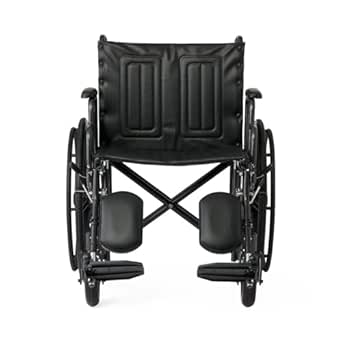 | Best for Elevating Leg Support | Seat dimensions: 22 × 18 in | Seat height: 22 in | Weight capacity: 500 lbs | VIEW ON AMAZON | See Our Full Breakdown |
| Medline Excel Extra-Wide Bariatric Wheelchair, 24-Inch Seat, 500 lb Capacity |  | Best Value for a Wider Seat | Seat dimensions: 24 × 18 in | Weight capacity: 500 lbs | Product weight: 60 lbs | VIEW ON AMAZON | See Our Full Breakdown |
| Vive Bariatric Wheelchair for Adults, 400 lb Capacity, 20-Inch Seat |  | Best Value Full-Size Wheelchair | Weight capacity: 400 lbs | Seat width: 20 inches | Item weight: 45 lbs | VIEW ON AMAZON | See Our Full Breakdown |
| Titus Heavy-Duty Bariatric Wheelchair, 26-Inch Seat, 500 lb Capacity |  | Best for Maximum Support and Seating Width | Weight capacity: 500 lbs | Seat width: 26 inches | Frame: Slide-tube silver-vein steel | VIEW ON AMAZON | See Our Full Breakdown |
| Medline Bariatric Wheelchair with 22-Inch Seat |  | Best for Caregivers and Easy Cleanup | Weight capacity: 500 lbs | Seat width: 22 inches | Frame finish: Hammertone | VIEW ON AMAZON | See Our Full Breakdown |
| Vive Wide Bariatric Wheelchair for Adults, 450 lb Capacity, 22-Inch Seat |  | Best Folding Design for Travel | Weight capacity: 450 lbs | Seat width: 22 inches | Seat depth: 16 inches | VIEW ON AMAZON | See Our Full Breakdown |
| Medline Heavy Duty Bariatric Transport Chair, 22 x 18 in Seat, Blue Frame |  | Best Transport Chair for Caregiver Pushing | Weight capacity: 450 lbs | Seat dimensions: 22 in W x 18 in D | Frame material: Steel | VIEW ON AMAZON | See Our Full Breakdown |
| Medline Reclining Wheelchair with Desk-Length Arms and Elevating Leg Rests, 20 x 18 in Seat |  | Best for Pressure Relief and Extended Sitting | Seat dimensions: 20 x 18 in (W x D) | Recline range: Up to 180 degrees | Weight capacity: 300 lbs | VIEW ON AMAZON | See Our Full Breakdown |
| wheelchairs for heavy people | Weight capacity |
|---|---|
| Vive Mobility Bariatric Transp | 450 lbs |
| Vive Mobility Reclining Wheelc | 300 lbs |
| Vive Extra-Wide Bariatric Whee | Up to 600 lbs |
| Medline Extra-Wide Bariatric W | 500 lbs |
| Medline Excel Extra-Wide Baria | 500 lbs |
| Vive Bariatric Wheelchair for | 400 lbs |
| Titus Heavy-Duty Bariatric Whe | 500 lbs |
| Medline Bariatric Wheelchair w | 500 lbs |
| Vive Wide Bariatric Wheelchair | 450 lbs |
| Medline Heavy Duty Bariatric T | 450 lbs |
| Medline Reclining Wheelchair w | 300 lbs |
More Details on Our Top Picks
Vive Mobility Bariatric Transport Wheelchair for Adults
For buyers who need a transport chair with more capacity, this Vive supports up to 450 pounds and gives the rider a 22-inch-wide seat. Its breathable, moisture-wicking upholstery may help during longer outings, while the pre-assembled frame means setup is limited to attaching the footrests. Compared with the Medline Excel Extra-Wide Bariatric Wheelchair, this model is designed for caregiver-pushed transport rather than independent propulsion, and its 12-inch wheels reflect that role. Folding helps with storage, but the 48-pound weight can still be awkward to lift into a vehicle. At 27 inches wide, it may also be a poor fit for narrow doorways, so measure the route before choosing it.
Pros:- Supports up to 450 pounds
- 22-inch seat has breathable, moisture-wicking upholstery
- Folds for storage and vehicle transport
- Swing-away leg rests and dual handbrakes support positioning and control
Cons:- The 27-inch frame may not clear narrow doorways
- At 48 pounds, it may be difficult for some caregivers to lift
Best for: Caregivers who need a foldable transport chair with a 22-inch seat and capacity up to 450 pounds
Not ideal for: People who need to self-propel or pass through doorways narrower than the 27-inch frame
- Weight capacity:450 lbs
- Item weight:48 lbs
- Frame dimensions:27 × 42 × 36 in
- Seat dimensions:22 × 18 in
- Wheel size:12 in
- Frame material:Steel
- Leg rests:Height-adjustable, swing-away
- Brakes:Dual handbrakes
Our verdict“Choose this transport chair if caregiver-pushed trips and a roomy seat matter more than a narrow frame or lightweight lifting.”
Vive Mobility Reclining Wheelchair with Elevating Leg Rests
The standout here is its 180-degree recline, paired with a headrest and detachable neck cushion for riders who need to rest in the chair. Removable, elevating leg rests allow more adjustment than the fixed transport setup of the Vive Mobility Bariatric Transport Wheelchair, but the tradeoff is a lower 300-pound capacity. That makes this a specialized comfort option within a roundup for heavier riders, rather than a fit for everyone seeking a bariatric chair. The 24-inch rear wheels and locking rear brakes suit a full-size wheelchair format, though the listing gives no chair weight or folded dimensions. Buyers who need to move the chair often should confirm those measurements before committing.
Pros:- Reclines up to 180 degrees for supported rest
- Headrest and detachable neck cushion add upper-body support
- Leg rests elevate, swing away, adjust, and detach
- Locking rear brakes and reinforced steel frame support stability
Cons:- 300-pound capacity is lower than the other bariatric options in this batch
- Chair weight and folded dimensions are not stated
Best for: Riders up to 300 pounds who need substantial recline, neck support, and elevating leg positioning
Not ideal for: Riders above 300 pounds or caregivers who need confirmed folded dimensions for vehicle storage
- Maximum recline:180 degrees
- Weight capacity:300 lbs
- Frame material:Reinforced steel
- Rear wheel size:24 in
- Front caster size:8 in
- Leg rests:Swing-away, height-adjustable, removable
- Brakes:Locking rear brakes
Our verdict“Pick this model for reclining and leg support when the rider is within its 300-pound limit and portability measurements are not essential.”
Vive Extra-Wide Bariatric Wheelchair, 28-Inch Seat
With a 28-inch seat and capacity up to 600 pounds, this is the clearest choice in the batch for riders who need substantially more room and support than the 22- and 24-inch-seat chairs offer. Its powder-coated steel frame uses dual crossbars, while removable armrests and swing-away footrests can make side transfers and entry easier. Compared with the Medline Excel Extra-Wide Bariatric Wheelchair, it offers a wider seat and higher stated capacity, but that room comes with a practical access cost: the product description warns that the extra-wide design may not fit standard doorways. Wipe-clean nylon and PU tires are useful everyday details, yet the supplied data does not state the chair’s overall width or weight, so check fit and handling before buying.
Pros:- 28-inch seat provides the widest seating in this batch
- Supports up to 600 pounds
- Dual-crossbar, powder-coated steel frame
- Removable padded armrests and wipe-clean nylon upholstery
Cons:- Extra-wide frame may not fit standard doorways
- Overall chair width and item weight are not stated
Best for: Riders who need a 28-inch seat and capacity up to 600 pounds, with enough room at home for an extra-wide chair
Not ideal for: People who use standard-width doorways or need to confirm chair weight before arranging lifting and transport
- Seat width:28 in
- Weight capacity:Up to 600 lbs
- Frame:Powder-coated steel with dual crossbars
- Upholstery:Nylon
- Tires:PU
- Armrests:Padded and removable
- Footrests:Swing-away and height-adjustable
- Brakes:Hand brakes
Our verdict“Choose this chair when seat width and the highest stated capacity take priority and the home can accommodate its extra-wide frame.”
Medline Extra-Wide Bariatric Wheelchair with 22-Inch Seat
This Medline pairs a 22-inch-wide, 18-inch-deep seat with elevating leg rests, making it a more adjustable option for riders who need to raise their legs than the Medline Excel with swing-away footrests. Its stated 500-pound capacity also exceeds the Vive transport chair’s 450-pound limit, though this is a full-size folding wheelchair rather than a compact transport model. Removable desk-length arms can help with side transfers, and the chair folds to a listed 13-inch depth. A major buying uncertainty is the conflicting listed weight: one section says 65 pounds and another says 58. The 34-inch turn radius may also challenge tight indoor spaces, so measure maneuvering areas as well as doorways.
Pros:- Supports up to 500 pounds with a 22-inch seat
- Elevating leg rests support raised-leg positioning
- Removable desk-length arms can assist side transfers
- Folds to a listed depth of 13 inches
Cons:- Listed item weight conflicts between 58 and 65 pounds
- A 34-inch turn radius may be difficult in tight spaces
- The assembled width is listed as 32.5 inches
Best for: Riders up to 500 pounds who need elevating leg rests and removable arms for transfers
Not ideal for: People who need a reliably stated chair weight or must maneuver through tight indoor turns
- Seat dimensions:22 × 18 in
- Seat height:22 in
- Weight capacity:500 lbs
- Item weight:58–65 lbs (listing differs)
- Assembled dimensions:32.5 × 32.5 × 36.5 in
- Folded dimensions:32.5 × 13 × 36.5 in
- Turn radius:34 in
- Frame and wheels:Chrome frame; solid wheels
Our verdict“Choose this Medline for elevating leg rests and a 500-pound capacity if its broad footprint and uncertain weight are manageable.”
Medline Excel Extra-Wide Bariatric Wheelchair, 24-Inch Seat, 500 lb Capacity
The Excel offers a practical middle ground: its 24-inch seat gives more room than the 22-inch Medline model, while its stated 500-pound capacity is below the 600-pound Vive with a 28-inch seat. Removable desk-length arms support side transfers, and adjustable swing-away footrests make getting into position easier. Those features give it a straightforward everyday role for riders who need extra seating width without moving to the widest chair in this batch. The tradeoff is handling: at 60 pounds, it can be a burden to lift, even though it folds for storage. Its listed assembled dimensions are also broad, so check doorway and turning clearances before choosing it for a compact home.
Pros:- 24-inch seat offers more width than the 22-inch Medline model
- Supports up to 500 pounds
- Removable desk-length arms assist side transfers
- Adjustable swing-away footrests and folding frame support positioning and storage
Cons:- At 60 pounds, the chair can be difficult to lift into a vehicle
- Listed assembled dimensions may be challenging in narrow spaces
Best for: Riders who need a 24-inch seat and 500-pound capacity, plus removable arms for side transfers
Not ideal for: People who need a lightweight chair or have narrow doorways and limited turning space
- Seat dimensions:24 × 18 in
- Weight capacity:500 lbs
- Product weight:60 lbs
- Frame material:Chrome
- Arms:Removable, desk-length
- Footrests:Adjustable, swing-away
- Assembled dimensions:32.5 × 32.5 × 36.5 in
- Folded dimensions:32.5 × 13 × 36.5 in
Our verdict“Choose the Excel for a 24-inch seat and 500-pound capacity if you can manage its 60-pound frame and confirm your space fits.”
Vive Bariatric Wheelchair for Adults, 400 lb Capacity, 20-Inch Seat
This Vive model makes the most sense for buyers who need a true self-propelled wheelchair at a budget-friendly point, rather than a caregiver-pushed transport chair. Compared with the Titus Heavy-Duty Bariatric Wheelchair, the narrower 20-inch seat trades roominess for easier maneuvering in tighter homes, and its published foldable design beats the Titus on storage clarity. The hand brakes and swing-away footrests add real day-to-day convenience that cheaper basic frames skip. The tradeoffs are honest ones: at 45 pounds it is a two-hand lift into a trunk, and the 27-inch overall width will catch on some older interior doorways. Still, for the capacity and feature set, this pick balances cost and capability better than anything else in this batch.
Pros:- Supports up to 400 lbs with a steel frame
- Folds for storage and car travel
- Adjustable, swing-away footrests ease transfers
- Padded armrests with easy-to-clean material
Cons:- At 45 lbs, lifting it into a vehicle is a real challenge
- 27-inch overall width may not clear all interior doorways
Best for: Budget-conscious buyers who self-propel and need a folding 400 lb-capable chair for home and occasional outings
Not ideal for: Users above 400 lbs or those with narrow 26-inch doorways at home — the frame width and capacity will both fall short
- Weight capacity:400 lbs
- Seat width:20 inches
- Item weight:45 lbs
- Overall width:27 inches
- Frame:Steel
- Footrests:Adjustable, swing-away
- Storage:Foldable
- Warranty:1 year
Our verdict“A sensible middle-ground pick for self-propelling users under 400 lbs who want folding convenience without paying for a premium bariatric frame.”
Titus Heavy-Duty Bariatric Wheelchair, 26-Inch Seat, 500 lb Capacity
When seating width is the deciding factor, the Titus stands out with a 26-inch seat — the roomiest in this batch until you reach the 28-inch Vive Extra-Wide elsewhere in this guide. The tool-free elevating leg rests with pneumatic pistons are a step above the standard swing-away footrests on the Medline Bariatric Wheelchair, making it the better choice for users with swelling, circulation issues, or post-surgery elevation needs. Removable padded armrests simplify lateral transfers from beds and toilets. The tradeoff is predictably weight and bulk: this is a heavy-duty steel frame built for the living room, not the car trunk, and the maker does not publish a shipping weight or folded dimensions, so transport planning is guesswork. Buy it for stability and comfort at home, not for portability.
Pros:- 500 lb weight capacity with heavy-duty steel frame
- Extra-wide 26-inch seat for larger users
- Elevating padded leg rests with pneumatic piston
- Removable padded armrests aid transfers
Cons:- Bulky heavy-duty frame is difficult to transport
- No published weight or folded dimensions, complicating travel planning
Best for: Larger-framed users up to 500 lbs who spend most of their day in the chair and need elevated leg positioning
Not ideal for: Anyone who regularly loads the wheelchair into a vehicle — the unstated weight and bulky frame make it impractical to transport
- Weight capacity:500 lbs
- Seat width:26 inches
- Frame:Slide-tube silver-vein steel
- Armrests:Removable, padded
- Leg rests:Tool-free elevating with pneumatic piston
- Rear wheels:24-inch urethane with hand rims
- Casters:8 x 2 in, semi-pneumatic, 3 positions
Our verdict“The pick when comfort and width matter more than portability — ideal for homebound users who live in the chair.”
Medline Bariatric Wheelchair with 22-Inch Seat
This Medline model is the pick I would point caregivers toward, because its easy-to-clean vinyl upholstery and solid tires remove two of the most annoying maintenance headaches in daily care — spills and flat tires. Compared with the Vive Bariatric Wheelchair, it raises capacity from 400 to 500 lbs while keeping the seat a manageable 22 inches, which tends to clear doorways better than wider bariatric frames. The removable desk-length armrests let users pull up to tables and make transfers simpler, and the swing-away footrests support safe standing pivots. The honest weakness is information: this is a newer listing without published feedback or foldability details, so buyers are trusting the brand rather than a track record. For a trusted name in medical supply with vinyl cleanup, that risk is reasonable.
Pros:- 500 lb weight capacity
- Removable desk-length armrests for table access and transfers
- Wipe-clean vinyl upholstery
- Solid tires never go flat
Cons:- Being a newer listing, there is no usage feedback to lean on
- Folded dimensions and chair weight are not clearly documented
Best for: Caregivers managing incontinence or mealtime spills who want a wipe-clean 500 lb chair from an established medical brand
Not ideal for: Buyers who want proven long-term reliability data or confirmed folding dimensions before purchasing
- Weight capacity:500 lbs
- Seat width:22 inches
- Frame finish:Hammertone
- Armrests:Removable, desk-length
- Footrests:Swing-away
- Upholstery:Easy-to-clean vinyl
- Tires:Solid
Our verdict“A low-maintenance, caregiver-friendly 500 lb chair that trades a proven track record for easier cleaning.”
Vive Wide Bariatric Wheelchair for Adults, 450 lb Capacity, 22-Inch Seat
What separates this Vive model from every other full-size chair here is how small it gets: the frame folds down to 11 inches wide and the rear wheels are quick-release detachable, which no other wheelchair in this batch offers. That combination makes it the only genuine car-trunk option for someone who still wants a self-propelled bariatric chair rather than a smaller transport chair like the Medline Heavy Duty Transport Chair. The reinforced steel frame with double crossbar supports 450 lbs, and the flip-up desk-length armrests plus height-adjustable swingaway leg rests make transfers safer than fixed-arm designs. The catch is the 32-inch overall width — the widest footprint in this batch — so measure your doorways first, because the very frame that carries 450 lbs may not fit your hallway.
Pros:- Folds to just 11 inches wide for storage
- Quick-release rear wheels shrink it further for car transport
- 450 lb capacity on a double-crossbar reinforced frame
- Flip-up arms and adjustable swingaway leg rests ease transfers
Cons:- 32-inch overall width may not fit through standard doorways
- Detaching wheels adds steps every time you load it
Best for: Heavier users who travel by car regularly and need a 450 lb chair that genuinely folds down small
Not ideal for: Homes with narrow doorways or tight hallways — the 32-inch overall width is wider than most interior openings
- Weight capacity:450 lbs
- Seat width:22 inches
- Seat depth:16 inches
- Folded width:11 inches
- Frame:Reinforced steel with double crossbar
- Rear wheels:Quick-release, detachable
- Tires:Solid
- Warranty:1 year
Our verdict“The only full-size bariatric chair here that works for frequent car travel — provided your doorways can handle its width.”
Medline Heavy Duty Bariatric Transport Chair, 22 x 18 in Seat, Blue Frame
Unlike the self-propelled chairs above, this Medline is a transport chair, meaning the user does not push it — and that changes everything about who it suits. With 12-inch rear wheels and no hand rims, it is lighter and easier for a caregiver to steer through malls, clinics, and airports than the Vive Wide Bariatric Wheelchair, while still supporting 450 lbs. The seat belt and wheel locks add safety the other picks lack outright, which matters for users with limited trunk control. The breathable nylon upholstery is cooler for long outings, though it is harder to sanitize than the vinyl on the Medline Bariatric Wheelchair. The real limitation is independence: no large rear wheels means no self-propulsion, so this only works when someone is available to push.
Pros:- 450 lb capacity in a lighter transport format
- Seat belt and wheel locks for user safety
- Breathable nylon upholstery stays cooler on long outings
- Removable arms and swing-away footrests simplify transfers
Cons:- Cannot be self-propelled — caregiver required at all times
- Nylon upholstery is harder to sanitize than vinyl after spills
Best for: Caregivers who push a heavier user on outings and want a lighter, safer chair for appointments and travel
Not ideal for: Users who want to self-propel — the 12-inch rear wheels and lack of hand rims make independent movement impossible
- Weight capacity:450 lbs
- Seat dimensions:22 in W x 18 in D
- Frame material:Steel
- Rear wheels:12 in with wheel locks
- Armrests:Removable, desk-length
- Footrests:Detachable, swing-away
- Safety features:Seat belt and wheel locks
- Foldable:Yes
Our verdict“The right choice when someone else does the pushing and safety features matter more than independence.”
Medline Reclining Wheelchair with Desk-Length Arms and Elevating Leg Rests, 20 x 18 in Seat
Most chairs in this roundup are built purely for capacity, but this Medline Reclining Wheelchair solves a different problem: what happens when someone needs to spend long hours in a chair. The 180-degree full recline lets a caregiver reposition the user for pressure relief, napping, or managing swelling — something none of the standard bariatric models like the Medline Excel Extra-Wide (24-Inch Seat) can do. Combined with elevating leg rests, it supports circulation in a way fixed-footrest chairs simply cannot.
The tradeoff is real, though: at 300 lbs of capacity and a 20-inch seat, it falls well short of the Titus Heavy-Duty (500 lbs) or the Vive Extra-Wide (28-inch seat). Heavier users who also need recline will find this limits them. It is also heavier and bulkier to fold than a basic transport chair like the Medline Heavy Duty Bariatric Transport Chair.
Pros:- Reclines up to 180 degrees for full-flat resting and pressure relief
- Elevating leg rests support circulation and reduce leg swelling
- Desk-length arms allow rolling up to tables and ease transfers
- Breathable, wipe-clean nylon upholstery suited to all-day use
- Hammertone frame stands up to daily reclining mechanics
Cons:- Only a 300 lb weight capacity — the lowest tier in this roundup
- 20-inch seat is narrow compared with dedicated bariatric models
- Reclining mechanism adds weight and bulk, making it harder to lift into a car
Best for: Users under 300 lbs who sit for long stretches and need frequent repositioning, pressure relief, or elevated legs for circulation and swelling management
Not ideal for: Heavier users above 300 lbs or those needing a wide bariatric seat — the Titus Heavy-Duty or Medline Excel Extra-Wide offer far greater capacity
- Seat dimensions:20 x 18 in (W x D)
- Recline range:Up to 180 degrees
- Weight capacity:300 lbs
- Upholstery:Breathable, easy-clean nylon
- Frame:Durable hammertone
- Arms:Desk-length
- Leg rests:Elevating
Our verdict“This is the pick for long-duration comfort and repositioning under 300 lbs — but heavier users should choose a true bariatric model instead.”

How We Picked
My ranking logic started with the two numbers that define this category: weight capacity and seat width. A chair that cannot safely hold the user is a safety hazard, not a product flaw to tolerate, so I grouped models by capacity tier (400, 450, and 500 lbs) and evaluated whether each frame, wheel, and axle design justified its rating. Seat width came next, because a 20-inch seat suits a very different body than a 28-inch seat, and I favored models that clearly state their dimensions and offer realistic fit guidance.
From there, I weighed daily usability: whether the chair is self-propelled or companion-propelled, how heavy it is to lift into a vehicle, whether it folds, and how well the armrests, footrests, and leg rests work for larger bodies. Features like recline and elevating leg rests were judged as genuine value-adds for users with circulation or pressure concerns rather than as checkbox features. Finally, I considered build quality reputation and long-term durability, because a bariatric wheelchair that fails at a weld or caster after months of use is the most expensive cheap purchase a buyer can make.
Factors to Consider When Choosing Wheelchairs For Heavy People
Choosing a wheelchair for a heavier user involves more than picking the highest weight capacity number. These are the factors that separate a chair that works for years from one that causes discomfort — or worse, fails.Measure Before You Buy Anything
The most common mistake in this category is guessing at seat width. Measure hip width across the widest point while seated, then add roughly two inches on each side for clearance, coats, and pressure distribution — a seat that is too tight creates pressure sores, while one that is too wide forces awkward, tiring reaching for the wheels. Also measure seat depth from the back of the hip to behind the knee, because too deep a seat cuts circulation behind the knees and too shallow a seat removes thigh support. Buyers frequently upgrade capacity but forget width entirely, ending up with a strong chair they cannot actually sit in comfortably. When in doubt between two widths, the wider one usually causes fewer problems over a full day of sitting.
Weight Capacity Should Exceed the User’s Weight
A 400 lb capacity rating does not mean the chair is ideal for a 400 lb user — it means that is the maximum. Ratings assume fairly even weight distribution, and real-world factors like momentum over thresholds, leaning to one side, and the dynamic load of transfers all stress the frame beyond static weight. A good rule of practice is to choose a chair rated at least 50 to 100 lbs above the user’s actual weight, which also leaves headroom if weight fluctuates. This is why the 500 lb-capacity models in this roundup make sense even for users well under 500 lbs. Underspeccing capacity is the single fastest way to bend a frame, crack a caster, or void any chance of the chair lasting.
Transport Chair vs. Self-Propelled Wheelchair
This distinction trips up more buyers than any other. A transport chair has small rear wheels and can only be pushed by a companion — it is lighter, narrower when folded, and easier to lift into a trunk, but it removes all independence. A self-propelled wheelchair has large rear wheels with hand rims the user can reach and push, at the cost of added weight and bulk. If the user has any upper-body strength and wants to move around alone, a transport chair is the wrong purchase no matter how convenient it looks. But if a caregiver handles every trip, a transport model like the bariatric Medline transport chair saves the caregiver’s back at every lift.
Who Will Be Lifting This Chair?
Bariatric wheelchairs are heavy — often 40 to 60 lbs — and someone has to get that weight into a car, up a porch step, or out of a closet. Before buying, think honestly about the caregiver’s strength and how often the chair will travel. A daily-lifted chair justifies prioritizing the lightest frame that still meets capacity, while a chair that lives in one place can be as heavy and overbuilt as the budget allows. Folded width matters too: some extra-wide models fold thin while others stay bulky. The best chair on paper becomes a burden if loading it into the car turns every outing into a two-person job.
Recline, Leg Rests, and Pressure Management
For users who sit for most of the day, or who have swelling, circulation issues, or healing wounds, recline and elevating leg rests are not luxuries — they are medical features that redistribute pressure and reduce edema. Reclining backrests let weight shift off the tailbone, and elevating leg rests raise the feet above hip level, which helps with conditions like lymphedema and post-surgical recovery. The tradeoff is real: recline mechanisms add weight, cost, and complexity, and they make the chair harder to fold and transport. If the user sits for short shopping trips only, skip these features and put the money toward a stronger frame or better cushions instead.
Armrest and Footrest Details That Matter More Than You Think
Desk-length armrests let the user pull up to tables and desks; full-length armrests offer better support during standing transfers but block table access. Removable or swing-away armrests make lateral transfers from bed to chair far easier and safer for both user and caregiver, which matters more as weight increases. Footrests should swing away and be removable for the same reason. Also check whether elevating leg rests are compatible or included if circulation is a concern. These small details determine whether the chair works in the actual home — under the dining table, through the bathroom door, next to the bed — or ends up fighting the layout every single day.
Frequently Asked Questions
How wide of a seat do I need for a bariatric wheelchair?
Measure the user’s hips at the widest point while seated in a normal position, then add about two inches on each side for comfortable clearance. That means a user measuring 22 inches across the hips generally needs a 24 or 26-inch seat rather than a 22-inch one. A seat that is too narrow creates pressure points on the hips that can develop into sores over long sitting periods, and it can make the chair physically impossible to use with winter clothing. Going slightly wider is usually safer than going tight, though an overly wide seat makes self-propulsion harder because the user has to reach farther for the hand rims. In this lineup, widths run from 20 inches up to 28 inches, so there is a fit for most body types as long as you measure first.
Is a 400 lb weight capacity enough, or should I buy a 500 lb chair?
Weight capacity should be treated as a ceiling with a safety margin, not a target. Choose a chair rated at least 50 to 100 lbs above the user’s actual weight, because ratings assume even, static loading — but real use involves rolling over thresholds, tipping back to climb curbs, and the dynamic forces of transfers, all of which stress the frame beyond the number on the label. A 350 lb user is well served by a 400 lb-rated chair, but a 420 lb user should step up to a 500 lb model like the Titus or the Medline Excel. The extra capacity also buys durability: heavier-duty frames, axles, and casters simply last longer under daily load. If weight is likely to fluctuate upward, buy the higher rating now rather than replacing the chair later.
What is the difference between a bariatric transport chair and a bariatric wheelchair?
A transport chair has small rear wheels and is designed to be pushed only by a caregiver — the user cannot propel it themselves. A standard (self-propelled) wheelchair has large rear wheels with hand rims so the user can push independently. Transport chairs are lighter, fold more compactly, and are much easier to lift into a car, which is why they are popular for outings and travel. The catch is total dependence: if the user has any ability or desire to move themselves around at home, a transport chair removes that independence entirely. If a caregiver handles every trip and the chair is mostly for appointments and errands, a bariatric transport chair is the more practical and manageable choice.
Will a bariatric wheelchair fit through my doorways at home?
This is a real constraint that buyers often overlook. A standard interior doorway in most homes is about 28 to 30 inches wide, and a wheelchair needs at least an inch or two of clearance beyond its overall width to pass through comfortably. Extra-wide chairs with 26 or 28-inch seats can have overall widths of 34 inches or more, which will not clear a typical bathroom or bedroom door. Before buying, measure the actual doorway openings along the chair’s expected route — especially the bathroom — and compare them to the chair’s overall width spec, not just the seat width. If doorways are tight, a narrower model paired with a wider, well-padded seat cushion is often a better solution than the widest chair available.
Are reclining bariatric wheelchairs worth the extra cost and weight?
It depends entirely on how long the user sits each day and whether there are circulation or pressure concerns. For someone who sits most of the day, has swelling in the legs, is recovering from surgery, or is at risk of pressure injuries, a reclining backrest with elevating leg rests genuinely improves health outcomes by redistributing weight off the tailbone and raising the feet. For someone who uses the chair mainly for shopping trips and appointments of an hour or two, those features add weight, cost, and folding bulk without much daily benefit. Recliners are also harder to lift into vehicles, so frequent travelers should think twice. Match the feature to the actual daily routine rather than buying the most capable chair available.
Conclusion
For most buyers, the Titus Heavy-Duty Bariatric Wheelchair with its 26-inch seat and 500 lb capacity is the best overall choice — it pairs genuine durability with one of the roomiest seats in this comparison, and it earns the top spot for users who need both strength and space. For best value, the Vive Bariatric Wheelchair with 20-inch seat and 400 lb capacity covers the essentials without paying for width or features you may not need. On the premium side, the Vive Extra-Wide 28-inch seat model and the Vive Reclining Wheelchair with elevating leg rests justify their place for users who need maximum sitting room or serious pressure and circulation management.
For beginners and first-time buyers, the Medline Bariatric Wheelchair with 22-inch seat is a forgiving, no-surprises starting point that fits most users and most homes. And for specific needs: choose the Medline Heavy Duty Bariatric Transport Chair if a caregiver does all the pushing and car-lifting matters most, the Medline Excel 24-inch/500 lb if you want high capacity in a mid-width seat, or the Medline Reclining Wheelchair if all-day sitting calls for pressure relief. Measure the user, measure the doorways, and be honest about who lifts the chair — those three answers will point you to the right model faster than any spec sheet.
Halloween Picks
halloween
As an affiliate, we earn on qualifying purchases.