
To declutter effectively, start with one room and create three piles: Keep, Throw Out, and Donate. Guarantee safety by eliminating hazardous items. Test unused things with a 90-day box to reassess their value. Get rid of duplicates and use smart storage solutions for organization. Don't hesitate to seek help when needed. Embrace sentimental items wisely and develop a sustainable maintenance plan to keep clutter at bay. You'll discover even more effective strategies along the way!
Key Takeaways
- Start decluttering with one room at a time to avoid feeling overwhelmed, focusing on spaces that often collect extra items.
- Create distinct piles: Keep, Throw Out, Donate, and Maybe to simplify decision-making and organization.
- Implement a 90-day test for unused items to evaluate their necessity before deciding to donate or discard.
- Designate specific storage locations for items and use bins or baskets to group similar belongings for easy access.
- Set time limits for decluttering sessions to maintain focus and minimize distractions, allowing for efficient progress.
Start With One Room

When you're ready to tackle decluttering, begin with one room to keep things manageable. Select a space that tends to gather extra possessions, like your living room or bedroom. This approach prevents you from feeling overwhelmed and helps create a sense of accomplishment as you make progress.
Set small goals, aiming to complete one room each week. This way, you maintain momentum and stay motivated throughout the process. Gradually work through your home over a few months, ensuring that each area gets the attention it needs. Remember, regularly assessing belongings in each room will also help you stay organized and stop future clutter from building up. Remember, taking it one room at a time makes decluttering achievable and less intimidating.
Make Piles: Keep, Throw Out, Donate
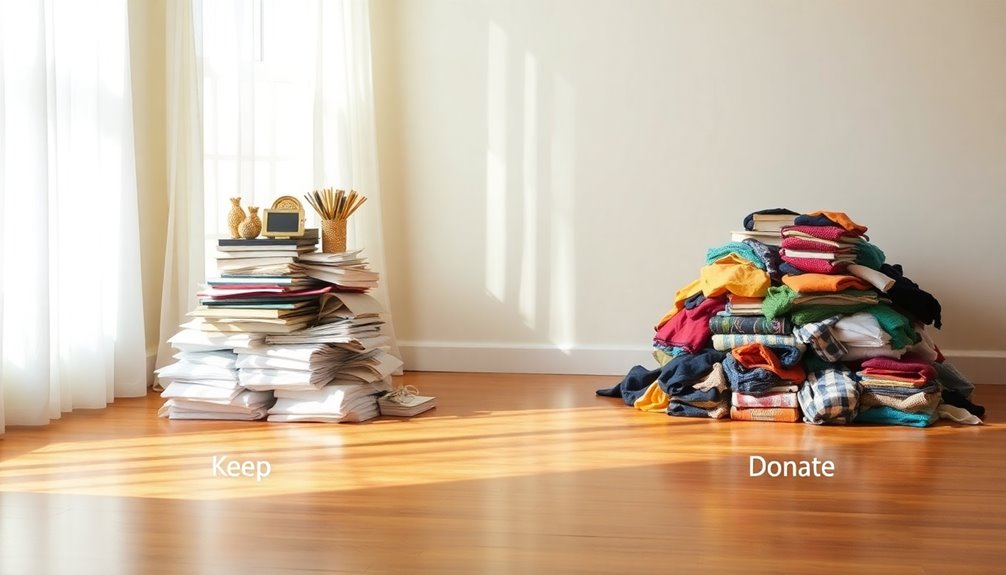
To effectively declutter your space, start by making three distinct piles: one for items you want to keep, another for things to throw out, and a third for donations. You might also consider a "maybe" pile for items needing more thought. Once you've sorted, revisit your piles to confirm everything is correctly categorized.
| Pile Type | Description |
|---|---|
| Keep | Essential items that you use regularly |
| Throw Out | Damaged or hazardous items |
| Donate | Gently used items no longer needed |
| Maybe | Items that require further consideration |
| Review | Reassess your choices after sorting |
Aim for regular sorting sessions, filling a bag for donation or disposal each time. This keeps your space organized!
Get Rid of Hazardous Items
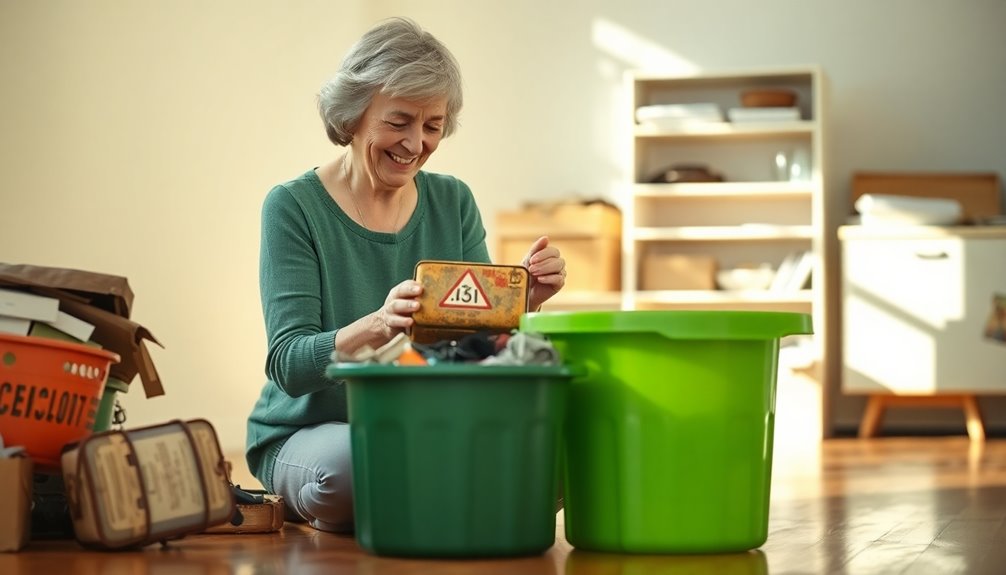
It's essential to identify safety hazards in your home, like old rugs or broken furniture, that can lead to falls.
Don't forget to dispose of expired medications and food items to keep your space safe and clutter-free. Additionally, maintaining a clutter-free environment can help reduce the risk of dental health issues that may arise from improper storage of food and medications.
Identify Safety Hazards
One of the most effective ways to enhance safety in your home is by identifying and removing hazardous items.
Start by looking for trip hazards like old rugs, clutter on the floor, and excess furniture. Clearing these items not only improves mobility but also reduces the risk of falls.
Next, assess your living space for broken items that could lead to injuries or hinder functionality.
Don't forget to check for hazardous materials such as old paint, chemicals, or sharp objects.
Finally, regularly inspect your electronics; unused devices can pose fire risks and take up unnecessary space.
Dispose of Expired Items
Regularly checking for expired items in your home can greatly enhance safety and organization. Start with your medicine cabinet; expired medications can pose serious health risks if kept around. Dispose of them safely through pharmacy take-back programs or local hazardous waste disposal sites.
Next, inspect your pantry and refrigerator for food items past their expiration date, as these can lead to foodborne illnesses.
Don't forget about hazardous items like old batteries, cleaning supplies, and electronics. Dispose of these according to local regulations to protect the environment and your safety. Additionally, be mindful of expired medications in pets, as they can also pose health risks if ingested.
Consider setting a monthly or seasonal schedule to review and eliminate expired items. This practice will reduce clutter and create a more manageable, safer living environment.
Make a Pile of Unused Items and Do a 90-Day Test
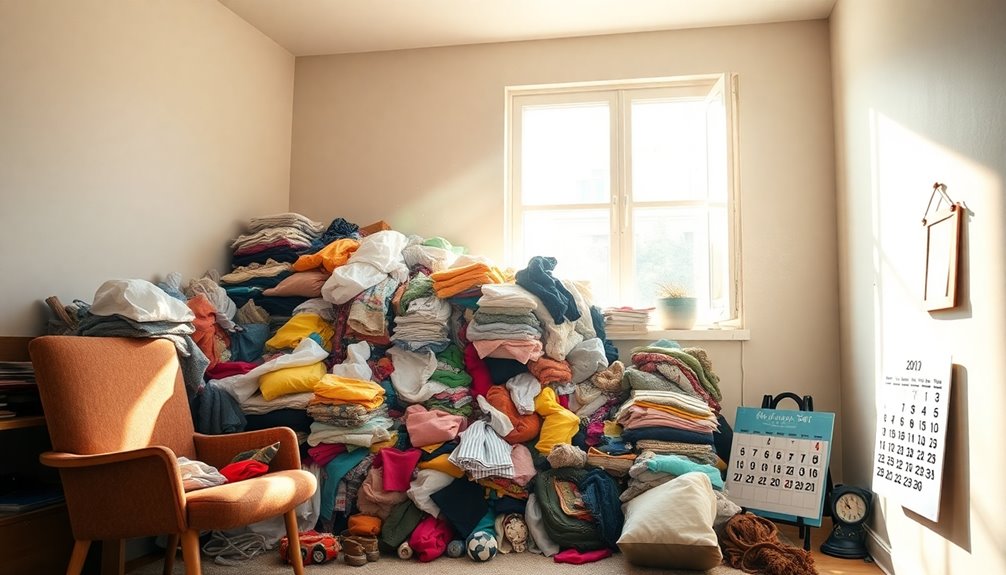
Start by setting aside a box for items you haven't used in a while.
After 90 days, check to see if you've needed any of them; if not, it's time to decide whether to keep or donate.
This simple test helps you focus on what truly adds value to your life.
Set Aside Unused Items
As you begin the journey of decluttering, consider setting aside a box for items you haven't used in a while. This practice allows you to hold onto these belongings without the pressure of immediate decisions.
Place everything you think you might need, but haven't touched lately, into this box. Over the next 90 days, if you find you haven't retrieved anything, it's likely safe to throw away or donate those items.
This method helps you reassess your belongings mindfully and eases the emotional burden of letting go. Remember, if you ever need an item again, you can always repurchase it.
Assess Usage After 90 Days
How can you be sure which items truly hold value in your life? Start by setting aside a box for unused items and then revisit it after 90 days to assess usage.
If you haven't reached for something during that time, it's likely safe to donate or discard it. This 90-day test helps reduce clutter by allowing you to evaluate the necessity of your belongings without feeling pressured to part with them right away.
Keeping the box accessible means you can retrieve items if needed, making the process less stressful. Remember, if you really miss an item, you can always repurchase it later, giving you peace of mind as you declutter your space.
Decide: Keep or Donate
Deciding whether to keep or donate items can feel overwhelming, but creating a pile of unused belongings simplifies the process.
Start by designating a box for items you're unsure about. This 90-day test lets you reflect without pressure.
Here's how to approach it:
- Place unused items in the designated box.
- Check in after 90 days to see if you've used any of them.
- Evaluate: If you haven't touched an item, it's likely safe to donate.
Get Rid of Duplicates

Many households are filled with duplicates that take up valuable space and create unnecessary clutter. Start by identifying common duplicates around your home, like kitchen utensils, towels, and clothing.
Assess each item to determine which version works best for you, keeping only the most functional or preferred ones. If you notice multiple items serving the same purpose but you rarely use them, it's time for getting rid of things.
Consider donating or selling your extra duplicates through platforms like Goodwill or ThredUp, allowing others to benefit while creating more space for yourself. Additionally, maintaining a consistent routine in your decluttering process can help prevent the reaccumulation of duplicates, ensuring a more organized, manageable living environment.
Make it a habit to regularly review your belongings to prevent reaccumulation of duplicates, ensuring a more organized, manageable living environment.
Organize Everything Where It Should Be

- Assign Places: Give every item a specific location to prevent clutter from accumulating.
- Use Bins: Group similar items in labeled bins or baskets to make them easy to find.
- Assess Accessibility: Regularly check frequently used items, ensuring they're easily accessible for your daily routine.
Additionally, create a system for incoming items, like a designated spot for mail, to stop clutter from spreading. Implementing these strategies can also free up time for managing retirement savings plans, allowing seniors to focus on their financial well-being.
Avoid Multitasking When Cleaning

When you're decluttering, focus on one task at a time to boost your productivity.
Setting a time limit can help you stay on track and minimize distractions, making it easier to decide what to keep or let go.
This approach not only reduces stress but also gives you a sense of accomplishment as you see progress in your space.
Focus on One Task
To declutter effectively, it's crucial to focus on one task at a time. This approach enhances your productivity and helps you make thoughtful decisions about your belongings.
When you multitask, you risk losing momentum and motivation, making it harder to achieve your goals.
Here are three steps to help you focus:
- Choose a specific area to declutter, like a drawer or shelf.
- Set a timer for a dedicated timeframe, such as an hour, to maintain concentration.
- Work uninterrupted until the timer goes off, allowing yourself to assess your items thoroughly. Regular cleaning practices can promote cleanliness and hygiene, which can further enhance your decluttering efforts.
Set Time Limits
Setting clear time limits for your decluttering sessions can greatly boost your focus and efficiency. Try setting a specific duration, like 30-60 minutes, to create a clear endpoint for your task. Using a timer not only motivates you to work efficiently but also minimizes distractions.
| Time Limit | Focus Area |
|---|---|
| 30 minutes | Clothes |
| 45 minutes | Kitchen |
| 60 minutes | Living Room |
| 30 minutes | Papers |
Avoiding multitasking keeps you dedicated to sorting and organizing, preventing feelings of overwhelm. By designating uninterrupted time for decluttering, you'll reduce procrastination and make real progress in your living space, ultimately enhancing your home's safety and organization. Additionally, maintaining a budget plan can help you manage expenses related to any new storage solutions you might need.
Minimize Distractions Effectively
Minimizing distractions is essential for effective decluttering, as it allows you to concentrate fully on the task at hand.
To make the most of your time to declutter, follow these strategies:
- Set a Timer: Allocate an hour for decluttering. This creates a clear endpoint and keeps you focused.
- Eliminate Media: Turn off your phone, TV, and other devices. Reducing noise helps you stay immersed in the task without interruptions.
- Declutter One Area: Choose one space to tackle at a time. Focusing on a single area prevents feelings of overwhelm and boosts motivation.
Be Smart With Storage

Smart storage solutions can make a world of difference when it comes to decluttering your space. Start by utilizing baskets or bins to group similar items together, which helps you locate and access them easily while cutting down on visual clutter.
Designate specific areas for incoming items like mail and packages to prevent buildup in common spaces. When organizing closets, opt for clear storage bins and labeled hangers to enhance visibility and retrieval.
Regularly sort through your items, eliminating old or unused ones to keep your space organized and your storage effective.
Finally, choose lightweight and accessible storage options to minimize physical strain and encourage consistent organizing efforts. Additionally, consider incorporating high-quality protein sources into your diet to support your overall health while you declutter.
Seek Help and Resources

- Local housekeeping services: Many offer specialized decluttering assistance tailored for seniors, ensuring a safe and effective approach.
- Online platforms: These can connect you with professional cleaning services, complete with reviews and ratings for quality assurance.
- Community organizations: Look for workshops at senior centers that provide additional guidance and support.
Additionally, professional caregivers can offer both emotional and physical support, helping you manage the practical and emotional challenges of decluttering.
It's also beneficial to consider utilizing camping resources as a way to learn about organizing and packing efficiently for trips, which can translate to decluttering your living space.
Don't hesitate to reach out for the assistance you need!
Embrace Sentimental Items Wisely

As you seek help and resources for decluttering, don't overlook the sentimental items that hold special memories. These emotional treasures can connect you to loved ones and cherished experiences.
To manage these items wisely, set clear limits, like designating a specific box for your most valued mementos. This way, you prevent overwhelming clutter while still honoring your past.
Consider digitizing photos and documents to preserve memories without the physical burden. Engage family members in conversations about the history of these sentimental items; their insights may help you decide what to keep or pass on.
Finally, select a few representative pieces that truly resonate with you, ensuring meaningful connections without excessive clutter. Additionally, be mindful of how state taxes on withdrawals can impact your financial decisions as you navigate your retirement planning.
Create a Sustainable Maintenance Plan

To keep your living space organized and clutter-free, it's essential to create a sustainable maintenance plan.
Regular maintenance prevents clutter from building up over time. Here are three effective strategies:
- Set a Decluttering Schedule: Dedicate 10-20 minutes each week to assess and organize your belongings.
- Use the 12-12-12 Rule: Each month, find 12 items to donate, throw away, and put away to maintain ongoing organization.
- Create Designated Spaces: Make sure frequently used items have specific places, and regularly check these areas to keep everything in order.
Frequently Asked Questions
What Is the 12-12-12 Rule for Decluttering?
The 12-12-12 rule for decluttering is simple and effective. You find 12 items to donate, 12 items to throw away, and 12 items to put away.
By breaking the task into manageable goals, you make decluttering less overwhelming. This method encourages a daily routine, helping you stay motivated while seeing tangible progress.
You'll create a more organized space, enhancing both safety and comfort in your home. Give it a try for a fresh start!
What Should I Remove First When Decluttering?
When you start decluttering, focus on removing damaged or hazardous items first, like broken furniture and expired products. This creates a safer space.
Next, tackle duplicates in common areas, especially kitchens and bathrooms, to simplify your belongings.
Prioritize high-traffic areas like entryways and living rooms, where clutter can block mobility and safety.
Finally, get rid of items you clearly don't need, such as old magazines or clothes you haven't worn in over a year.
How to Declutter at 70?
Imagine stepping into a bright, open space where each item sparks joy.
To declutter at 70, start small—focus on one room at a time. Set achievable goals, like decluttering a single corner each week.
Sort your belongings into three piles: keep, throw away, and donate. Don't hesitate to ask for help; friends and family can bring enthusiasm to the task.
Embrace the process, and soon you'll find your space revitalized and inviting.
What Is the Rule of 5 Decluttering?
The Rule of 5 decluttering is a simple yet effective method where you identify five items to remove from your space each day.
This approach makes decluttering manageable and less overwhelming. By consistently removing five items daily, you can clear out 150 items in a month!
You can focus on different categories like clothing or kitchenware, making it flexible to fit your pace and capacity.
It's all about progress and feeling accomplished!
Conclusion
Decluttering can feel overwhelming, especially if you've accumulated a lifetime of belongings. But remember, you don't have to tackle it all at once. Start with one room and break it down into manageable steps. Embrace the process, and don't be afraid to ask for help—friends and family are often more than willing to lend a hand. By taking it one step at a time, you'll create a more organized and enjoyable space that reflects your current lifestyle.