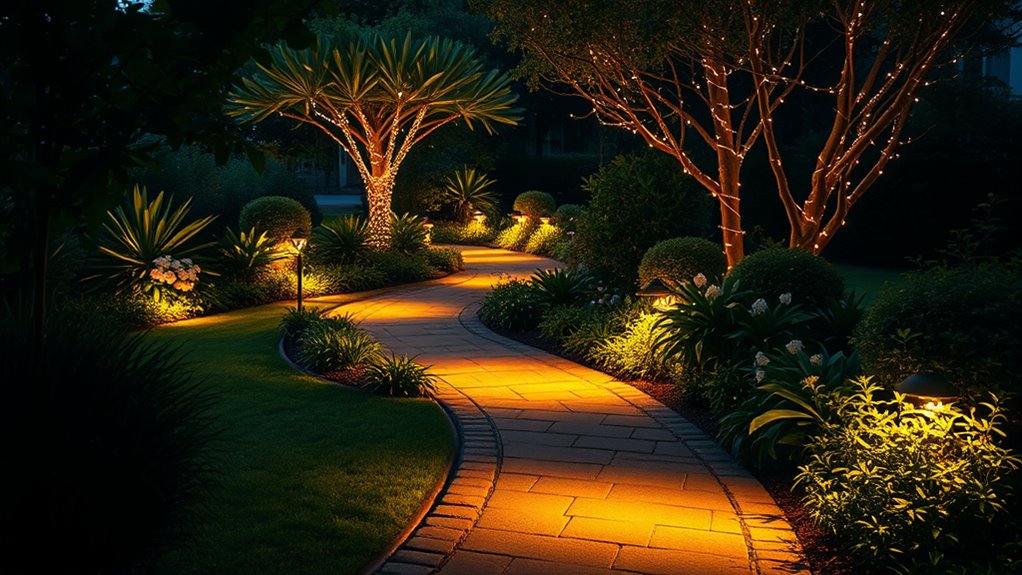

To create a night-safe garden, strategically use path lights to illuminate walkways, steps, and edges, making navigation safe and inviting. Incorporate contrast by placing darker foliage against lighter surfaces and highlighting key features with contrasting lighting to add depth. Use visual cues like ground lights and color changes to guide movement and prevent accidents. Balancing safety and ambiance guarantees your garden remains both secure and beautiful after sunset—discover how different techniques can enhance your outdoor space.
Key Takeaways
- Strategically place path lights along walkways, stairs, and edges to improve visibility and prevent accidents at night.
- Use contrasting lighting to emphasize features, creating depth and visual interest while aiding navigation.
- Incorporate subtle ground cues like illuminated lawn or pond edges to guide movement and delineate zones.
- Balance functional safety lighting with soft, aesthetic illumination to foster a welcoming, secure garden environment.
- Avoid uniform lighting; instead, layer different light types to highlight features and maintain visual intrigue.

Have you ever wondered how to enjoy your garden safely after dark? Creating a night-safe garden isn’t just about turning on a few lights; it’s about designing a space that guides your senses, enhances safety, and invites you to unwind without worry. One of the most effective ways to achieve this is by using well-placed path lights. These lights illuminate walkways, steps, and edges, helping you see where you’re going and preventing accidents. Choose fixtures that cast a warm, inviting glow rather than harsh, glaring lights, which can cause discomfort or trap you in shadows. Position them along the sides of paths, near stairs, and around garden features to create a clear visual guide. This approach not only improves safety but also adds a cozy ambiance, making your garden feel welcoming even after sunset.
Contrast plays a essential role in ensuring your garden remains safe and inviting at night. By emphasizing differences between light and shadow, you help your eyes quickly adapt to the environment. For instance, planting darker foliage against lighter paving or installing contrasting lighting around key features makes them stand out. This contrast helps you identify hazards and navigate confidently. It’s useful to avoid overly uniform lighting that washes out shadows or creates a flat, uninteresting landscape. Instead, aim for layered lighting — combining soft pathway lights, targeted spotlights on focal points, and gentle uplights on trees — to create depth and clarity. With careful contrast, you’ll find yourself moving through your garden more comfortably, even when your vision is limited.
Cues are another essential element in a night-safe garden. These visual signals guide you intuitively through the space and help you recognize boundaries, hazards, and points of interest. For example, subtle ground lights can delineate the edges of a lawn or a pond, signaling where it’s safe to walk. Similarly, highlighting flowerbeds or sculptures with focused lighting draws your attention to specific features, preventing accidental collisions. Incorporating cues also involves using color and texture changes to alert you to different zones within your garden. Brightly lit areas can signal gathering spots, while dimmer zones indicate quiet retreats. When these cues are clear, your brain processes the information quickly, making navigation effortless and secure.

Stroller Organizer with Cup Holder, Non-Slip Stroller Caddy Baby Essentials
- Large Capacity Storage: Holds bottles, diapers, toys, snacks
- Ideal Baby Shower Gift: Perfect for new moms and dads
- Universal Compatibility: Fits Uppababy, Baby Jogger, more
As an affiliate, we earn on qualifying purchases.
Frequently Asked Questions
How Do Night‑Safe Gardens Improve Safety for Nighttime Visitors?
Night-safe gardens improve safety for nighttime visitors by ensuring clear visibility along paths and around key features. You can use well-placed path lights to eliminate dark spots, creating a safe walking environment. High contrast between walkways and surroundings helps visitors easily distinguish where to go, reducing trips and falls. Cues like illuminated signage or tactile elements guide visitors confidently, making the garden safer and more inviting after sunset.
What Are the Best Materials for Durable Garden Path Lighting?
You should choose materials like stainless steel, copper, or durable plastics for garden path lighting. These materials withstand weather, resist corrosion, and maintain their shine through rain and sun. Imagine the soft glow of stainless steel reflecting moonlight, or copper developing a charming patina over time. With sturdy materials, your pathway stays clear and inviting, guiding visitors safely through your garden even after dark.
How Can Contrast Be Used Effectively in Low-Light Garden Designs?
You can use contrast effectively in low-light garden designs by pairing dark plants or mulch with bright or reflective path lights. Place lighter-colored stones or flowers near darker backgrounds to create visual separation, guiding visitors naturally. Incorporate contrasting textures and shapes to enhance depth and interest, making pathways more noticeable and safe. Using contrast helps your garden feel inviting and easier to navigate, even when lighting is limited.
Are Solar-Powered Lights Suitable for Night‑Safe Gardens?
Yes, solar-powered lights are suitable for night-safe gardens. They’re eco-friendly, easy to install, and cost-effective since they don’t require wiring or electricity. You can place them along pathways, around key features, or near seating areas to improve visibility and safety. Just make certain they get enough sunlight during the day to charge fully. Their soft, ambient glow helps guide you and guests, creating a welcoming, secure outdoor space.
What Cues Help Visually Impaired Individuals Navigate Gardens Better?
You want to help visually impaired people navigate your garden? Easy! Use tactile cues like textured paving stones or different materials underfoot. Bright, contrasting colors on borders and plants act as visual signals. Incorporate audible cues—think chimes or gentle water features. Combine these with well-placed lighting. After all, a garden should be a haven, not a maze—unless you’re secretly auditioning for a spy movie.
Conclusion
So, here’s the irony: you went to great lengths to light up your garden, only to discover that a few well-placed shadows and contrasts can actually make it safer at night. Instead of blinding yourself with endless floodlights, you now enjoy a cozy, mysterious glow that guides your steps. Sometimes, less truly is more. Who knew that a little darkness, with just the right cues, could make your garden both safer and more enchanting?