
If you need extra stability and plan to use your device mainly indoors or for short outings, a walker might be best since it offers solid support and reliability. If you’re active, want to reduce lifting effort, and enjoy outdoor walks or shopping, a rollator with wheels and added features could better suit your lifestyle. Thinking about your balance, mobility, and daily activities helps choose the right one—keep exploring for more tips to find your perfect match.
Key Takeaways
- Choose a walker for stable support and indoor or short outdoor use, especially if balance is a concern.
- Opt for a rollator if you want easier mobility outdoors, with wheels and built-in seating for longer outings.
- Consider your activity level: active users benefit from a rollator’s convenience, while those needing maximum stability prefer a walker.
- Test both devices if possible to see which feels more comfortable and suits your walking style.
- Consult healthcare professionals to select the device that best supports your safety, independence, and lifestyle needs.

Are you unsure whether a walker or a rollator is the right mobility aid for your needs? That’s a common dilemma, and understanding the differences can help you make the best choice. Both devices aim to improve your mobility and independence, but they serve slightly different purposes and lifestyles. Your decision depends on how much support you want, your activity level, and where you plan to use it most.
Choosing between a walker and a rollator depends on your support needs and activity level.
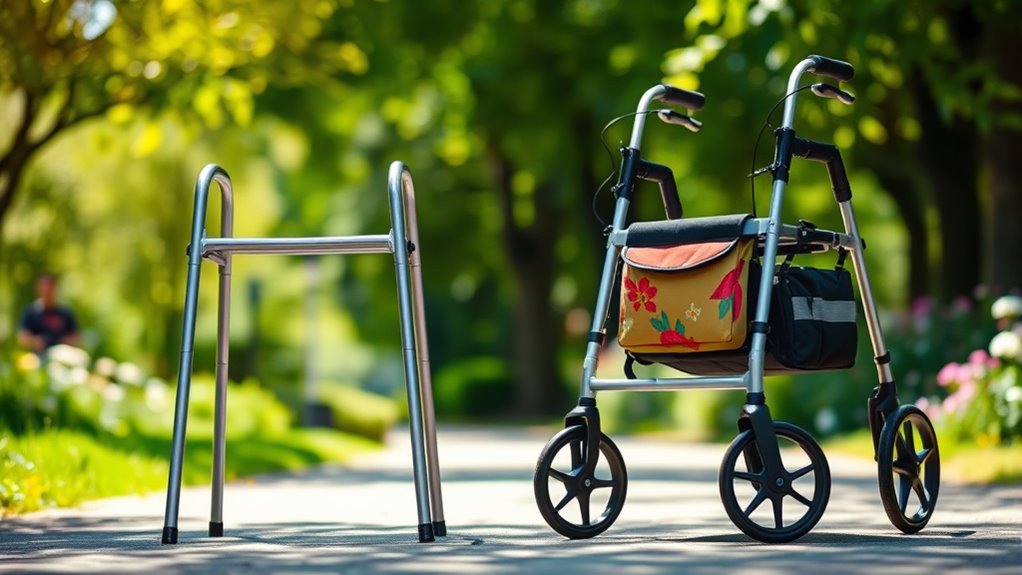
A standard walker provides a sturdy frame you hold onto, offering excellent stability for those who need significant support. If you have balance issues or weakness in your legs, a walker might be your best option. It’s simple, reliable, and often lightweight, making it easy to maneuver indoors and outdoors. However, it requires you to lift and place it with each step, which might be tiring if you have limited strength or joint pain. If you’re mostly confined to your home or use it for short distances, a walker can be a dependable choice.
On the other hand, a rollator adds wheels, making it more like a walking companion rather than a support you lift. Because of its wheels, a rollator allows you to walk more naturally, without the effort of lifting it with each step. If you’re active and want to move around more freely, a rollator offers greater ease and speed. Many models come with a built-in seat, so you can rest when needed, and some even include storage compartments to carry personal items or shopping. This makes a rollator ideal for outdoor use, like shopping trips or strolls in the park, where mobility and convenience are key.
Your choice also depends on your balance and coordination. If you struggle with stability, a walker with four legs might provide the reassurance you need. If you’re more confident but want a device that enhances your walking experience, a rollator’s wheels and features could be more suitable. Consider where you’ll use the device most often—inside your home, the grocery store, or parks—and choose accordingly. Also, think about your comfort and ease of use; some people find rolling easier on their joints, while others prefer the stability of a stationary frame.
Ultimately, the right choice aligns with your lifestyle, mobility level, and personal preferences. Take time to test both options if possible, and consult with a healthcare professional to ensure you select the device that best supports your independence and safety.

Cup Holder for Walker: Stroller Cup Holder Attachment with Phone Holder
- Dual-purpose cup and phone holder: Save space and keep essentials within reach
- Universal fit for various strollers: Compatible with Doona, Nuna, Britax, and more
- Suitable for wheelchairs and scooters: Fits walkers, bikes, boats, and ATVs
As an affiliate, we earn on qualifying purchases.
Frequently Asked Questions
Can I Switch Between a Walker and Rollator Easily?
Yes, you can switch between a walker and a rollator easily if they’re compatible and you’re comfortable doing so. Many rollators are designed to be lightweight and portable, making it simple to shift. Just guarantee you’re familiar with how to use each device safely, especially if you’re adjusting features like brakes or seats. Practicing a few times can help you switch smoothly and confidently, improving your mobility and independence.
Which Device Offers Better Storage Options?
A rollator generally offers better storage options than a walker. It comes with built-in baskets, trays, or pouches, making it easier for you to carry personal items, groceries, or medical supplies. This convenience means you don’t have to make multiple trips or carry a bag separately. Imagine having everything within arm’s reach, allowing you to stay organized and independent while moving around comfortably.
Are Rollators More Suitable for Outdoor Use Than Walkers?
Yes, rollators are generally more suitable for outdoor use than walkers. They feature larger wheels that handle uneven terrain better, making outdoor navigation easier. Plus, their built-in seats allow you to rest when needed during outdoor activities. You’ll appreciate the added stability and convenience, especially if you enjoy walking outside or need to traverse rough or varied surfaces. Rollators are designed to offer more mobility support outdoors.
How Do I Choose the Right Height for My Device?
To choose the right height, you gotta get it right the first time. Stand upright and let your arms hang naturally at your sides, then bend your elbows to about a 15-20 degree angle. Adjust the device so the handgrips align with these bent elbows. It should feel comfortable and secure, not strained or too loose. Proper height guarantees stability and prevents discomfort, so take your time to measure accurately.
What Safety Features Should I Look for in Each?
You should look for safety features like sturdy brakes, non-slip wheels, and secure locking mechanisms. Confirm the brakes are easy to operate and respond quickly. Check that the wheels are designed for your terrain, providing stability and control. Look for adjustable height settings for proper posture, and consider additional safety features like reflectors or lights for visibility. Prioritize devices with reliable, tested safety features to prevent accidents and enhance your confidence.
Conclusion
Choosing between a walker and a rollator depends on your mobility needs and lifestyle. Remember, about 2.7 million Americans use mobility aids, highlighting their importance in maintaining independence. If you value stability and support, a walker might suit you best. For those who prioritize mobility with added comfort, a rollator offers more features. Ultimately, select the option that best enhances your daily life, ensuring you stay active and confident.