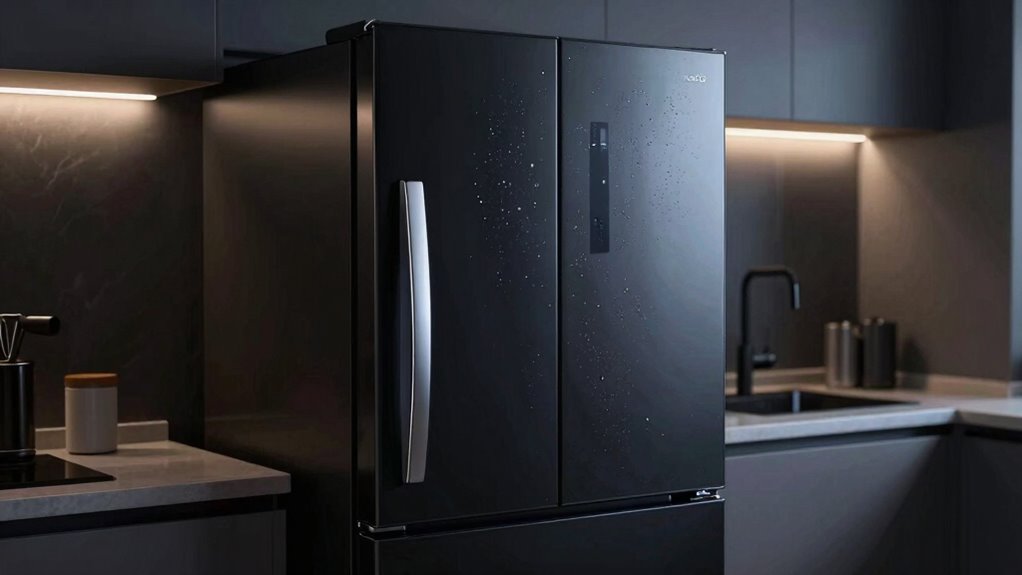

If your refrigerator runs nonstop at night, it could be due to several common issues. These include problems with door sealing, such as a cracked gasket allowing warm air inside, or setting the thermostat too low, which makes the compressor work harder. Dirty condenser coils or mechanical malfunctions can also cause continuous operation and increased noise. Addressing these issues can improve efficiency and quiet your fridge. Keep exploring to find out how each problem might be affecting you.

Turn the school run and nap time into listening time
- Thousands of audiobooks, podcasts and originals
- Listen on your phone, tablet or Echo — also offline
- Cancel anytime
Key Takeaways
- Cracked or dirty door gasket allows warm air in, causing the compressor to run continuously.
- Incorrect temperature settings, especially too low, trigger constant compressor operation.
- Dirty condenser coils hinder heat dissipation, leading to longer compressor cycles.
- Mechanical issues like faulty compressors or fans cause nonstop running and increased noise.
- Continuous operation during the night may disrupt sleep and increase energy bills.
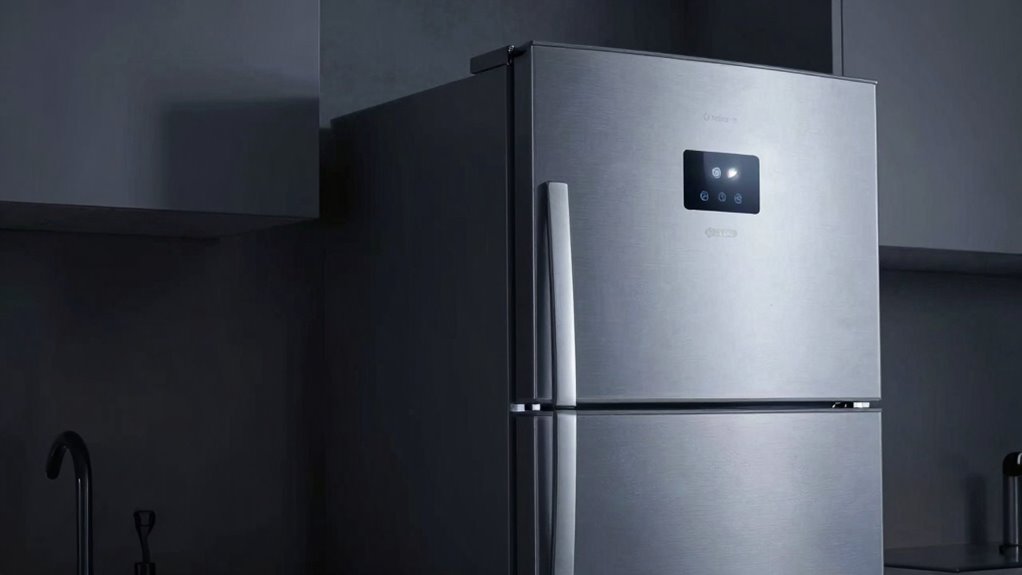
If your refrigerator is running nonstop at night, it can be more than just a minor annoyance—it might signal an underlying problem. Continuous operation not only disrupts your sleep but also impacts your appliance’s energy efficiency. When a fridge runs constantly, it consumes more power than necessary, leading to higher electricity bills and unnecessary energy waste. This persistent running can also elevate noise levels in your home, making your nights less peaceful. Understanding why your refrigerator runs nonstop can help you address the issue effectively and restore both comfort and efficiency.
One common reason for nonstop operation is a door that isn’t sealing properly. If the door gasket is cracked or dirty, warm air seeps into the fridge, causing the compressor to work overtime to maintain the set temperature. This increased workload pushes the appliance into overdrive, raising noise levels and reducing its energy efficiency. Make sure to inspect the gasket regularly, clean it if needed, and replace it if it’s damaged. Proper sealing keeps cold air in and warm air out, helping your fridge run smoothly and quietly.
Another factor is the temperature setting. If the thermostat is set too low, the compressor will have to run more frequently to keep the interior cold enough. While a colder fridge might seem desirable, it can make the appliance run relentlessly and increase noise levels. Adjusting the temperature to the manufacturer’s recommended setting—usually around 37-40°F (3-4°C)—can reduce unnecessary compressor cycles, improving energy efficiency and keeping noise to a minimum. Additionally, proper maintenance can extend the life of your appliance and prevent issues like this from worsening over time. Regular maintenance also includes checking the refrigerator’s internal components, which can help identify problems early before they cause continuous running.
Clogged or dirty condenser coils also cause your refrigerator to work harder than necessary. Located either at the back or beneath the unit, these coils dissipate heat from the compressor. When they’re covered with dust or debris, heat transfer is hindered, forcing the compressor to run longer. Regularly cleaning these coils with a vacuum or brush can markedly improve your fridge’s energy efficiency and keep noise levels down.
Finally, a malfunctioning compressor or fan motor could be the culprit. If these parts aren’t functioning properly, the appliance will run nonstop as it struggles to reach the correct temperature. In such cases, professional repair or replacement might be necessary. Addressing these mechanical issues not only restores quiet operation but also helps your refrigerator operate more efficiently, saving energy and prolonging its lifespan. Additionally, understanding home appliance efficiency can guide you in maintaining your refrigerator’s optimal performance.
refrigerator door gasket replacement
As an affiliate, we earn on qualifying purchases.
As an affiliate, we earn on qualifying purchases.
Frequently Asked Questions
Can Overstuffing Cause My Refrigerator to Run Constantly?
They say, “Less is more,” and overstuffing your fridge can definitely cause it to run constantly. When you pack it too full, airflow is restricted, making temperature regulation harder. As a result, your refrigerator works overtime, decreasing energy efficiency. To keep it running smoothly, leave space for air to circulate. This way, you save energy and maintain proper temperature, preventing unnecessary wear and tear.
How Does the Door Seal Affect Refrigerator Cycling?
A poor door seal causes temperature fluctuation inside your fridge, making it work harder and cycle more often. Seal deterioration allows warm air to enter, forcing the compressor to run nonstop to maintain coolness. Regularly check and replace worn or damaged seals to prevent this. Proper sealing guarantees consistent temperatures, reduces energy consumption, and keeps your food fresh longer.
Is a Noisy Refrigerator a Sign of Malfunction?
A noisy refrigerator often hints at noise issues that might be worth investigating, but it’s not always a sign of a malfunction. Sometimes, a loud hum or rattling is just normal operation, especially during defrost cycles or when the compressor kicks in. However, persistent or unusual sounds could indicate malfunction signs, like a failing fan or motor. It’s a good idea to check it out before it becomes a bigger problem.
Can Ambient Room Temperature Influence Refrigerator Operation?
Yes, ambient room temperature can influence your refrigerator’s operation. If the room is too warm, your fridge works harder to maintain proper temperature regulation, reducing energy efficiency and causing it to run more frequently. Conversely, cooler room temperatures help it operate smoothly, saving energy. To optimize performance, keep the room temperature stable, guarantee proper ventilation, and avoid placing the fridge near heat sources.
How Often Should I Defrost My Freezer to Prevent Nonstop Running?
You should defrost your freezer whenever ice buildup reaches about a quarter-inch thick—that’s when efficiency drops dramatically. Regular defrosting is essential for maintaining energy efficiency and preventing your freezer from working overtime. Follow maintenance tips like cleaning coils and sealing door gaskets to keep it running smoothly. By defrosting on time, you’ll avoid the nightmare of constant running, saving energy and extending your appliance’s lifespan.
Conclusion
Just like a watch that keeps ticking through the night, your refrigerator running nonstop can be a sign that it’s working overtime. Imagine a busy bee tirelessly gathering nectar—your fridge’s compressor works nonstop to keep your food fresh, especially on hot nights. If it’s running constantly, it’s worth checking for issues. Think of it as your kitchen’s heartbeat—steady, essential, but sometimes needing a little tune-up to keep the rhythm smooth.
Halloween Picks
halloween
As an affiliate, we earn on qualifying purchases.