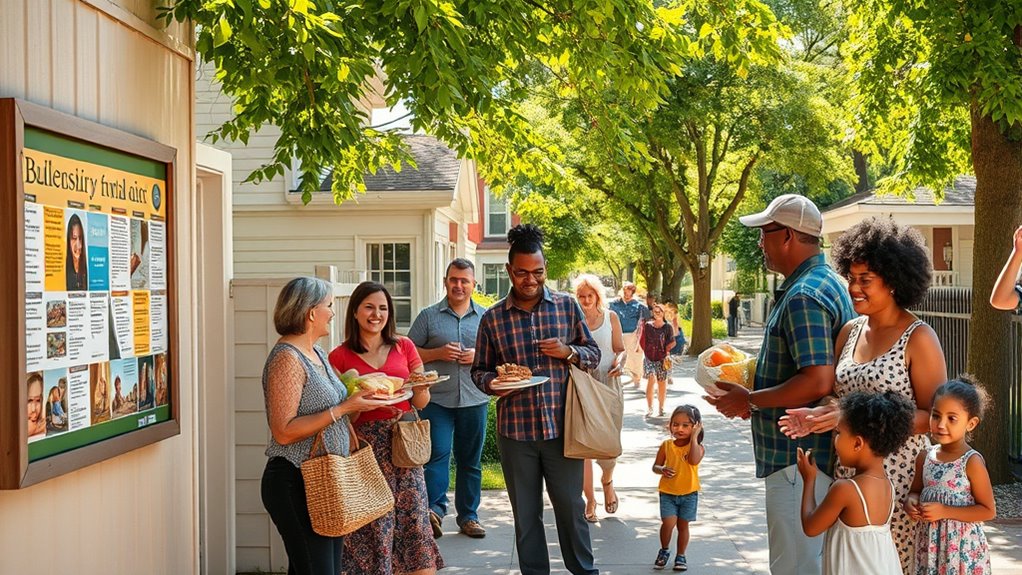

To build your neighborhood mutual aid network, start by introducing yourself to neighbors and sharing contact info to create trust. Organize a communication channel, like a group chat or community board, to share needs and offers for help. Host casual events or virtual meetings to foster connection and gather ideas for support. This approach reduces isolation and builds a caring community. Keep exploring to discover more ways to strengthen your neighborhood’s resilience and support system.
Key Takeaways
- Start by introducing yourself to neighbors and sharing contact info to build trust.
- Create a communication channel like a group chat or community board for sharing needs and offers.
- Organize small events or virtual meetings to foster relationships and discuss neighborhood support ideas.
- Encourage neighbors to share resources, volunteer, and assist during emergencies to strengthen collective resilience.
- Promote a culture of mutual aid through regular interactions, shared responsibility, and community activities.
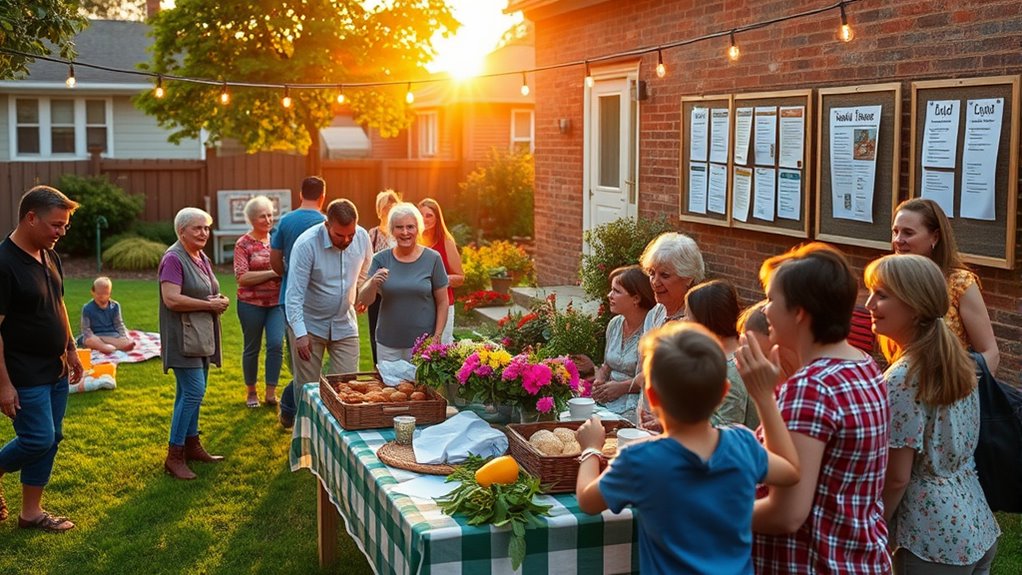
Have you ever wondered how neighbors come together to support each other during tough times? It’s not just about casual greetings or holiday greetings; it’s about creating a real safety net that can catch you when life throws curveballs. Neighborhood mutual aid is a powerful way to build this support network right where you live. When neighbors look out for one another, everyone benefits, and the community becomes a safer, more resilient place.
Neighbors supporting each other creates a resilient, safe community that benefits everyone.
You can start by reaching out and getting to know your neighbors. Simple actions like introducing yourself, sharing contact information, or inviting them for a chat can lay the foundation for trust. Once you make those initial connections, you’ll discover that many people are willing to help, whether it’s running errands, sharing resources, or offering emotional support. Building relationships takes time, but it pays off when you need assistance or can lend a hand yourself.
Creating a neighborhood mutual aid group doesn’t require formal organization or large resources. It can be as straightforward as setting up a communication channel—like a group chat or a community board—where neighbors can post needs or offers for help. Maybe someone needs a ride to the doctor, or perhaps you’re looking for volunteers to help with a community garden. When people know they can rely on each other, it encourages a sense of belonging and shared responsibility. This collective effort also helps fill gaps that social services might not cover immediately, making your neighborhood more self-sufficient. Additionally, understanding the importance of raw food for maintaining health can be shared during community activities, promoting overall well-being.
Being proactive is key. You can organize small events or meetings to discuss common concerns and brainstorm ways to support one another. These gatherings don’t have to be fancy—just a casual get-together or a virtual call can foster camaraderie. As trust grows, neighbors will feel more comfortable sharing their needs and offering help. Over time, your neighborhood can develop a culture of mutual aid where everyone looks out for each other, whether it’s during a crisis or everyday challenges.
Most importantly, building your support network now means you’re investing in a community that cares. When you know your neighbors, you’re less likely to feel isolated during difficult moments. Mutual aid isn’t just about providing assistance—it’s about creating a sense of shared responsibility and solidarity. So, take that first step today. Reach out, connect, and start building a network that can support you now and in the future.
Frequently Asked Questions
How Do I Find Local Mutual Aid Groups in My Area?
You can find local mutual aid groups by checking social media platforms like Facebook or Twitter, where community members often post about upcoming meetings and events. Visit local community centers, libraries, or bulletin boards for flyers and contact info. Additionally, search online using keywords like “mutual aid” plus your area’s name, or explore platforms like Nextdoor and local activist websites to connect with nearby groups.
What Are Common Activities Included in Neighborhood Mutual Aid?
You probably thought neighborhood mutual aid was just about swapping recipes, right? Nope! It’s about sharing groceries, running errands for neighbors who can’t, organizing community clean-ups, and offering emotional support. Sometimes, you might even set up skill-sharing workshops or help with childcare. Basically, it’s where neighbors turn into an unstoppable team, making life easier and more connected—without waiting for a superhero to save the day.
How Can I Ensure Privacy and Safety Within the Network?
You can guarantee privacy and safety by setting clear boundaries and using secure communication methods like encrypted messaging apps. Always verify members before sharing personal information and avoid posting sensitive details publicly. Establish group guidelines that promote respectful interactions and confidentiality. Regularly check in with members about their comfort levels and be ready to remove anyone who jeopardizes the group’s safety. Prioritize trust and discretion in all your interactions.
What Are the Costs Involved in Starting a Mutual Aid Group?
Starting a mutual aid group can cost as little as nothing, especially if you’re using free online tools and relying on community resources. Studies show 60% of grassroots efforts operate with minimal funding. Your main expenses might include basic supplies, flyers, or digital platforms. To keep costs low, leverage existing community spaces and volunteers. Focus on building trust and resource sharing, making your group sustainable without heavy financial investments.
How Do Mutual Aid Efforts Differ From Traditional Community Services?
Mutual aid efforts differ from traditional community services because they are grassroots and rely on volunteers rather than government funding or institutional authority. You actively participate in organizing and supporting neighbors directly, fostering a sense of collective responsibility. Unlike traditional services that often operate top-down, mutual aid emphasizes peer-to-peer support, flexibility, and reciprocity, making your involvement more personal and responsive to the specific needs within your community.
Conclusion
Building your neighborhood mutual aid network now quietly plants the seeds for a more resilient future. As you weave connections and share resources, you’re gently nurturing a safety net that can catch you when days are less certain. In these subtle acts of support, you create a tapestry of trust and care, ensuring that when life’s unpredictable turns come, you’re surrounded by a community ready to lift each other up—quietly, steadily, and sincerely.