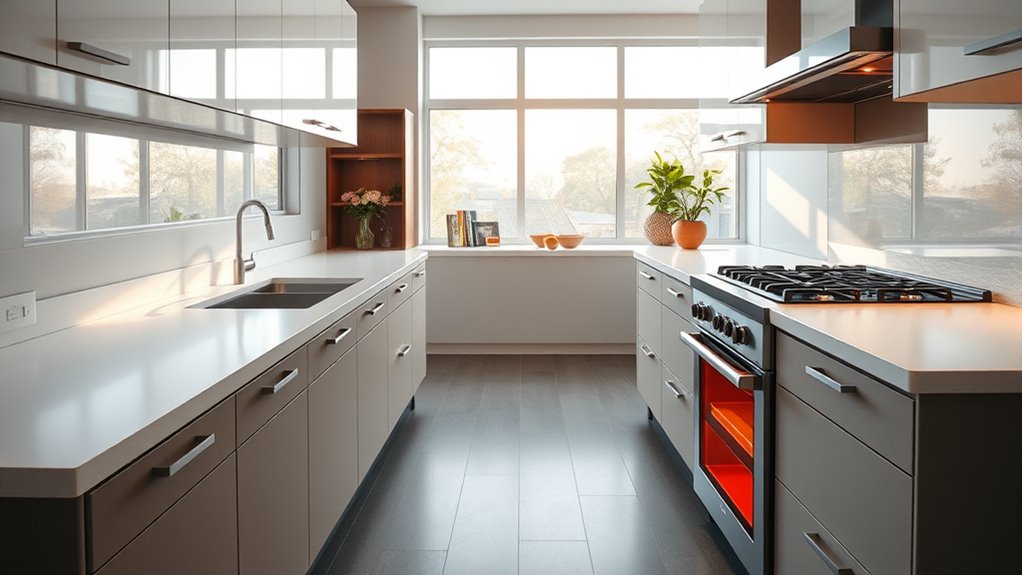

To make your kitchen more accessible, start by lowering work surfaces to comfortable heights and adding adjustable or wheelchair-friendly countertops. Keep your space clutter-free and organized, so everything is within easy reach. Replace high cabinets with open shelving or pull-down options, and switch traditional drawers for pull-out racks. Focus on ergonomic handles and smooth-gliding mechanisms, while reorganizing items for safety and efficiency. Continuing will give you detailed tips to transform your kitchen into a safer, more functional space.
Key Takeaways
- Lower countertops to accessible heights and include adjustable surfaces for easier reach and flexibility.
- Organize items at waist level and use pull-out shelves to minimize bending and stretching.
- Replace high shelves with open shelving or pull-down units for better visibility and access.
- Install ergonomic handles, touch-latch mechanisms, and smooth-gliding drawers for easier operation.
- Maintain a clutter-free workspace and optimize layout to enhance safety, efficiency, and overall accessibility.

Making your kitchen more accessible can considerably improve your daily convenience and safety. When you’re designing or reorganizing your space, consider simple yet effective modifications like countertop adjustments and cabinet reconfigurations. These changes make it easier to reach, see, and use everything in your kitchen, especially if mobility is limited or if you want to prevent strain and accidents.
Start with countertop modifications. Lowering work surfaces to a more comfortable height ensures you don’t have to stretch or bend excessively. Adjustable-height countertops are a great option if you want flexibility, but if that’s not possible, simply removing or replacing existing surfaces with those at a wheelchair-friendly height can make a significant difference. Keep in mind that having ample clear space underneath the countertops allows for easier wheelchair access and comfortable standing positions. You should also think about installing pull-out shelves or trays within the countertops. These additions bring items closer to you, reducing the need to reach or bend awkwardly. Maintaining a clutter-free countertop not only enhances safety but also provides sufficient space for food prep and other activities. Additionally, considering the financial impact of accessible kitchen modifications can help you plan and budget effectively for these improvements.
Next, focus on cabinet adjustments. Traditional cabinets with high shelves can be challenging to access, especially if you have limited reach or strength. Replacing upper cabinets with open shelving or installing pull-down or slide-out shelves can drastically improve accessibility. These modifications allow you to see and reach items more comfortably without climbing or straining. For lower cabinets, consider swapping out traditional doors with pull-out drawers or racks that glide smoothly. This setup puts everything within easy reach and minimizes the need for awkward bending or stretching. Additionally, installing ergonomic handles or touch-latch mechanisms can make opening cabinets easier, especially if grip strength is an issue. When reorganizing, group frequently used items at waist level to avoid unnecessary bending or stretching, keeping your workspace efficient and safe.
Frequently Asked Questions
What Is the Cost Range for Kitchen Accessibility Modifications?
You can expect cost estimates for kitchen accessibility modifications to range from $1,000 to $15,000, depending on your needs and the extent of renovations. To stay on track, include these costs in your budget planning, considering factors like new countertops, lowered cabinets, or widened doorways. It’s wise to obtain multiple quotes from contractors to ensure you’re covering all necessary upgrades while staying within your financial limits.
How Do I Assess My Current Kitchen for Accessibility Needs?
To evaluate your kitchen for accessibility needs, start by checking door thresholds; they should be low or beveled to prevent tripping. Measure cabinet heights to confirm they’re reachable from a seated position, ideally between 30-34 inches. Look for clear pathways of at least 36 inches wide. Test door handles and switches for ease of use, and consider if appliances are within easy reach to identify areas needing adjustment.
Are There Specific Brands or Products Recommended for Accessible Kitchen Design?
Think of your kitchen as a stage where accessibility takes center spotlight. For brand recommendations and product suggestions, consider brands like Kohler, Delta, and Legrand, known for their user-friendly designs. Look for adjustable-height counters, lever handles, and easy-to-reach storage solutions. These trusted options guarantee safety and independence. Choosing quality products from reputable brands transforms your kitchen into an accessible, functional space where everyone can perform with ease and confidence.
How Long Does a Typical Kitchen Accessibility Retrofit Take?
A typical kitchen accessibility retrofit takes about 2 to 4 weeks, depending on the project’s complexity. Your retrofit timeline depends on thorough accessibility planning, which guarantees all modifications meet your needs. During this period, contractors will assess your space, order specialized products, and implement adjustments like lowering countertops or widening pathways. Staying involved in the process helps prevent delays, ensuring your kitchen becomes more functional and accessible efficiently.
Can I Make My Existing Kitchen More Accessible Without Professional Help?
Sure, you can tackle DIY modifications to make your kitchen more accessible, but don’t expect a miracle overnight. With a sprinkle of patience and a dash of universal design principles, you can reconfigure cabinets, add raised countertops, or install pull-out shelves. Just remember, even the best DIY efforts might need a professional touch later. So, go ahead—turn your kitchen into a haven for everyone, one clever tweak at a time!
Conclusion
By rearranging your kitchen for accessibility, you make cooking safer and more enjoyable. Imagine a homeowner, Sarah, who installed pull-out shelves and lowered countertops; she can now cook comfortably without bending or reaching too high. Small changes like these can transform your space, giving you independence and confidence. So, take a step today—your kitchen should work with you, not against you. Accessibility makes every meal prep easier and more enjoyable.