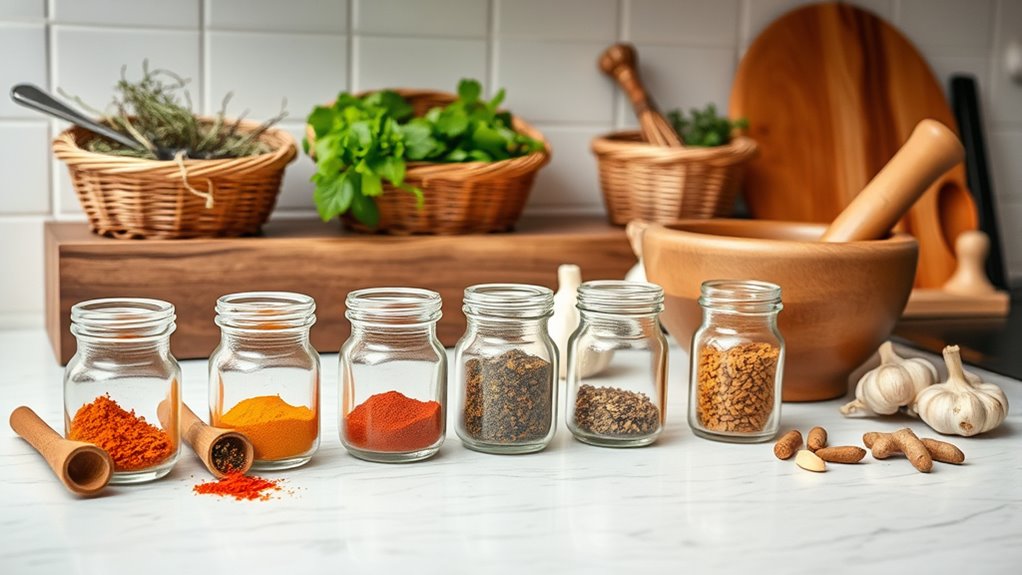

To create an anti-inflammatory kitchen setup, organize your spices like turmeric, ginger, and cinnamon in easy-to-reach, airtight containers on a dedicated rack. Store fresh produce in breathable containers and crisper drawers to maintain nutrients. Design a specific prep area with sharp knives and chopping boards to encourage healthy cooking habits. Keep oils and key ingredients visible and accessible. With these simple changes, you’ll make nourishing meals effortlessly—keep exploring to discover more tips for a healthier kitchen.
Key Takeaways
- Dedicate a specific, organized space for anti-inflammatory spices like turmeric, ginger, cinnamon, and black pepper for easy access.
- Store produce in breathable containers and crisper drawers to maintain freshness and nutrient content.
- Create a well-equipped meal prep station with sharp knives, cutting boards, and accessible ingredients to promote healthy cooking.
- Use labeled jars for oils and spices, keeping them visible and within reach to encourage regular use.
- Design your kitchen to support mindful cooking and healthy habits, reducing reliance on processed foods and fostering nourishing meal choices.
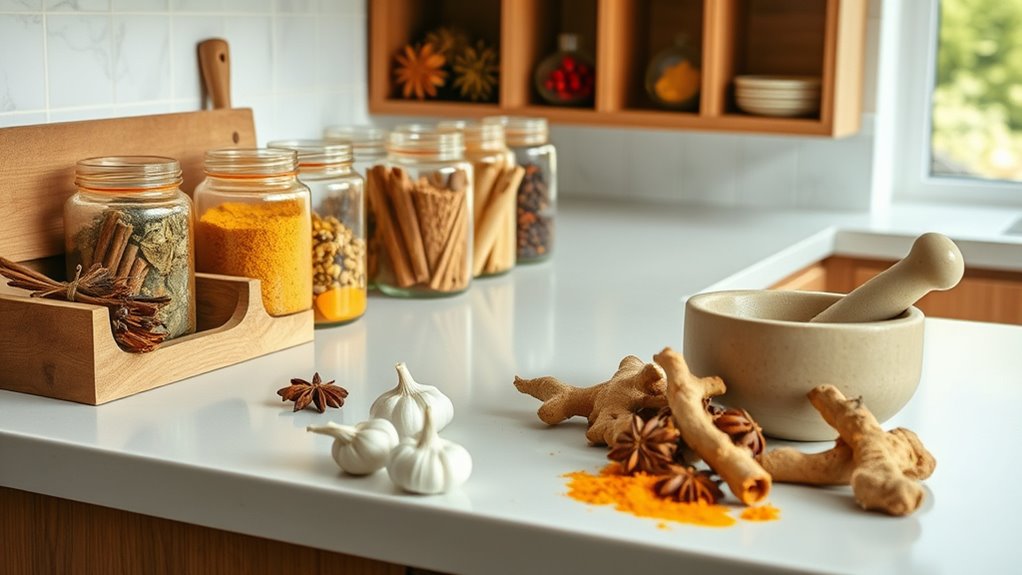
Creating an anti-inflammatory kitchen setup is a powerful step toward supporting your health and reducing chronic inflammation. When you organize your space with inflammation-fighting spices, proper storage, and thoughtful prep areas, you set yourself up for making healthier choices effortlessly. Start by dedicating a specific spot in your pantry or spice rack for anti-inflammatory herbs and spices. Turmeric, ginger, cinnamon, cayenne pepper, and black pepper are your best allies—they contain compounds that help reduce inflammation and boost your immune system. Keep these spices within easy reach so you can sprinkle them into your meals without hassle. Investing in small, airtight containers not only keeps these spices fresh longer but also makes your kitchen look tidy and inviting. Clear containers are especially helpful because they let you see what you have at a glance, preventing you from buying duplicates or letting spices go stale.
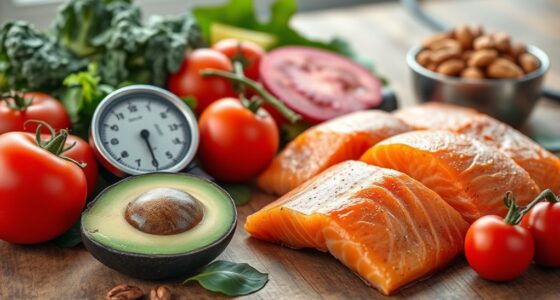
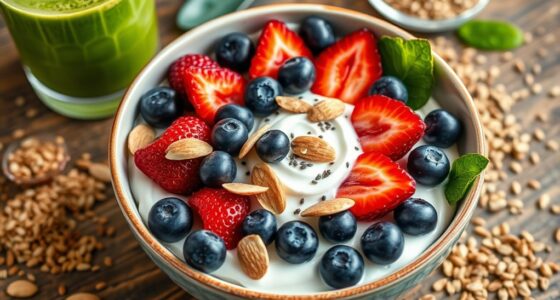
Next, think about how you store your produce and perishable ingredients. Fresh vegetables like leafy greens, broccoli, bell peppers, and berries are packed with antioxidants that fight inflammation. Store them in clear, breathable containers or designated crisper drawers to maintain their freshness and nutrient content. Keep your garlic and onions nearby—they’re natural anti-inflammatories and add flavor without extra calories or salt. When prepping ingredients, establish a dedicated space with sharp knives, cutting boards, and bowls for washing and chopping. This encourages you to prepare your meals from scratch, which is better for inflammation than relying on processed or pre-packaged foods. Having your prep station organized with everything within reach makes cooking less of a chore and more of a mindful, health-conscious activity. Additionally, educating yourself about the benefits of specific ingredients can motivate you to incorporate more anti-inflammatory foods into your diet.
Your kitchen setup should also support quick and easy meal assembly. Use labeled jars or containers for oils like extra virgin olive oil or avocado oil, both of which are known for their anti-inflammatory properties. Keep spices, herbs, and essential ingredients visible and accessible so you’re more likely to use them. When it’s time to cook, having a clean, organized prep area reduces stress and helps you focus on making nourishing meals. Additionally, consider creating zones for different tasks—one for prepping, another for cooking, and a separate space for cleaning. This streamlined flow minimizes clutter and makes the process more enjoyable. By designing your kitchen with anti-inflammatory principles in mind, you’re not just creating a space for cooking—you’re fostering a healthier lifestyle. Every time you reach for your spices, chop your veggies, or pour your oils, you reinforce your commitment to reducing inflammation and supporting your overall well-being.
Frequently Asked Questions
Which Spices Have the Strongest Anti-Inflammatory Properties?
Turmeric, ginger, cinnamon, and cayenne pepper top the list of spices with strong anti-inflammatory properties. You should incorporate turmeric in your dishes regularly since it contains curcumin, a potent compound. Ginger adds warmth and reduces inflammation, while cinnamon helps fight inflammation and improves blood flow. Cayenne pepper contains capsaicin, which can decrease inflammation and pain. Use these spices frequently in your cooking to support your overall health and reduce inflammation naturally.
How Should I Organize My Spices for Quick Access?
You should organize your spices by frequency of use, placing the most common ones like turmeric, ginger, and cinnamon at eye level or in easy-to-reach drawers. Use clear, labeled jars or containers to keep everything visible and tidy. Consider a spice rack or pull-out drawer for quick access. Group similar spices together to streamline your cooking process and save time during meal prep.
What Are the Best Storage Containers for Preserving Spice Potency?
Think of your spice jars as tiny treasure chests; you want them to keep their riches fresh. Opt for airtight glass or metal containers with tight-sealing lids to lock out air and moisture. Dark, opaque containers are like secret hideaways, shielding spices from light’s sneaky degradation. Store them in a cool, dark place to preserve their potency, ensuring each pinch packs maximum flavor and anti-inflammatory power.
How Can I Prevent Spice Cross-Contamination in My Kitchen?
To prevent spice cross-contamination, you should always use separate utensils for each spice, never double-dip, and keep spices in clearly labeled, sealed containers. Store spices away from raw meats and other potential contaminators. Regularly clean your spice jars and storage area to eliminate residue. When cooking, avoid transferring spices from different jars directly onto your dishes without rinsing or using new utensils. This keeps flavors pure and minimizes contamination risks.
Are There Any Spices to Avoid for Inflammation?
Did you know that some spices can trigger inflammation? You should avoid or limit highly processed or artificial spice blends, as they often contain additives and preservatives that promote inflammation. Stick to natural, whole spices like turmeric, ginger, and cinnamon, which are known for their anti-inflammatory properties. Always check labels and opt for organic options when possible. This way, you support your health and reduce unnecessary inflammation risks.
Conclusion
Creating an anti-inflammatory kitchen is like blending vibrant spices into a calming palette—bright, inviting, and nourishing. As you organize your spices and prep your ingredients, you craft a space that’s both lively and peaceful. Think of your kitchen as a sanctuary where bold flavors meet soothing routines. With each step, you turn a simple room into a haven that nurtures your health and happiness, balancing the zest of life with the calm of well-being.