
To prep meals for dysphagia, focus on creating soft, smooth textures that are easy to swallow and taste good. Choose mashed or pureed fruits, cooked vegetables, and shredded proteins, adding broth or sauces for flavor. Use gentle thickening techniques to reach a pudding-like consistency, ensuring foods hold shape without dripping. Season foods mildly to enhance taste while avoiding irritants. Keep these tips in mind to make meals both safe and enjoyable—if you keep going, you’ll discover even more helpful strategies.
Key Takeaways
- Puree or mash foods to a smooth, pudding-like consistency that holds shape without being runny.
- Incorporate flavorful herbs, spices, and sauces to enhance taste while maintaining a safe texture.
- Use cooked fruits, vegetables, and proteins blended to manageable, soft textures suitable for swallowing.
- Prepare large batches of safe, pre-portioned pureed meals for convenience and consistent quality.
- Reheat foods thoroughly and store in airtight containers to preserve freshness and ensure safety.
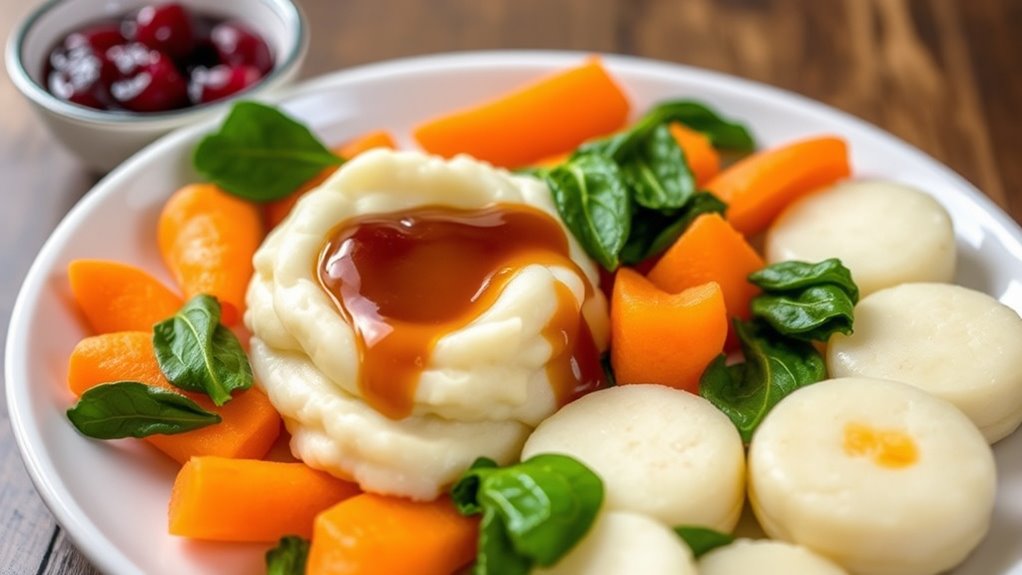
If you or someone you care for has dysphagia, planning and preparing meals carefully becomes essential to guarantee safety and proper nutrition. The primary goal is to create textures that are easy to swallow while still tasting good. This involves understanding how to modify foods to reduce choking risks without sacrificing flavor or enjoyment. When preparing meals, focus on achieving a smooth, cohesive consistency that minimizes the risk of aspiration. You might use pureeing, mashing, or chopping foods into small, manageable bites. The key is to eliminate lumps, fibers, or chunks that could cause choking or discomfort.
Start by selecting ingredients that naturally lend themselves to safe textures. Soft fruits like bananas or cooked apples and pears are excellent choices because they mash easily. Vegetables such as cooked carrots, squash, or sweet potatoes become smooth and palatable once mashed or pureed. Proteins like cooked chicken, fish, or eggs can be shredded or blended to make them easier to swallow. Incorporate broth, gravy, or sauces to add moisture and enhance flavor, making the food more appealing and easier to swallow. Be cautious with thickening agents; these can help achieve the desired consistency but should be used carefully to avoid altering taste or texture too much.
Choose soft, easily mashed ingredients like bananas, cooked vegetables, and shredded proteins for safe, palatable textures.
When preparing meals, aim for a consistency similar to pudding or thick sauce. You can test the texture by spooning a small amount onto your finger or a spoon—if it holds its shape without dripping or being too stiff, it’s likely suitable. Remember, the texture should be soft enough to slide down easily but not so runny that it’s watery or difficult to control. Thicker purees provide better control and reduce the risk of aspiration, but they shouldn’t be so stiff that they’re difficult to swallow. Endeavor to find a balance between safety and flavor; bland, unappetizing textures can discourage eating, so seasoning and flavoring are essential, provided they don’t alter the consistency adversely.
Incorporating appropriate texture modification techniques can further improve safety and satisfaction during meals. Incorporate herbs, spices, and natural flavorings to make meals enjoyable, but avoid overly spicy or acidic ingredients that might irritate the throat. Keep in mind that presentation can also influence appetite, so serve meals attractively in small portions. To make meal prep more manageable, prepare large batches of pureed or mashed foods ahead of time and store them properly. Use airtight containers and label them clearly to ensure freshness and safety. This approach saves time and ensures you always have safe, nutritious options ready. Ultimately, understanding how to modify textures without compromising taste helps promote better eating experiences and supports overall health and safety for those with dysphagia.

Carnation Breakfast Essentials Ready to Drink with Fiber, Chocolate, 24 pk
- Convenient Nutritional Breakfast: Easy way to start your day with nutrients
- High-Quality Protein: Contains 10g of protein per serving
- Rich in Vitamins & Minerals: Provides 21 essential nutrients
As an affiliate, we earn on qualifying purchases.
Frequently Asked Questions
Can I Meal Prep for Multiple Days in Advance Safely?
Yes, you can meal prep for multiple days in advance safely. Make sure to store your prepared meals in airtight containers and cool them quickly in the refrigerator within two hours of cooking. Reheat thoroughly to an internal temperature of at least 165°F before eating. Label each container with dates, and discard any leftovers after 3-4 days to prevent foodborne illness. This way, you guarantee both convenience and safety.
What Are the Best Storage Containers for Texture-Sensitive Meals?
You should choose airtight, leak-proof containers made of BPA-free plastic or glass for texture-sensitive meals. Look for containers with secure lids to prevent spills and maintain consistency. Opt for sizes that suit your meal portions and make reheating easy. Consider containers with clear sides so you can easily identify your meals. Proper storage helps preserve texture and flavor, ensuring your meals stay safe and enjoyable for multiple days.
How Do I Modify Recipes for Different Dysphagia Levels?
You can modify recipes for different dysphagia levels by adjusting texture and thickness. For mild cases, blend or mash foods to create a smoother consistency, adding liquids if needed. For more severe dysphagia, purée ingredients until completely smooth, avoiding lumps or chunks. Always test textures and consult with a healthcare professional to guarantee safety. Your efforts make mealtime enjoyable and safe, transforming challenges into nourishing moments for your loved ones.
Are There Specific Seasonings to Avoid in Dysphagia-Friendly Prep?
You should avoid strong, spicy, or overly hot seasonings that might irritate your throat or cause discomfort. Stay away from ingredients like chili powder, hot sauce, or horseradish. Instead, opt for mild herbs and gentle flavorings such as parsley, basil, or a touch of lemon juice. Always check your tolerance and consult with a healthcare professional to ensure the seasonings suit your specific dysphagia level.
How Can I Ensure Meals Remain Safe and Fresh During Storage?
To keep your meals safe and fresh, store them in airtight containers and label each with the date. Keep hot foods hot (above 140°F) and cold foods cold (below 40°F) in the fridge or freezer. Reheat thoroughly before eating, and don’t leave meals out for more than two hours. Regularly check for signs of spoilage like off odors or mold, and discard if anything seems amiss.
Conclusion
Now that you have these texture tips in your toolkit, imagine the delicious possibilities waiting to be explored. Every spoonful could bring a new favorite, a comforting bite, or an exciting surprise just around the corner. With your newfound knowledge, you’re ready to transform mealtime into a safe, satisfying experience—one carefully prepared bite at a time. The next flavor adventure is just ahead, and you hold the key to making every meal both enjoyable and safe.