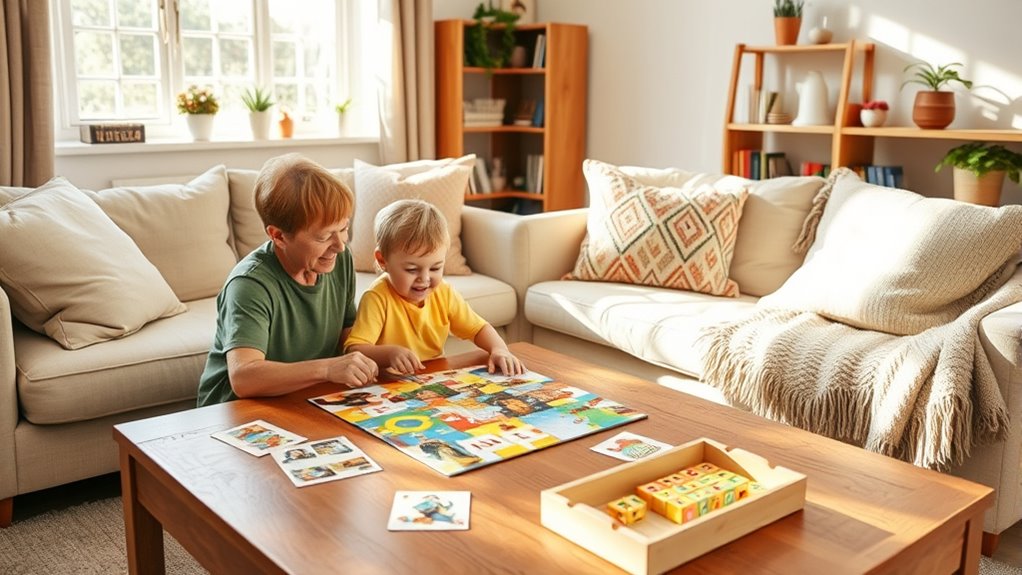

To boost your cognitive health at home, try simple activities like puzzles, crosswords, or Sudoku to challenge your mind. Explore new topics through books, magazines, or podcasts to stimulate your thinking. Learning a new hobby, such as cooking, knitting, or playing an instrument, engages different brain areas. Socialize with friends or family through conversations or games to keep your mind sharp and connected. Keep these activities enjoyable and routine—if you explore more, you’ll find even more ways to stay mentally active.
Key Takeaways
- Engage in brain puzzles like crosswords, Sudoku, or jigsaw puzzles regularly for mental challenge and enjoyment.
- Read diverse materials or listen to audiobooks to stimulate language skills and curiosity.
- Learn new hobbies such as cooking, drawing, or playing an instrument to activate multiple brain areas.
- Play social games like chess or cards to boost strategic thinking and social interaction.
- Incorporate enjoyable, short daily activities into routines to build lasting cognitive habits.
Cognitive stimulation at home is a practical way to keep your mind sharp and support mental well-being, especially as you age. Engaging in simple, fun activities can boost your brain health without the need for expensive tools or structured programs. The key is to choose activities that challenge your thinking, stimulate your senses, and bring you joy. These activities can be integrated into your daily routine, making mental exercise feel natural and enjoyable rather than a chore.
Start by incorporating puzzles and brain games into your day. Crossword puzzles, Sudoku, and jigsaw puzzles are excellent choices because they challenge your logic, memory, and problem-solving skills. You don’t need to spend hours on these—just a few minutes regularly can make a difference. If you prefer digital options, there are many apps designed to target specific cognitive skills, and they often add a fun, interactive element to your routine. These activities are not only stimulating but also give you a sense of accomplishment when you complete a challenging puzzle or level.
Reading and engaging with new information is another effective way to keep your mind active. Whether it’s a novel, a magazine, or online articles, reading encourages your brain to process language, follow plots, and make connections. To add variety, try exploring topics you’re unfamiliar with; this forces your brain to adapt and learn new information. Additionally, listening to audiobooks or podcasts can be a relaxing way to stimulate your mind, especially if reading becomes tiring or difficult.
Learning a new skill or hobby is a fantastic way to boost cognitive function. You could try cooking new recipes, learning a musical instrument, or picking up a craft like knitting or drawing. These activities require planning, focus, and creativity, engaging multiple areas of your brain simultaneously. Even if you’re not naturally inclined toward arts and crafts, trying something new keeps your brain adaptable and resilient. It also offers a sense of achievement and can be a great way to connect with others if you join classes or groups.
Finally, don’t overlook the importance of social interaction. Regular conversations with friends or family members stimulate your memory and language skills. Playing games like chess or card games can add a competitive and social element that keeps your mind alert. Keeping your brain active doesn’t have to be complicated or time-consuming; the key is consistency and choosing activities that you find enjoyable. When you make these activities a part of your routine, you’re investing in your mental health and overall well-being in a simple, enjoyable way.

Stroller Organizer with Cup Holder, Non-Slip Stroller Caddy Baby Essentials
- Large Capacity Storage: Holds bottles, diapers, toys, snacks
- Ideal Baby Shower Gift: Perfect for new moms and dads
- Universal Compatibility: Fits Uppababy, Baby Jogger, more
As an affiliate, we earn on qualifying purchases.
Frequently Asked Questions
How Can I Tailor Activities for Different Age Groups?
You can tailor activities for different age groups by considering their developmental stages. For young children, focus on simple, sensory, and play-based tasks like sorting or storytelling. For older kids, introduce more complex puzzles or memory games. Teens might enjoy strategy games or creative challenges. Always observe their interests and adjust activities accordingly, making sure they’re engaging and appropriately challenging to boost their cognitive growth.
Are There Specific Activities for Individuals With Cognitive Impairments?
Did you know that personalized activities can improve cognitive function in individuals with impairments by up to 30%? You should focus on activities like matching games, simple puzzles, and music therapy, which stimulate memory and reasoning. Use familiar objects and routines to make tasks engaging and less frustrating. Tailoring activities to their interests and abilities boosts motivation and helps maintain cognitive skills effectively.
How Often Should Cognitive Stimulation Activities Be Done?
You should aim to do cognitive stimulation activities daily or at least several times a week. Consistency is key, so try to incorporate these activities into your routine to boost mental agility and engagement. Keep activities enjoyable and manageable, adjusting frequency based on your energy levels and interest. Regular practice helps maintain cognitive function and provides a sense of accomplishment, making it easier to stay motivated and consistent.
Can These Activities Replace Professional Therapy?
You shouldn’t rely solely on these activities to replace professional therapy. Studies show that early intervention markedly improves cognitive health, but trained therapists provide personalized strategies that home activities can’t match. You can supplement therapy with fun, daily exercises, yet professional guidance ensures proper diagnosis and tailored treatment. Keep engaging in these activities; they support your efforts but aren’t a substitute for expert care.
What Materials Are Needed for Most Activities?
You typically need just common household items for most activities, like paper, pencils, or crayons. Items such as puzzles, memory games, or simple craft supplies can also be helpful. Sometimes, you might use everyday objects like buttons, coins, or containers. The key is to choose materials that are safe, easily accessible, and engaging, making it simple to create stimulating activities without special equipment or extensive preparation.
Conclusion
By incorporating simple, fun activities into your daily routine, you’re planting seeds of mental growth that blossom over time. Think of cognitive stimulation as a gentle river, flowing effortlessly through your home, nourishing your mind with every activity. These small, joyful moments create a tapestry of sharpness and memory, making your home a sanctuary for your brain’s health. Keep it playful and consistent—your mind will thank you, growing stronger with each passing day.