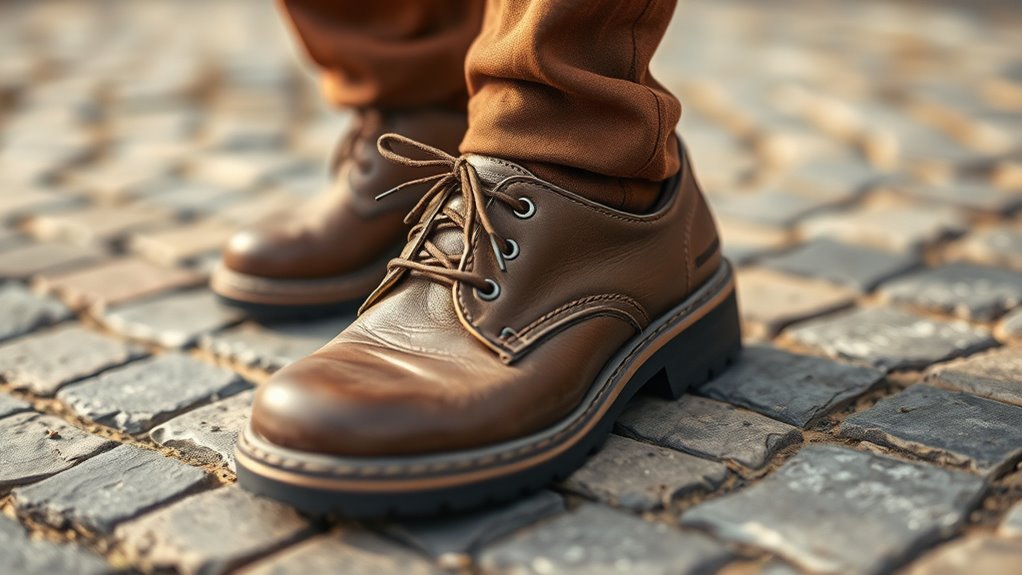

Wearing supportive shoes is key to maintaining stability and preventing falls, especially as you age or face balance concerns. Look for shoes that mold well to your foot, have firm yet flexible soles, and provide ample cushioning. Features like a sturdy heel counter, a non-slip outsole, and a secure fit help keep your feet aligned and grounded. Choosing the right footwear can boost your confidence and safety, and there’s more to discover to keep your steps steady.
Key Takeaways
- Choose shoes with sturdy heel counters and wide, non-slip outsoles to enhance grip and prevent slips.
- Opt for low, broad heels and supportive insoles to promote proper posture and balance.
- Ensure a secure fit that isn’t too loose, providing stability and preventing unnecessary foot movement.
- Prioritize shoes that mold well to the foot, offering ample cushioning and arch support for comfort and control.
- Consider footwear designed for foot conditions like flat feet or bunions to maintain stability and reduce pain.
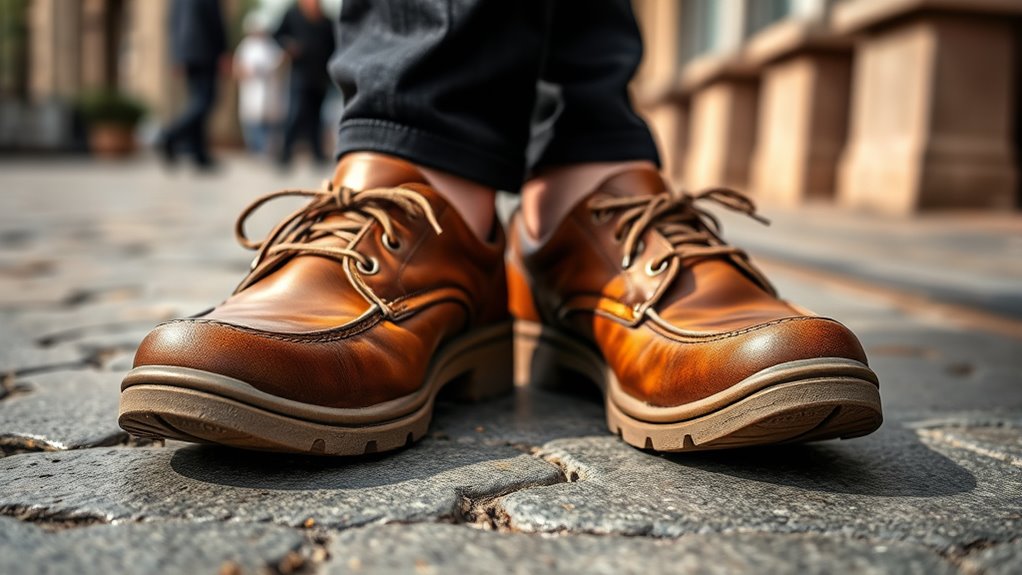
Wearing sensible shoes is vital for maintaining stability and preventing falls, especially as you age or if you have balance concerns. When you choose footwear that prioritizes orthopedic comfort and foot support, you provide your body with the foundation it needs to move confidently and safely. Proper shoes help distribute your weight evenly, reducing strain on your feet, ankles, knees, and hips. This not only minimizes discomfort but also enhances your overall stability, making everyday activities safer and more comfortable.
Wearing supportive, comfortable shoes enhances stability and reduces fall risk for safer, more confident movement daily.
Opting for shoes with good orthopedic comfort means selecting footwear that molds well to your foot’s natural shape and provides ample cushioning. When your shoes support your arches and absorb shock with each step, you’re less likely to experience fatigue or pain that can compromise your balance. Foot support is vital because it stabilizes your foot’s position, preventing unnecessary movement inside the shoe that can throw off your balance. Shoes with firm yet flexible soles, a supportive insole, and a secure fit help keep your feet aligned and grounded, especially on uneven surfaces.
You should look for shoes that have a sturdy heel counter to lock your heel in place, preventing slips and enhancing stability. A wide, non-slip outsole also adds grip, giving you better traction whether you’re walking on hardwood floors, tile, or outdoor pavement. Avoid high heels or shoes with overly soft soles, as they can destabilize you, increasing the risk of falls. Instead, prioritize shoes with a low, broad heel and a slightly elevated sole to maintain proper posture and balance.
Comfortable, supportive shoes are especially important if you have existing foot conditions like plantar fasciitis, bunions, or flat feet. These conditions can worsen if you wear shoes that don’t offer adequate support, leading to pain and increased fall risk. When shopping for footwear, try them on at the end of the day when your feet are naturally more swollen to guarantee a proper fit. Make sure there’s enough room in the toe box for your toes to move freely, but that the shoe isn’t too loose, which could cause instability.
Investing in high-quality, supportive shoes is a simple yet powerful step toward maintaining your mobility and safety. The right footwear provides orthopedic comfort and foot support, which are key to staying steady on your feet and preventing unnecessary falls. Additionally, modern shoe technology advances can enhance stability and comfort, making supportive footwear more effective than ever. By choosing shoes that align with your foot’s natural needs, you’re giving yourself the best chance to move confidently and comfortably every day.
Frequently Asked Questions
Can Wearing Sensible Shoes Improve Balance Immediately?
Yes, wearing sensible shoes can improve your balance immediately. Proper footwear selection provides better support, which enhances gait correction and stability. When you choose shoes with good arch support and a secure fit, your body aligns better, reducing the risk of falls. While long-term benefits are also important, you’ll likely notice an immediate boost in balance and confidence as your shoes help stabilize your gait and improve overall footing.
Are There Specific Brands Recommended for Stability?
Think of finding stability like choosing a sturdy ship in choppy seas. Brands like Orthofeet, Vionic, and New Balance are your reliable vessels, offering orthopedic brands and comfort-focused options that keep you steady. These brands prioritize arch support, cushioning, and grip, helping you stay balanced. When selecting shoes, look for those that feel like a solid foundation beneath you—so you can walk confidently, no matter the terrain.
How Often Should I Replace My Supportive Shoes?
You should replace your supportive shoes every 6 to 12 months, depending on your shoe lifespan and how often you wear them. If you notice uneven wear, reduced cushioning, or discomfort, it’s time for a replacement. Regularly check the sole and insole condition to guarantee stability and support. Prioritizing timely replacements helps maintain proper foot alignment and prevents injuries. Don’t wait too long—your shoes’ effectiveness diminishes with age.
Do Insoles Enhance Shoe Stability?
Yes, insoles can markedly enhance shoe stability. Insole cushioning provides extra support, helping you maintain balance and reduce foot fatigue. Orthotic benefits come from customized insoles that correct imbalances or provide extra arch support, further stabilizing your gait. When you choose insoles designed for stability, you improve overall comfort and reduce the risk of slips or falls, making your shoes much more supportive for everyday activities.
Can Wearing the Wrong Shoes Cause Long-Term Joint Issues?
Wearing the wrong shoes can definitely cause long-term joint issues. Poor footwear increases joint strain, leading to pain and potential damage over time. Cheap or unsupportive shoes often lack durability, causing your joints to work harder to stabilize your movements. Investing in proper footwear helps protect your joints and guarantees durability, reducing the risk of chronic joint problems caused by inadequate support. Always choose shoes that fit well and support your activity.
Conclusion
Wearing sensible shoes can make a real difference in your daily stability and confidence. Imagine Sarah, who struggled with frequent falls until she switched to supportive footwear; now, she moves confidently and avoids injuries. Choosing the right shoes isn’t just about comfort—it’s about protecting yourself and maintaining your independence. So, next time you shop, prioritize stability and support. Your future self will thank you for the mindful choice.