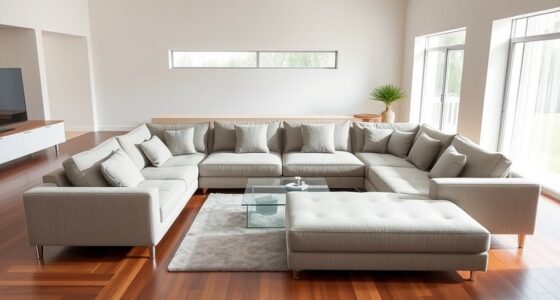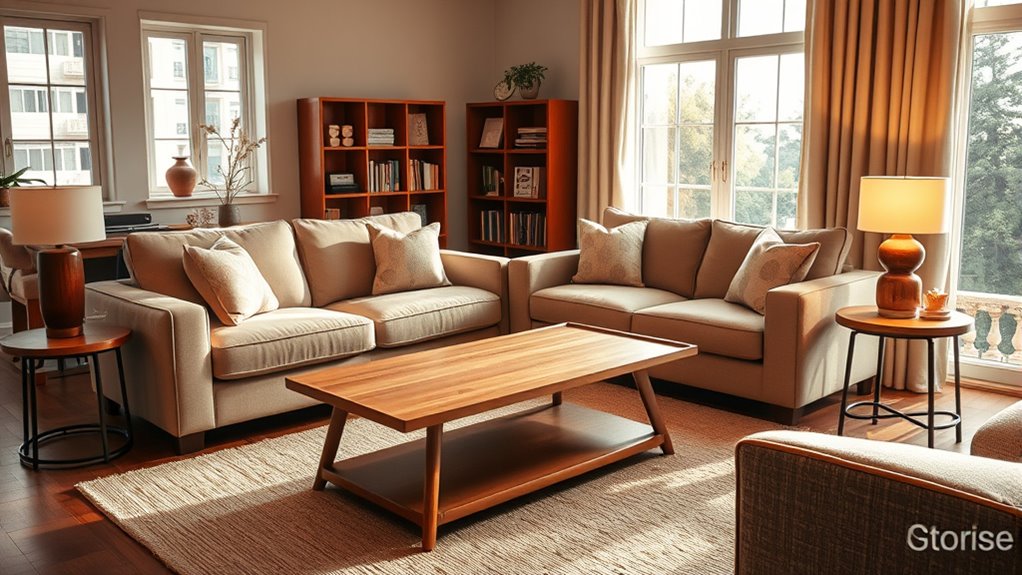

To position furniture for easy reach, arrange your space so that frequently used items are within arm’s length, placing them on accessible surfaces or at a comfortable height. Use adjustable furniture and shelves mounted at eye level to minimize stretching or bending. Keep pathways clear and wider if needed for mobility aids. Incorporate good lighting to improve visibility. If you want to optimize your space further, there’s more to discover about creating an efficient layout.
Key Takeaways
- Arrange frequently used items at waist to shoulder height to minimize stretching and bending.
- Position furniture and storage within arm’s reach to improve accessibility and reduce unnecessary movement.
- Use adjustable-height tables and shelves to accommodate different user needs and optimize reachability.
- Maintain clear pathways and wider aisles for easy navigation and safe access to all areas.
- Place lighting strategically near work surfaces to enhance visibility and ease of reaching items safely.

Positioning your furniture thoughtfully can make daily life much more convenient and comfortable. When you plan your space carefully, you create an environment that promotes ease of movement, reduces strain, and makes everyday tasks simpler. One key aspect to consider is ergonomic design, which ensures that furniture is arranged to support your body’s natural posture and minimize discomfort. For example, placing frequently used items within arm’s reach prevents unnecessary stretching or bending, helping to avoid strain on your back, shoulders, and neck. Incorporating accessibility features into your furniture placement can also markedly enhance functionality, especially if you or someone in your household has mobility challenges. These features include adjustable-height tables, lever-style handles, or open pathways that accommodate mobility aids like walkers or wheelchairs.
Start by identifying your most-used items and positioning them where they are easiest to access. For instance, keep your remote, phone, or keys close to your sitting or standing area so you don’t have to stretch or get up repeatedly. When arranging furniture, consider the flow of movement within the space. Clear pathways ensure you can move freely without obstacles, which is especially important in tight areas or for those with limited mobility. An accessible layout often features wider aisles and strategically placed furniture that doesn’t block doorways or key access points. This way, everyone can navigate your space comfortably and safely.
Prioritize easy access and clear pathways for a safer, more functional living space.
In addition, think about the height and reachability of your furniture. For ergonomic design, adjust the height of tables, desks, or work surfaces to match your body’s needs. For example, a work desk should be at a height that allows your elbows to rest comfortably while typing or writing, reducing strain on your arms and shoulders. If you’re designing a space for someone with limited mobility, consider furniture that can be easily adjusted or features built-in accessibility options. Swivel chairs, adjustable beds, or shelves mounted at accessible heights make a notable difference in usability. Furthermore, using vertical storage solutions can maximize space and keep frequently used items within easy reach, reducing unnecessary movement and clutter.
Furthermore, lighting plays a crucial role in accessibility. Properly placed lamps or task lighting ensure that you can see clearly when reaching for items, minimizing accidents or frustration. When you organize your space with ergonomic design principles and accessibility features in mind, you create an environment that’s not only functional but also welcoming. The effort you put into thoughtful furniture placement pays off by making daily routines smoother, more comfortable, and safer for everyone who uses the space.
Frequently Asked Questions
How Can I Optimize Furniture Placement in Small Rooms?
To optimize furniture placement in small rooms, you should focus on space-saving solutions like multi-functional pieces and vertical storage. Keep frequently used items within easy reach to improve visual accessibility and reduce clutter. Arrange furniture against walls to maximize open space, and consider compact or slim-profile designs. This approach guarantees your room feels larger, more organized, and functional without sacrificing style or comfort.
What Tools Help Measure Ideal Furniture Height?
To find the ideal furniture height, you can use measuring tools like a tape measure or a ruler to determine the appropriate dimensions for your space. Height calculators are also helpful, as they consider ergonomic factors and your specific needs. By combining these tools, you guarantee your furniture is comfortably accessible and well-suited to your room, making your space both functional and cozy.
How Does Lighting Impact Furniture Accessibility?
Think of lighting as your personal lighthouse guiding you through a room. Good lighting considerations improve visual accessibility, making it easier to spot and reach furniture. Bright, well-placed lights eliminate shadows and reduce strain, helping you navigate safely. Poor lighting can create obstacles, like fog obscuring your path. So, when arranging furniture, make certain there is ample illumination, especially near frequently used pieces, to boost accessibility and keep your space functional and inviting.
Are There Ergonomic Guidelines for Furniture Arrangement?
Yes, there are ergonomic guidelines for furniture arrangement. You should follow ergonomic principles to guarantee your workspace promotes comfort and efficiency. Keep frequently used items within arm’s reach and at waist level to reduce strain. Use furniture ergonomics to support good posture, like adjustable chairs and desks. Arrange your furniture to minimize unnecessary movement, and ensure pathways are clear. This setup helps prevent discomfort and enhances your overall productivity.
How Often Should I Rearrange Furniture for Best Accessibility?
Think of your space like a garden; just as plants flourish with regular tending, your furniture needs rethinking every 6-12 months to stay functional. You should rearrange based on your decorating style and color coordination, ensuring frequently used items are within easy reach. If your needs change, like adding a new piece or a new hobby, reconfigure sooner. Regular tweaks keep your space inviting and accessible, just like a well-kept garden.
Conclusion
By thoughtfully arranging your furniture for easy reach, you create a more functional and comfortable space. For example, imagine placing your coffee table within arm’s reach of your sofa, so you don’t have to get up to grab a drink. When you prioritize accessibility, daily activities become smoother, reducing frustration and enhancing your home’s flow. Small adjustments like these make a big difference, turning your space into a more practical and enjoyable environment.