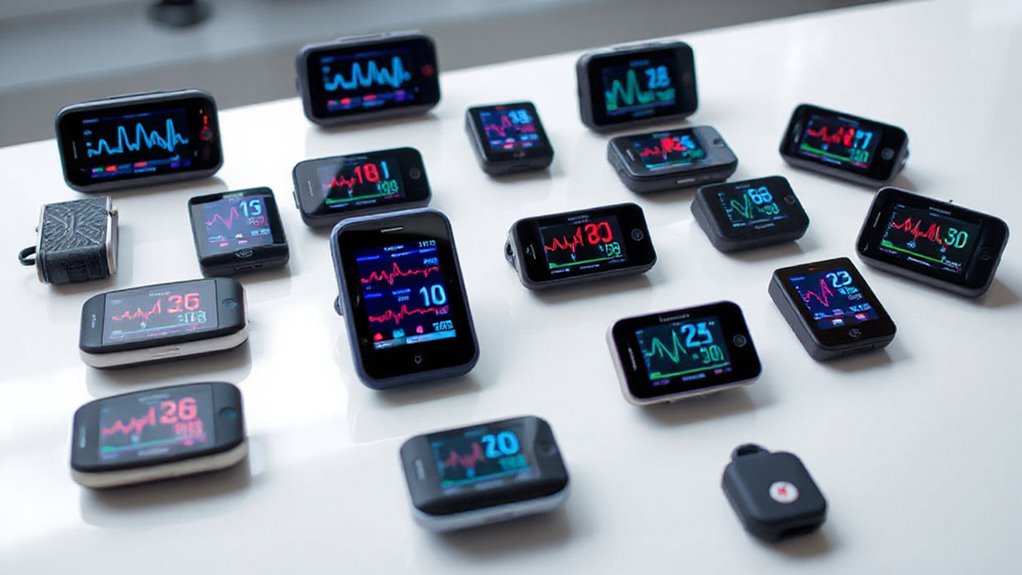

Among these ECG heart monitor devices for home, I’d put the KardiaMobile 6L Personal EKG Monitor first for its six-lead recordings in a compact, app-connected format. The OMRON Complete stands out for people who want blood pressure and ECG readings in one device, while the KardiaMobile Card is a simpler choice for basic single-lead checks. The main tradeoffs are lead detail versus simplicity, app and membership features versus standalone data storage, and ECG-only tracking versus added blood pressure measurement. Read on for how the seven options compare and which type of home user each best suits.

Turn the school run and nap time into listening time
- Thousands of audiobooks, podcasts and originals
- Listen on your phone, tablet or Echo — also offline
- Cancel anytime
Complete the kit


Key Takeaways
- The KardiaMobile 6L Personal EKG Monitor is my overall pick for combining a compact form with six-lead recordings, without making an integrated blood pressure cuff the center of the experience.
- The OMRON Complete is the specific-use standout for buyers who want blood pressure and ECG readings together, though its all-in-one format is less pocketable than the handheld options.
- The KardiaMobile Card favors ease and portability over the additional views offered by the 6L devices; it is the better fit when a basic single-lead check meets the need.
- The EMAY 6L and HaSoCare emphasize a different ownership style: EMAY offers six-channel recording, while HaSoCare’s LCD and data storage can appeal to buyers who prefer on-device access.
- The two KardiaMobile 6L Max listings appear closely related, with membership wording as the clearest listed distinction; verify the included plan and current product details before choosing between them.
| HaSoCare Portable ECG Monitor with LCD Screen and Data Storage |  | Best for Flexible Recording Options | Display: LCD screen | Recording time: About 30 seconds | Monitoring modes: Hand-to-hand, hand-to-chest, and hand-to-leg | VIEW ON AMAZON | See Our Full Breakdown |
| KardiaMobile Card Portable Personal EKG Monitor |  | Best for Wallet-Ready Simplicity | Device type: Personal electrocardiogram (EKG) monitor | Size and weight: Credit-card-sized; 7.4 g | Recording time: 30 seconds | VIEW ON AMAZON | See Our Full Breakdown |
| KardiaMobile 6L Max 6-Lead EKG Monitor with One-Year Membership |  | Best for Included Cardiologist Reviews | EKG leads: 6 | Recording time: 30 seconds | Included membership: KardiaCare for 1 year | VIEW ON AMAZON | See Our Full Breakdown |
| KardiaMobile 6L Max Six-Lead EKG Monitor with One-Year KardiaCare Membership |  | Best for Smartphone-Based Six-Lead Readings | Model: AC-019 | EKG leads: 6: I, II, III, aVL, aVR, aVF | Recording time: 30 seconds | VIEW ON AMAZON | See Our Full Breakdown |
| EMAY 6L Portable 6-Channel ECG Monitor |  | Best for Subscription-Free Phone and PC Use | Model: EMG-6L | Channels: 6 | Compatible devices: iOS and Android smartphones; Windows and Mac PCs | VIEW ON AMAZON | See Our Full Breakdown |
| OMRON Complete 2-in-1 Upper Arm Blood Pressure Monitor with EKG | 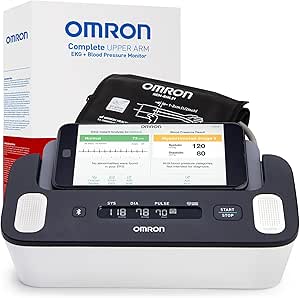 | Best for Combined Blood Pressure and ECG Tracking | Measurement types: Blood pressure and EKG | On-device reading storage: Up to 90 readings | App storage: Unlimited readings in the OMRON Connect app | VIEW ON AMAZON | See Our Full Breakdown |
| KardiaMobile 6L Personal EKG Monitor |  | Best Compact Six-Lead ECG | Lead count: 6 | Recording time: 30 seconds | Rhythm determinations: Atrial fibrillation, bradycardia, tachycardia, and normal sinus rhythm | VIEW ON AMAZON | See Our Full Breakdown |
| ecg heart monitor devices for home | Recording time | Connectivity | Compatible devices |
|---|---|---|---|
| HaSoCare Portable ECG Monitor | About 30 seconds | Bluetooth to phone; cable to computer | — |
| KardiaMobile Card Portable Per | 30 seconds | Bluetooth | Most smartphones and tablets |
| KardiaMobile 6L Max 6-Lead EKG | 30 seconds | — | — |
| KardiaMobile 6L Max Six-Lead E | 30 seconds | Bluetooth | Most smartphones and tablets |
| EMAY 6L Portable 6-Channel ECG | — | Bluetooth and USB | iOS and Android smartphones; Windows and Mac PCs |
| OMRON Complete 2-in-1 Upper Ar | — | Bluetooth | — |
| KardiaMobile 6L Personal EKG M | 30 seconds | — | Most smartphones and tablets |
More Details on Our Top Picks
HaSoCare Portable ECG Monitor with LCD Screen and Data Storage
The HaSoCare Portable ECG Monitor stands out for offering three ways to record: hand-to-hand, hand-to-chest, or hand-to-leg. That flexibility may suit someone who wants to try different positions at home, while the LCD screen and built-in storage let the device record without making a phone the center of every reading. At about 30 seconds per recording, it matches the quick check-in pace of the KardiaMobile Card, but it is much less pocket-focused and does not list specific rhythm classifications. Bluetooth phone transfer and a computer cable give you options for moving stored data, though both depend on a compatible device. The main limitation is that the storage capacity is unspecified, so I would not choose it if knowing how many readings it retains is a priority. There is no subscription requirement.
Pros:- Three recording modes: hand-to-hand, hand-to-chest, and hand-to-leg
- LCD screen and built-in storage support recording without relying on a phone during the check
- Can transfer data to compatible phones by Bluetooth or computers by cable
- Lightweight at 60 g and requires no subscription
Cons:- Storage capacity is not specified
- Phone or computer is needed to transfer recorded data
- The supplied information does not list specific rhythm classifications
Best for: Home users who want multiple recording positions, an on-device screen, and the option to transfer ECG data to either a phone or computer.
Not ideal for: Buyers who want clearly listed rhythm classifications, a specified storage limit, or a wallet-sized monitor for readings away from home.
- Display:LCD screen
- Recording time:About 30 seconds
- Monitoring modes:Hand-to-hand, hand-to-chest, and hand-to-leg
- Connectivity:Bluetooth to phone; cable to computer
- Data storage:Built-in; capacity not specified
- Weight:60 g
- Subscription:None required
Our verdict“Choose HaSoCare if you value recording-position flexibility and built-in storage more than named rhythm detections or a precisely stated storage capacity.”
KardiaMobile Card Portable Personal EKG Monitor
The KardiaMobile Card is the most travel-friendly choice here: its credit-card-sized body and 7.4 g weight make it easy to keep close for a quick, 30-second finger-sensor reading. It connects by Bluetooth to most smartphones or tablets, and readings can be saved and shared through the free app without Wi-Fi or a computer. Compared with the HaSoCare Portable ECG Monitor, it is far more compact and provides named determinations for AFib, bradycardia, tachycardia, and normal sinus rhythm; HaSoCare instead offers more recording positions and an LCD screen. Its battery supports at least 2,000 recordings, but the device does not detect heart attacks, and some additional detections require paid membership. It is also not tested or recommended for people with pacemakers or ICDs.
Pros:- Credit-card-sized and weighs 7.4 g, making it easy to carry
- Records a 30-second reading with Bluetooth and no Wi-Fi, cords, or computer
- Lists detections for AFib, bradycardia, tachycardia, and normal sinus rhythm
- Core features require no subscription, and the battery supports at least 2,000 recordings
Cons:- Does not detect heart attacks
- Not tested or recommended for people with pacemakers or ICDs
- Some additional detections and features require paid membership
Best for: People who want a highly portable, phone-connected ECG monitor for occasional 30-second readings and sharing results through an app.
Not ideal for: People with pacemakers or ICDs, buyers seeking heart-attack detection, or users who want an on-device screen and multiple recording positions.
- Device type:Personal electrocardiogram (EKG) monitor
- Size and weight:Credit-card-sized; 7.4 g
- Recording time:30 seconds
- Connectivity:Bluetooth
- Compatible devices:Most smartphones and tablets
- Listed detections:AFib, bradycardia, tachycardia, and normal sinus rhythm
- Battery:Lithium-ion polymer; supports at least 2,000 EKGs
- Subscription:Not required for listed core features
- Warranty:1-year limited
Our verdict“Pick the KardiaMobile Card for compact, app-based readings on the go, but skip it if you need a display on the device or have an implanted pacemaker or ICD.”
KardiaMobile 6L Max 6-Lead EKG Monitor with One-Year Membership
This KardiaMobile 6L Max pairs a 30-second, six-lead recording with a year of KardiaCare, including four cardiologist EKG reviews and results delivered within 24 hours. That service is its defining difference from the KardiaMobile Card, which is simpler and easier to carry but records a single-lead reading and does not include these reviews. The six-lead format and FDA-cleared rhythm determinations give this pick a more involved home-monitoring role, with listed determinations for AFib, bradycardia, tachycardia, PVCs, SVE, and Wide QRS. Automatic emailing of results to selected recipients can make sharing easier. The tradeoff is ongoing membership dependence: the description says membership is required to use the six-lead EKG, and it renews after the first year unless canceled. I would choose it for the included review service, not as a substitute for clinical evaluation.
Pros:- Records a six-lead EKG in 30 seconds
- Includes four cardiologist EKG reviews during the first year
- Provides FDA-cleared rhythm determinations for several listed rhythm findings
- Can automatically email EKG results to selected recipients
Cons:- Membership is required to use the six-lead EKG
- Membership renews after one year unless canceled
- The review service is limited to four cardiologist EKG reviews in the included year
Best for: People who want six-lead home ECG recordings and value having a set number of cardiologist EKG reviews included during the first year.
Not ideal for: Buyers who want a device with no membership dependence, a simple wallet-sized single-lead monitor, or a replacement for medical evaluation.
- EKG leads:6
- Recording time:30 seconds
- Included membership:KardiaCare for 1 year
- Listed detections:AFib, bradycardia, tachycardia, PVCs, SVE, and Wide QRS
- Result sharing:Can automatically email EKG results to selected recipients
Our verdict“Choose this KardiaMobile 6L Max if included cardiologist reviews matter more to you than avoiding a membership tied to six-lead use.”
KardiaMobile 6L Max Six-Lead EKG Monitor with One-Year KardiaCare Membership
The KardiaMobile 6L Max (AC-019) is a portable, Bluetooth-connected option for buyers who want six named leads— I, II, III, aVL, aVR, and aVF—rather than the compact single-lead format of the KardiaMobile Card. It records in 30 seconds using a compatible phone or tablet, and its included year of KardiaCare provides four cardiologist EKG reviews. That makes it a fit for people who want more detailed recordings and a defined review benefit, though it is not the same as continuous monitoring or emergency assessment. Its key drawback is that six-lead use depends on membership, which renews after the included year unless canceled. It also does not detect heart attacks and is not recommended for people with pacemakers or ICDs. Compared with the EMAY 6L, this pick emphasizes the KardiaCare review service over PC connectivity and subscription-free use.
Pros:- Records six leads (I, II, III, aVL, aVR, and aVF) in 30 seconds
- Bluetooth connectivity works with most smartphones and tablets
- Includes one year of KardiaCare with four cardiologist EKG reviews per year
- Portable monitor includes a pre-installed battery and quick start guide
Cons:- Six-lead EKG use requires membership, which renews after one year unless canceled
- Does not detect heart attacks
- Not recommended for people with pacemakers or ICDs
Best for: Smartphone or tablet users seeking six-lead recordings with an included first year of cardiologist EKG reviews.
Not ideal for: People with pacemakers or ICDs, buyers who want to avoid membership renewal, or users who need PC connectivity or heart-attack detection.
- Model:AC-019
- EKG leads:6: I, II, III, aVL, aVR, aVF
- Recording time:30 seconds
- Connectivity:Bluetooth
- Compatible devices:Most smartphones and tablets
- Membership:One year of KardiaCare included
- Included components:6-lead EKG monitor with pre-installed CR2016 battery; quick start guide
- Warranty:1 year
Our verdict“Choose this model over the EMAY 6L if you prefer the included KardiaCare reviews to PC connectivity and a rechargeable, subscription-free setup.”
EMAY 6L Portable 6-Channel ECG Monitor
The EMAY 6L suits home users who want a six-channel device that can connect to both smartphones and computers without a subscription. Its 2.4-inch display shows heart rate on the device, while Bluetooth and USB give you a choice of phone-based or PC-based workflows. That versatility separates it from the KardiaMobile 6L Max: EMAY includes a rechargeable battery and does not require membership, while KardiaMobile bundles four cardiologist reviews during its first year. The EMAY description says it records and stores ECG signals, but does not list specific rhythm determinations, so buyers seeking named app-based classifications may prefer the Kardia options. At 85 g and 4.7 inches long, it is portable for home use but less pocketable than the KardiaMobile Card. It is not a hospital diagnostic replacement and is not recommended for people with an implanted pacemaker.
Pros:- Six-channel recording with stored ECG signals and heart-rate display
- Connects to iOS and Android smartphones as well as Windows and Mac PCs
- Bluetooth and USB provide phone and computer transfer options
- Rechargeable lithium battery and no subscription requirement
Cons:- Not intended to replace a hospital diagnostic ECG device
- Use is not recommended for people with an implanted pacemaker
- The supplied product details do not specify rhythm classifications
Best for: Home users who want a rechargeable six-channel ECG monitor with an on-device display and the option to transfer data to a phone or computer without a subscription.
Not ideal for: People with an implanted pacemaker, buyers who want cardiologist reviews included, or users seeking a hospital-grade diagnostic device.
- Model:EMG-6L
- Channels:6
- Compatible devices:iOS and Android smartphones; Windows and Mac PCs
- Connectivity:Bluetooth and USB
- Display:2.4 inches
- Battery:Rechargeable lithium
- Dimensions:4.7 x 2.2 x 0.7 inches
- Weight:85 g
- Warranty:1 year
Our verdict“Pick the EMAY 6L if subscription-free phone and PC connectivity matters more than the KardiaMobile 6L Max’s included cardiologist reviews.”
OMRON Complete 2-in-1 Upper Arm Blood Pressure Monitor with EKG
The OMRON Complete suits people who want blood pressure and ECG readings from one upper-arm device rather than a standalone rhythm monitor. That combination makes it more useful for routine home tracking than the KardiaMobile 6L, which records ECG but does not measure blood pressure. Bluetooth links readings to the OMRON Connect app, where users can keep an unlimited history and share records; on-device storage is limited to 90 readings, so app use matters for longer tracking. The included cuff fits arms from 9 to 17 inches, and the case and batteries let buyers start without sourcing basic accessories. The tradeoff is a less portable setup than a compact phone-connected ECG, and buyers seeking detailed multi-lead recordings may prefer the KardiaMobile 6L.
Pros:- Measures blood pressure and ECG with one device
- Bluetooth app connection supports tracking and sharing readings
- Stores up to 90 readings on the device
- Includes a wide-range cuff, storage case, and four AA batteries
Cons:- On-device history is limited to 90 readings; unlimited storage requires the app
- Bulkier and less portable than phone-connected ECG monitors such as KardiaMobile 6L
- The cuff-based setup takes more space than a compact ECG-only reader
Best for: People who want to track blood pressure alongside ECG readings at home and share a longer history through a smartphone app.
Not ideal for: Buyers who want a pocketable ECG-only device, detailed six-lead recordings, or a monitor that keeps an unlimited history without app connection.
- Measurement types:Blood pressure and EKG
- On-device reading storage:Up to 90 readings
- App storage:Unlimited readings in the OMRON Connect app
- Connectivity:Bluetooth
- Cuff fit:9–17 inches
- Power:Four AA batteries included
- App compatibility:Apple Health and Google Fit
- Included accessories:Cuff and storage case
Our verdict“Choose the OMRON Complete if you want one home setup for blood pressure and ECG tracking and are comfortable using its app to keep a longer record.”
KardiaMobile 6L Personal EKG Monitor
The KardiaMobile 6L is the more focused choice for buyers who want a portable ECG reading with more lead detail than a single-lead pocket monitor. It records in 30 seconds and offers rhythm determinations for atrial fibrillation, bradycardia, tachycardia, and normal sinus rhythm without a subscription for those readings. Compared with the OMRON Complete, it is much smaller and provides six-lead ECG rather than combining ECG with blood pressure measurement. That makes it easier to carry, but it cannot replace a blood pressure monitor and it depends on the Kardia app and a compatible phone or tablet. Its rhythm results are not a heart attack check or a substitute for routine care; it is also not recommended for people with pacemakers or ICDs.
Pros:- Records a six-lead ECG in 30 seconds
- Provides determinations for atrial fibrillation, bradycardia, tachycardia, and normal sinus rhythm
- No subscription is required for the listed rhythm readings
- Compact, lightweight design works with most smartphones and tablets
Cons:- Requires the Kardia app and a compatible smartphone or tablet
- Does not measure blood pressure or check for heart attacks
- Not tested or recommended for people with pacemakers or ICDs
Best for: Smartphone users who want a compact, six-lead home ECG for checking specified heart rhythms and saving readings through an app.
Not ideal for: People with pacemakers or ICDs, buyers without a compatible smartphone or tablet, or anyone who needs blood pressure readings or heart attack detection.
- Lead count:6
- Recording time:30 seconds
- Rhythm determinations:Atrial fibrillation, bradycardia, tachycardia, and normal sinus rhythm
- Compatible devices:Most smartphones and tablets
- Subscription:Not required for the listed rhythm readings
- Battery:3 V CR2016
- Battery average life:200 hours
- Dimensions:3.54 x 1.18 x 0.28 inches
- Weight:24 g
Our verdict“Pick the KardiaMobile 6L for portable six-lead ECG readings without a subscription, but choose the OMRON Complete if blood pressure tracking is also a priority.”

How We Picked
I ranked these devices by how well they fit regular home ECG checks, weighing recording format and lead count, ease of taking a reading, portability, and how practical it is to review or share results. I also looked at whether a device adds a useful capability, such as blood pressure measurement or an on-device display, rather than treating extra features as automatic advantages. A simpler single-lead device can be the more sensible choice when ease and compactness matter more than additional ECG views.
The order reflects the balance of those needs, not a claim that one device suits every person or detects every heart problem. I favor the KardiaMobile 6L Personal as the strongest general-purpose fit, place the OMRON Complete higher for combined blood pressure and ECG use, and reserve the Card for buyers who want a straightforward single-lead option. The HaSoCare, EMAY, and Max listings serve narrower preferences; their value depends on whether you prioritize screen-based access, six-channel recording, or a particular membership bundle. Device features and app terms can vary by listing and region, so check current details before purchase.
| ecg heart monitor devices for home | Connectivity | Compatible devices |
|---|---|---|
| HaSoCare Portable ECG Monitor | Bluetooth to phone; cable to computer | — |
| KardiaMobile Card Portable Per | Bluetooth | Most smartphones and tablets |
| KardiaMobile 6L Max 6-Lead EKG | — | — |
| KardiaMobile 6L Max Six-Lead E | Bluetooth | Most smartphones and tablets |
| EMAY 6L Portable 6-Channel ECG | Bluetooth and USB | iOS and Android smartphones; Windows and Mac PCs |
| OMRON Complete 2-in-1 Upper Ar | Bluetooth | — |
| KardiaMobile 6L Personal EKG M | — | Most smartphones and tablets |
Factors to Consider When Choosing Ecg Heart Monitor Devices For Home
Before choosing a home ECG, I’d start with how you plan to use the readings, not the largest feature list. These decisions shape whether a handheld monitor, an app-based device, or an ECG-and-blood-pressure unit will feel useful day to day.
Choose Lead Count for the Job
Lead count describes how many electrical views a device records, but more leads do not make a home monitor a substitute for a clinical assessment. A single-lead model can be a practical choice for capturing a quick rhythm strip, while a six-lead unit may provide more information to share with a clinician. Consider whether you have been asked to record a particular type of reading before paying for added channels. A common mistake is buying by lead count alone, without checking how the reading is saved or reviewed. Ask your care provider which device format, if any, suits your monitoring plan. If no specific format has been recommended, prioritize consistent use and understandable records over a more complex spec sheet.
Check the App and Data Workflow
A device is only helpful if you can find and share its recordings when you need them. Before buying, check whether the model relies on a phone app, what phones it supports, and whether results can be exported or shared in a form your clinician can use. Some devices place analysis, history, or sharing features behind a membership, so distinguish included access from features that may require ongoing service. Do not assume that a subscription label means every app function is included indefinitely. Buyers who prefer fewer phone steps may value a built-in screen or local storage, while app users may prefer records gathered in one place. Confirm the current software and plan terms for the specific listing.
Decide Whether Blood Pressure Belongs in the Same Device
An ECG monitor and a blood pressure monitor measure different things, so one reading cannot stand in for the other. A combined unit can reduce the number of devices on a shelf and make it easier to collect both measurements during a home routine. The tradeoff is a larger, less portable device that may be unnecessary if you already own a reliable blood pressure cuff. If you need blood pressure readings often, check cuff fit and the measurement range as carefully as the ECG functions. Avoid choosing an all-in-one solely because it promises more measurements; the added feature should match a real need. If compact rhythm checks are your priority, a handheld ECG may be a better fit.
Match the Device to Your Routine
Think about where readings will happen: at a desk, while traveling, or beside a home blood pressure cuff. Pocket-sized monitors are easier to carry, but they may depend on a phone and careful hand placement. A screen and built-in storage can make a device easier to use without opening an app, though that convenience may come with a different data-sharing process. Check what the device requires for power, cleaning, and storage, especially if more than one person may handle it. For shared use, confirm whether separate user records are supported rather than assuming that saved readings will stay organized. A device you can use calmly and repeatably is often a better match than one with features you rarely access.
Set Expectations for Home ECG Results
Home ECG devices can record heart electrical activity, but they are not a replacement for diagnosis, emergency care, or a clinician’s interpretation. Automated labels can be limited, and a normal-looking recording does not rule out every heart condition. Follow the device instructions for posture, contact, and recording duration so avoidable technique errors do not cloud the result. If symptoms are severe, sudden, or concerning, seek medical help instead of waiting for an app result. Buyers should also check whether the device is cleared or authorized for their intended use in their location. Treat recordings as information to discuss with a healthcare professional, not as a final answer.
Frequently Asked Questions
Should I choose a six-lead monitor over a single-lead model?
Choose based on the monitoring plan you need, not on the assumption that more leads always mean a better purchase. Six-lead options in this roundup, such as the KardiaMobile 6L models and EMAY 6L, offer more recording views than the KardiaMobile Card. A single-lead device may be easier to carry and use for a basic rhythm recording. If a clinician has requested a particular format, follow that guidance and confirm the device can provide it. More leads do not make a consumer monitor a diagnostic replacement.
Do I need an ECG monitor that also measures blood pressure?
That depends on whether you already need regular blood pressure readings at home. The OMRON Complete combines blood pressure measurement with ECG, which can simplify a routine for someone tracking both. If you own a suitable cuff or only want portable ECG recordings, a separate handheld monitor may be less bulky and more direct. Remember that blood pressure and ECG readings describe different aspects of health and should not be treated as interchangeable. Check cuff fit and the device’s measurement instructions before choosing an all-in-one unit.
Will I need a paid membership to use a KardiaMobile device?
Membership terms and the features included can depend on the specific model, package, and current service terms. The two KardiaMobile 6L Max listings here both mention a one-year membership, but their product wording differs, so verify exactly what the package includes. Check which recording, history, analysis, and sharing functions work without a continuing plan. Do not assume a bundled year means all features remain available afterward. Review current app and membership details before purchase if ongoing access matters to you.
Can I use a home ECG monitor instead of seeing a clinician?
No. These devices can record ECG information, but a home recording cannot rule out every condition or replace a medical evaluation. Automated interpretations may be limited, and poor contact or movement can affect a reading. Share recordings with a healthcare professional when appropriate, especially if symptoms recur or readings are unusual. Seek urgent care for severe or sudden symptoms rather than relying on a device or app to decide what to do. Use the monitor as a record-making tool within a care plan, not as a standalone diagnosis.
What should I check before buying a monitor for a family member?
Start with whether the intended user can operate the device comfortably, including its hand placement, screen, phone app, and reading steps. Confirm that the app supports their phone if the model depends on one, and check whether records can be shared with the person’s clinician or caregiver. If they also track blood pressure, a combined unit may simplify the routine, but only if the cuff is a suitable fit. For more than one user, verify how the device stores separate readings so records do not get mixed. A simpler workflow may be more useful than extra recording features that the person finds difficult to use.
Conclusion
For most buyers seeking a home ECG recorder, I recommend the KardiaMobile 6L Personal EKG Monitor as best overall for its balance of compact use and six-lead recording. The KardiaMobile Card is my beginner-friendly pick for someone who wants a simpler single-lead device, while the OMRON Complete is best for specific needs when ECG and blood pressure checks belong in one routine. For buyers who want to compare membership bundles, the KardiaMobile 6L Max listings are the premium-style alternatives; check the included plan and current terms before selecting one. I’d look at the HaSoCare for screen-based access and stored readings or the EMAY 6L for six-channel recording if those features matter more than an app-centered workflow. Match the choice to the readings you need and the way you will review them, and use any home recording as information to discuss with a healthcare professional.