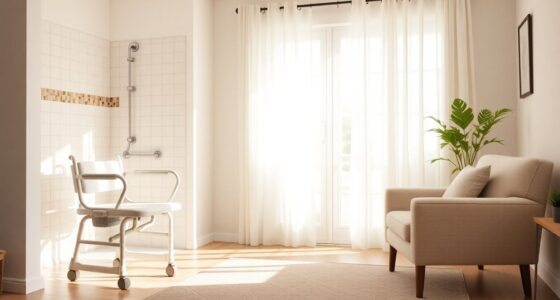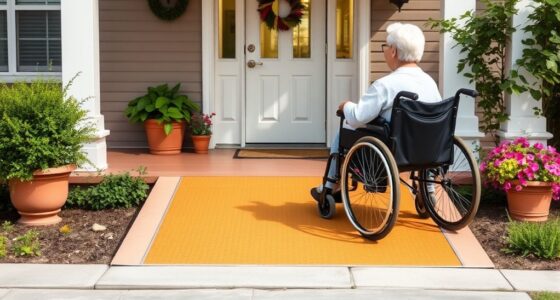

When choosing slip-resistant flooring materials, prioritize textured options like stamped concrete, textured vinyl, or grooved tiles that offer better traction. Consider the specific area’s moisture levels, traffic, and style, ensuring durability and safety. Regular maintenance and cleaning are key to keeping surfaces safe over time. By selecting the right materials, you can create a safer environment. Keep exploring to discover more tips for choosing the perfect slip-resistant flooring for your space.
Key Takeaways
- Prioritize textured surfaces like stamped concrete, grooved tiles, or textured vinyl for enhanced slip resistance.
- Consider the environment; moisture-prone areas benefit from non-slip, water-resistant flooring options.
- Evaluate durability and maintenance needs to ensure long-term safety and performance.
- Match the flooring’s aesthetic and safety features with the specific space and usage requirements.
- Regularly inspect and maintain textured surfaces to preserve slip resistance over time.

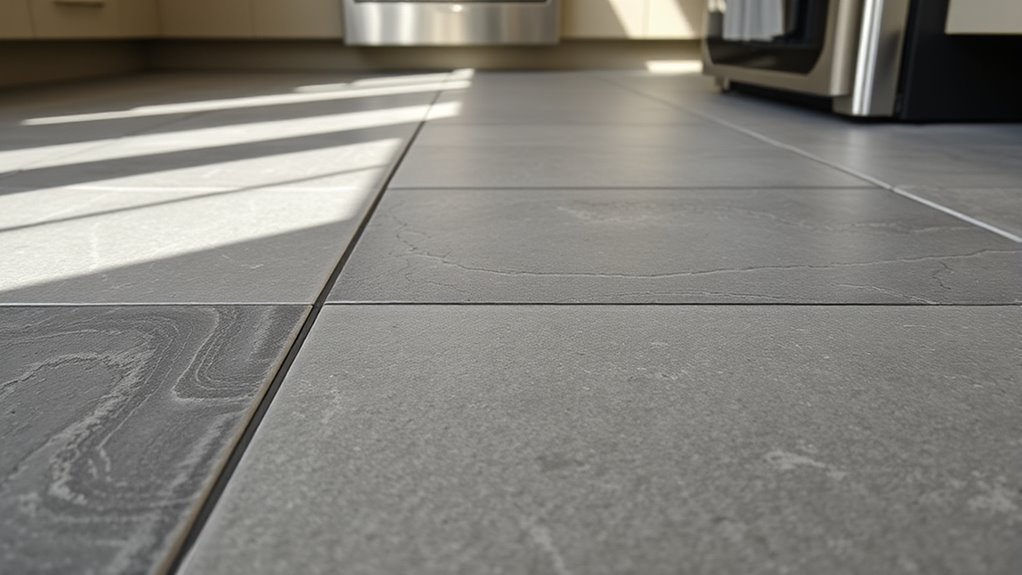
When selecting flooring for your home or business, prioritizing slip resistance is vital to guarantee safety. Choosing the right surface can prevent accidents and provide peace of mind for everyone who walks through your space. One key factor to contemplate is the benefits of textured surfaces. These surfaces are designed to increase traction, especially in areas prone to moisture or spills. Textured flooring options, such as stamped concrete, textured vinyl, or grooved tiles, offer a rougher surface that enhances grip underfoot. This added traction is particularly advantageous in places like kitchens, bathrooms, entryways, or commercial settings where slips are more likely. The textured finish not only improves safety but can also add aesthetic appeal, offering a variety of patterns and styles that blend functionality with design. Moreover, selecting textured materials that are compatible with your environment ensures both safety and longevity.
However, while textured surfaces deliver safety benefits, they also come with maintenance considerations that you need to account for. For example, textured flooring can trap dirt, dust, and moisture more easily than smooth surfaces. Regular cleaning becomes essential to keep the surface safe and looking its best. Sweeping or vacuuming to remove loose debris followed by damp mopping with suitable cleaners helps prevent buildup that could compromise slip resistance. In some cases, textured surfaces may require specialized cleaning tools or solutions to effectively remove grime without damaging the texture. Additionally, over time, textured surfaces might wear down, especially in high-traffic areas, which can reduce their slip-resistant qualities. You might need to periodically inspect the surface and consider re-coating or resealing to maintain ideal traction. Choosing durable, wear-resistant materials can also help extend the lifespan of the textured flooring and maintain its safety features.
Frequently Asked Questions
How Do I Maintain Slip-Resistant Flooring Long-Term?
To maintain slip-resistant flooring long-term, establish regular cleaning routines using gentle, non-abrasive cleaners to remove dirt and debris that can reduce traction. Keep an eye on wear and tear, and promptly repair or replace damaged sections to prevent accidents. Avoid harsh chemicals that could degrade the surface. Consistent care guarantees your flooring retains its slip-resistant properties, keeping your space safe and functional over time.
Are Slip-Resistant Options Suitable for Outdoor Use?
Yes, slip-resistant options are suitable for outdoor use. They offer excellent outdoor durability and weather resistance, making them ideal for patios, walkways, and pool decks. You benefit from their ability to withstand rain, snow, and sun exposure without losing grip. Just guarantee you select materials specifically designed for outdoor environments, and regularly clean them to maintain their slip-resistant properties and prolong their lifespan.
What Is the Cost Difference Between Slip-Resistant and Standard Flooring?
The cost comparison shows slip-resistant flooring generally costs more than standard options, but the difference varies based on material and installation. You should consider your budget considerations carefully, as investing in slip-resistant surfaces can save you money long-term by reducing accidents and liability. While upfront costs may be higher, the added safety benefits often outweigh the initial expense. Always evaluate your specific needs and budget before making a final decision.
Can Slip-Resistant Flooring Be Installed Over Existing Surfaces?
Yes, you can install slip-resistant flooring over existing surfaces, but you need to take into account surface preparation and compatibility. First, ensure the current surface is clean, level, and free of any debris. Check if the new slip-resistant material is compatible with the existing floor type. Proper surface prep helps ensure adhesion and safety, preventing issues like unevenness or slipping. Always follow manufacturer guidelines for best results.
How Do I Choose the Best Slip Resistance Level for My Space?
To choose the best slip resistance level for your space, consider conducting traction testing to assess current safety conditions. Check safety standards relevant to your environment, such as OSHA or ANSI guidelines, to determine the appropriate coefficient of friction. You should match the flooring’s slip resistance to your space’s specific needs—high-traffic areas require higher traction, while less risky zones may need a moderate level.
Conclusion
Remember, safety is no accident. When selecting slip-resistant flooring, prioritize durability and traction to keep everyone secure. Think of it as planting a sturdy tree—its roots hold firm even in stormy weather. By choosing the right materials, you create a safer space where slips and falls are less likely. Trust your judgment and act today, because a well-chosen floor isn’t just about looks, it’s about protecting what matters most—your loved ones and your peace of mind.