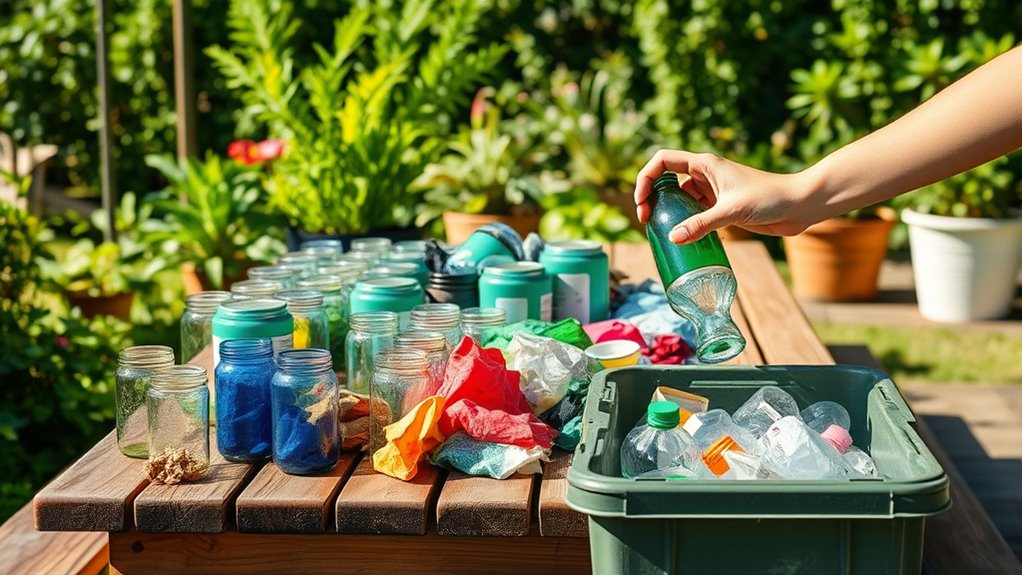

To practice eco-friendly recycling and repurposing, start by examining your everyday items for creative ways to reuse, like turning jars into storage or textiles into shopping bags. Support local recycling programs and participate in community cleanup efforts. Incorporate small changes into your routine, stay open to new ideas, and encourage others to join in. If you keep exploring, you’ll discover even more simple, sustainable tips for reducing waste and protecting the environment.

Turn the school run and nap time into listening time
- Thousands of audiobooks, podcasts and originals
- Listen on your phone, tablet or Echo — also offline
- Cancel anytime
Key Takeaways
- Repurpose household items like jars, cans, and textiles into functional decor or storage solutions.
- Implement at-home recycling systems to sort waste and reduce contamination.
- Use eco-friendly materials for DIY projects, emphasizing sustainable and biodegradable options.
- Support community initiatives focused on recycling, upcycling, and environmental education efforts.
- Incorporate upcycling into daily routines, such as turning old clothes into bags or furniture into art.

Recycling and repurposing are essential steps toward reducing waste and protecting the environment. When you actively participate in sustainable waste management, you help conserve natural resources and lower pollution levels. One effective way to do this is by exploring upcycling ideas, which transform old or discarded items into useful, attractive objects. Upcycling not only keeps waste out of landfills but also sparks your creativity, giving you a chance to create personalized decor, furniture, or accessories from materials you might have otherwise thrown away. For example, turning glass jars into stylish storage containers or repurposing pallets into rustic furniture are simple projects that make a big difference. These ideas promote sustainability by extending the life of everyday objects, reducing the demand for new resources, and minimizing environmental impact.
You can start incorporating upcycling ideas into your routine by examining what you already have at home. Look at items that might seem obsolete or broken, and think about how they could be transformed into something valuable. Old T-shirts can become reusable shopping bags, while tin cans can be painted and turned into planters or organizers. Not only do these projects give your belongings a second life, but they also save money and reduce the need to buy new products. Additionally, incorporating recycling systems into your home can streamline waste management and ensure more materials are properly processed. As you get more comfortable with upcycling, you might even develop your unique techniques or share ideas with friends and family, creating a community centered around sustainable waste management. This approach encourages mindful consumption and inspires others to think about how they can make a positive environmental impact through their daily choices.
In addition to personal projects, you can support larger initiatives that focus on eco-friendly practices. Participating in local recycling programs or community clean-up events helps keep waste out of natural environments. Educating yourself about proper recycling procedures ensures that your efforts are effective, preventing contaminated loads that often end up in landfills or incinerators. Businesses and organizations can also adopt sustainable waste management strategies, such as composting organic waste or implementing zero-waste policies, further amplifying your positive influence. Remember, every small action adds up, and when you incorporate upcycling ideas into your lifestyle, you’re actively contributing to a more sustainable future. The key is to stay curious, open-minded, and committed to reducing your ecological footprint through thoughtful waste reduction and innovative repurposing. Your efforts can inspire others and help build a community that values environmental responsibility and sustainable practices.
Frequently Asked Questions
How Can I Identify Eco-Friendly Recyclable Materials?
You can identify eco-friendly recyclable materials by checking labels for symbols like the recycling emblem. Look for biodegradable plastics, which break down naturally, and recycled paper products made from post-consumer waste. Avoid plastics with recycling codes 3 and 7, which are less eco-friendly. Always read packaging details to guarantee the materials are certified eco-conscious. This way, you’re actively supporting sustainable practices and reducing environmental impact.
What Are Common Mistakes in Repurposing Items?
Think of repurposing like building a puzzle—you need the right pieces fitting together. Common mistakes include overestimating your upcycling techniques, which can lead to fragile or unusable items. Also, ignoring the original material’s strength or purpose causes failure. Be patient, plan your project, and explore creative reuse ideas carefully. For example, turning an old ladder into shelving works perfectly when you consider weight limits and stability.
Which Recycling Programs Are Available Locally?
You can find local recycling programs through your city’s waste management website or community centers. Look for community composting options to recycle organic waste and electronic waste recycling events to safely dispose of gadgets. Many areas also offer curbside pickup for recyclables. Check if your local landfill or recycling facility accepts specific items. Participating in these programs helps reduce waste and supports eco-friendly practices in your community.
How to Dispose of Hazardous Waste Responsibly?
To dispose of hazardous waste responsibly, you should always follow local hazardous waste disposal guidelines and avoid dumping chemicals down drains or onto the ground. Use proper containers for safe chemical handling, clearly label them, and take them to designated collection centers. Never mix different chemicals, and wear protective gear. By doing so, you protect the environment and your health while ensuring safe chemical handling practices.
Are There Eco-Friendly Alternatives to Single-Use Plastics?
Yes, you can switch to eco-friendly alternatives like biodegradable packaging and reusable shopping bags. These options reduce plastic waste and are better for the environment. When shopping, bring your own reusable bags, and choose products with biodegradable packaging whenever possible. By making these simple changes, you help cut down on single-use plastics and support sustainable practices that protect our planet for future generations.
Conclusion
By embracing eco-friendly recycling and repurposing, you turn waste into wonder. Imagine the beauty of giving new life to old items, transforming clutter into creativity. While some see trash, you see potential—an opportunity to make a difference. It’s a simple act that’s powerful enough to protect the planet. So, choose to repurpose, recycle, and inspire change—because sometimes, the smallest actions create the biggest impact.
Fall Picks
fall essentials
As an affiliate, we earn on qualifying purchases.