
Co-housing models for grandparents and grandchildren focus on creating intentional communities that strengthen intergenerational bonds. You can design shared spaces like kitchens, gardens, or play areas that encourage natural interactions and cooperation. This setup promotes family involvement, reduces caregiving burdens, and fosters lasting relationships. By establishing clear boundaries and maintaining open communication, you guarantee harmony and support. Keep exploring these models to discover how thoughtful planning can transform your family life.
Key Takeaways
- Design shared spaces like kitchens and gardens to promote spontaneous interactions and collective activities among grandparents and grandchildren.
- Implement clear communication and boundaries to manage shared routines and resolve potential conflicts effectively.
- Incorporate flexible layouts that adapt to evolving needs of multi-generational households.
- Foster a community-focused environment with common areas encouraging social engagement and relationship building.
- Establish caregiving support systems that enhance involvement and shared responsibilities between grandparents and parents.
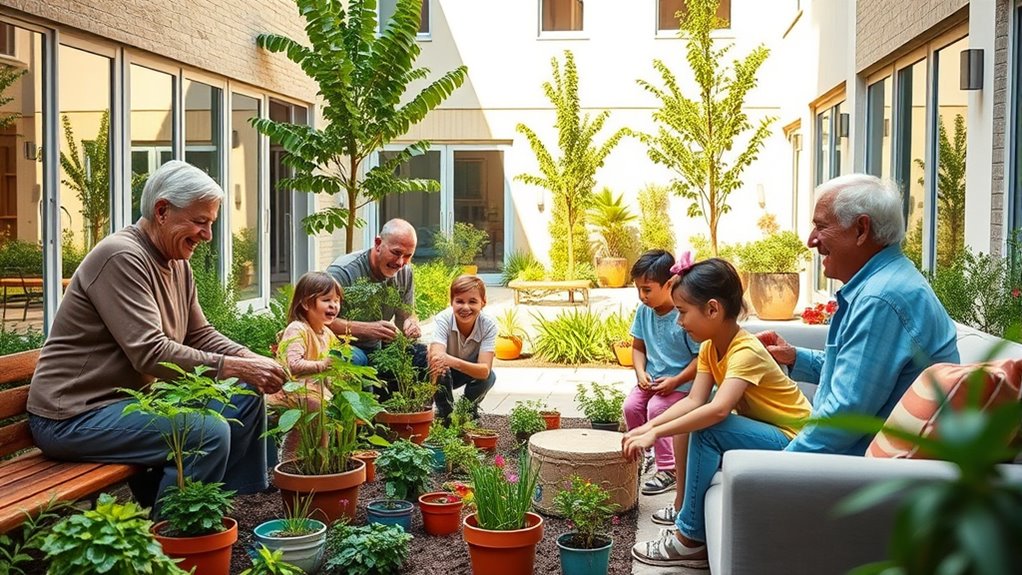
Have you ever considered how co-housing can strengthen bonds between grandparents and grandchildren? This model of communal living fosters opportunities for meaningful interactions, creating an environment where generations can connect more deeply. When you live in close proximity with your grandchildren, everyday moments become shared experiences—cooking together, storytelling, or simply enjoying each other’s company. These interactions build a foundation of intergenerational bonding that lasts a lifetime, giving children a sense of stability and love from their extended family. Still, embracing co-housing isn’t without its challenges. Communal living can bring about disagreements over shared spaces, routines, or decision-making, which require patience and open communication. You might find yourself steering through different lifestyles, habits, or expectations, all of which test your ability to coexist harmoniously. But overcoming these communal living challenges is part of what makes co-housing so enriching; it encourages you to develop conflict resolution skills and mutual respect. When you intentionally design your living space to include shared areas—like kitchens, gardens, or play zones—you create opportunities for spontaneous interactions and collective activities. These shared spaces become the heart of your community, fostering a sense of belonging and cooperation. In this setup, grandparents often feel more involved in their grandchildren’s daily lives, providing consistent support and guidance without the constraints of traditional visiting hours. Children gain a stable, nurturing environment where they can learn from their elders and develop a stronger sense of family identity. Additionally, co-housing models can ease the caregiving burden, allowing grandparents to participate actively in their grandchildren’s upbringing while sharing responsibilities with other residents. It’s important to recognize, however, that successful intergenerational bonding in co-housing depends on intentional planning and ongoing communication. You’ll need to establish boundaries, respect privacy, and be flexible to adapt to changing needs. But when these elements come together, co-housing becomes a powerful way to bridge generational gaps, creating a supportive community where everyone benefits. Living in such a close-knit environment might challenge your patience at times, but the rewards—closer relationships, shared responsibilities, and a richer family life—are well worth the effort. Ultimately, co-housing offers a unique opportunity to nurture intergenerational bonds, helping both grandparents and grandchildren thrive in a community built on connection, respect, and shared experiences.
Frequently Asked Questions
How Do Co-Housing Models Impact Grandchildren’s Independence?
You’ll find that co-housing models boost grandchildren’s independence by fostering intergenerational bonding and community support. As they engage with grandparents and neighbors, they develop confidence, social skills, and a sense of security. This environment encourages them to explore and learn independently, knowing they’re part of a caring community. Ultimately, co-housing helps grandchildren grow into self-reliant individuals while strengthening family ties and creating a supportive, nurturing atmosphere.
What Financial Arrangements Are Typical in Grandparent-Grandchild Co-Housing?
In grandparent-grandchild co-housing, shared expenses are common, with many families splitting costs equally or based on income. Around 60% of households include discussions about inheritance planning to ensure clarity and fairness. You typically see arrangements like rent-sharing, pooled resources for utilities, and agreements on property inheritance. These financial setups foster transparency, helping everyone feel secure and avoid misunderstandings down the line.
How Are Privacy Concerns Managed in Shared Living Spaces?
You manage privacy concerns by establishing clear personal boundaries and respectful routines. Setting designated private spaces allows everyone to enjoy solitude when needed. Noise management is essential; agree on acceptable noise levels and quiet hours to prevent disturbances. Open communication helps address concerns early, ensuring shared living remains comfortable. By respecting each other’s boundaries and managing noise thoughtfully, you create a harmonious environment where privacy feels secure and everyone’s needs are met.
What Legal Considerations Exist for Co-Housing Agreements?
You need clear legal contracts that define property rights and responsibilities to avoid disputes. These agreements should specify ownership shares, usage rights, and decision-making processes. It’s essential to consult a legal professional to guarantee the contracts comply with local laws and protect everyone’s interests. Properly drafted, these legal considerations help prevent misunderstandings and create a solid foundation for your co-housing arrangement.
How Do Co-Housing Models Address Caregiving Responsibilities?
Like a sturdy tree offering shade, co-housing models foster intergenerational support and community collaboration. You share caregiving responsibilities openly, knowing that everyone contributes to nurturing both young and old. This setup encourages mutual aid, where grandparents and grandchildren grow together, balancing daily tasks and emotional bonds. By working as a collective, you create a safe, supportive environment that addresses caregiving needs with compassion and shared commitment, strengthening your community’s roots.
Conclusion
As you explore co-housing models for grandparents and grandchildren, you realize it’s no accident how these communities foster connection and support. Sometimes, life’s paths unexpectedly cross to create meaningful bonds, reminding you that shared spaces can be more than just physical—they’re a reflection of life’s fortunate coincidences. Embracing this model, you might find that the most lasting relationships come when you least expect them, turning simple co-housing into a beautiful, shared journey.