
Connecting with your neighbors for support builds a strong, trusting community that benefits everyone. Attend neighborhood events like picnics or block parties to meet new faces and exchange contact details. Getting involved in neighborhood watch groups or safety meetings can also enhance security and awareness. By fostering friendships and sharing responsibilities, you’ll create a reliable support system. Curious how to start? Keep exploring ways to strengthen those neighborhood bonds and boost your community’s safety.
Key Takeaways
- Attend community events like block parties and neighborhood gatherings to meet and connect with neighbors.
- Organize or join neighborhood watch programs and safety meetings to build trust and collective security.
- Share contact information and create communication groups for quick updates and emergency alerts.
- Foster friendships through regular interactions, helping with errands, yard work, or emotional support.
- Develop a sense of mutual responsibility by staying informed about local issues and participating in community initiatives.
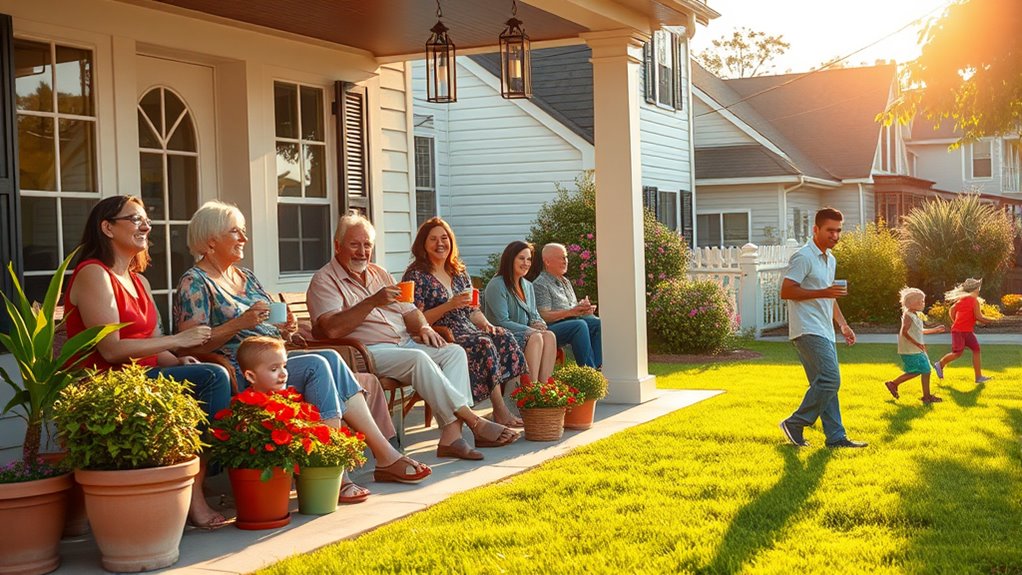
Have you ever wondered how building strong relationships with your neighbors can make life easier and more enjoyable? When you actively connect with those living nearby, you create a network of support that benefits everyone. One of the easiest ways to start is by participating in community events. Attending neighborhood picnics, block parties, or local fairs not only introduces you to new faces but also fosters a sense of camaraderie. These gatherings give you opportunities to share interests, exchange contact information, and build trust. Over time, you’ll find that your neighbors become familiar allies you can rely on in various situations.
Getting involved in community events also enhances neighborhood safety. When residents come together to organize neighborhood watch programs or safety meetings, they develop a collective awareness that discourages crime. Knowing your neighbors and being familiar with their routines helps you notice unusual activity more easily. By attending safety seminars or workshops offered during community events, you learn valuable tips on crime prevention and emergency preparedness. Your proactive participation can make your neighborhood a safer place to live, as residents become more vigilant and united.
Community involvement boosts safety by fostering awareness, vigilance, and collective efforts to prevent crime and prepare for emergencies.
Building relationships through community events encourages open communication, which is crucial for neighborhood safety. When you know who belongs and who doesn’t, it’s easier to spot strangers or suspicious behavior. Sharing contact details or creating a neighborhood communication group ensures that everyone stays informed about local concerns or emergencies. This connection not only helps in responding quickly to incidents but also nurtures a sense of collective responsibility. As you get to know your neighbors better, you’ll find that looking out for one another becomes second nature, strengthening the overall safety of your community.
Moreover, engaging in these events helps break down barriers and fosters a sense of belonging. When you participate regularly, you start to see familiar faces and develop genuine friendships. These relationships make it easier to ask for help, whether you need a ride, assistance with yard work, or support during tough times. In turn, your neighbors will feel comfortable reaching out to you too, creating a reciprocal support system. This interconnectedness transforms a collection of houses into a true community where everyone looks out for each other. Being aware of safety tips and best practices can further empower residents to maintain a secure environment.

Joie Baby, Nutmeg Stroller & Mint Latch Car Seat, Travel System (Shale)
- Includes stroller and car seat: Lightweight, no base needed, from birth
- Baseless installation: Easy secure fit with built-in anchors
- One-hand fold: Compact and quick for storage
As an affiliate, we earn on qualifying purchases.
Frequently Asked Questions
How Can I Approach Shy or Introverted Neighbors Effectively?
To approach shy or introverted neighbors effectively, start by building trust through small, genuine gestures like a friendly smile or brief hello. Respect their space and avoid pressuring them to talk. Use active listening when they do engage, showing you genuinely care. Over time, consistent kindness and patience will help them feel more comfortable, making it easier to develop a supportive connection without overwhelming them.
What Are Some Common Neighborhood Support Activities?
You might be surprised to learn that neighborhood support activities include participating in community events and neighborhood patrols, which foster safety and camaraderie. These activities help neighbors connect, share resources, and look out for one another. Getting involved in local cleanups or block parties can strengthen bonds. Neighborhood patrols also promote safety, giving everyone peace of mind. Engaging in these activities is a simple way to build a stronger, more supportive community.
How Do I Handle Conflicts With Neighbors Respectfully?
When handling conflicts with neighbors, respect their boundaries and communicate calmly. Approach the situation with a friendly attitude, listen to their perspective, and share your concerns honestly. Use conflict resolution techniques like finding common ground and suggesting compromises. By staying respectful and open-minded, you can resolve disagreements peacefully and maintain a positive relationship with your neighbors. Remember, respectful dialogue helps build trust and understanding.
When Is the Right Time to Ask for Help From Neighbors?
In the age of dial-up, you’d know the right moment to ask for help from neighbors is during community events or emergencies. If you’re facing a crisis or need advice, don’t hesitate—reach out when you’re comfortable or when an issue impacts your safety. Building relationships through regular chats at local events or sharing emergency contacts makes it easier to ask for support when it matters most.
How Can I Build Long-Lasting Neighbor Relationships?
To build long-lasting neighbor relationships, engage in community events and discover shared interests. Attend local gatherings, introduce yourself warmly, and show genuine interest in their lives. Offer help when needed and be consistent in your interactions. Keep communication open and friendly, and celebrate special occasions together. By fostering trust and connection through shared activities, you’ll create strong, lasting bonds that enrich your neighborhood experience.
Conclusion
Building connections with your neighbors creates a stronger community, fosters trust, and provides support when you need it most. By reaching out, offering help, and sharing your life, you cultivate relationships that uplift and sustain you. When you open your door, open your heart, and open your mind, you build not just a network, but a family. Together, you create a neighborhood where kindness flourishes, friendships grow, and support becomes a natural part of everyday life.