To practice safe transfers from bed to chair, start by checking the environment for hazards and ensuring the supporting devices are in good condition. Use proper techniques like maintaining a stable stance, protecting your back with good body mechanics, and communicating clearly with the individual. Practice with supervision until you’re confident in your skills. If you keep practicing these steps, you’ll improve safety and comfort for both you and the person you’re assisting.
Key Takeaways
- Ensure the environment is free of hazards, with clear pathways and proper lighting before starting the transfer.
- Use appropriate assistive devices, such as transfer belts or slide sheets, to support stability and safety.
- Communicate clearly with the individual, explaining each step to promote cooperation and reduce anxiety.
- Practice proper body mechanics, including proper positioning and lifting techniques, to prevent caregiver injury.
- Regularly review and rehearse transfer techniques to build confidence and maintain safe, effective practices.
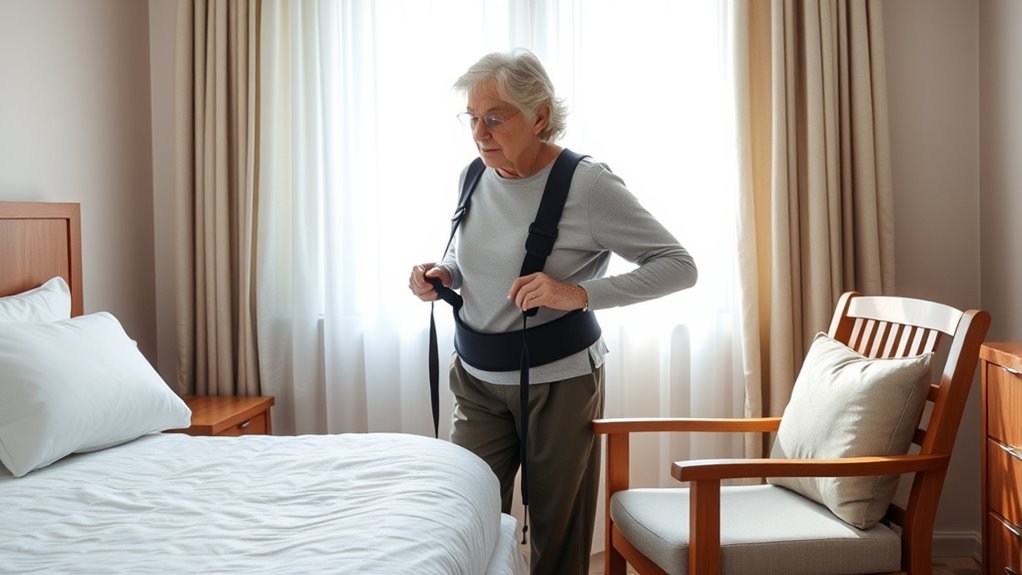
Have you ever considered how essential safe transfer techniques are in preventing injuries? When you’re helping someone move from bed to chair, it’s important to focus on proper methods to protect both yourself and the person you’re assisting. Using assistive devices can make this process safer and more manageable. These devices, such as transfer belts, slide sheets, or gait belts, provide additional support and stability, reducing the risk of slips or falls. Before attempting any transfer, verify the assistive devices are in good condition, properly fitted, and suitable for the individual’s needs. Familiarizing yourself with these tools through thorough caregiver training is fundamental. Proper training teaches you how to select the right device, position it correctly, and use it effectively during transfers. This knowledge not only enhances safety but also boosts your confidence, making the transfer smoother and less stressful.
Caregiver training is an investment in safe practice. It covers techniques like body mechanics, proper positioning, and how to communicate effectively with the person you’re helping. When you know how to lift and pivot correctly, you minimize strain on your back and joints, preventing injury. Training also emphasizes the importance of evaluating the person’s mobility, strength, and comfort before initiating the transfer. For example, if the individual has limited weight-bearing ability or joint issues, you’ll need to adapt your approach accordingly. With proper technique and the right assistive devices, you can perform transfers more efficiently, reducing fatigue and the chance of accidental slips. Additionally, understanding proper body mechanics is crucial to prevent caregiver injuries.
Practicing these skills regularly helps reinforce correct habits. Once you’re trained, take time to review and refresh your knowledge periodically. Repetition helps build muscle memory, ensuring you don’t forget critical steps, especially in high-pressure situations. Always check your environment for hazards—clear pathways, non-slip mats, and adequate lighting. Communicate clearly with the person you’re assisting, explaining each step to keep them comfortable and cooperative. Remember, patience and attentiveness are key. If you encounter resistance or difficulty, stop and reassess your approach rather than forcing the transfer. Using assistive devices correctly, combined with solid caregiver training, creates a safer transfer process that protects everyone involved.
Frequently Asked Questions
How Often Should I Practice Transfer Techniques?
You should practice transfer techniques regularly to maintain transfer consistency and reinforce your skills. Aim for daily practice if possible, especially when you’re still learning or recovering. Consistent practice helps build confidence and guarantees safety during transfers. Keep sessions short but frequent, focusing on proper form each time. Over time, this reinforcement will make transfers smoother and safer, reducing the risk of falls or injuries.
What Equipment Can Assist Safe Transfers?
Think of your transfer as a well-choreographed dance—you need the right tools to stay in sync. Assistive devices like transfer belts, grab bars, and transfer boards help you perform safe transfer techniques with confidence. These tools provide stability and support, reducing fall risks. By incorporating the right equipment, you can make transfers smoother and safer, ensuring you maintain independence while minimizing injury.
How Do I Prevent Falls During Transfers?
To prevent falls during transfers, you should guarantee clear caregiver communication, giving step-by-step instructions and maintaining eye contact. Make environmental adjustments by removing clutter, securing rugs, and positioning furniture for easy access. Use appropriate transfer equipment, like gait belts or transfer boards, and always check stability before proceeding. Your attentive communication and environment setup help create a safe, confident transfer, reducing the risk of falls for yourself and the person you’re assisting.
Are There Specific Exercises to Improve Transfer Strength?
You can improve your transfer strength with targeted strength training exercises like seated leg lifts, squats, and hip bridges. Practice proper transfer techniques, such as maintaining a stable base and engaging core muscles, to enhance your stability. Regularly doing these exercises helps build muscle strength, making transfers safer and easier. Remember to start slowly and increase intensity gradually, and always follow your healthcare provider’s recommendations for safe practice.
What Should I Do if I Experience Pain During Transfer?
If transfer discomfort strikes like a sudden storm, stop immediately. You should communicate with your healthcare provider for pain management strategies tailored to you. Adjust your technique gently, as if steering a delicate boat through choppy waters, to reduce pain and prevent injury. Remember, listening to your body is key—ignoring pain can turn small waves into a rough sea. Prioritize safety and seek guidance to make transfers smoother and more comfortable.
Conclusion
So, next time you’re tempted to toss yourself into that chair like a superhero, remember: practicing safe transfers isn’t just for fun—though it might be more exciting that way. Keep your wits about you, use proper technique, and avoid turning your daily routine into a slapstick comedy. After all, staying safe means you get to sit back and enjoy life, not a trip to the emergency room. Safety first—because falling isn’t exactly a walk in the park!