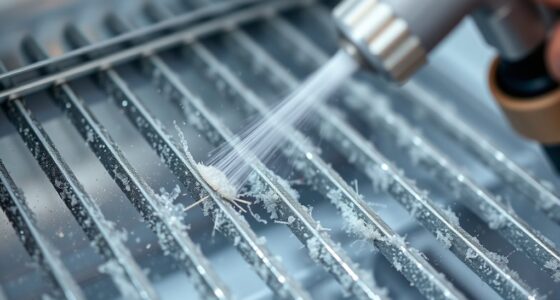

To prepare your home for spring cleaning, start by gathering organizing tools like baskets, bins, and labels to sort your belongings. Air out rooms by opening windows to refresh the air and reduce allergens. Declutter thoroughly to make cleaning easier and more effective. Create a checklist for each space and gather cleaning supplies beforehand to stay focused. For more tips on streamlining your spring cleaning, keep exploring the best strategies to transform your home.
Key Takeaways
- Gather organizing tools like baskets, labels, and shelves to sort and categorize items efficiently.
- Air out rooms by opening windows and doors to improve airflow and reduce indoor allergens.
- Declutter and sort belongings to simplify cleaning and create a more organized space.
- Prepare a cleaning checklist and gather supplies such as microfiber cloths and all-purpose cleaners.
- Focus on areas prone to winter clutter first and create a comprehensive plan for thorough cleaning.

Spring is the perfect time to refresh your home, but before diving into cleaning, it’s important to prepare your space. The first step is to gather your organizing tools. These can include baskets, bins, shelves, and labels that help you sort through clutter efficiently. Having the right tools at hand makes it easier to categorize items, decide what to keep, donate, or toss, and create a sense of order. As you start sorting, focus on areas that tend to accumulate clutter during the winter months, like closets, drawers, and under-sink cabinets. Clear space now so you can work more effectively during your cleaning sessions.
Next, airing out your rooms is essential to freshen your environment and eliminate any stale odors. Open windows and doors to allow fresh air to circulate throughout your home. This not only helps reduce indoor air pollution but also prepares the space for a deeper clean. During this process, you might notice dust and allergens that have settled in your curtains, furniture, or carpets. Airing out the rooms gives you a chance to assess what needs extra attention, like vacuuming or dusting, and helps you create a more inviting atmosphere for your spring cleaning efforts.
Before you start scrubbing and dusting, take a moment to declutter. Use your organizing tools to separate items into categories, making it easier to see what you really need and what can be discarded. This step lightens your workload later on and ensures your space remains organized after cleaning. Also, consider creating a cleaning checklist tailored to each room. This way, you won’t overlook essential tasks like cleaning windows, wiping down baseboards, or sanitizing high-touch surfaces. Preparing your cleaning supplies in advance, such as microfiber cloths, all-purpose cleaners, and vacuum attachments, keeps you focused and efficient. Additionally, understanding the effectiveness of hydrocolloid patches can inspire you to incorporate targeted cleaning methods for specific problem areas, ensuring a comprehensive spring cleaning.

Momcozy Universal Stroller Organizer with Insulated Cup Holder
- Structured Organizer with Multiple Pockets: Internal multi-functional partition design
- Insulated Cup Holders: Includes 2 insulated cup holders
- Large Capacity Storage: Fits essentials like phone, wallet, and more
As an affiliate, we earn on qualifying purchases.
Frequently Asked Questions
How Do I Remove Stubborn Stains From Carpet Fibers?
To remove stubborn stains from carpet fibers, start by applying a mixture of white vinegar and water or a specialized stain remover. Blot the stain gently with a clean cloth, avoiding rubbing, which can damage the fibers. Use stain removal techniques like gentle scrubbing with a soft brush. Always follow carpet fiber care instructions, and consider testing cleaners on a small hidden area first to prevent damage.
What’s the Best Way to Organize Cleaning Supplies Efficiently?
Did you know that an organized space can boost your cleaning efficiency by up to 30%? To keep your supplies accessible, use smart storage solutions like stackable bins or wall-mounted racks. Implement labeling strategies on bins and bottles to quickly find what you need. Keep frequently used items at eye level, and store seldom-used supplies elsewhere. This approach saves time and keeps your cleaning routine smooth and stress-free.
How Can I Prevent Mold After Cleaning Damp Areas?
To prevent mold after cleaning damp areas, guarantee proper mold prevention by thoroughly drying the space. Use fans or dehumidifiers to reduce moisture levels, and regularly maintain damp areas like bathrooms and basements. Keep surfaces clean and well-ventilated, and fix leaks promptly. Consistent damp area maintenance prevents moisture buildup, which is essential in stopping mold growth and keeping your home healthy and mold-free.
What Eco-Friendly Products Are Safest for Children and Pets?
Did you know that nearly 60% of parents worry about harmful chemicals in household cleaners? For eco-friendly cleaning, choose products labeled as child safe, free from harsh chemicals like ammonia and bleach. These child-safe products use natural ingredients, making them safe for kids and pets. By opting for eco-friendly cleaning options, you protect your loved ones and the environment simultaneously, creating a healthier home for everyone.
How Often Should I Deep Clean Different Home Areas?
You should deep clean different home areas based on their usage and your seasonal scheduling. For high-traffic spaces like kitchens and bathrooms, aim for every 1-3 months. Less-used areas, like guest rooms, can be cleaned every 3-6 months. Follow the frequency guidelines to keep your home fresh and healthy. Regular deep cleaning prevents buildup of dirt and germs, making your environment safer for everyone, especially children and pets.
Conclusion
With your home now ready for spring cleaning, think of it as a garden waiting to bloom anew. As you clear away the dust and clutter, you’re planting the seeds for freshness and renewal. Embrace this opportunity to refresh not just your space, but your spirit. When you’re done, your home will shine brighter than ever, like a garden bursting into color after a long winter’s sleep. Now, step back and enjoy the beauty of your refreshed sanctuary.