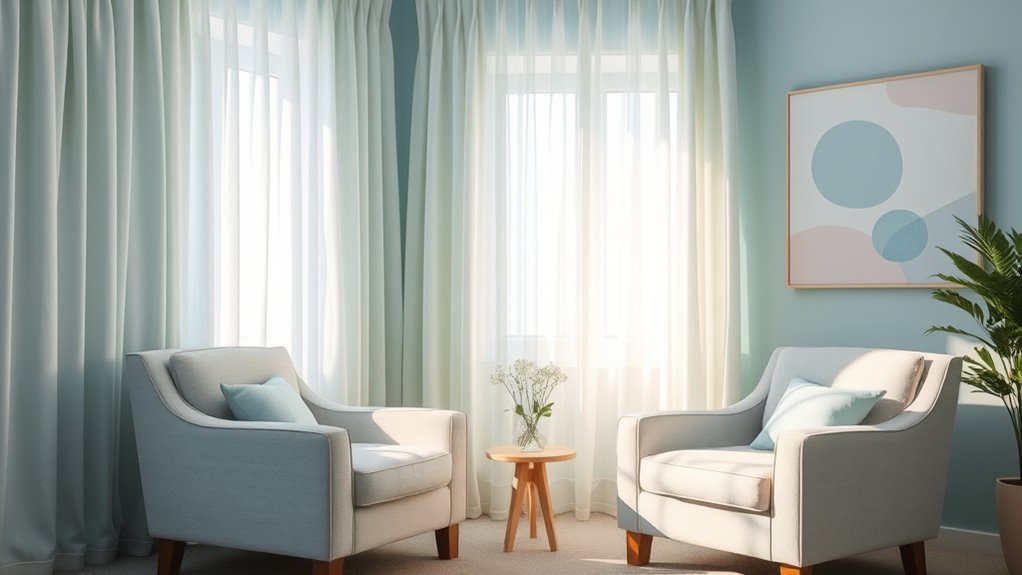

When selecting pastel blues and greens for dementia care, you create calming environments that promote emotional stability and reduce agitation. These colors evoke trust, safety, and harmony, helping residents feel secure and relaxed. They also enhance sensory comfort and support easier wayfinding through strategic use of visual cues. Pairing these shades with natural materials strengthens connections to nature, creating spaces that are both soothing and functional. Keep exploring to discover how these colors can transform your care environment further.

Turn the school run and nap time into listening time
- Thousands of audiobooks, podcasts and originals
- Listen on your phone, tablet or Echo — also offline
- Cancel anytime
Key Takeaways
- Use pastel blues and greens to create calming, trustworthy environments that reduce agitation and promote emotional stability.
- Incorporate these colors as visual cues for easy navigation and wayfinding for residents with spatial awareness difficulties.
- Pair pastel blues and greens with natural materials like wood to reinforce a connection to nature and enhance relaxation.
- Apply muted tones to minimize sensory overload and support cognitive function through gentle visual stimulation.
- Design versatile spaces with these colors to foster a peaceful, familiar atmosphere that enhances overall well-being.

Choosing the right colors for dementia care environments can substantially impact residents’ comfort and well-being. When selecting colors like pastel blues and greens, you’re leveraging the principles of color psychology to create calming, welcoming spaces. These hues are known for their soothing qualities, which can help reduce agitation and promote relaxation among residents. By understanding how color influences mood and behavior, you can design environments that support residents’ emotional stability and sense of security. Pastel blues evoke feelings of tranquility and trust, encouraging residents to feel more at ease in their surroundings. Similarly, pastel greens symbolize renewal and harmony, fostering a peaceful atmosphere that can lessen feelings of confusion or distress.
In addition to emotional benefits, pastel blues and greens contribute to sensory stimulation without overwhelming the senses. Sensory stimulation plays a essential role in dementia care, helping to maintain cognitive functions and improve overall quality of life. These soft, muted colors are gentle on the eyes and can help create a visually harmonious environment, reducing visual clutter that might cause confusion or agitation. When you incorporate these colors thoughtfully, you provide residents with visual cues that support orientation and comfort, making it easier for them to navigate their surroundings. The subtle contrasts and harmonious tones of pastel blues and greens can enhance depth perception, making spaces feel more accessible and less intimidating. Moreover, research shows that color contrast can influence visual clarity and spatial awareness, which is particularly beneficial in dementia environments.
Furthermore, these colors can be used strategically to highlight specific areas within a care setting, such as entrances, restrooms, or activity zones. By doing so, you create visual landmarks that aid in wayfinding, which is especially important for individuals with dementia who may struggle with spatial awareness. Pastel blues and greens are versatile, pairing well with neutral tones or natural materials like wood and stone, reinforcing a connection to nature. This connection can further promote relaxation and a sense of familiarity, which is crucial for residents in unfamiliar environments.
Ultimately, choosing pastel blues and greens for dementia care environments isn’t just about aesthetics; it’s about intentionally shaping spaces that nurture residents’ mental and emotional health. These colors support calming sensory stimulation and help foster a sense of safety and stability. When you apply an understanding of color psychology and sensory needs, you’re creating more than just a visually appealing space—you’re crafting an environment that enhances residents’ overall well-being, making their daily experience more comfortable, familiar, and soothing.
dementia care calming room decor
As an affiliate, we earn on qualifying purchases.
As an affiliate, we earn on qualifying purchases.
Frequently Asked Questions
How Do Pastel Blues and Greens Affect Dementia Patients’ Mood?
You’ll find that pastel blues and greens positively influence dementia patients’ mood through color psychology, promoting calmness and reducing agitation. These soft hues enhance visual comfort, making surroundings less overwhelming and easier to process. By choosing these gentle colors, you create a soothing environment that helps patients feel secure and relaxed, ultimately supporting their emotional well-being and reducing stress in their daily routine.
Are These Colors Suitable for All Stages of Dementia?
Pastel blues and greens can be suitable across various dementia stages, but consider color brightness and cultural associations. Softer shades help calm agitation, especially in early stages, while slightly brighter tones may stimulate late-stage patients. Be mindful of cultural meanings; some cultures associate certain greens or blues with specific emotions or beliefs. Adjust the brightness and hue accordingly to create a soothing, culturally sensitive environment that adapts to each stage’s needs.
Can Color Choices Influence Patient Safety and Navigation?
Yes, your color choices can influence patient safety and navigation. Using color contrast helps residents distinguish different areas, reducing confusion and falls. Incorporate lighting effects to enhance visibility and prevent accidents. Bright, contrasting colors in key areas like doorways and staircases guide residents safely through their environment. Proper lighting combined with strategic color contrasts supports better orientation, making it easier for dementia patients to navigate confidently and safely.
How Do Environmental Factors Impact Color Perception in Dementia Care?
Ironically, environmental factors like poor lighting and low visual contrast can turn a vibrant space into a confusing maze for someone with dementia. You might think softer colors are calming, but if lighting isn’t adequate, they blend into the surroundings, impairing perception. Bright, well-lit environments with strong visual contrast help residents distinguish objects and pathways clearly, reducing disorientation and enhancing safety. Properly managing these factors makes a real difference in their daily navigation.
What Are the Best Ways to Implement These Colors in a Care Setting?
To implement pastel blues and greens effectively, optimize lighting to reduce glare and enhance color perception. Use soft, even lighting to create a calming environment. Choose wall paint textures that are smooth and matte to prevent reflections and confusion. Incorporate these colors in key areas like hallways and bedrooms, and coordinate furniture and decor to complement the palette, fostering a soothing, supportive space for dementia care.
Conclusion
Choosing pastel blues and greens creates a calming, comforting environment, fostering peace and reducing anxiety. These gentle hues support recognition, encourage relaxation, and promote well-being. By selecting colors that soothe, you help dementia patients feel safe, understood, and at ease. Prioritize these soft tones to create a space that nurtures, relaxes, and reassures. Ultimately, your choice of calming colors makes a meaningful difference in their daily comfort, their sense of security, and their quality of life.
Halloween Picks
halloween
As an affiliate, we earn on qualifying purchases.