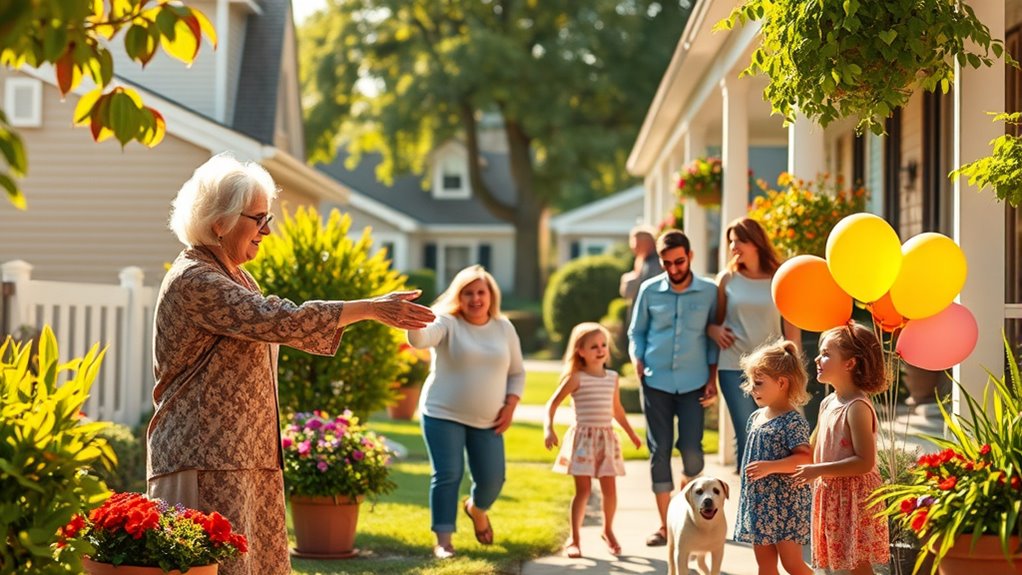

Reaching out to neighbors for support starts with small gestures, like saying hello or inviting someone over for coffee. Participating in neighborhood events such as block parties or casual gatherings helps build trust and familiarity. As you get involved, you’ll notice new opportunities to ask for help or offer assistance, making your community stronger and more supportive. If you keep exploring, you’ll discover even more ways to foster lasting connections and create a caring environment.
Key Takeaways
- Initiate casual conversations during neighborhood events or gatherings to build trust and open lines of communication.
- Organize small, inclusive activities like coffee meet-ups or cleanup days to foster stronger relationships.
- Offer help with tasks or errands, demonstrating support and encouraging neighbors to do the same.
- Use community platforms or social media groups to stay connected and share needs or offers of assistance.
- Be proactive in checking on neighbors, especially during emergencies or difficult times, to strengthen your support network.
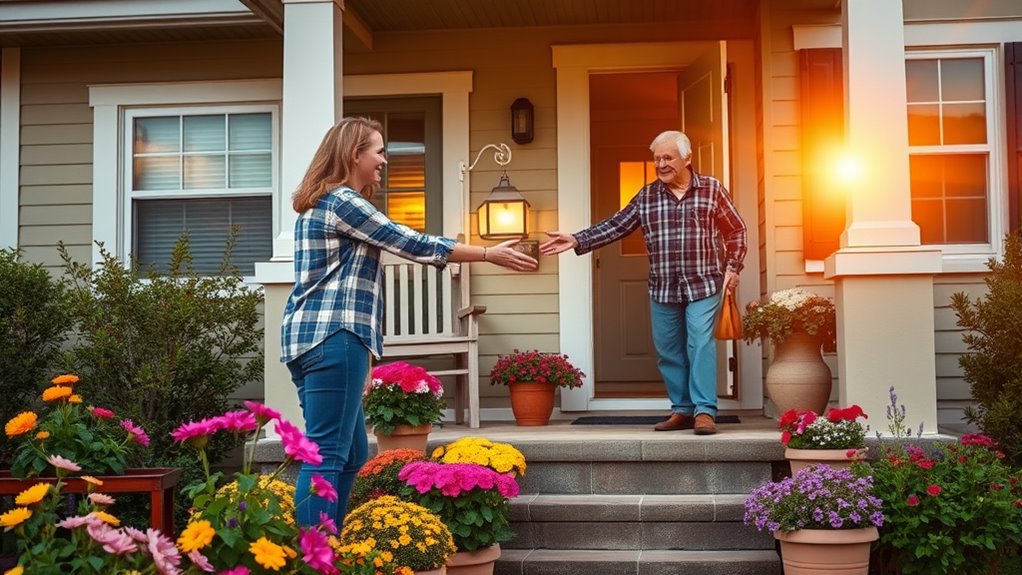
Have you ever wondered how a simple gesture can transform your neighborhood? Reaching out to your neighbors isn’t just about exchanging pleasantries; it’s about building a sense of community that strengthens everyone’s feeling of belonging. One of the most effective ways to foster this connection is through community bonding, which can happen naturally during neighborhood events. Whether it’s a block party, a holiday gathering, or a casual barbecue, these gatherings create opportunities for neighbors to interact, share stories, and develop trust. When you participate in or even host a neighborhood event, you send a message that you care about your community, encouraging others to do the same. Over time, these events become a foundation for support, making it easier to ask for help or offer assistance when needed.
Neighborhood events serve as more than just social occasions—they’re powerful tools for cultivating bonds that last. When you attend a local picnic or holiday celebration, you’re not only enjoying good company but also reinforcing the idea that your neighborhood is a safe, welcoming place. These events often lead to spontaneous acts of kindness, like lending a tool, watering a neighbor’s plants, or checking on someone who might be feeling lonely. As community bonding deepens, it becomes natural to reach out in times of need, whether it’s offering a ride, sharing resources, or simply being there to listen. The development of community bonds can significantly enhance your neighborhood’s resilience and overall quality of life. The more you engage in neighborhood activities, the more you’ll realize how much strength and resilience can develop through these connections.
Taking the initiative to organize a neighborhood event can be surprisingly simple, and it often sparks a wave of engagement. You might start small—perhaps a monthly coffee meet-up or a cleanup day—and gradually expand as more neighbors get involved. When neighbors see that someone cares enough to organize an event, it encourages them to participate and contribute their own ideas. This collective effort not only enhances community bonding but also creates a support network where everyone feels valued. Over time, these relationships foster mutual trust, making it easier to reach out in moments of crisis or celebration. In essence, neighborhood events act as catalysts for creating a supportive environment, where reaching out becomes second nature.

Greencian 96Pcs Summer Beach Pool Party Decorations Neighborhood Block Plates and Napkins Pool Beach Tableware Set for Summer Birthday BBQ Picnic Block Neighborhood Street Party Supplies, Serves 24
- Complete Party Set for 24 Guests: Includes plates, napkins, and forks
- Vibrant Coastal and Summer Design: Bright, cheerful beach-themed patterns
- Durable High-Quality Materials: Sturdy paper plates and strong plastic forks
As an affiliate, we earn on qualifying purchases.
As an affiliate, we earn on qualifying purchases.
Frequently Asked Questions
How Do I Approach a Neighbor I Don’T Know Well?
You can approach a neighbor you don’t know well by starting with a friendly smile and introducing yourself. Mention community events or casual conversations as common ground to break the ice. Compliment something about their yard or ask about local activities. Keep it light and genuine, and listen actively. This friendly approach helps build trust and opens the door to ongoing conversations and support within your neighborhood.
What if My Neighbor Declines to Help?
If your neighbor declines to help, don’t take it personally; about 60% of people worry about rejection or trust issues when asked for support. Remember, rejection fears are common, and it doesn’t mean they don’t care. Respect their decision, stay friendly, and consider trying again later or finding other neighbors. Building trust takes time, so don’t give up—your willingness to connect can still open doors in the future.
How Can I Build Trust With New Neighbors?
You can build trust with new neighbors by attending community events and engaging in shared interests. Introduce yourself warmly and show genuine curiosity about their lives. Volunteer for neighborhood activities or organize small get-togethers to foster connection. Consistent friendliness and reliability help establish trust over time. By actively participating and showing you care about the community, you’ll create a foundation of mutual respect and understanding.
Are There Cultural Considerations When Reaching Out?
You should be aware that cultural sensitivities and communication styles vary widely. If you reach out thoughtfully, you’ll avoid misunderstandings and build genuine connections. Pay attention to cues—some cultures favor directness, others prefer subtlety. Respect boundaries and adapt your approach accordingly. When you show curiosity and listen actively, you demonstrate respect and openness, paving the way for trust to grow naturally, no matter the cultural differences.
When Is the Best Time to Ask for Support?
You should ask for support when you feel emotionally ready and confident in your timing. Trust your instincts and choose a moment when your neighbor is likely to be receptive, showing timing sensitivity. Avoid busy or stressful times; instead, look for a calm, private moment. When you approach with honesty and respect, your neighbors will appreciate your vulnerability and be more inclined to help.
Conclusion
By reaching out to your neighbors, you foster stronger community bonds and create a support network that benefits everyone. Some believe that these connections can lead to a safer, happier neighborhood, as people look out for one another. While it might seem simple, building these relationships can truly transform your environment. So, take that first step—knock on a door or share a smile. You might just discover a neighbor who becomes a lifelong friend.