
After a fall, you should guarantee the senior’s safety by providing immediate emotional support and checking for injuries. Then, review their home for hazards like loose rugs or poor lighting, and consider installing grab bars and handrails. Encourage gentle exercises to improve strength and balance, and stay on top of medication and vision care. Taking these steps helps prevent future incidents. Keep exploring ways to protect and support your loved one for long-term safety.
Key Takeaways
- Provide immediate emotional support, ensure safety, and assess medical needs to address fear and prevent further injury.
- Implement home modifications like grab bars, secure rugs, and improve lighting to reduce fall risks.
- Encourage balance and strength exercises tailored to the senior’s health to improve stability and confidence.
- Monitor health factors such as medication, vision, and overall health to proactively prevent future falls.
- Promote outdoor safety and hazard awareness, especially during seasonal changes, to maintain activity safely.

A fall can be be a frightening experience for seniors, but how you respond afterward can make all the difference in their recovery. Your immediate reaction sets the tone for their physical and emotional healing. First, guarantee they’re safe and assess whether they need urgent medical attention. Once their safety is confirmed, focus on providing emotional support. Reassure them that falls happen and that they’re still valued and loved. Your calm presence can reduce feelings of fear or embarrassment, helping them regain confidence. It’s important to listen to their concerns and fears, validating their feelings without dismissing them. This emotional support is vital in preventing feelings of helplessness or anxiety that often follow such incidents.
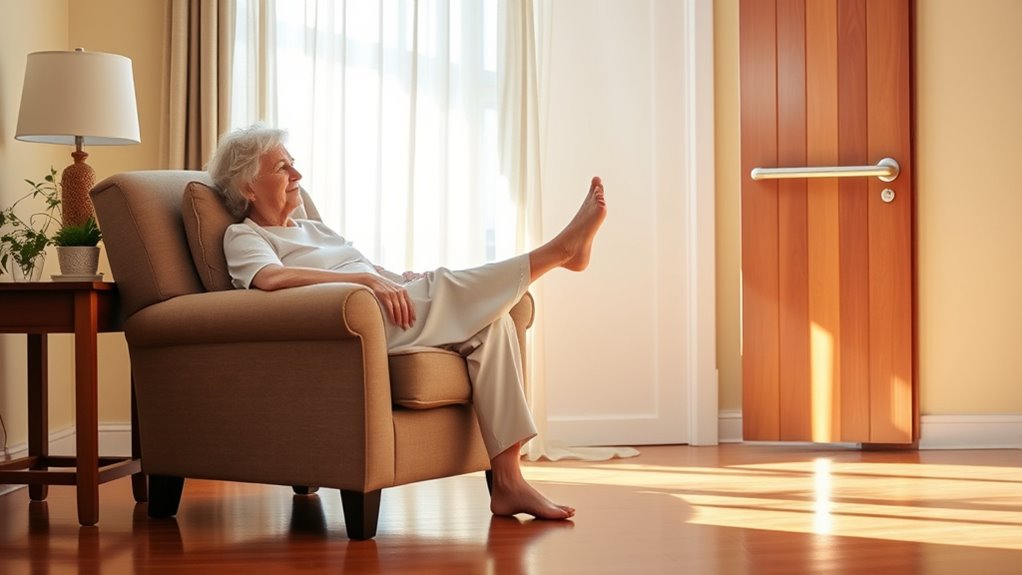
After guaranteeing their well-being, consider making home modifications to reduce future fall risks. Simple changes like installing grab bars in bathrooms, securing loose rugs, and adding better lighting can dramatically improve safety. Stairs can be a hazard, so adding handrails and keeping pathways clear can prevent future accidents. You might also consider rearranging furniture to create clear walking paths or using non-slip mats in frequently used areas. These modifications don’t just enhance safety; they also help your loved one feel more secure and independent in their environment. When they see that their space is tailored to keep them safe, it can boost their confidence and reduce anxiety about falling again. Additionally, home safety assessments can help identify specific risks unique to their living space and guide effective modifications.
Alongside physical changes, encourage habits that promote balance and strength, such as gentle exercises or physical therapy, if recommended by their healthcare provider. Regular activity can improve muscle strength and coordination, further decreasing fall risk. Communicate openly about these precautions, emphasizing that your goal is to support their independence while keeping them safe. Remember, emotional support isn’t just comforting; it’s empowering. A senior who feels supported and understood is more likely to cooperate with safety measures and participate in activities that keep them healthy. Additionally, incorporating digital literacy programs can help seniors feel more confident using technology to stay connected and safe, especially if they are prone to falls or accidents.
Finally, keep an eye on their overall health, including medication management and vision checks, since these factors can influence fall risk. Staying proactive and involved in their care shows that you’re committed to their well-being. Additionally, understanding the importance of preventive measures can help you better protect your loved one from future incidents. In the end, how you respond after a fall—combining practical safety measures with emotional reassurance—can profoundly impact their recovery and future safety. Your attentiveness and compassion make a real difference, helping seniors navigate the aftermath of a fall with confidence and security. Moreover, engaging in outdoor activities like seasonal outdoor safety can help seniors stay active while minimizing hazards associated with changing weather conditions.

Stroller Organizer with Cup Holder, Non-Slip Stroller Caddy Baby Essentials
- Large Capacity Storage: Holds bottles, diapers, toys, snacks
- Ideal Baby Shower Gift: Perfect for new moms and dads
- Universal Compatibility: Fits Uppababy, Baby Jogger, more
As an affiliate, we earn on qualifying purchases.
Frequently Asked Questions
How Can I Emotionally Support a Senior After a Fall?
When a senior experiences a fall, you can offer emotional reassurance by calming their fears and reminding them they’re safe. Use active listening to understand their feelings and concerns, showing empathy and patience. Let them express their worries without interrupting. Your supportive presence and gentle words can help reduce anxiety, rebuild confidence, and foster trust, making them feel cared for and secure during this vulnerable time.
What Are Signs of Internal Injuries Post-Fall?
You should watch for signs of internal injuries like severe pain, swelling, dizziness, nausea, or vomiting after a fall. If you notice blood in urine or stool, difficulty breathing, or an altered mental state, seek medical help immediately. To prevent future incidents, implement fall prevention strategies such as installing grab bars, removing tripping hazards, and encouraging regular eye and health check-ups. Staying vigilant helps protect your loved one from serious complications.
How Do I Manage Medication Adjustments After a Fall?
You should consult your healthcare provider to oversee medication adjustments after a fall. They can review your current medications for interactions and determine if dosage management is necessary to prevent future incidents. Avoid making changes on your own, as improper adjustments might cause adverse effects. Your provider may also recommend additional tests or therapies to ensure your safety and reduce fall risk moving forward.
When Should I Consider Professional Home Modifications?
You should consider professional home modifications when you notice ongoing safety concerns or mobility challenges. Improving home safety might involve installing grab bars, removing tripping hazards, or widening doorways for better mobility aids use. If your senior struggles with balance or uses mobility aids, these modifications can prevent future falls. Consulting an expert guarantees changes are effective, safe, and tailored to meet their specific needs, promoting independence and peace of mind.
How Can I Help a Senior Regain Confidence After Falling?
Imagine your loved one hesitating to walk after a fall. To help them regain confidence, encourage gentle exercise routines tailored to their abilities, like balance and strength exercises. Introduce mobility aids gradually, ensuring they feel secure using them. Celebrate small victories to rebuild their trust in their abilities. Your support and patience boost their confidence, empowering them to move independently and safely again.
Conclusion
Remember, each fall is a signal, a gentle nudge from life reminding you to strengthen your loved one’s safety net. By making your home a fortress of care and vigilance, you’re planting seeds of stability that grow into a shield of confidence. Together, you build a sturdy bridge over uncertain waters, ensuring their days ahead are calmer and more secure. With your caring hands, you turn a fragile moment into a foundation for a safer tomorrow.