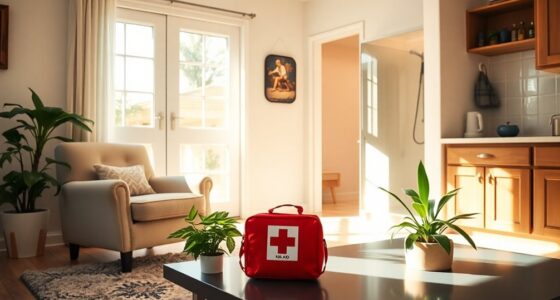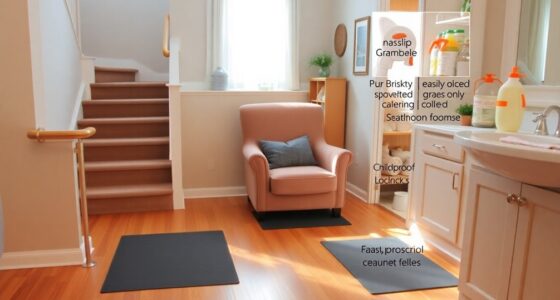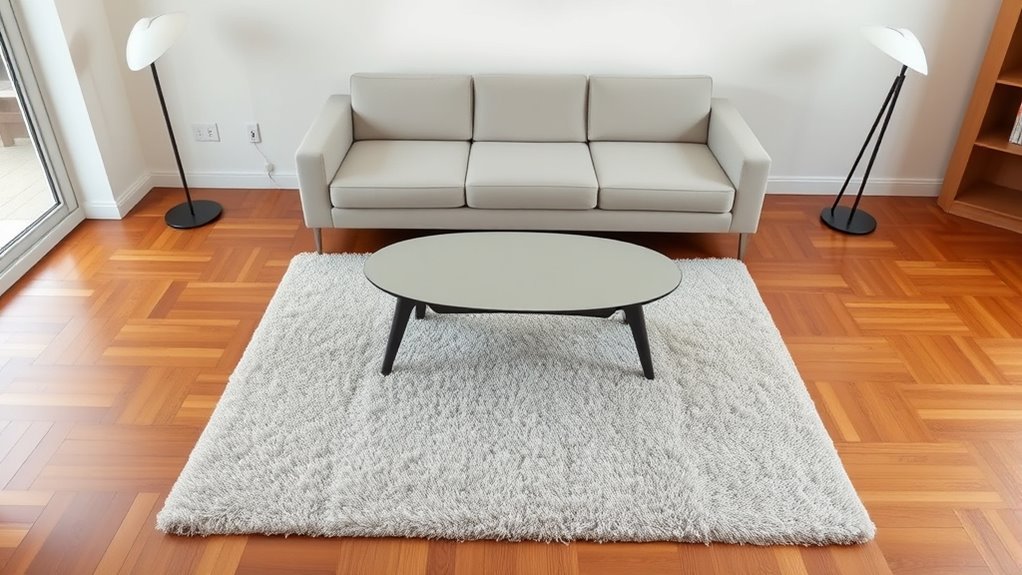

To avoid trips, arrange your furniture so walkways are clear and at least 36 inches wide. Keep pathways well-lit and avoid pushing furniture against walls haphazardly; instead, follow the natural flow of movement. Place sofas and chairs to provide easy access to doors and stairs, and add protective pads to sharp corners. Regularly review your setup to spot potential hazards and make adjustments, so your space remains both safe and functional. If you keep these tips in mind, you’ll create a safer home environment.
Listen free for 30 days with Audible
Thousands of audiobooks and originals — cancel anytime.
As an affiliate, we earn on qualifying purchases.
Key Takeaways
- Maintain walkways at least 36 inches wide to ensure safe navigation and prevent cluttered pathways.
- Avoid placing furniture against walls randomly; arrange it to facilitate natural flow and unobstructed movement.
- Use furniture with rounded edges or add protective pads to reduce injury risk from sharp corners.
- Keep stairs and high-traffic areas clear and well-lit to prevent trips and falls.
- Regularly review and adjust furniture placement to maintain unobstructed pathways and enhance safety.
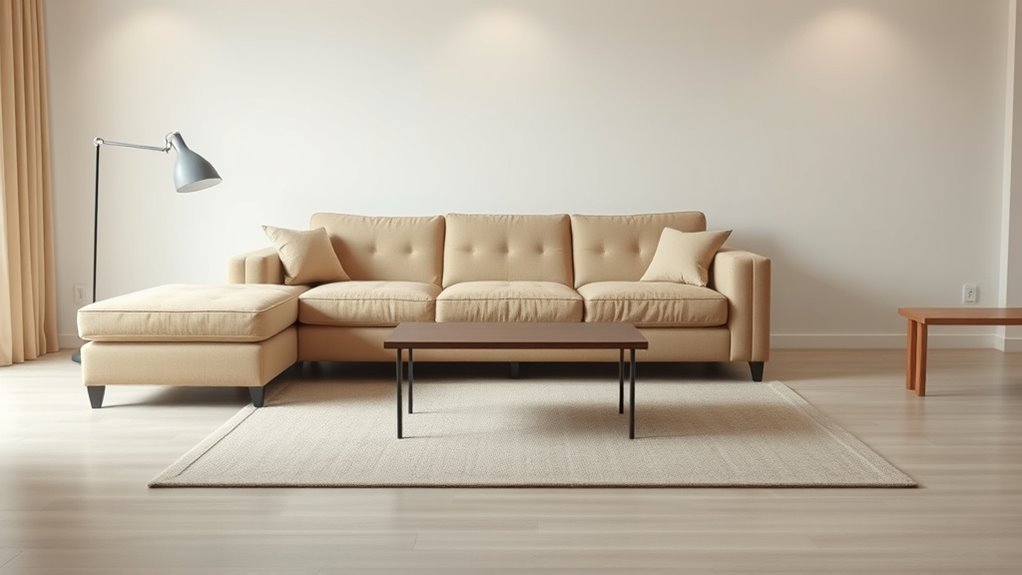
To prevent accidents and guarantee safe movement through your home, it’s essential to position furniture thoughtfully. Proper placement not only minimizes trip hazards but also enhances the overall flow of your space. When you focus on hazard prevention, you create a safer environment for everyone, especially children, elderly family members, or guests who might not be familiar with your layout. Starting by evaluating your rooms, look for areas where furniture might obstruct walkways or create tight spots that force you to squeeze past. Clear pathways should be at least 36 inches wide to allow effortless navigation. This way, you avoid cluttered corridors that increase the risk of trips and falls.
Arrange furniture to keep walkways at least 36 inches wide for safer, unobstructed movement.
Space optimization plays a vital role here, helping you make the most of your room while keeping it safe. Instead of pushing furniture against walls haphazardly, consider the natural flow of movement. For example, position sofas and chairs in a way that encourages easy access to doors, windows, and other frequently used areas. Think about multifunctional furniture that offers storage — ottomans with hidden compartments or beds with drawers — to reduce clutter and free up space. When furniture is arranged efficiently, you prevent overcrowding, which is often a culprit behind trips. It’s wise to avoid placing small objects or decorative items in walkways; these can easily be overlooked and cause accidents.
Lighting also plays a key role in hazard prevention. Make sure pathways are well-lit, especially in hallways, staircases, and entrances. Proper lighting helps you see potential obstacles and navigate safely during nighttime or in dim conditions. When positioning larger furniture pieces, keep in mind the height and shape to avoid sharp edges or protruding legs that might catch your foot. Consider furniture with rounded corners or adding protective pads to sharp edges for added safety. Additionally, hazard awareness is crucial in maintaining a safe environment, so regularly inspecting your space helps identify and address potential risks.
Additionally, be mindful of furniture placement near stairs or uneven surfaces. Always keep these areas clear and well-marked, so you’re less likely to trip. Regularly review your furniture arrangement, especially after moving or redecorating, to make certain pathways remain unobstructed. By intentionally placing furniture with hazard prevention and space optimization in mind, you foster a home environment that’s not only aesthetically pleasing but also safe and functional. This proactive approach reduces the likelihood of trips and falls, giving you peace of mind and a more comfortable living space.
As an affiliate, we earn on qualifying purchases.
Frequently Asked Questions
How Can I Ensure Furniture Placement Doesn’T Obstruct Emergency Exits?
To guarantee your furniture doesn’t obstruct emergency exits, keep fire escape accessibility clear at all times. Use furniture arrangement tips like placing larger pieces away from doors and pathways, and avoid blocking windows or exits with chairs or couches. Regularly check that pathways are unobstructed, and keep clutter away near emergency routes. By staying mindful of your furniture placement, you create a safer environment that allows quick evacuation when needed.
What Tools Are Best for Measuring Safe Clearance Distances?
Did you know that improper furniture placement causes over 20% of home trips? To guarantee safe clearance distances, you should use reliable measuring tools like tape measures, laser distance meters, or rulers. Always follow clearance standards set by safety codes or guidelines, which specify minimum distances between furniture and walkways. Using these tools helps you accurately measure and maintain safe clearances, reducing trip hazards and ensuring a safer living space.
How Often Should I Reassess Furniture Setup for Safety?
You should reevaluate your furniture setup regularly through inspections, ideally every few months, to guarantee safety. Conduct seasonal adjustments to account for changes in household activity or lighting, which can affect visibility and clearance. By making these routine checks, you ensure furniture remains positioned to prevent trips and falls. Staying proactive helps you identify potential hazards early, keeping your space safe and accessible for everyone.
Are There Specific Furniture Styles That Are Safer for High-Traffic Areas?
You should choose furniture with smooth edges and stable bases for high-traffic areas to enhance furniture safety. Select modern, minimalist designs that keep walkways clear and avoid bulky pieces that can cause trips. Prioritize low-profile furniture and those with non-slip feet. Good high traffic design minimizes obstacles, ensuring safety and easy movement. Regularly reassess to maintain ideal safety, especially if furniture placement or styles change.
How Do I Make Furniture More Visible in Dimly Lit Rooms?
You might think your furniture is obvious, but in dimly lit rooms, it’s easy to miss. To boost visibility, prioritize lighting enhancement—add brighter bulbs, lamps, or sconces. Use color contrast by choosing furniture in shades that stand out against your walls, making pieces easier to see. These simple tricks turn your space from a trip hazard to a safe haven, proving that sometimes, the smallest details make the biggest difference.
Conclusion
By thoughtfully arranging your furniture, you create a safe and inviting space where trips are less likely to happen. Keep walkways clear, avoid placing furniture in high-traffic areas, and consider the flow of movement—like a well-choreographed dance. Remember, even in a Victorian parlor, furniture placement can make all the difference. So, take a moment to plan, and you’ll enjoy a safer, more comfortable home every day.
Fall Picks
fall essentials
As an affiliate, we earn on qualifying purchases.