High-end camping coolers trade lower cost and lighter carry weight for sturdier construction, better insulation, or easier campsite transport. My best overall pick is the YETI Tundra 65, a balanced hard cooler for groups that need useful capacity without jumping to an oversized chest. The Lifetime 115-Quart stands out for buyers who want generous room, while the Ninja FrostVault 45-Quart Wheeled Cooler offers a more manageable format with wheels. The main choice is between capacity, portability, and paying for premium build details that matter most on frequent or extended trips. Read on for the full breakdown of all 13 options and how I’d match them to different camping needs.

Turn the school run and nap time into listening time
- Thousands of audiobooks, podcasts and originals
- Listen on your phone, tablet or Echo — also offline
- Cancel anytime
Complete the kit


Key Takeaways
- The YETI Tundra 65 is the balanced pick: it sits between compact models and the larger 75- and 110-quart options, which can be easier to justify for mixed-use camping.
- Big capacity brings a handling penalty: the Lifetime 115-Quart, YETI Tundra 110, and Igloo Polar are better suited to vehicle-based trips than frequent carrying over distance.
- Wheels change campsite logistics: the Ninja FrostVault 45 and Coleman Classic rolling model address transport differently from the lineup’s carry-style hard coolers.
- Premium construction is not the same as the best fit: YETI, Dometic, and Pelican offer premium-positioned choices, but a smaller or simpler cooler may serve occasional campers better.
- There is a clear compact-to-group spectrum: the Stanley Adventure 24 qt and YETI Tundra 35 favor modest loads, while the 65- to 115-quart choices suit larger provisions and longer stays.
| Igloo Marine Cooler | Insulated Hard Shell Ice Chest |  | Best for Marine-Ready Capacity | Brand: Igloo | Model name: Latitude | Capacity: Up to 149 cans | VIEW ON AMAZON | See Our Full Breakdown |
| Lifetime 115-Quart High-Performance Cooler |  | Best for Bear-Country Base Camps | Brand: Lifetime | Model: 91108 | Capacity: 115 quarts | VIEW ON AMAZON | See Our Full Breakdown |
| Dometic Recon 69L Hardside Cooler | 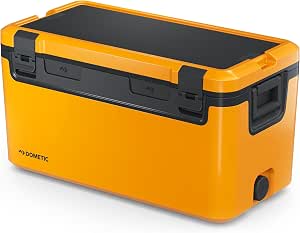 | Best for Flexible Access and Food Organization | Capacity: 69 liters | Dimensions: 16.54 x 33.07 x 17.95 inches | Weight: 33 pounds | VIEW ON AMAZON | See Our Full Breakdown |
| Ninja FrostVault 45-Quart Wheeled Cooler, Halocline Green |  | Best for Separate Food Storage on Wheels | Capacity: 45 quarts | Can capacity: Up to 68 cans without ice or 40 cans with ice | Dry storage: FrostVault Dry Zone | VIEW ON AMAZON | See Our Full Breakdown |
| YETI Tundra 65 Cooler |  | Best for Rugged, Tie-Down-Ready Camping | Model: Tundra 65 | Construction: Rotomolded | Insulation: Up to 3 inches of pressure-injected polyurethane foam | VIEW ON AMAZON | See Our Full Breakdown |
| Coleman Chiller 48-Quart Cooler |  | Best for Lightweight, Short-Trip Use | Capacity: 48 qt | Ice retention: Up to 60 hours | Can capacity: 31 cans with 24 lb of ice; up to 76 cans without ice | VIEW ON AMAZON | See Our Full Breakdown |
| YETI Tundra 75 Cooler |  | Best Premium for Large, Rugged Trips | Capacity: 50 cans | Dimensions: 33.5 × 18 × 17.5 in | Empty weight: 34 lb | VIEW ON AMAZON | See Our Full Breakdown |
| Stanley Adventure Outdoor Cooler, 24 qt, Twilight |  | Best Compact Cooler for Multi-Day Outings | Capacity: 24 qt | Ice retention: Up to 4 days | Empty weight: 9.5 lb | VIEW ON AMAZON | See Our Full Breakdown |
| Igloo Polar Hard Cooler |  | Best for Sun-Exposed Campsites | Brand: Igloo | Model: 44577 | Recommended use: Camping | VIEW ON AMAZON | See Our Full Breakdown |
| YETI Tundra 35 Cooler |  | Best Premium Compact Pick | Capacity: Up to 20 cans | Dimensions: 21 3/8 × 16 1/8 × 15 3/4 in | Empty weight: 20 lb | VIEW ON AMAZON | See Our Full Breakdown |
| Pelican 70 Quart Elite Cooler |  | Best for Long Ice Retention | Capacity: 70 quarts | Weight: 33.3 pounds | Insulation: Polyurethane, 2 inches thick | VIEW ON AMAZON | See Our Full Breakdown |
| Coleman Classic Series Insulated Rolling Cooler |  | Best for Rolling Campground Hauls | Can capacity: Up to 101 cans without ice | Capacity with ice: 50 cans with 26 pounds of ice | Ice retention: Up to 5 days at temperatures as high as 90°F | VIEW ON AMAZON | See Our Full Breakdown |
| YETI Tundra 110 Hard Cooler |  | Best for Raft Frames and Rugged Expeditions | Capacity: 110 quarts (108.9 liters) | Dimensions: 37.5 x 18.13 x 20 inches | Weight: 37 pounds listed; product information also lists 20 pounds | VIEW ON AMAZON | See Our Full Breakdown |
| highend camping cooler | Capacity | Insulation |
|---|---|---|
| Igloo Marine Cooler | Insulate | Up to 149 cans | THERMECOOL foam |
| Lifetime 115-Quart High-Perfor | 115 quarts | — |
| Dometic Recon 69L Hardside Coo | 69 liters | 2 inches |
| Ninja FrostVault 45-Quart Whee | 45 quarts | Up to 3 inches |
| YETI Tundra 65 Cooler | — | Up to 3 inches of pressure-injected polyurethane foam |
| Coleman Chiller 48-Quart Coole | 48 qt | — |
| YETI Tundra 75 Cooler | 50 cans | Up to 3 in PermaFrost, FatWall design |
| Stanley Adventure Outdoor Cool | 24 qt | Double-wall foam |
| Igloo Polar Hard Cooler | — | — |
| YETI Tundra 35 Cooler | Up to 20 cans | Up to 3 in PermaFrost |
| Pelican 70 Quart Elite Cooler | 70 quarts | Polyurethane, 2 inches thick |
| Coleman Classic Series Insulat | — | — |
| YETI Tundra 110 Hard Cooler | 110 quarts (108.9 liters) | Up to 3 inches of PermaFrost polyurethane foam |
More Details on Our Top Picks
Igloo Marine Cooler | Insulated Hard Shell Ice Chest
The Igloo Marine Cooler earns its place for campers who want generous storage and a stated ice-retention rating without moving up to an oversized expedition chest. Its capacity of up to 149 cans suits group weekends, while THERMECOOL foam and Cool Riser Technology are rated for up to five days of ice retention. Compared with the Lifetime 115-Quart High-Performance Cooler, it offers a can-count capacity rather than a quart measurement and lacks that model’s bear-resistance certification and longer stated retention. The tradeoff is a sturdy hard shell: it is less convenient to carry than a soft cooler, and the supplied details give no weight or dimensions to help judge transport or vehicle fit. Marine-grade hinges add durability, but this is not the strongest choice for bear-country security.
Pros:- Holds up to 149 cans for group trips
- THERMECOOL foam insulation is rated for up to five days of ice retention
- Marine-grade hinges are designed for extended life
- Cool Riser Technology is included in the insulated hard-shell design
Cons:- Hard-shell construction can be heavier and less convenient to carry than a soft cooler
- No weight or dimensions are provided, making transport and vehicle fit harder to plan
- No bear-resistance certification is specified
Best for: Campers and boaters who need room for a group’s drinks and want marine-grade hinges with a stated five-day ice-retention rating.
Not ideal for: Bear-country campers or solo travelers who need certified wildlife resistance, a compact load, or published dimensions and weight before buying.
- Brand:Igloo
- Model name:Latitude
- Capacity:Up to 149 cans
- Insulation:THERMECOOL foam
- Ice retention:Up to 5 days
- Hinges:Marine-grade, extended-life
- Warranty:1 year
Our verdict“Choose the Igloo for high-capacity camping and boating when its five-day rating matters more than bear certification or precise transport specs.”
Lifetime 115-Quart High-Performance Cooler
For backcountry camps where wildlife security and long storage matter, the Lifetime 115-Quart High-Performance Cooler brings the clearest case in this group: it is IGBC-certified as bear-resistant when locked and rated to retain ice for up to 10 days. That gives it a different purpose from the YETI Tundra 65, whose supplied details emphasize rugged construction and bear-resistant design but do not state an ice-retention duration. The included divider doubles as a cutting board, adding useful prep space at a fixed campsite, and the drain connects to a garden hose for easier cleanup. The cost of this capacity is physical bulk; at 115 quarts, it may be awkward to load or move. Its bear protection also depends on locking it, so it is not a set-and-forget substitute for careful camp food storage.
Pros:- IGBC-certified bear resistance when locked
- Ice retention rated for up to 10 days
- Included divider doubles as a cutting board
- Garden-hose-compatible drain simplifies draining and cleanup
Cons:- 115-quart capacity makes it cumbersome to transport and store
- Bear resistance depends on the cooler being locked
- Its large format is excessive for small groups or short trips
Best for: Groups camping in bear country who can lock the cooler and want substantial food storage, long stated ice retention, and a built-in prep divider.
Not ideal for: Campers with limited vehicle space, frequent solo portages, or no practical way to keep the cooler locked in bear habitat.
- Brand:Lifetime
- Model:91108
- Capacity:115 quarts
- Bear resistance:IGBC-certified; withstands a bear for up to one hour when locked
- Ice retention:Up to 10 days
- Drain:Easy-drain spout compatible with a garden hose
- Included component:Divider that doubles as a cutting board
- Warranty:5-year limited warranty
Our verdict“Pick the Lifetime for a locked, high-capacity base-camp cooler when bear resistance and a 10-day retention rating outrank easy transport.”
Dometic Recon 69L Hardside Cooler
The Dometic Recon 69L is a strong fit for campers who want a large hard cooler that adapts to how they pack and serve food. Its removable lid opens from either side, so the access direction can work around a tailgate, campsite table, or crowded vehicle. A divider, drop-in basket, and water-dispensing tap support more organized use than the straightforward Igloo Marine Cooler, though the Igloo lists a higher can capacity and a stated five-day ice-retention rating. Dometic specifies two inches of insulation but provides no ice-retention duration, so buyers focused on documented hold time may prefer the Lifetime 115-Quart, rated for up to 10 days. At 33 pounds before loading, the Recon is not a light carry, and its accessories are not included.
Pros:- Removable lid opens from either side for more flexible access
- Two inches of insulation in an injection-molded polypropylene shell
- Includes a divider and drop-in basket for separating supplies
- Tap provides a way to dispense water from the cooler
Cons:- Weighs 33 pounds before contents are added
- No ice-retention duration is specified in the supplied product data
- Recon accessories are not included
Best for: Car campers and tailgaters who want a 69-liter hard cooler with adaptable lid access, organized storage, and a built-in dispensing tap.
Not ideal for: Campers prioritizing a stated multi-day ice-retention rating, low carry weight, or a cooler that includes optional Recon accessories.
- Capacity:69 liters
- Dimensions:16.54 x 33.07 x 17.95 inches
- Weight:33 pounds
- Material:Polypropylene (PP)
- Insulation:2 inches
- Included components:Cooler, basket, divider
- Color:Glow
Our verdict“Choose the Dometic when flexible lid access and built-in organization matter more than a published ice-retention duration or lighter carry.”
Ninja FrostVault 45-Quart Wheeled Cooler, Halocline Green
The Ninja FrostVault 45-Quart solves a specific camp-kitchen problem: its FrostVault Dry Zone keeps food separate from drinks and ice, with the zone specified to stay below 40°F. That separation can make meal ingredients easier to access without rummaging through melting ice. Compared with the larger Igloo Marine Cooler, the Ninja has less overall capacity, but its all-terrain, puncture-resistant wheels make it better suited to moving a loaded cooler across camp. Its up-to-three-inch insulation and lockable lid and drawer latch add practical protection, though the stated 68-can capacity applies only without ice; with ice, capacity drops to 40 cans. It is not presented as bear-resistant out of the box, and padlocks are not included, so campers in wildlife areas should not treat the locking hardware as certified protection.
Pros:- FrostVault Dry Zone separates food from drinks and ice
- Dry storage is specified to remain under 40°F
- Puncture-resistant all-terrain wheels help move the cooler across camp
- Up to three inches of insulation and lockable lid and drawer latch
Cons:- Capacity falls from up to 68 cans without ice to 40 cans with ice
- Padlocks are not included
- Locking hardware is not stated to provide certified bear resistance
Best for: Car campers who want to roll supplies around camp and keep food ingredients in a separate, food-safe dry zone.
Not ideal for: Bear-country campers needing certified bear resistance, or buyers who expect the full 68-can capacity while packing with ice.
- Capacity:45 quarts
- Can capacity:Up to 68 cans without ice or 40 cans with ice
- Dry storage:FrostVault Dry Zone
- Dry Zone temperature:Under 40°F
- Insulation:Up to 3 inches
- Wheels:All-terrain, puncture-resistant
- Security:Lockable lid and drawer latch
- Color:Halocline Green
Our verdict“Pick the Ninja for wheeled campsite mobility and separate food storage, but not as a certified bear-safe cooler.”
YETI Tundra 65 Cooler
The YETI Tundra 65 is the rugged-build choice for campers who expect their cooler to take hard use and need to secure it during transport. Its rotomolded shell, pressure-injected insulation, reinforced hinges, and heavy-duty latches make durability the main distinction; molded tie-down slots and non-slip feet also help keep it stable in a vehicle or at camp. The Lifetime 115-Quart is the more compelling pick when a stated 10-day ice-retention rating and IGBC certification are priorities. YETI’s supplied details instead describe a bear-resistant FatWall design without listing a certification or a specific retention duration, so those claims should not be treated as equivalent. The Tundra 65’s hard, robust construction favors vehicle-based trips over long carries, and the available data gives no weight or dimensions for planning around its bulk.
Pros:- Rotomolded construction with pressure-injected polyurethane foam insulation
- Reinforced two-pin interlocking hinge system and heavy-duty rubber latches
- Molded AnchorPoint slots support securing the cooler during transport
- Leakproof drain and non-slip feet suit outdoor use
Cons:- No specific ice-retention duration is provided in the supplied data
- Bear-resistant design is listed, but no certification is specified
- Weight and dimensions are not provided, making carry and fit harder to assess
Best for: Vehicle-based campers who need a rugged cooler with tie-down points, stable feet, and reinforced hardware for repeated outdoor use.
Not ideal for: Campers seeking a stated ice-retention duration, verified bear-resistance certification, or published weight and dimensions before purchase.
- Model:Tundra 65
- Construction:Rotomolded
- Insulation:Up to 3 inches of pressure-injected polyurethane foam
- Hinge system:Two-pin interlocking NeverFail design
- Lid latches:Heavy-duty rubber T-Rex latches
- Drain:Leakproof Vortex drain
- Handles:LipGrip handles and military-grade polyester rope DoubleHaul handles
- Tie-downs:Molded AnchorPoint slots
- Bear resistance:FatWall design listed as bear-resistant
Our verdict“Choose the Tundra 65 for durable, tie-down-ready vehicle camping, while the Lifetime is a clearer match for buyers who need a stated retention rating and bear certification.”
Coleman Chiller 48-Quart Cooler
The Coleman Chiller 48-Quart is the practical pick for campers who want useful space without starting with a heavy, ruggedized chest. Its 7.6-pound empty weight is far below the YETI Tundra 75’s 34 pounds, making it easier to load into a car or carry to a picnic spot. TempLock insulation is rated to keep contents cold for up to 60 hours, a fit for weekend outings rather than extended off-grid stays. Upright 2-liter bottle storage and a lid rated to support 200 pounds add everyday utility. The tradeoff is that its ice-retention claim is shorter than the Stanley Adventure Outdoor Cooler’s up-to-four-day claim, and 48 quarts can still be awkward to move once packed. I’d choose it for moderate trips, not for maximum ice life or bear-country duty.
Pros:- Light 7.6-pound empty weight for its 48-quart capacity
- TempLock insulation is rated for up to 60 hours of cold retention
- Fits 2-liter bottles upright
- Reinforced lid supports up to 200 pounds, and handles fold flat
Cons:- Up-to-60-hour ice retention is less than the Stanley Adventure Outdoor Cooler’s up-to-four-day claim
- The 48-quart body can become cumbersome when fully loaded
- No bear-resistant certification is listed
Best for: Car campers and picnic groups who want a roomy cooler that is relatively light to carry empty and suits trips of roughly a weekend.
Not ideal for: Campers planning longer trips or travel in bear country who need longer stated ice retention or certified bear-resistant construction.
- Capacity:48 qt
- Ice retention:Up to 60 hours
- Can capacity:31 cans with 24 lb of ice; up to 76 cans without ice
- Empty weight:7.6 lb
- Bottle fit:2-liter bottles fit upright
- Lid capacity:Supports up to 200 lb
- Handles:Swing-up, fold-flat
- Warranty:1-year limited
Our verdict“Choose the Coleman for lightweight, short-trip capacity; pick the Stanley for a longer stated ice-retention window.”
YETI Tundra 75 Cooler
For trips where rugged construction and bear resistance matter more than easy carrying, the YETI Tundra 75 is the heavyweight choice in this group. Its rotomolded shell, FatWall design and up-to-three-inch PermaFrost insulation are built for demanding outdoor use, while its bear-resistant certification sets it apart from the Coleman Chiller 48-Quart. The listed capacity is 50 cans, with a recommended 2:1 ice-to-contents ratio; that packing guidance means ice takes up a substantial share of the interior. At 34 pounds empty and 33.5 inches long, it calls for a vehicle and a deliberate storage plan rather than casual portability. I’d favor it over the smaller YETI Tundra 35 when group capacity is the priority, but the Tundra 35 is easier to accommodate on compact outings.
Pros:- Certified bear-resistant construction for rugged outdoor settings
- Rotomolded build with up to 3 inches of PermaFrost insulation
- 50-can capacity suits group provisions
- Heavy-duty T-Rex lid latches are designed to resist latch failure
Cons:- 34-pound empty weight makes loading and carrying difficult
- Large 33.5-inch length takes substantial vehicle and storage space
- Recommended 2:1 ice-to-contents ratio reduces room available for food and drinks
Best for: Large-group campers, anglers and outdoor travelers who need certified bear-resistant construction and can transport a heavy cooler by vehicle.
Not ideal for: Solo campers, small-vehicle owners or anyone who regularly carries a cooler far from the parking area.
- Capacity:50 cans
- Dimensions:33.5 × 18 × 17.5 in
- Empty weight:34 lb
- Insulation:Up to 3 in PermaFrost, FatWall design
- Construction:Rotomolded
- Bear resistance:Certified bear-resistant
- Recommended ice-to-contents ratio:2:1
- Latches:T-Rex lid latches
Our verdict“Choose the Tundra 75 for rugged group trips where bear resistance and capacity outweigh weight and bulk.”
Stanley Adventure Outdoor Cooler, 24 qt, Twilight
The Stanley Adventure Outdoor Cooler gives compact-trip buyers a longer stated ice-retention window than its 24-quart size might suggest: up to four days. That claim makes it a better fit for a small camping party staying several nights than the Coleman Chiller 48-Quart, whose listed retention is up to 60 hours. Its double-wall foam construction, silicone gasket and leak-resistant drain plug are aimed at containing cold and mess, while a removable shoulder strap offers another way to carry it. The compromise is capacity: 24 quarts leaves less room for a group’s food and drinks, and 9.5 pounds empty can still feel heavy after loading. Compared with the larger Coleman, this Stanley favors a smaller footprint and longer stated retention over bulk storage.
Pros:- Ice retention rated for up to four days
- Double-wall foam construction with a silicone gasket
- Side handles and removable shoulder strap provide carrying options
- Leak-resistant drain plug and lid bungee add practical camp utility
Cons:- 24-quart capacity is limited for families or larger groups
- At 9.5 pounds empty, it can be tiring to carry once loaded
- Drain plug requires manual draining
Best for: Couples or small camping parties who need a compact cooler with a multi-day ice-retention claim and flexible carrying options.
Not ideal for: Large families or group campers who need room for substantial food and drink supplies, especially if they must carry it far when full.
- Capacity:24 qt
- Ice retention:Up to 4 days
- Empty weight:9.5 lb
- Outer material:High-density polyethylene
- Inner layer:Polypropylene
- Insulation:Double-wall foam
- Carrying features:Side handles and removable shoulder strap
- Warranty:Lifetime
Our verdict“Pick the Stanley for compact, multi-day trips with a small crew; choose the Coleman when greater capacity matters more.”
Igloo Polar Hard Cooler
The Igloo Polar Hard Cooler earns a place for details aimed at repeated outdoor exposure rather than for a capacity or ice-retention claim—the available product data provides neither. Its UV-inhibiting lid is intended to help guard against sun damage, while the stain- and odor-resistant liner can make cleanup less of a chore after food-heavy trips. A threaded drain plug that supports hose hookup is useful when draining near a campsite, and reinforced swing-up handles include tie-down loops for securing the cooler during transport. Compared with the Coleman Chiller 48-Quart, however, the Igloo gives buyers fewer documented details for judging size, weight and cold-holding performance. I’d shortlist it for buyers who value its sun and cleanup features, but confirm its dimensions and capacity before planning a group’s packing needs.
Pros:- UV-inhibiting lid helps guard against sun damage
- Stain- and odor-resistant liner suits food storage and cleanup
- Threaded drain plug supports hose hookup
- Reinforced swing-up handles include tie-down loops
Cons:- Capacity and dimensions are not provided in the available specifications
- No ice-retention duration is listed for comparison with the Coleman or Stanley
- The available data does not state empty weight or a warranty
Best for: Campers who store their cooler in sunny or exposed locations and value an odor-resistant liner, tie-down points and hose-compatible draining.
Not ideal for: Buyers who need a known capacity, dimensions, weight or stated ice-retention duration before choosing a cooler for a specific trip.
- Brand:Igloo
- Model:44577
- Recommended use:Camping
- Lid:UV-inhibiting
- Liner:Stain- and odor-resistant
- Drain plug:Threaded; supports hose hookup
- Handles:Reinforced swing-up handles with tie-down loops
- Lid latches:Dual snap-fit latches and child-safety latch
Our verdict“Consider the Igloo for its sun-conscious lid and practical drain, but verify its size and cooling specifications before buying.”
YETI Tundra 35 Cooler
The YETI Tundra 35 brings the Tundra line’s rugged construction to a more manageable size than the Tundra 75. It holds up to 20 cans and weighs 20 pounds empty, so it is easier to fit into a smaller vehicle or campsite, though it is still a substantial carry compared with the 7.6-pound Coleman Chiller 48-Quart. Up to three inches of PermaFrost insulation, rotomolded construction and certified bear resistance make it a serious choice for compact trips where durability matters more than low weight. The recommended 2:1 ice-to-contents ratio limits usable room, and 20 cans makes this a poor substitute for a family-sized chest. A dry goods basket helps separate items, but buyers who need larger group capacity should step up to the Tundra 75.
Pros:- Certified bear-resistant construction in a smaller format than the Tundra 75
- Rotomolded build with up to 3 inches of PermaFrost insulation
- T-Rex lid latches use keeper technology
- Includes a dry goods basket
Cons:- 20-pound empty weight is heavy compared with the Coleman Chiller 48-Quart
- Capacity is limited to up to 20 cans
- Recommended 2:1 ice-to-contents ratio takes up a notable share of packing space
Best for: Small camping groups and anglers who want a durable, bear-resistant cooler that takes less space than a large-capacity chest.
Not ideal for: Families or group campers who need extensive food storage, or anyone prioritizing a light cooler for long carries.
- Capacity:Up to 20 cans
- Dimensions:21 3/8 × 16 1/8 × 15 3/4 in
- Empty weight:20 lb
- Insulation:Up to 3 in PermaFrost
- Construction:Rotomolded
- Bear resistance:Certified bear-resistant
- Recommended ice-to-contents ratio:2:1
- Included accessory:One dry goods basket
Our verdict“Choose the Tundra 35 for compact trips that call for bear resistance and rugged construction, not for low weight or large-group capacity.”
Pelican 70 Quart Elite Cooler
The Pelican 70 Quart Elite makes the most sense when keeping provisions cold for an extended camp matters more than easy lifting. Its 2-inch polyurethane insulation and freezer-grade gasket are built to slow heat transfer, while stainless steel hardware and reinforced latches support repeated outdoor use. Compared with the wheeled Coleman Classic Series Insulated Rolling Cooler, Pelican is a better fit for rougher trips where a rugged, stationary chest is more useful than rolling convenience. The Coleman, however, is easier to move across a campground and has a seat-strength lid. At 33.3 pounds empty, the Pelican is already a substantial lift before it is packed, and its premium construction may be more than casual weekend campers need. The lifetime warranty adds reassurance for buyers planning years of regular use.
Pros:- Two inches of polyurethane insulation and a freezer-grade gasket are designed for extended ice retention.
- Stainless steel hardware and reinforced latches suit repeated outdoor use.
- Lifetime warranty provides long-term coverage.
- Self-draining cup holders and a bottle opener add useful campsite convenience.
Cons:- At 33.3 pounds empty, it is heavy to lift before food and ice are added.
- Lacks wheels, making transport harder than with the Coleman Classic Series Insulated Rolling Cooler.
- Its premium build may be excessive for occasional, short outings.
Best for: Campers planning multi-day trips who want strong insulation, rugged hardware, and long-term warranty coverage.
Not ideal for: Campers who frequently move a loaded cooler alone or need wheels for long walks from the car to camp.
- Capacity:70 quarts
- Weight:33.3 pounds
- Insulation:Polyurethane, 2 inches thick
- Gasket:Freezer-grade
- Material:Polypropylene
- Hardware:Stainless steel
- Warranty:Lifetime
- Color:White/Gray
- Model number:70Q-1-WHTGRY
Our verdict“Choose the Pelican 70 Quart Elite if long-trip insulation and durable construction matter more to you than wheels or lighter handling.”
Coleman Classic Series Insulated Rolling Cooler
The Coleman Classic Series Insulated Rolling Cooler prioritizes moving a large load with less carrying effort. Its 6-inch all-terrain wheels and dual handles help when the campsite is a walk from the parking area, while capacity for up to 101 cans without ice suits group outings. With ice packed in, the stated capacity drops to 50 cans, a practical reminder that real-world space depends on how you load it. The Coleman also stands apart from the Pelican 70 Quart Elite and YETI Tundra 110 by pairing claimed ice retention of up to five days at temperatures as high as 90°F with wheels and a lid that supports up to 250 pounds. Its large footprint can still be awkward to store or lift, and wheels do not remove the bulk of a full cooler.
Pros:- All-terrain wheels and dual handles make campground transport easier.
- Holds up to 101 cans without ice, providing ample room for group outings.
- Designed to retain ice for up to five days in temperatures as high as 90°F.
- Lid supports up to 250 pounds and includes four cup holders.
Cons:- Large capacity makes the cooler bulky to store and maneuver in tight spaces.
- Capacity falls to 50 cans when packed with 26 pounds of ice.
- Wheels help with rolling but do not make a full cooler easy to lift into a vehicle.
Best for: Families and group campers who need substantial drink capacity and expect to roll their cooler across campground paths.
Not ideal for: Campers with limited vehicle or storage space, or those who need a compact cooler for remote trips without smooth rolling routes.
- Can capacity:Up to 101 cans without ice
- Capacity with ice:50 cans with 26 pounds of ice
- Ice retention:Up to 5 days at temperatures as high as 90°F
- Wheels:6-inch all-terrain
- Handles:Dual handles
- Lid capacity:Supports up to 250 pounds
- Cup holders:4, each fits a tumbler up to 30 ounces
- Construction:Made with 15% less plastic than comparable coolers
- Additional feature:Built-in measuring ruler
Our verdict“Pick the Coleman Classic Series if rolling a large cooler and having room for a group’s drinks matter more than compact storage.”
YETI Tundra 110 Hard Cooler
The YETI Tundra 110 is the specialist pick here: its 110-quart size is designed to fit major raft frames, making it relevant for river trips as well as large camping loads. Rotomolded construction, up to three inches of PermaFrost polyurethane foam, and heavy-duty rubber latches focus on durability and cold retention; its bear-resistant design adds protection in the right setting. Compared with the Pelican 70 Quart Elite, the Tundra offers substantially more capacity and a raft-oriented fit, but its 37-pound listed empty weight makes handling a bigger commitment. The Coleman Classic Series is more convenient for rolling around a campground, while the Tundra is better suited to being secured in a raft or kept at a base camp. Product information also lists a conflicting 20-pound weight, so buyers should verify the actual weight before planning transport.
Pros:- Designed to fit major raft frames, making it suited to river trips.
- Rotomolded construction and FatWall insulation support a rugged build.
- Bear-resistant design and heavy-duty rubber latches add protection.
- Includes a dry goods basket for separating items from the ice.
Cons:- Listed empty weight of 37 pounds makes loading and carrying difficult.
- Product information also lists a conflicting weight of 20 pounds.
- Large 110-quart format is more cooler than many small camping parties need.
Best for: River campers and expedition groups who need a large, rugged cooler designed to fit major raft frames.
Not ideal for: Solo campers or anyone who must frequently lift a cooler; its large size and listed 37-pound empty weight make transport demanding.
- Capacity:110 quarts (108.9 liters)
- Dimensions:37.5 x 18.13 x 20 inches
- Weight:37 pounds listed; product information also lists 20 pounds
- Insulation:Up to 3 inches of PermaFrost polyurethane foam
- Construction:Rotomolded with FatWall insulation
- Color:White
- Design:Bear-resistant
- Included:One dry goods basket
Our verdict“Choose the YETI Tundra 110 for raft-based trips and large loads if you can manage its bulk and confirm the weight before purchase.”

How We Picked
I ranked these high-end camping coolers by how well their capacity, transport format, construction, and intended use align with real campsite needs. A cooler’s usable volume matters, but so does whether one person can move it, whether its form suits a vehicle-based trip, and whether its design fits frequent use. I also weighed practical ownership factors such as access, cleaning, and the tradeoff between a premium build and a simpler model that may be sufficient for occasional outings.
The order favors versatility and fit over size or premium branding alone. Models with a broadly useful capacity and manageable campsite role rank ahead of options that make more sense for narrow needs, such as very large group storage or compact personal loads. Wheeled designs receive credit for reducing transport effort, while larger hard coolers face a portability penalty. Because product specifications and configurations can vary, I focus on the distinct buying role each model represents rather than implying a performance test.
Factors to Consider When Choosing Highend Camping Coolers
Before choosing among these models, I’d start with the trip you actually take—not the longest trip you might take someday. The right cooler depends on who is carrying it, how provisions are packed, and how much room your vehicle and campsite offer. These factors can help prevent a common mismatch: buying a large, heavy chest for a small household or paying for features that rarely affect your outings.
Match Capacity to Food, Drinks, and Group Size
Capacity labels describe volume, but they do not tell you how your usual load will fit once food containers and ice share the interior. Think through a typical day’s meals and drinks, then allow room for the cooling method you plan to use. A compact model such as the Stanley Adventure 24 qt has a different job from a 65-quart or larger cooler; choosing by the biggest trip you can imagine may leave you hauling unused space on routine weekends. Oversized coolers also invite overpacking, which can make loading and lifting harder. For longer trips, consider whether a second cooler for drinks and frequently accessed items would work better than one very large chest. Measure vehicle storage before settling on a large-capacity option.
Treat Portability as a Core Feature
A full hard cooler can be difficult for one person to move, even when its empty weight seems manageable. Decide whether the cooler will travel from a car to a nearby site, cross uneven ground, or stay in one place at a drive-up campsite. Wheels can reduce effort on firm paths, but they do not remove the need to lift a cooler into a vehicle or navigate rough terrain. Carry handles, grip points, and the cooler’s overall footprint affect how easily it fits into a trip routine. A common mistake is choosing capacity first and discovering later that the loaded cooler takes two people to reposition. If you camp with limited help, favor a size and transport style you can handle without strain.
Pay for Insulation and Build That Match Your Use
Premium construction can make sense when a cooler sees frequent outings, rough handling, or extended trips away from easy resupply. For occasional car camping, a simpler insulated model may cover the need without the extra bulk or expense of a premium-positioned chest. Check how the lid, latches, handles, and drain are designed, since these parts shape daily use as much as the shell does. Do not assume a rugged exterior alone guarantees a better fit: a heavy-duty cooler still needs to suit your storage space and lifting limits. Also compare manufacturer guidance for ice use and care rather than relying on a single headline insulation claim. Spend more when the build and features solve a recurring problem, not simply because the cooler looks more substantial.
Plan for How You Access and Organize Contents
Frequent opening can disrupt organization and make it harder to keep meal ingredients separate from drinks. Before buying, consider whether you want one shared cooler or a setup divided by purpose, such as food in one chest and beverages in another. A design with added storage features may appeal to campers who want more separation, while a straightforward hard cooler can be easier to pack around familiar containers. Check the interior dimensions where available, because a nominal quart capacity does not guarantee that your preferred food bin will fit. Think about whether you will need to reach items while the cooler is packed tightly or positioned in a vehicle. A packing plan can improve usability more than choosing a larger cooler by default.
Check Cleaning, Draining, and Storage Before You Buy
Cooler ownership does not end when camp is packed up: melted ice, food spills, and lingering moisture all affect cleanup. Look at whether the drain is accessible where you expect to place the cooler and whether the interior is straightforward to wipe down. A large model may be harder to empty and store, so check its outside dimensions and where it will live between trips. If your campsite is far from a disposal point, plan for how you will manage meltwater without making a mess. Many buyers focus on capacity and overlook the awkwardness of cleaning a deep, bulky chest at home. A cooler that fits your storage and cleanup routine is more likely to earn regular use.
Compare Total Setup Needs, Not Just the Cooler
The cooler is only one part of keeping provisions organized at camp. You may need separate containers for food, a way to secure the cooler in a vehicle, or a transport plan for moving it from parking to the site. Buying one oversized cooler can seem simpler, yet it may be less practical than pairing a medium chest with a compact cooler for drinks or day use. Check whether accessories or replacement parts are available for the features you expect to use often. Avoid paying for a format that conflicts with your campsite: a wheeled cooler is less helpful on rough ground, while a carry-style chest can be tiring over a long approach. Choose the arrangement that suits your actual route, group, and packing habits.
Frequently Asked Questions
Which cooler size makes the most sense for a typical family camping trip?
For many family trips, a mid-to-large cooler is a more useful starting point than either a compact personal model or the biggest chest available. In this lineup, the YETI Tundra 65 represents the balanced-capacity approach, while the 75- and 110-quart models make more sense when the group, trip length, or amount of food justifies the added bulk. Consider how many meals you pack, whether drinks need separate space, and how often you can restock. Measure your vehicle’s storage area before choosing a larger option. If your needs vary widely, two smaller coolers can be easier to organize and move than one very large one.
Should I choose a wheeled cooler or a carry-style hard cooler?
Choose wheels when your route from the vehicle to camp is fairly firm and the cooler will be moved often. The Ninja FrostVault 45 and Coleman Classic rolling model are the lineup’s wheeled options, while many of the other picks rely on lifting and carrying. Wheels are less useful on rough trails, sand, or uneven ground, and they do not solve the problem of lifting a full cooler into a car. Carry-style models can be easier to position in tight vehicle spaces, though a large loaded chest may call for two people. Match the transport format to the surface and distance you regularly cover.
Is a premium cooler worth choosing over a simpler model for occasional camping?
For occasional drive-up camping, a simpler cooler may be enough if its capacity and insulation approach fit your trip habits. A premium-positioned model makes more sense when you expect frequent use, rough handling, or a need for a particular build or storage feature. Compare the cooler’s weight, size, and maintenance needs along with its construction; premium does not automatically mean more convenient for every camper. The Coleman Chiller and Igloo Marine are simpler alternatives in this group, while YETI, Dometic, and Pelican sit among the premium-positioned choices. Pay for benefits you expect to use rather than choosing by brand alone.
Is one very large cooler better than using two smaller coolers?
One large cooler can simplify packing for a group that shares provisions and has room to transport it. Two smaller coolers can make it easier to separate food from drinks, limit repeated access to meal supplies, and assign carrying between campers. The tradeoff is that two units take more storage space and may require more setup. Large choices such as the YETI Tundra 110 or Lifetime 115-Quart suit buyers who prioritize one substantial storage chest, while smaller models support divided loads. Decide based on your vehicle layout, group routine, and who will move the coolers when they are full.
What should I check before buying a cooler for a campsite with a long walk from parking?
Focus on the cooler’s loaded weight, grip points, overall size, and the path between parking and your site. A large hard cooler may be difficult to carry far, and wheels can help only if the route is smooth enough for them. A compact model like the Stanley Adventure 24 qt is easier to manage but holds less, so you may need to reduce your load or make more than one trip. Check whether the cooler can be carried comfortably by one person or needs a two-person lift. For a long approach, a smaller cooler that fits your transport limits can be a better choice than maximizing capacity.
Conclusion
My best overall recommendation is the YETI Tundra 65 for campers who want a versatile capacity without committing to the largest format. For best value, I’d look first at the Lifetime 115-Quart if generous storage is the priority and its size suits your vehicle and handling needs. The best premium choice depends on the feature set you want: consider the Dometic Recon 69L or Pelican 70 Quart Elite alongside the YETI options rather than paying for branding alone. Beginners with simple, occasional camping plans may be better served by the Coleman Chiller 48-Quart than a bulky premium chest. For specific needs, choose the Ninja FrostVault 45 or Coleman Classic rolling model for wheeled transport, the Stanley Adventure 24 qt or YETI Tundra 35 for compact loads, and the YETI Tundra 110 or Igloo Polar for vehicle-based trips that call for substantial capacity. The right pick is the one your group can pack, move, clean, and store comfortably.