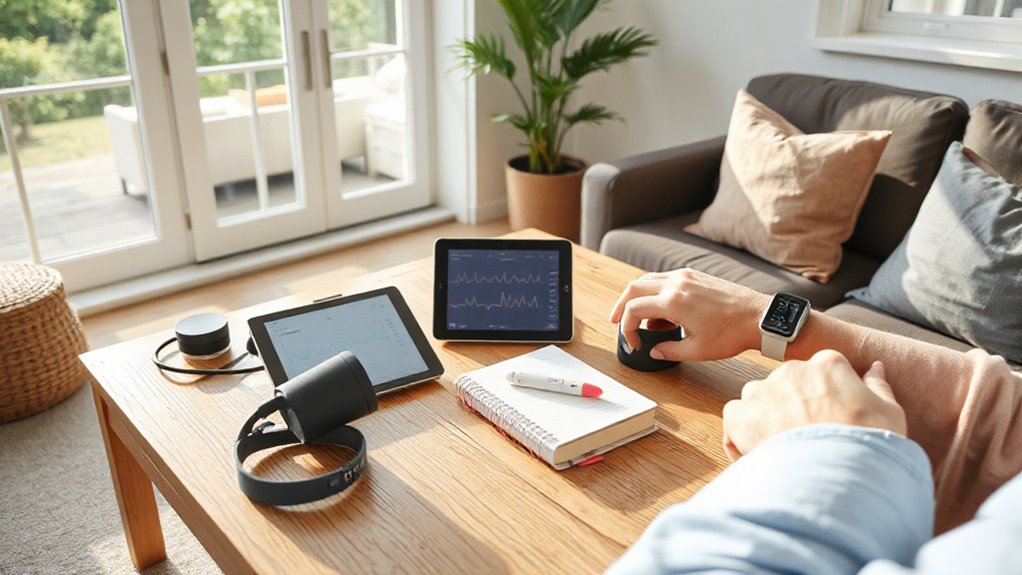

Home medical monitoring kits for seniors range from emergency response buttons to blood pressure and glucose monitors, so the right choice depends on what needs tracking and where help may be needed. ADT Medical Alert Plus is my best overall pick for in-home emergency response with optional fall detection, while the Metene TD-4116 offers a straightforward glucose testing kit and the Safety+ 4G adds mobile coverage for people who leave home often. The main tradeoffs are emergency monitoring versus self-measurement, home-only coverage versus mobility, and guided features versus simpler operation. A glucose meter cannot summon help, and an alert pendant does not track vital signs, so matching the kit to the senior’s actual need matters. Read on for the full comparison, buying guidance, and picks by situation.

Turn the school run and nap time into listening time
- Thousands of audiobooks, podcasts and originals
- Listen on your phone, tablet or Echo — also offline
- Cancel anytime
Complete the kit


Key Takeaways
- ADT Medical Alert Plus leads for in-home emergency response, while Bay Alarm Medical SOS Mobile GPS and Safety+ 4G suit seniors who need coverage away from home.
- Medical Guardian MGHome Cellular focuses on home use without relying on a landline; mobile alert models add portability but bring charging and connectivity needs.
- The glucose meters serve different usability priorities: VivaGuard emphasizes spoken readings, Metene TD-4116 is a conventional kit, and iHealth Gluco+ adds wireless tracking.
- A bed exit alarm can notify a caregiver when someone leaves bed, but it does not provide the same emergency response as a medical alert service.
- The best choice depends on the task: these products do not replace one another, and a monitor for blood pressure or glucose does not call emergency responders.
| ADT Medical Alert Plus In-Home Emergency Response System with Fall Detection |  | Best for Home Coverage | Maximum range: 600 feet | Connectivity: Cellular 4G | Fall detection: Automatic | VIEW ON AMAZON | See Our Full Breakdown |
| FDA Cleared Wrist Blood Pressure Monitor with Voice and LCD Display |  | Best for Simple Readings | Monitor type: Wrist blood pressure monitor | Display: Large LCD | Voice announcements: Yes | VIEW ON AMAZON | See Our Full Breakdown |
| iHealth Gluco+ Wireless Smart Glucose Monitor Kit with 100 Strips & 100 Lancets |  | Best for Connected Glucose Tracking | Model: Gluco+ BG5S100 | Clearance and standard: 510(k) cleared; ISO 15197:2015 accuracy standard | Result time: 5 seconds | VIEW ON AMAZON | See Our Full Breakdown |
| Medical Guardian MGMini Medical Alert Device for Seniors, Silver |  | Best Compact Wearable | Connectivity: Cellular | Monitoring: 24/7; subscription activation required | Communication: Two-way speaker | VIEW ON AMAZON | See Our Full Breakdown |
| Safety+ 4G Medical Alert System with Fall Detection and GPS |  | Best for Longer Battery Life | Connectivity: Nationwide 4G | Monitoring: 24/7 emergency monitoring | Fall detection: Automatic | VIEW ON AMAZON | See Our Full Breakdown |
| Metene TD-4116 Blood Glucose Monitor Kit with 100 Test Strips and Lancets |  | Best for Simple Glucose Tracking | Model: TD-4116-100 | Blood sample size: 0.7 µL | Result time: 7 seconds | VIEW ON AMAZON | See Our Full Breakdown |
| PLAYOUNG Blood Glucose Monitor Kit with 100 Test Strips and 100 Lancets |  | Best for Fast Readings | Part number: G-421 | Blood sample size: 0.7 µL | Result time: 5 seconds | VIEW ON AMAZON | See Our Full Breakdown |
| Medical Guardian MGHome Cellular Medical Alert System |  | Best for In-Home Emergency Response | Coverage range: Up to 1,400 feet | Power source: Standard outlet | Backup battery: 32 hours | VIEW ON AMAZON | See Our Full Breakdown |
| Bay Alarm Medical SOS Mobile GPS Medical Alert System |  | Best for Seniors on the Go | Connectivity: 4G LTE GPS | Weight: Under 2 oz | Water resistance: Water-resistant | VIEW ON AMAZON | See Our Full Breakdown |
| VivaGuard Talking Blood Glucose Monitor Kit |  | Best for Low Vision | Model: VGM26 | Testing range: 20–600 mg/dL | Test time: 5 seconds | VIEW ON AMAZON | See Our Full Breakdown |
| Smart Caregiver Bed Exit Alarm with Wireless Pager |  | Best for Bedside Fall Monitoring | Pad size: 10″ x 30″ | Sensor type: Full-coverage weight sensor | Pager capacity: Up to 6 sensors | VIEW ON AMAZON | See Our Full Breakdown |
| Nomo Medical Alert System with Fall Detection for Seniors |  | Best for Whole-Home Monitoring | Components: Smart Hub, 2 Satellite Range Extenders, Wearable Tags | Connectivity: Secure WiFi; no landline required | Installation: Plug-and-play | VIEW ON AMAZON | See Our Full Breakdown |
| home medical monitoring kits for senior | Connectivity |
|---|---|
| ADT Medical Alert Plus In-Home | Cellular 4G |
| FDA Cleared Wrist Blood Pressu | — |
| iHealth Gluco+ Wireless Smart | Bluetooth; Gluco-Smart app |
| Medical Guardian MGMini Medica | Cellular |
| Safety+ 4G Medical Alert Syste | Nationwide 4G |
| Metene TD-4116 Blood Glucose M | — |
| PLAYOUNG Blood Glucose Monitor | — |
| Medical Guardian MGHome Cellul | — |
| Bay Alarm Medical SOS Mobile G | 4G LTE GPS |
| VivaGuard Talking Blood Glucos | — |
| Smart Caregiver Bed Exit Alarm | — |
| Nomo Medical Alert System with | Secure WiFi; no landline required |
More Details on Our Top Picks
ADT Medical Alert Plus In-Home Emergency Response System with Fall Detection
The ADT Medical Alert Plus suits seniors who spend most of their time at home but want room to move around the house and nearby outdoors. Its 600-foot range reaches farther from the base than a compact wearable such as the Medical Guardian MGMini, while automatic fall detection and temperature alerts add coverage for two different household risks. In an emergency, the system connects to professional monitoring and guides caregivers through response steps. The tradeoff is that this is a monitored service, not a standalone kit: activation and a monthly agreement are required before it can help. Its corded power also makes placement around a home part of the setup. Choose it for broad home coverage; consider the MGMini if carrying a cellular alert device beyond the home matters more.
Pros:- 600-foot range supports movement across the home and nearby outdoor areas
- Automatic fall detection can call for help when the user cannot press a button
- Temperature monitoring adds alerts for unsafe home conditions
- 24/7 professional monitoring includes step-by-step caregiver communication
Cons:- Activation and a recurring monitoring agreement are required
- Corded power limits where the base unit can be placed
- The in-home focus is less suited to users who need an alert device while away
Best for: Seniors who spend most of their day at home and want a wide alert range, fall detection, and temperature monitoring.
Not ideal for: People who need a wearable alert while traveling away from home or who do not want an ongoing monitoring subscription.
- Maximum range:600 feet
- Connectivity:Cellular 4G
- Fall detection:Automatic
- Sensor technology:Accelerometer and thermistor
- Temperature monitoring:Alerts when temperatures exceed safe limits
- Power source:Corded electric
- Battery:One lithium-ion battery included
- Unit dimensions:7 × 6 × 2.75 inches
Our verdict“Choose the ADT system for broad monitored coverage around the home; choose the MGMini if portable cellular coverage matters more.”
FDA Cleared Wrist Blood Pressure Monitor with Voice and LCD Display
This wrist monitor prioritizes readability and simple operation: a large LCD, spoken readings, and a single button can make routine checks easier for someone who has trouble seeing small numbers or managing multiple controls. Two user profiles hold 90 readings each, so a couple can keep separate records without switching devices. Compared with the iHealth Gluco+ glucose kit, this monitor has no app-based tracking to learn; that simplicity also means fewer tools for reviewing patterns over time. The key tradeoff is wrist positioning. Readings can be less accurate than those from an upper-arm monitor when the wrist is not held correctly, and this model calls for a palm-up position. It makes sense for users who can follow that instruction consistently and value spoken results over more connected recordkeeping.
Pros:- Voice announcements make readings easier to hear without focusing on the display
- Large LCD supports straightforward reading
- Stores 90 readings for each of two users
- Rechargeable USB battery avoids routine battery replacement
Cons:- Wrist readings can be less accurate than upper-arm readings if positioning is incorrect
- Accurate use requires a consistent palm-up wrist position
- The supplied data does not specify app connectivity for reviewing trends
Best for: Older adults who want spoken blood pressure readings, one-button operation, and separate memory for two users.
Not ideal for: People who need an upper-arm format or may find it difficult to hold their wrist in the required palm-up position.
- Monitor type:Wrist blood pressure monitor
- Display:Large LCD
- Voice announcements:Yes
- Memory:180 readings total; 90 per user
- User profiles:2
- Operation:One-button
- Power:Rechargeable via USB
- Charging time:2–3 hours
Our verdict“Pick this for accessible, uncomplicated wrist readings if the user can maintain the required position.”
iHealth Gluco+ Wireless Smart Glucose Monitor Kit with 100 Strips & 100 Lancets
The iHealth Gluco+ is the strongest fit here for someone who needs a complete glucose-testing kit and wants readings to build into a longer record. Results arrive in 5 seconds from a 0.7 µL sample, and Bluetooth sync sends them to the Gluco-Smart app for storage and pattern tracking. That connected approach gives it a different role from the FDA Cleared Wrist Blood Pressure Monitor, which keeps readings on the device and favors simple checks over app analysis. The Gluco+ also includes 100 strips, 100 lancets, a lancing device, and a travel case, so a buyer starts with core testing supplies on hand. Its tradeoff is setup: app pairing and smartphone use may be a hurdle, and the on-device memory holds 500 readings if the user does not sync.
Pros:- Provides results in 5 seconds using a 0.7 µL blood sample
- Bluetooth app sync supports long-term storage and pattern tracking
- Includes 100 test strips, 100 lancets, a lancing device, and a travel case
- Rechargeable battery supports up to 200 tests per charge
Cons:- App pairing is needed for unlimited data storage and advanced features
- Initial Bluetooth setup may be difficult for users unfamiliar with smartphones
- On-device memory is limited to 500 readings without syncing
Best for: Seniors who monitor blood glucose regularly and have a caregiver or personal comfort with syncing readings to a smartphone app.
Not ideal for: People who want a fully standalone meter or find Bluetooth pairing and smartphone apps difficult to manage.
- Model:Gluco+ BG5S100
- Clearance and standard:510(k) cleared; ISO 15197:2015 accuracy standard
- Result time:5 seconds
- Sample volume:0.7 µL
- Battery life:Up to 200 tests per charge
- On-device memory:500 readings
- Connectivity:Bluetooth; Gluco-Smart app
- Included testing supplies:100 test strips and 100 lancets
- Warranty:12 months
Our verdict“Choose the Gluco+ if app-based glucose records and a supplied set of testing essentials matter more than standalone simplicity.”
Medical Guardian MGMini Medical Alert Device for Seniors, Silver
The MGMini is a portable alert device for seniors who want to carry a direct line to a monitoring operator outside the house. Its two-way speaker lets the wearer communicate from the device, and the included lanyards and belt clip offer alternatives for keeping it close. Compared with the ADT Medical Alert Plus, the MGMini is more portable, while ADT is built around a 600-foot in-home range and adds temperature monitoring. Location updates and step counting provide extra context through an app or portal, though neither replaces emergency communication. Battery life of up to three days means it needs more frequent charging than the Safety+ system’s stated six days. Monitoring activation is mandatory, and automatic fall detection costs extra, so this is best for users who will wear and recharge it consistently.
Pros:- Two-way speaker connects the wearer with trained monitoring operators
- Cellular connectivity and location updates support use beyond the home
- Lanyards and a belt clip give the wearer different carrying options
- Includes step counting and access to an app or online portal
Cons:- Monitoring service must be activated before use
- Fall detection is an optional add-on with an additional monthly fee
- Up to three days of battery life requires regular charging
Best for: Seniors who want a compact cellular alert device they can wear at home and while out, with two-way operator communication.
Not ideal for: People seeking included fall detection or longer intervals between charges, or those who do not want a monitoring subscription.
- Connectivity:Cellular
- Monitoring:24/7; subscription activation required
- Communication:Two-way speaker
- Location:Hourly updates
- Battery life:Up to 3 days
- Recharge time:4 hours
- Wear options:Lanyards and belt clip included
- Fall detection:Optional add-on
Our verdict“Choose the MGMini for a portable monitored connection if you accept its charging routine and separate fall detection add-on.”
Safety+ 4G Medical Alert System with Fall Detection and GPS
For someone who may forget a daily charging routine, the Safety+ 4G stands out with up to six days of battery life and automatic fall detection included in its described feature set. GPS and nationwide 4G support monitored use away from home, while the caregiver app can share alerts. It also works without a smartphone, a practical distinction from the iHealth Gluco+, whose advanced data features rely on an app. The included dock, lanyard, and belt clip give caregivers a ready charging spot and the wearer a choice of how to carry it. The ongoing service subscription is required after the included first month, and battery life is specified as an upper limit rather than a guarantee. Compared with the MGMini, Safety+ reduces charging frequency and includes fall detection rather than listing it as an add-on.
Pros:- Up to six days of battery life can reduce charging interruptions
- Automatic fall detection and GPS are included features
- Nationwide 4G supports monitored use away from home
- Works without a smartphone and includes a charging dock, lanyard, and belt clip
Cons:- Ongoing subscription is required after the first month of service
- Battery still needs periodic charging, despite the longer stated runtime
- Caregiver app access requires a smartphone on the caregiver side
Best for: Seniors who need a wearable monitored alert with GPS and fall detection, and whose caregivers want fewer charging reminders.
Not ideal for: People unwilling to continue a paid monitoring service after the included first month or unable to keep a wearable charged periodically.
- Connectivity:Nationwide 4G
- Monitoring:24/7 emergency monitoring
- Fall detection:Automatic
- Location services:GPS
- Battery life:Up to 6 days
- Water resistance:Designed for shower or rain use
- Wear options:Lanyard with magnetic clasp or belt clip
- Included service:First month
Our verdict“Choose Safety+ for a GPS-enabled wearable with fall detection and a longer stated battery interval than the MGMini.”
Metene TD-4116 Blood Glucose Monitor Kit with 100 Test Strips and Lancets
The Metene TD-4116 is a practical pick for seniors who want glucose tracking with few setup steps. Its code-free design, large display, and 0.7 µL sample requirement help keep routine checks straightforward, while the 7-second result avoids a long wait at the meter. Compared with the VivaGuard Talking Blood Glucose Monitor Kit, Metene has less memory and no listed voice guidance, so it may be less helpful for low vision or long-term record keeping. It does offer 450 stored readings, five averaging periods, and four daily reminder alarms, which can help users spot patterns and keep a testing routine. The tradeoff is ongoing dependence on compatible strips and lancets; the provided kit supplies 100 of each, but they will need replenishing.
Pros:- Code-free operation reduces setup steps
- Small 0.7 µL sample and 7-second results support quicker checks
- Stores 450 readings and calculates averages across five periods
- Large display and four daily reminder alarms support routine use
Cons:- Ongoing testing requires replacement strips and lancets
- No voice guidance is listed for users with low vision
- Stores fewer readings than the VivaGuard monitor
Best for: Seniors who want a straightforward meter with reminders and multiweek glucose averages
Not ideal for: People who need spoken readings or the larger 1,000-record memory offered by VivaGuard
- Model:TD-4116-100
- Blood sample size:0.7 µL
- Result time:7 seconds
- Memory capacity:450 readings
- Included supplies:100 test strips and 100 lancets
- Reminder alarms:4 per day
- Glucose averaging periods:14, 21, 28, 60, and 90 days
Our verdict“Choose Metene if you want a simple, reminder-equipped meter with several averaging periods and can manage recurring supply replacement.”
PLAYOUNG Blood Glucose Monitor Kit with 100 Test Strips and 100 Lancets
For seniors who prioritize a quick check, the PLAYOUNG G-421 returns a result in 5 seconds and needs a 0.7 µL sample. It arrives with a meter, lancing device, 100 strips, 100 lancets, and a storage case, so the basic kit is ready to organize at home. Compared with the Metene TD-4116, PLAYOUNG lists a slightly larger memory capacity—500 rather than 450 readings—and five depth settings on its lancing device. That may give users more control over finger pricks, though neither advantage replaces clear instructions or clinician guidance on testing. The main uncertainty is long-term supply planning: the product details do not identify compatible replacement strip models. I would choose it for its quick result and included case only if the buyer can confirm replacement strips before relying on it.
Pros:- Provides results in 5 seconds
- Requires a small 0.7 µL blood sample
- Stores up to 500 readings
- Includes a lancing device with five depth settings, plus a storage case
Cons:- Compatible replacement strip models are not specified in the product details
- No reminder alarms or averaging periods are listed
- Requires recurring supplies of test strips and lancets
Best for: Seniors who want a quick-reading starter kit and can verify ongoing strip availability
Not ideal for: Buyers who need clearly documented replacement strip compatibility before choosing a meter
- Part number:G-421
- Blood sample size:0.7 µL
- Result time:5 seconds
- Reading storage:500 readings
- Lancing depth settings:5
- Coding:No coding
- Included supplies:100 test strips and 100 lancets
- Other included components:Meter, lancing device, operation guide, and storage case
Our verdict“Pick PLAYOUNG for quick readings and a complete starter kit if you can confirm which strips to buy next.”
Medical Guardian MGHome Cellular Medical Alert System
The MGHome Cellular fills a different role from glucose meters such as the Metene TD-4116: it is for reaching emergency support, not tracking a health measurement. Its wearable call button works as a pendant or wristband, and a press connects the user to a 24/7 monitoring team through the base station’s two-way speaker. Coverage is listed up to 1,400 feet, which gives a user room to move around the home and nearby areas while carrying the button. A 32-hour backup battery provides some continuity during a power outage. The tradeoff is that the service requires activation and a recurring monitoring subscription; fall detection is an additional paid option. Compared with the Bay Alarm Medical SOS Mobile GPS, MGHome is the more home-centered choice and depends on its base station rather than a compact mobile device.
Pros:- Wearable button can be worn as a pendant or wristband
- Connects to a 24/7 monitoring team through two-way audio
- Listed coverage extends up to 1,400 feet
- 32-hour backup battery offers some protection during power outages
Cons:- Monitoring requires activation and an ongoing subscription
- Optional fall detection adds a separate recurring charge
- Home coverage relies on the base station and is not the same as mobile GPS protection
Best for: Seniors who spend most of their time at home and want a wearable emergency button linked to live operators
Not ideal for: People who need a monitoring device that works independently while away from home
- Coverage range:Up to 1,400 feet
- Power source:Standard outlet
- Backup battery:32 hours
- Monitoring:24/7; activation required
- Wearable accessories:Pendant/lanyard and wristband
- Communication:Two-way speaker through base station
- Mounting type:Tabletop
- Optional fall detection:Available at additional recurring cost
Our verdict“Choose MGHome if a senior primarily needs an at-home call button and accepts the ongoing monitoring service.”
Bay Alarm Medical SOS Mobile GPS Medical Alert System
The Bay Alarm Medical SOS Mobile GPS suits seniors who want emergency calling beyond the walls of home. Its compact device weighs under 2 ounces, works on 4G LTE GPS, and reaches a trained operator with one button and a built-in two-way speaker. It does not require a smartphone, which makes it less dependent on a user’s comfort with apps or phone settings than a phone-based solution. A companion app gives caregivers access to device status, battery level, and activity. Compared with the Medical Guardian MGHome Cellular, this pick is built for mobility, while MGHome offers a home base station and a stated 1,400-foot coverage range. The mobile device’s battery lasts up to several days, depending on use and network conditions, so someone must remember to recharge it. A subscription is required.
Pros:- One-button call connects to a trained operator
- Works without a smartphone
- Lightweight, water-resistant design can be worn with a lanyard or clip
- Caregivers can check device status and battery through a companion app
Cons:- Requires an ongoing subscription
- Battery life varies with use and network conditions
- Needs regular charging, unlike a home base station with a backup battery
Best for: Active seniors who leave home regularly and want one-button access to an operator without carrying a smartphone
Not ideal for: People who need a fixed home station with a stated backup battery or may struggle to charge a wearable device
- Connectivity:4G LTE GPS
- Weight:Under 2 oz
- Water resistance:Water-resistant
- Communication:One-button access with built-in two-way speaker
- Battery life:Up to several days per charge, depending on usage and network conditions
- Wearing options:Lanyard or clip
- Smartphone required:No
- Caregiver support:Companion app for device status, battery level, and activity
Our verdict“Choose Bay Alarm Medical SOS Mobile GPS for portable operator access when the senior can keep the device charged.”
VivaGuard Talking Blood Glucose Monitor Kit
The VivaGuard Talking Blood Glucose Monitor is the strongest fit here for seniors who benefit from spoken prompts or need more room for long-term records. Voice guidance, adjustable volume, and a large display offer multiple ways to follow a reading; the meter also stores up to 1,000 results, more than either the Metene TD-4116 or PLAYOUNG G-421. It returns readings in 5 seconds from a 0.8 µL sample and includes hypo and ketone alerts, which add useful cues beyond a basic result. Its 100 strips and lancets, lancing device, batteries, and case make a ready-to-use set. The tradeoff is that no control solution is included, and the slightly larger sample requirement may matter to buyers comparing it with the 0.7 µL Metene and PLAYOUNG meters. Replacement supplies remain part of routine use.
Pros:- Voice guidance and adjustable volume support users with low vision
- Stores up to 1,000 readings with 7-, 14-, and 30-day averages
- 5-second results and hypo and ketone alerts provide quick feedback
- Includes 100 strips, 100 lancets, batteries, a lancing device, and a carrying case
Cons:- Control solution is not included
- Requires a 0.8 µL sample, slightly more than Metene or PLAYOUNG
- Ongoing use requires replacement strips and lancets
Best for: Seniors with low vision who want spoken guidance and a large memory for glucose readings
Not ideal for: Buyers who want control solution included or prefer the smaller 0.7 µL sample requirement of Metene or PLAYOUNG
- Model:VGM26
- Testing range:20–600 mg/dL
- Test time:5 seconds
- Blood sample size:0.8 µL
- Memory:1,000 records
- Test averages:7, 14, and 30 days
- Coding:No coding required
- Included components:100 test strips, 100 30G lancets, lancing device, carrying case, and 2 AAA batteries
- Control solution:Not included
Our verdict“Choose VivaGuard if spoken guidance and a larger reading history matter more than included control solution or the smallest sample size.”
Smart Caregiver Bed Exit Alarm with Wireless Pager
The Smart Caregiver Bed Exit Alarm is designed for one specific concern: alerting a caregiver when someone leaves bed. Its 10″ x 30″ weight-sensing pad sits under the shoulders, where it can detect a bed exit and send an alert to the wireless pager. Compared with the Nomo Medical Alert System, which adds wearable fall detection and two-way voice communication, this is a narrower, bed-focused tool; it may suit a household that needs a bedside alert without a broader monitoring setup. The pager’s vibrate and sound modes give caregivers a choice of alert, and support for up to six sensors can help monitor multiple locations. The tradeoffs are the required pad placement and unspecified pager range and battery life, which make setup and coverage worth checking against the home layout.
Pros:- Large 10″ x 30″ pad senses weight across a broad contact area
- Wireless pager lets caregivers move away from the bedside
- Vibrate and sound alert options accommodate different caregiving settings
- Supports up to six sensors for monitoring multiple locations
Cons:- Pad needs placement under the shoulders for best performance
- Pager range and battery life are not specified
- Provides bed-exit alerts rather than the broader fall detection and voice features of the Nomo system
Best for: Caregivers who need an alert when a senior leaves bed and want a wireless pager they can carry around the home
Not ideal for: Seniors who need wearable fall detection, two-way voice communication, or emergency response beyond bed-exit alerts
- Pad size:10″ x 30″
- Sensor type:Full-coverage weight sensor
- Pager capacity:Up to 6 sensors
- Alert modes:Vibrate and sound
- Pad placement:Under shoulders for optimal performance
- Connection:Wireless pager
- Company origin:USA
Our verdict“Choose this for focused, wireless bed-exit alerts; choose a broader system if you need wearable fall detection or two-way communication.”
Nomo Medical Alert System with Fall Detection for Seniors
The Nomo Medical Alert System is the broader choice for a household that needs alerts across more than the bedside. Its Smart Hub, two satellite range extenders, and wearable tags combine fall detection and unusual-movement alerts with a panic button and two-way voice communication. That gives caregivers more ways to respond than the bed-focused Smart Caregiver Bed Exit Alarm, which alerts when someone leaves its sensor pad. Nomo is also described as plug-and-play and needs no landline, so setup does not call for special wiring or a technician. The tradeoffs matter: operation depends on stable WiFi, and 24/7 RapidSOS emergency monitoring is included only as a 30-day trial, with a monthly subscription required afterward. I would favor it for connected homes seeking wider coverage, but less so where WiFi is unreliable or ongoing subscription service is unwanted.
Pros:- Hub and two satellite range extenders provide coverage across multiple areas
- Wearable tags combine fall detection with a panic button
- Two-way voice communication gives caregivers a way to speak through the system
- Plug-and-play setup requires no landline or special wiring
Cons:- 24/7 RapidSOS emergency monitoring requires a monthly subscription after the 30-day trial
- System operation depends on a stable WiFi connection
- Covers more monitoring needs than the bed-focused Smart Caregiver alarm, which may be unnecessary for buyers seeking only bed-exit alerts
Best for: Families seeking wearable fall detection, caregiver alerts, and two-way voice across a WiFi-connected home
Not ideal for: Households with unreliable WiFi or caregivers who do not want to pay for monitoring after the 30-day trial
- Components:Smart Hub, 2 Satellite Range Extenders, Wearable Tags
- Connectivity:Secure WiFi; no landline required
- Installation:Plug-and-play
- Monitoring:24/7 RapidSOS emergency services; 30-day trial included
- Fall detection:Included
- Communication:Two-way voice
- Emergency control:Panic button
- Alerts:Caregiver alerts for falls or unusual movement
Our verdict“Choose Nomo for connected, whole-home fall alerts and two-way voice if your WiFi is stable and you are prepared for an ongoing monitoring subscription.”

How We Picked
I compared these products by the job they perform for an older adult at home: calling for emergency help, measuring a health metric, or notifying a caregiver about movement. Within each job, I weighed ease of operation, the kind of coverage or measurement offered, setup and upkeep demands, and whether the kit’s features fit common senior and caregiver routines. I gave priority to clear role fit over the number of included accessories.
The ranking reflects those differences. ADT Medical Alert Plus comes first for its in-home emergency response focus and fall detection option. Mobile systems rank well for seniors who need help beyond the home, while cellular home systems better suit those who stay in. Glucose and blood pressure monitors follow as self-measurement tools, with their order shaped by usability features such as voice guidance or wireless records. The bed exit alarm addresses a narrower caregiver need, so it is best treated as a supplement rather than a replacement for an emergency response system.
Factors to Consider When Choosing Home Medical Monitoring Kits For Seniors
Start by identifying the event you need the kit to handle, then check whether the senior or caregiver can keep it working day to day. A useful choice fits the routine, the home, and the person’s ability to use it consistently.
Match the device to the job
Separate emergency response from health tracking before comparing features. An alert system is meant to connect someone with help, while a glucose or blood pressure monitor records a measurement for review. A bed exit alarm notifies a caregiver about movement, which may help with overnight routines but does not measure health or contact responders by itself. A common mistake is buying a device because it sounds medically comprehensive when it only handles one task. If more than one need is present, list each one and decide whether separate devices are practical. Keep any clinician’s measurement instructions in view when choosing a monitor.
Choose coverage around daily movement
Consider where the senior spends time across a typical week, including the yard, errands, and visits with family. A home system may fit someone who is usually near its base, while a mobile GPS model is designed for use beyond the residence. Mobile coverage depends on connectivity and requires the wearable device to be with the person and ready to use. Home systems also have limits: the usable area and connection method should match the layout and available service. Ask who will check the coverage and test the system after setup. Buying for rare trips alone may add upkeep without solving the more common at-home need.
Account for setup, charging, and supplies
Daily reliability often depends on small recurring tasks. Alert devices may need charging, while glucose kits require compatible strips and lancets; blood pressure monitors need correct placement and regular use. Before choosing, identify who will manage these tasks if the senior cannot or forgets. Check how the system signals a low battery, how supplies are replenished, and whether the user can complete the process without help. A feature-rich device can be a poor fit if its upkeep is likely to interrupt use. Simpler routines may be more valuable than extra functions for someone living independently.
Prioritize readable, understandable feedback
Display size, button layout, spoken prompts, and the clarity of alerts all affect whether a device gets used correctly. Voice readings can help someone who has difficulty seeing a screen, but spoken output may not suit every setting or hearing ability. Wireless records can make sharing readings with family easier, though they add phone and setup steps. Think about the user’s vision, hearing, dexterity, and comfort with connected devices rather than assuming a digital feature is automatically simpler. If possible, have the intended user try the basic operation before settling on a model. Make sure they know what a reading or alert means and whom to contact next.
Set expectations for fall detection and caregiver alerts
Fall detection and bed exit alerts can add a layer of awareness, but they should not be treated as a guarantee that every fall or movement will be caught. Wearable detection depends on the device being worn and able to communicate; a bed sensor only covers the area and event it is designed to monitor. False alerts, missed alerts, and caregiver availability all affect how useful these features are in practice. Decide who receives notifications and what that person can realistically do when one arrives. A useful plan includes a backup way to call for help and regular checks that the device is functioning. Match the alert feature to a specific concern instead of relying on it as a substitute for supervision or care planning.
Compare ongoing obligations before adding devices
Some monitoring systems rely on a response service or a network connection, while standalone measurement kits depend on the user or caregiver to interpret and act on readings. Clarify what is included, what requires a separate arrangement, and how the device works if power or connectivity is interrupted. For meters, confirm that replacement supplies remain available and compatible with the exact model. For alert systems, understand who answers an alert and what information they need. Adding multiple devices can create overlapping alarms and records, so decide which person will review them. The best setup is one whose limits and next steps everyone in the household understands.
Frequently Asked Questions
Can one home medical monitoring kit track readings and call for emergency help?
These products serve different functions, so do not assume a single kit does both. A glucose or blood pressure monitor records a measurement, while an emergency alert system is intended to connect the user with help. A caregiver may need to pair the tools if the senior needs both routine tracking and emergency response. Decide who reviews measurements and who receives emergency alerts, since those responsibilities may fall to different people. Keep the device instructions and emergency contact plan somewhere accessible.
Should I choose a home alert system or a mobile GPS system?
Base the choice on where the senior needs access to help most often. A home-focused system suits someone who spends most of the day at home and wants a device centered on that setting. A mobile GPS option is more appropriate for regular time away from home, but it adds charging, carrying, and connectivity considerations. If the senior sometimes leaves home, consider how often and whether they will reliably wear or carry the device. Confirm the system’s stated coverage details before choosing.
Is fall detection enough if a senior lives alone?
Fall detection can add a way to trigger an alert, but it cannot guarantee that every fall will be recognized or that help will arrive without a working connection and response plan. The device also has to be worn and maintained as directed. Ask who receives alerts, whether that person can respond promptly, and what happens if the device battery is depleted. For someone living alone, make sure there is a clear manual way to call for assistance as well. Discuss the overall safety plan with the senior and their care team.
What should I check before choosing a glucose meter kit for an older adult?
Check whether the senior can read the display, handle the testing steps, and manage small supplies such as strips and lancets. Spoken readings may help with limited vision, while wireless records can support sharing results but may require a compatible phone and setup. Confirm that the kit’s strips match the meter and can be replenished when the included supply is used. Ask the clinician what testing schedule and recordkeeping method are appropriate. Choose a process the user can repeat accurately rather than relying on a long feature list.
When does a bed exit alarm make sense alongside a medical alert device?
A bed exit alarm may help a caregiver notice when someone gets out of bed, particularly during periods when the caregiver is nearby and able to respond. It serves a different purpose from a wearable medical alert, which is designed to request emergency help. Consider who will hear the pager, how far they may be from it, and whether alerts will be useful overnight. It may add noise or require placement and testing, so the household should agree on how it fits into the care routine. Choose it as a targeted caregiver notification tool, not as a substitute for an emergency response plan.
Conclusion
For a senior who wants an in-home way to request assistance, I recommend ADT Medical Alert Plus as the best overall fit in this lineup. The Metene TD-4116 is my best value-style pick for someone who needs a conventional glucose testing kit, while Medical Guardian MGHome Cellular is the best premium direction for a home-focused alert setup without a landline. For beginners, VivaGuard Talking Blood Glucose Monitor is a strong choice when spoken feedback is useful; seniors who are frequently away from home should compare Safety+ 4G and Bay Alarm Medical SOS Mobile GPS. Choose Smart Caregiver Bed Exit Alarm for a specific caregiver notification need, and consider iHealth Gluco+ when wireless glucose records are a priority. The right kit is the one that addresses the main risk or routine while remaining practical to use and maintain.