If your ice maker suddenly slows down, it could be due to clogged or dirty filters that restrict water flow or temperature issues inside the freezer. Poor airflow or blocked vents can also cause uneven cooling, slowing ice production. Additionally, incorrect freezer temperatures or poor sealing might lead to temperature fluctuations. Regular maintenance and adjustments can help restore efficiency. Keep exploring to find out more tips on fixing your ice maker’s slowdown and smooth operation.
Key Takeaways
- Clogged or dirty water filters restrict water flow, reducing ice production speed.
- Low or inconsistent water pressure slows down ice-making efficiency.
- Incorrect freezer temperature or fluctuations hinder proper ice formation.
- Blocked vents or poor airflow inside the freezer cause uneven cooling.
- Old or overdue filters decrease water flow, impacting ice maker performance.
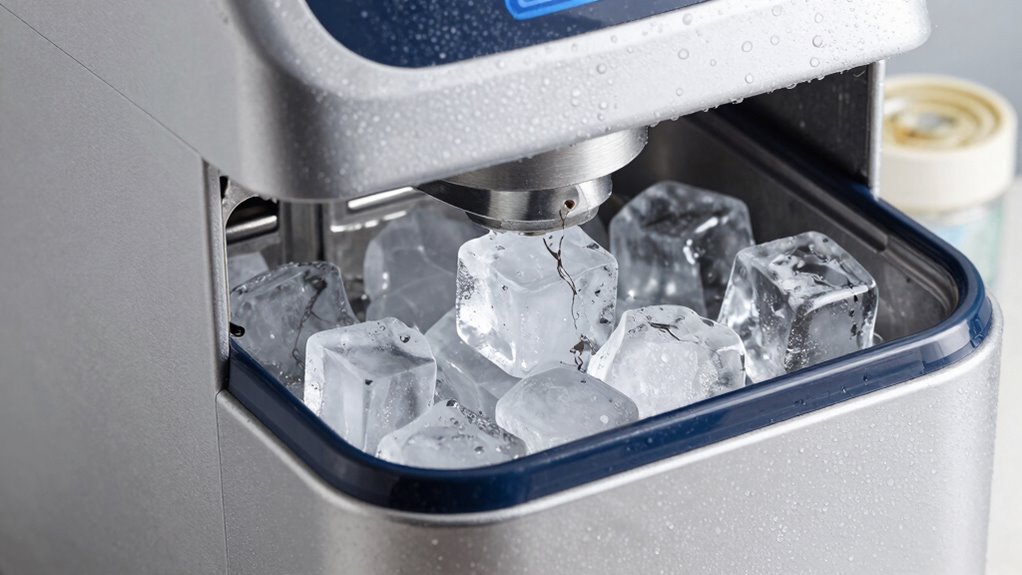
If your ice maker starts slowing down, it can be frustrating, especially when you need a steady supply of ice. One of the most common reasons for this issue is a clogged or dirty water filter. Over time, mineral deposits or debris can build up, restricting water flow into the ice maker. When the water filter isn’t replaced regularly, it limits the amount of water available for ice production, causing the machine to slow down or even stop producing ice altogether. To fix this, check your water filter and replace it if it’s overdue. This simple step can restore proper water flow and improve the ice maker’s efficiency. Additionally, water pressure can impact how quickly your ice maker produces ice, so ensuring consistent pressure is crucial for optimal operation. Temperature regulation also plays a crucial role in how quickly your ice maker produces ice. If the freezer temperature isn’t set correctly, it can impact ice formation. When it’s too warm—say above 0°F (-18°C)—the ice may freeze more slowly or not at all, leading to a noticeable slowdown. Conversely, if it’s too cold, the ice may freeze too quickly, causing the machine to work harder than necessary, which can also reduce efficiency over time. Make sure your freezer is consistently set to the manufacturer’s recommended temperature. Regularly checking and adjusting the thermostat ensures ideal conditions for ice production. Proper air circulation inside the freezer can also help maintain even temperatures and prevent uneven freezing, which affects ice production speed. Keeping the freezer door closed as much as possible and ensuring proper sealing can help stabilize the internal temperature and keep your ice maker running smoothly. Proper insulation can also help maintain consistent internal temperatures and improve overall efficiency. Good ventilation within the freezer is essential to prevent heat buildup and promote consistent airflow, supporting faster ice production. Additionally, ensuring that the vents inside the freezer are not blocked can help improve airflow and overall ice production speed.
Frequently Asked Questions
Can Power Surges Affect My Ice Maker’s Speed?
Yes, power surges can affect your ice maker’s speed. Electrical issues caused by surges may disrupt the appliance’s normal operation, leading to malfunctions or reduced efficiency. When a surge occurs, it can damage internal components or circuitry, causing your ice maker to slow down or stop altogether. To prevent this, consider using surge protectors and regularly inspecting your appliance for electrical issues, ensuring it runs smoothly and efficiently.
Does the Water Quality Impact Ice Production Rate?
Did you know that hard water, which causes mineral buildup, can reduce your ice maker’s efficiency by up to 30%? Water quality directly impacts ice production; contamination and minerals clog the system, slowing down the process. When minerals accumulate, they block water flow and cause ice to freeze unevenly. Using filtered or softened water helps prevent these issues, ensuring your ice maker operates smoothly and produces ice quickly.
How Often Should I Replace the Water Filter?
You should replace your water filter every six months to maintain ideal ice production. Follow the recommended replacement schedule from your ice maker’s manufacturer, as filters can become clogged with impurities over time. Regularly changing your water filter ensures clean, fresh water flows into your ice maker, preventing slowdowns caused by reduced water flow or impurities. Keep track of your replacement schedule to avoid ice production issues and guarantee fresh ice every time.
Can Ambient Temperature Influence Ice Maker Performance?
Yes, ambient temperature can influence your ice maker’s performance. Temperature fluctuations and ambient humidity levels affect how efficiently it produces ice. Higher temperatures can cause the unit to work harder, slowing down production, while very cold environments might freeze parts unevenly. Humidity also plays a role, as high humidity can cause excess moisture, leading to slower ice formation. Keep your ice maker in a stable, moderate-temperature environment for ideal performance.
Is It Normal for Ice Makers to Slow During Certain Seasons?
Yes, it’s normal for ice makers to slow during certain seasons due to seasonal variations in ambient temperatures. Warmer weather can cause your appliance to work harder, reducing efficiency. Additionally, appliance aging can contribute to slower ice production over time. To keep things running smoothly, regularly clean your ice maker and consider upgrading if it’s outdated. Understanding these factors helps you maintain peak performance year-round.
Conclusion
If your ice maker suddenly slows down, don’t panic. It’s often a simple fix, like clearing a frozen line or cleaning the filter. For example, imagine noticing your ice production drops just before a family gathering. After a quick defrost and filter change, your ice maker is back to full speed, ensuring you have plenty of ice for everyone. Regular maintenance can prevent these hiccups and keep your ice maker running smoothly all year round.