A poorly organized fridge can cause uneven temperatures, food spoilage, and energy waste. To set up smarter, keep shelves well-spaced for better air circulation and avoid overcrowding. Place frequently used items at eye level for quick access, and regularly clean out expired food. Using a thermometer helps maintain the ideal 37–40°F, reducing energy use. Want to maximize freshness and efficiency? Keep exploring to learn how the right layout makes a difference.
Key Takeaways
- Organize items with proper spacing to promote optimal airflow and prevent warm spots.
- Place frequently used items at eye level for quick access and reduced door openings.
- Keep the fridge temperature between 37–40°F (3–4°C) for safety and efficiency.
- Avoid overcrowding shelves to ensure cold air circulates freely throughout the fridge.
- Regularly clean out expired food to maintain a clutter-free, energy-efficient layout.
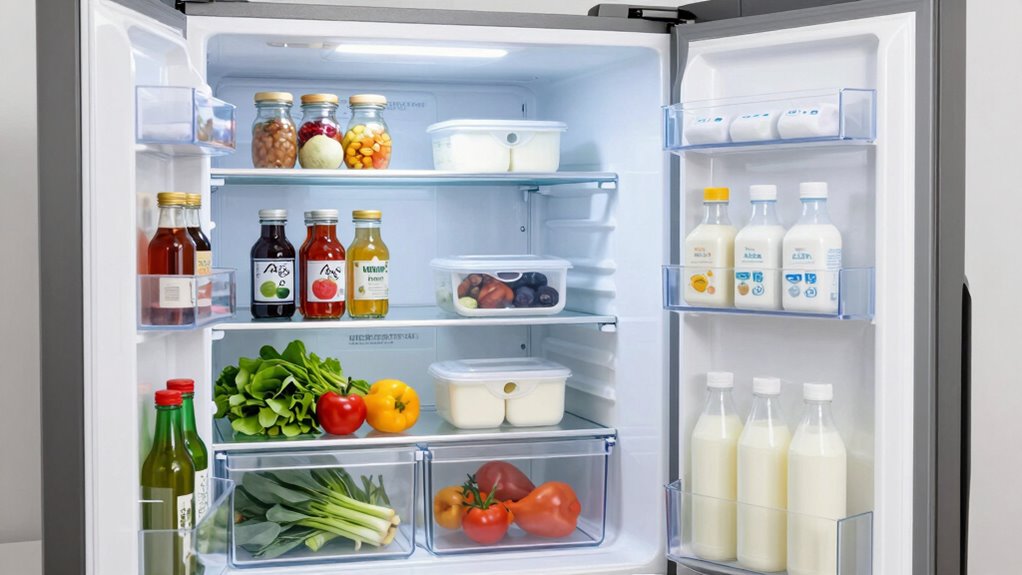
Your fridge’s setup also influences energy efficiency. When you overcrowd the fridge, air can’t circulate properly, causing the compressor to work harder to maintain a consistent temperature. Conversely, a well-organized fridge with clear, spaced-out shelves allows cold air to flow freely, keeping everything at the right temperature with less effort. It’s a simple way to reduce energy consumption without sacrificing food safety. Additionally, avoid leaving the door open for extended periods, and close it promptly after storing or retrieving items. Every time you do this, you help your fridge operate more efficiently.
Another smart tip is to keep frequently used items at eye level or in easily accessible spots. This reduces the time the door is open and minimizes temperature fluctuations, further enhancing energy efficiency. Regularly cleaning out expired or spoiled food prevents clutter and ensures your fridge runs smoothly. Also, consider investing in a fridge thermometer to monitor the internal temperature—ideally, it should stay around 37–40°F (3–4°C). Maintaining the right temperature not only preserves your food better but also reduces unnecessary energy use. Being aware of temperature zones inside your fridge helps optimize both food safety and energy savings. Additionally, understanding air circulation principles can help you organize your fridge more effectively for maximum efficiency. Proper airflow ensures that cold air reaches all parts of the refrigerator evenly, preventing warm spots that can compromise food safety and energy efficiency. Recognizing energy-efficient practices can further contribute to lowering your electricity bills and reducing environmental impact. Incorporating smart organization techniques can also make your fridge more user-friendly and efficient.

Finnhomy 3-Tier Rolling Kitchen Cart with 18" D x 36" W Oak Wood Tabletop, Kitchen Island Cart with 4" Wheels and Slider Shelf, Microwave Cart & Coffee Cart with Hooks for Dining Room, Chrome
- Large 18x36 inch Oak Top: Sturdy, water-resistant, supports 200 lbs
- Heavy-Duty Steel Frame: Industrial-strength, supports up to 500 lbs
- Multi-Functional Storage: Stores appliances, enhances kitchen space
As an affiliate, we earn on qualifying purchases.
Frequently Asked Questions
How Often Should I Rearrange My Fridge for Optimal Freshness?
You should rearrange your fridge every few weeks to maintain maximum freshness. Regular fridge organization helps prevent cross-contamination and keeps things fresh longer. Focus on best placement by storing raw meats on the bottom, vegetables in crisper drawers, and dairy higher up. This routine ensures ingredients stay fresh, reduces spoilage, and keeps your fridge functioning efficiently. Staying consistent with these adjustments makes a noticeable difference in your food’s longevity.
Does Fridge Layout Affect Energy Consumption?
Yes, your fridge layout impacts energy consumption. Proper temperature zones ensure heat isn’t squandered, making your fridge more energy efficient. Keep frequently used items at the front and in easy-to-reach spots, reducing the energy needed to keep everything cold. Investing in energy-efficient appliances also helps lower power use. By organizing your fridge wisely and choosing efficient models, you minimize energy waste and keep your food fresh longer.
Are Certain Materials Better for Fridge Shelving?
Certain materials are better for fridge shelving because they offer superior durability and support. For example, glass shelves are a popular choice, as they’re sturdy, easy to clean, and won’t stain or absorb odors. Proper shelf organization depends on these materials, making your fridge more efficient and organized. Choosing the right material guarantees your items stay safe and accessible, while also prolonging the lifespan of your fridge’s interior.
How Can I Prevent Cross-Contamination With My Fridge Setup?
To prevent cross-contamination and guarantee food safety, you should store raw meats on the bottom shelf to control bacteria spread. Keep cooked and ready-to-eat foods on higher shelves, away from raw items. Use airtight containers to prevent leaks, and regularly clean your fridge to eliminate bacteria. Always wash hands before handling food, and avoid stacking foods haphazardly to maintain proper bacteria control and keep everything safe.
What’s the Best Way to Store Leftovers in a New Layout?
To store leftovers smartly, start with specific shelf organization—dedicate a designated zone for leftovers. Use clear containers with food labeling to prevent confusion and cross-contamination. Stack similar items neatly, and always seal containers tightly to keep flavors fresh. This systematic, structured setup guarantees leftovers stay fresh, are easy to find, and reduce waste. Implementing labels and organized shelving makes your fridge safer, smarter, and more streamlined.
Conclusion
Now that you’ve got the scoop on smarter fridge layouts, it’s time to put it into action. Think of your fridge as a well-orchestrated dance, where every item has its perfect spot, making life easier and fresher. With a few simple tweaks, you’ll turn your fridge into a powerhouse of organization, keeping everything within reach and your kitchen running smoothly. Embrace the change — your fridge will thank you, and so will your busy mornings!