
To store heavy small appliances safely, evaluate their weight first and use proper lifting techniques, like keeping your back straight, bending at hips and knees, and lifting with both hands. Store the heaviest items on lower, stable shelves to prevent accidents. Use sturdy containers with handles and label them for quick access. Always prioritize safety by taking your time and seeking help if needed. Continuing with these tips will help you organize without risking your back health.

Turn the school run and nap time into listening time
- Thousands of audiobooks, podcasts and originals
- Listen on your phone, tablet or Echo — also offline
- Cancel anytime
Key Takeaways
- Use proper lifting techniques: keep back straight, bend at hips and knees, and lift with both hands.
- Store heavy appliances on lower, stable shelves to minimize strain and improve accessibility.
- Seek help or use tools like dollies or carts when moving heavy appliances.
- Organize storage with labeled, sturdy containers to reduce unnecessary lifting and searching.
- Prioritize safety by taking breaks, listening to your body, and avoiding twisting or sudden movements.
Storing heavy small appliances can quickly become a back-breaking task if you’re not careful. When dealing with appliances that have significant weight, it’s vital to consider their appliance weight and how it impacts both your safety and ease of storage. Lifting or maneuvering items that are too heavy for your strength can lead to strains, sprains, or worse injuries. To prevent this, plan your storage approach with safety as the top priority, making sure you avoid unnecessary risks.
First, assess the weight of each appliance before attempting to move it. Heavy small appliances like mixers, coffee makers, or blenders may seem manageable at first glance, but their weight can add up quickly. Use your judgment and, if possible, pick up or lift with both hands, keeping your back straight and bending at the hips and knees rather than your waist. This technique helps distribute the load evenly and minimizes strain on your spine. If an appliance feels too heavy or awkward, don’t hesitate to ask for help or use tools like dollies or carts designed for heavy lifting.
Assess appliance weight, lift with proper technique, and seek help or tools to prevent injury when storing heavy small appliances.
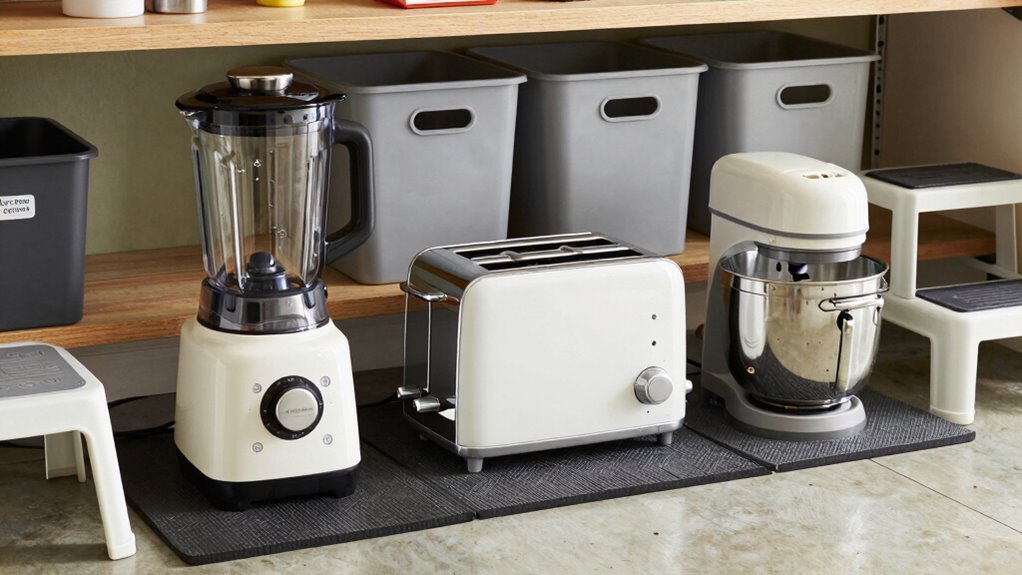
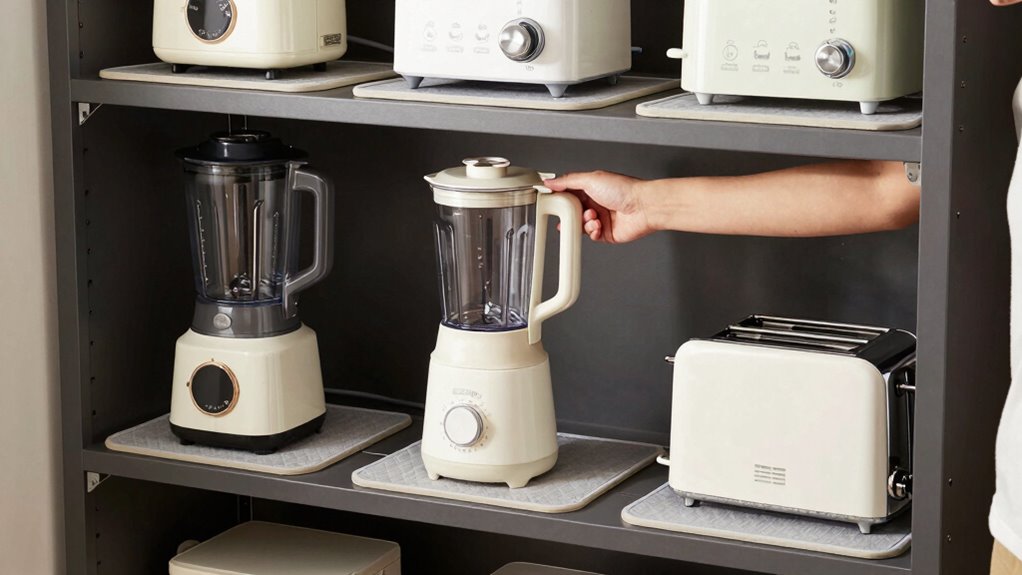
Storage safety isn’t just about physically lifting the appliances; it’s also about where and how you store them. Avoid placing heavy items on high shelves or in hard-to-reach areas. Instead, opt for lower, stable shelves where you can easily access and put down the appliances without risking a fall or injury. Secure storage spaces prevent appliances from falling unexpectedly, which could cause injury or damage. If you’re stacking appliances, place the heaviest items at the bottom to create a stable base, reducing the risk of toppling. Additionally, understanding the impact of appliance weight can help you make smarter storage choices that protect both your safety and your belongings. It’s also helpful to consider proper storage techniques to optimize space and safety in your kitchen. Being aware of safety precautions can also guide you in developing more secure storage habits. Remember that proper organization and weight distribution can significantly reduce the chance of accidents when handling or retrieving stored appliances. Incorporating ergonomic lifting methods can further reduce back strain and promote safer handling practices.
Another tip is to invest in storage solutions that make handling heavy small appliances safer and more manageable. Use bins or containers with handles, and make sure they’re sturdy enough to hold the weight. Label these containers clearly so you know what’s inside without needing to lift or move them repeatedly. When storing appliances that are lightweight but still bulky, consider using shelves with lip barriers or sides to prevent items from falling off.
Finally, always prioritize your safety by taking your time and using proper lifting techniques. Never rush when handling heavy appliances, and listen to your body. If you start feeling strain or discomfort, pause and reposition yourself or seek assistance. A little extra effort upfront can save you from serious back pain later. Proper storage habits, combined with awareness of appliance weight and safety measures, ensure you keep your back protected while maintaining an organized space.
Frequently Asked Questions
What Tools Are Best for Lifting Heavy Small Appliances Safely?
For appliance lifting, use a dolly or hand truck to reduce strain and improve safety. Employ safety precautions like wearing gloves and lifting with your legs, not your back. Clear the pathway to prevent accidents and ask for help if the appliance is too heavy. Using proper tools and techniques makes lifting safer, protecting your back and minimizing injury risk during appliance handling.
How Often Should I Rotate Stored Appliances to Prevent Damage?
You should rotate your stored appliances every 3 to 6 months to prevent damage. This regular movement keeps components in top shape and prevents sticky parts or mold. Incorporate appliance maintenance into your storage organization routine, checking for issues and cleaning surfaces. By staying proactive, you guarantee your appliances stay in prime condition, avoiding costly repairs later. Regular rotation is the secret to keeping your collection safe and functional for the long haul.
Can I Use Furniture Sliders to Move Heavy Appliances Easily?
Yes, you can use furniture sliders to move heavy appliances easily. They reduce friction, making appliance protection simpler and preventing damage to floors. Just place the sliders under the appliance’s corners, then gently push or pull. This method minimizes strain on your back and helps you relocate heavy items safely. Always guarantee the sliders are suitable for your flooring type and the appliance’s weight to avoid accidents or damage.
Are There Specific Storage Containers for Small Appliances?
Think of storage containers for small appliances like tailored suitcases for your gadgets—specifically designed for convenience. You should opt for clear, stackable bins with lids, perfect for keeping appliances dust-free and organized. These containers make appliance cleaning easier and help you maintain tidy storage organization. Look for ones with compartments or labels to quickly find what you need, reducing clutter and streamlining your space efficiently.
How Do I Prevent Mold and Dust on Stored Appliances?
To prevent mold and dust on your stored appliances, regularly clean them with gentle cleaning tips, ensuring they’re dry before storage. Use breathable storage containers or covers that promote air circulation, preventing moisture buildup. Keep appliances in a cool, dry place and avoid stacking them tightly, which can trap dust and moisture. Periodically check your stored items, wiping down surfaces and opening covers to maintain airflow and reduce mold risk.
Conclusion
Storing your heavy small appliances safely keeps your space tidy and your back happy. Picture pulling a sturdy, well-placed shelf or bin that feels like an old friend, ready to support you. As you lift and tuck away each item, imagine a gentle hug instead of strain, guiding your movements. With a little planning, your storage area becomes a sanctuary where practicality and comfort meet—keeping your back healthy and your home clutter-free.
Cold & flu season Picks
humidifiers
As an affiliate, we earn on qualifying purchases.