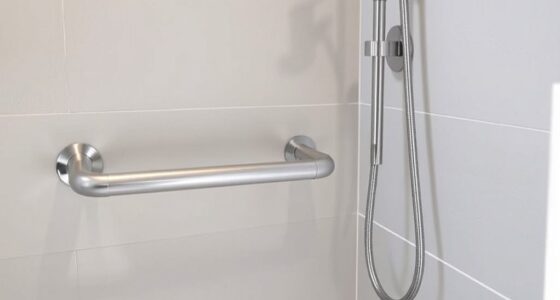
To make your bathroom truly accessible, focus on clearances that allow for safe movement beyond grab bars. Make certain there’s at least 30 inches of width and 48 inches of depth in front of fixtures for easy maneuvering. Proper fixture height, adequate space on either side of the toilet, and door widths of at least 32 inches are essential. Smart layout choices can transform your bathroom into a safe, comfortable space—continue to explore how these details can make a difference.

Turn the school run and nap time into listening time
- Thousands of audiobooks, podcasts and originals
- Listen on your phone, tablet or Echo — also offline
- Cancel anytime
Key Takeaways
- Ensure at least 30 inches width and 48 inches depth of open space in front of fixtures for easy maneuvering.
- Position sinks with a minimum of 27 inches height and space underneath for wheelchair access.
- Maintain about 18 inches of clear space on each side of the toilet for safe transfers.
- Use outward or sliding doors with at least 32-inch widths to maximize interior accessibility.
- Prioritize thoughtful layout and adequate clearances to create safe, independent, and inclusive bathroom environments.

Have you ever wondered if grab bars alone are enough to make a bathroom truly accessible? While grab bars are essential for safety, they’re just one piece of the puzzle. To create a bathroom that genuinely accommodates everyone, you need to consider the space around fixtures and the overall layout. Clearances—those open areas around toilets, sinks, and showers—are critical for ease of movement, especially for wheelchair users or those with limited mobility. Without sufficient space, even the most well-placed grab bars won’t make the bathroom functional or comfortable.
Grab bars aren’t enough—adequate clearances around fixtures are vital for truly accessible bathrooms.
The minimum clear space in front of and around fixtures isn’t arbitrary; it’s designed to give you enough room to maneuver comfortably. For example, a wheelchair requires at least 30 inches of width and 48 inches of depth to turn around easily. This means that the area in front of the toilet or sink should be free of obstructions and wide enough to allow smooth movement. If you’re designing or renovating a bathroom, paying attention to these measurements ensures you’re not just meeting building codes, but also making the space genuinely usable.
Next, consider the height and positioning of fixtures in relation to clearances. The sink should be mounted low enough to allow a wheelchair user to roll underneath comfortably, ideally with a clearance of at least 27 inches from the floor to the bottom of the sink. The toilet should have enough space on either side for transfer and support, typically about 18 inches from the center to the side wall or nearest obstructions. These details might seem small, but they make a big difference in everyday usability.
Furthermore, door widths and swing directions play a vital role. A door that swings inward into a narrow space can block access or make it difficult to get in or out with mobility aids. An accessible bathroom door should be at least 32 inches wide and ideally swing outward or slide open to maximize usable space inside. Every inch of clearance matters because it determines how easily someone with mobility challenges can navigate the room without feeling cramped or restricted.
In essence, ensuring proper clearances isn’t just about ticking boxes on building codes—it’s about creating a bathroom where you can move freely, feel safe, and maintain independence. True accessibility goes beyond grab bars, involving thoughtful space planning that respects your need for comfort and mobility. When you prioritize clearances, you’re making a space that welcomes everyone, regardless of their physical abilities. Incorporating attention to detail in design ensures that all users can enjoy a safe and functional bathroom environment.
Frequently Asked Questions
What Are the Best Materials for Slip-Resistant Bathroom Flooring?
You should choose slip-resistant bathroom flooring made from materials like textured porcelain or ceramic tiles, vinyl with a textured surface, rubber, or textured natural stone. These materials provide better grip, reducing the risk of slips and falls. Make sure the surface isn’t overly smooth and has good traction. Regularly clean and maintain your flooring to keep it safe, especially in wet areas.
How Can Lighting Improve Bathroom Safety for Disabilities?
Imagine walking into your bathroom—suddenly, the difference good lighting makes becomes clear. Bright, even lighting eliminates shadows and highlights hazards, giving you confidence and control. Motion sensors or task lighting can be game-changers, ensuring you’re never left in the dark unexpectedly. Proper lighting enhances visibility around obstacles, reduces falls, and makes steering easier for those with disabilities. It’s a simple upgrade that transforms safety into everyday certainty.
Are There Specific Door Widths Recommended for Wheelchair Access?
You should aim for a door width of at least 32 inches to guarantee wheelchair accessibility. This clearance allows smooth passage without needing to tilt or maneuver awkwardly. If possible, opt for even wider doors—up to 36 inches—for easier access and movement. Remember, wider doors improve safety and comfort, making it easier for you or others using mobility devices to navigate the bathroom independently and comfortably.
What Are Effective Strategies for Managing Bathroom Humidity?
To manage bathroom humidity effectively, you should use an exhaust fan that runs during and after showers to remove moisture promptly. Keep the door open or slightly ajar when not in use to improve airflow. Using a dehumidifier can also help reduce excess moisture, preventing mold growth. Additionally, wiping down wet surfaces and ensuring proper ventilation maintenance keeps humidity levels low, making your bathroom safer and more comfortable.
How Can I Personalize Accessibility Features for Individual Needs?
You can personalize accessibility features by evaluating your specific needs and preferences. Install adjustable grab bars, lever handles, or a shower seat tailored to your comfort. Use visual or tactile cues if you have sensory impairments. Consult with an occupational therapist to customize solutions that fit your mobility and strength levels. Regularly update features as your needs change, ensuring your bathroom remains safe, comfortable, and truly accessible.
Conclusion
You might think grab bars are enough, but proper clearances truly make the difference. It’s a common myth that simply adding bars guarantees accessibility—yet, space around fixtures matters just as much. When you prioritize clearances, you create a safer, more functional bathroom for everyone. So, don’t just focus on grab bars; challenge the theory that they’re all you need. Sometimes, it’s the overlooked space that transforms accessibility from mere compliance to real comfort.
Fall Picks
fall essentials
As an affiliate, we earn on qualifying purchases.