If your dryer takes longer to dry clothes, feels unusually hot, or you notice lint buildup around it, these are signs of vent blockages or excessive lint. A burning smell, weak airflow, or the exterior vent cap not moving are warning signs you shouldn’t ignore. These issues can cause overheating, fire risks, and higher energy bills. Keep an eye out for these signals to stay safe and save money as you explore how to prevent problems before they escalate.
Key Takeaways
- Clothes take longer to dry, indicating possible lint buildup or vent blockage.
- The dryer feels excessively hot or emits a burning smell during operation.
- Lint or dust accumulates around the dryer or on surfaces near the vent area.
- The exterior vent cap is blocked, not moving, or has visible debris.
- The dryer makes unusual noises or works harder, increasing energy use and safety risks.
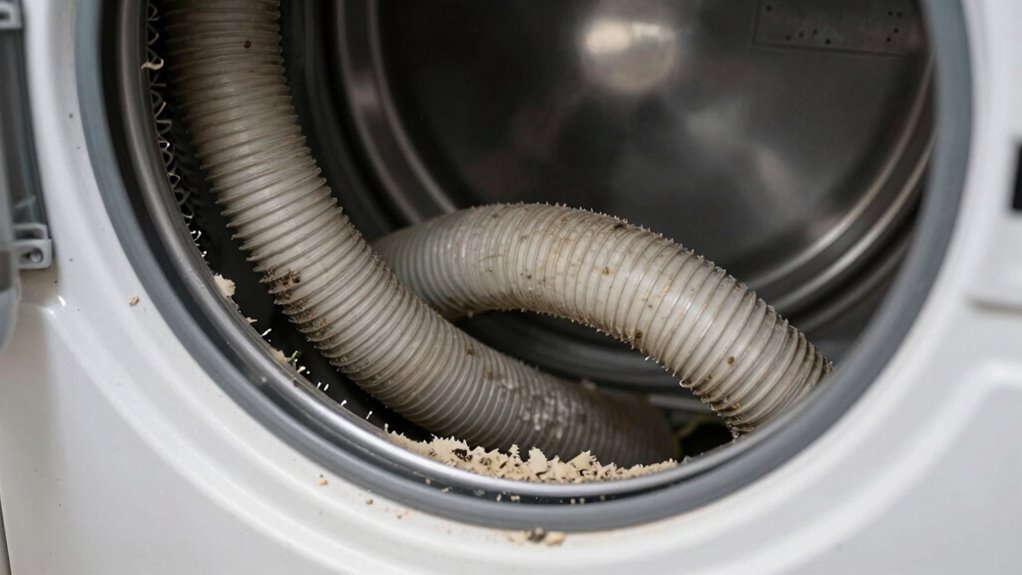
A clogged or damaged dryer vent can cause serious problems, including fire hazards, inefficient drying, and increased energy bills. One of the clearest warning signs is excessive lint buildup around your dryer or on the laundry room floor. If you notice that your clothes are taking longer to dry than usual, it’s a sign that your vent isn’t functioning properly. Lint buildup inside the vent restricts airflow, forcing the dryer to work harder and consume more energy. Over time, this can lead to vent blockages that not only slow down drying times but also pose serious safety risks. Regularly inspecting and maintaining your dryer vent can help prevent these issues and ensure a safer laundry space.
Another indicator to watch for is the presence of vent blockages. If you notice that hot air is not escaping from the vent outside, or if you see a burning smell during or after a drying cycle, these are immediate signs of a blockage. Vent blockages prevent proper airflow, causing the dryer to overheat. This overheating increases the risk of a fire, especially when lint and debris accumulate inside the vent. Regularly inspecting the exterior vent cap can help you determine if air is flowing freely. If you see that the vent cap isn’t moving or if it’s blocked by debris, it’s time to get it cleaned. Proper ventilation is crucial to prevent these hazards, especially considering the importance of airflow in dryer operation. Additionally, neglecting to maintain your vent system can lead to significant safety risks over time.
You might also observe an unusual amount of dust or lint around your laundry area, which could indicate vent issues. When lint isn’t properly expelled, it can escape into your home, leading to buildup on walls, ceilings, and other surfaces. This not only creates a mess but also signals that your vent system isn’t working efficiently. Additionally, if your dryer feels excessively hot to the touch, it’s a sign that airflow is restricted, likely due to vent blockages or lint accumulation inside the duct. Proper ventilation is crucial to prevent these hazards, especially considering the importance of airflow in dryer operation. Neglecting these signs can cause your dryer to overheat and potentially start a fire, emphasizing the need for regular inspections. Ensuring proper dryer vent maintenance can help you avoid these dangerous situations and keep your home safe.

Window Seal Kit for Portable Air Conditioner Sliding Windows (11x64inch)
- Maximizes Cooling Efficiency: Covers window gaps to block heat and drafts
- Easy Installation: No tools needed, attaches with adhesive tape
- Universal Fit: Compatible with single and dual-hose units
As an affiliate, we earn on qualifying purchases.
Frequently Asked Questions
How Often Should I Clean My Dryer Vent?
You should clean your dryer vent at least once a year to prevent lint accumulation and vent blockage, which can cause efficiency issues or fires. If you notice your dryer takes longer to dry clothes or if there’s excessive heat or musty odors, clean the vent more often. Regular maintenance is essential to keep airflow clear, avoid potential hazards, and extend your dryer’s lifespan.
Can a Clogged Vent Cause Fire Hazards?
A clogged vent definitely increases your fire risk—ironic, isn’t it? You’d think a simple lint buildup would be harmless, but it’s actually a fire hazard waiting to happen. When lint accumulates, it blocks airflow and overheats the dryer. This dangerous combination can ignite the lint, causing a house fire. So, always clean your vent regularly to prevent this silent, yet deadly, threat.
What Tools Are Best for Dryer Vent Cleaning?
You should use a vent cleaning brush or an auger designed for dryer vents to effectively remove lint buildup. Incorporate vent cleaning techniques like using a vacuum attachment and flexible rods to reach deep inside. Always wear safety equipment such as gloves and a dust mask to protect yourself from debris and dust. These tools and precautions guarantee thorough cleaning while keeping you safe from potential hazards.
How Do I Know if My Vent Is Properly Ventilating?
Think of your vent as a lifeline for your dryer, guiding airflow like a river carving through rock. To check if it’s properly ventilating, perform an airflow assessment by feeling for strong, steady air exit during operation. If airflow feels weak or inconsistent, your ventilation efficiency might be compromised. Regularly inspecting and cleaning your vent guarantees your dryer breathes freely, preventing lint buildup and reducing fire risks.
Can Regular Maintenance Prevent Dryer Vent Issues?
Regular maintenance can definitely prevent dryer vent issues. You should schedule frequent vent inspections to catch problems like vent blockage early on. During these inspections, clear out lint buildup and check for any obstructions that could hinder airflow. Keeping your vent clean and well-maintained reduces fire risks, improves dryer efficiency, and prolongs its lifespan. So, yes, consistent maintenance is key to avoiding costly repairs and ensuring safe, effective venting.
Conclusion
Ignoring dryer vent warning signs is like leaving a garden hose kinked—eventually, the pressure builds, and disaster strikes. When you notice the signs, don’t turn a blind eye; clear the blockage before it becomes a roaring wildfire in your laundry room. Regular maintenance keeps your dryer running smoothly, like a well-oiled machine, and your home safe and cozy. Stay vigilant, and let your dryer vent breathe easy—because a proactive approach is your best safeguard against trouble.