
To install handrails along stairways, choose a durable, code-compliant material like wood or metal suited to your environment. Make certain the handrail is securely anchored to the wall or supports at the recommended height of 34-38 inches. Proper hardware such as anchors and bolts should be used for stability. Regularly check for looseness or damage to maintain safety and compliance. If you keep exploring, you’ll discover more tips for a perfect and safe installation.
Key Takeaways
- Select durable, compliant materials like wood or metal, suitable for indoor or outdoor use, ensuring safety and longevity.
- Follow local building codes for handrail height (34-38 inches) and load capacity to meet safety regulations.
- Securely install handrails using appropriate hardware such as wall anchors, bolts, and fasteners for stability.
- Ensure continuous handrail length without gaps for effective support on long stairways.
- Regularly inspect and maintain the handrail to address looseness, corrosion, or damage, ensuring ongoing safety.
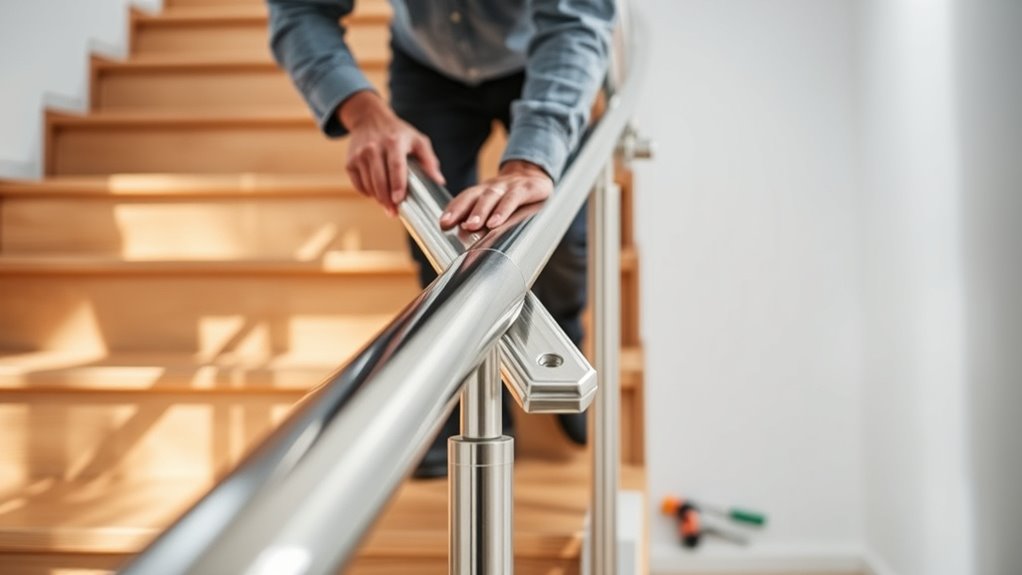
Installing handrails along stairways is a essential step to enhance safety and prevent falls. When you choose to add handrails, paying attention to material selection is pivotal. The right material ensures durability, strength, and a comfortable grip. Common options include wood, metal, and composite materials. Wood offers a warm, aesthetic appeal but may require regular maintenance to prevent rot or splinters. Metal, such as stainless steel or aluminum, provides a sleek look and excellent strength, making it suitable for high-traffic areas. Composite materials combine durability with low maintenance, offering a practical choice for many settings. As you select the material, consider the environment where the handrail will be installed, the weight it needs to support, and the overall style of the space. Making certain the material meets safety regulations is equally important. Local building codes specify standards for handrail height, load capacity, and grip size, so you need to verify that your chosen materials and design adhere to these regulations. This compliance guarantees your handrail provides maximum safety and can withstand daily use. When installing, make sure the handrail is securely anchored to the wall or structural supports. Proper mounting not only adheres to safety regulations but also ensures the handrail can handle the force exerted during use. Using appropriate hardware, such as heavy-duty anchors and bolts designed for the chosen material, is essential. For instance, if you’re working with wood, you might need wood screws and wall anchors; with metal, you’ll require compatible fasteners to prevent loosening over time. Additionally, the handrail should be installed at a height that is comfortable for most users, typically between 34 and 38 inches above the stair nosing, aligning with safety standards. Remember, a continuous handrail without gaps provides better support, especially on long stairways. When you follow safety regulations regarding material selection and installation practices, you notably reduce the risk of accidents. Properly installed handrails not only protect residents and visitors but also add to the overall aesthetic of your space. Regular inspections are necessary to make certain the handrail remains secure and free of damage. If you notice any looseness, corrosion, or splinters, address these issues promptly. Additionally, understanding building code standards helps ensure your installation remains compliant with local safety regulations. Ultimately, taking the time to choose the right materials and rigorously follow safety regulations will result in a dependable, safe, and visually appealing handrail that serves its purpose effectively for years to come.
As an affiliate, we earn on qualifying purchases.
Frequently Asked Questions
What Are the Latest Safety Standards for Handrail Installation?
You should follow the latest safety standards for handrail installation by guaranteeing your handrail design complies with local building codes, which specify height, grip size, and clearance. Use proper installation techniques, such as secure mounting into wall studs or anchors, to ensure stability. Regularly inspect and maintain your handrails to prevent accidents, and choose materials that provide a firm grip. Staying updated with code changes guarantees your handrail remains safe and compliant.
How Do I Choose the Best Material for My Handrails?
You should choose a material that offers excellent durability and complements your home’s style. Consider options like stainless steel or hardwood for maximum longevity, especially in high-traffic areas. If you want aesthetic options, metal or painted wood can add visual appeal. Prioritize materials that withstand daily wear and match your decor, ensuring safety and style. Your choice should blend strength, appearance, and maintenance ease for the perfect handrail.
Are There Specific Codes for Outdoor Versus Indoor Stairways?
Yes, there are specific codes for outdoor versus indoor stairways. Outdoor durability demands robust, weather-resistant materials to withstand the elements, while indoor aesthetics focus on style and safety. You’ll want to follow local building codes that specify height, grip, and spacing for each setting. Always consult your local authorities or a professional to guarantee your handrails meet all safety standards, creating a secure and stylish staircase for every environment.
Can I Install Handrails Myself, or Should I Hire a Professional?
You can do a DIY installation if you’re comfortable with tools and follow safety guidelines, but hiring professional help guarantees the handrails are secure and code-compliant. Professionals bring expertise, especially for outdoor or complex stairways, reducing risks of improper installation. Consider your experience and the stairway’s complexity before deciding. When in doubt, investing in professional help guarantees safety, durability, and compliance with local building codes.
How Often Should Handrails Be Inspected and Maintained?
You should inspect your handrails at least once a year to catch any issues early. Regular preventive maintenance is key to ensuring safety and durability. Keep an eye out for loose fittings, cracks, or corrosion, especially after harsh weather. An established inspection schedule helps you stay proactive, preventing accidents before they happen. Don’t wait for visible damage; routine checks now can save lives and costly repairs later.
Conclusion
Now that you’ve installed those handrails, you’ll be unstoppable on every staircase! No more slips, trips, or worries—you’re practically invincible with your new safety upgrade. Imagine confidently ascending and descending like a superhero, feeling safer with every step. Don’t underestimate the power of a sturdy handrail; it could be the difference between a minor stumble and a major fall. You’ve just transformed your staircase into a fortress of safety—get ready to conquer every step like never before!