For aging eyes, aim for 300 to 500 lux for everyday tasks and up to 750 lux for detailed activities like reading. Use brighter LED bulbs, add multiple light sources, and consider adjustable lamps to enhance visibility. Keep fixtures clean and position lights to minimize shadows. Gradually increase ambient lighting for comfortable adaptation. Learning more about these simple steps can help you create a safer, more comfortable environment for your vision.
Key Takeaways
- Aim for 300 to 500 lux for general indoor activities to support aging eyes’ comfort and safety.
- Use 750 lux or higher for detailed tasks like reading or crafts to reduce eye strain.
- Measure lighting with an affordable lux meter; ensure task areas are noticeably brighter than surrounding spaces.
- Enhance lighting by increasing bulb wattage, adding layered light sources, and using adjustable task lamps.
- Position lights behind or at sides to minimize shadows, and adjust brightness gradually for comfortable adaptation.

As your eyes age, they become more sensitive to insufficient or uneven lighting, making it harder to see clearly and increasing the risk of accidents. This natural change means you need to pay close attention to the lighting in your environment. Knowing the right levels can substantially improve your safety and comfort. Experts recommend aiming for around 300 to 500 lux for most indoor activities, which translates to a well-lit room without harsh glare. For tasks that require more focus, such as reading or detailed crafts, increasing the lighting to about 750 lux ensures you can see small print and fine details without straining your eyes.
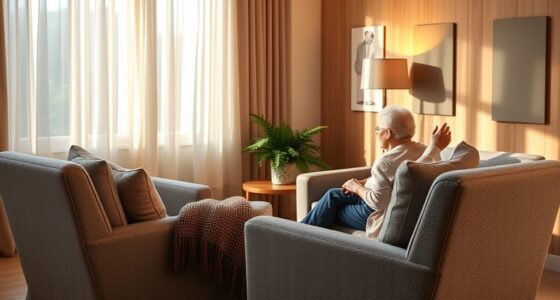
As you age, optimal lighting (300–750 lux) enhances safety and clarity in your environment.
To put this into perspective, typical household lighting often falls short. A standard living room might only provide 100 to 300 lux, which can be insufficient for aging eyes. You can measure your lighting levels with a lux meter, an affordable device available online or at hardware stores. If you don’t have one, use your own judgment: rooms should feel bright but not glaring, and task areas should be noticeably brighter than general spaces. If you find yourself squinting or struggling to see clearly, it’s a good sign that you need brighter lighting.
Simple steps can help you reach ideal lighting levels. First, increase the wattage of your bulbs or switch to higher-lumen LED bulbs that provide more light without excess heat or energy costs. Use multiple light sources instead of relying on a single fixture, creating a layered lighting scheme that minimizes shadows and uneven illumination. For reading or detailed work, add adjustable task lamps that you can direct exactly where needed. Keep light fixtures clean and free of dust to maximize brightness. Also, consider using warmer, softer bulbs if harsh white light causes glare or discomfort; many LED options now come with adjustable color temperatures. Additionally, lighting design principles can guide you in creating an effective and comfortable environment.
Adjusting your environment gradually makes it easier to adapt. Start by increasing overall ambient lighting, then add task lighting where necessary. Position lights behind you or at the sides to reduce shadows on your work area. Use dimmers or switches to fine-tune brightness levels based on time of day or activity. Remember, consistent, adequate lighting doesn’t just help you see better—it also protects your eyes from fatigue and reduces the likelihood of accidents. Making these small but deliberate changes creates a safer, more comfortable space tailored to your evolving vision.

Stroller Organizer with Cup Holder, Non-Slip Stroller Caddy Baby Essentials
- Large Capacity Storage: Holds bottles, diapers, toys, snacks
- Ideal Baby Shower Gift: Perfect for new moms and dads
- Universal Compatibility: Fits Uppababy, Baby Jogger, more
As an affiliate, we earn on qualifying purchases.
Frequently Asked Questions
How Do Aging Eyes Affect Daily Visual Tasks?
Aging eyes can make daily visual tasks more challenging by reducing brightness sensitivity and causing difficulty focusing. You might struggle to read small print, see in low light, or distinguish colors accurately. To adapt, you can increase lighting, use brighter bulbs, or add task lighting. Taking these steps helps you see clearly, perform tasks comfortably, and maintain independence despite age-related vision changes.
Can Lighting Adjustments Prevent Eye Strain?
Think of it like upgrading your old jalopy—you need better lighting to keep things running smoothly. Yes, adjusting your lighting can prevent eye strain. You should increase brightness in work areas, use task lighting, and eliminate glare. These simple steps help your eyes focus easier and reduce fatigue. By customizing your lighting, you make daily tasks more comfortable and protect your eyes from unnecessary strain, just like tuning up that vintage car.
Are There Specific Bulbs Recommended for Aging Eyes?
Yes, you should choose bulbs with higher color rendering index (CRI) ratings, ideally 90 or above, to enhance color clarity for aging eyes. Opt for LED bulbs with warm to neutral color temperatures between 2700K and 3500K, which reduce glare and eye strain. Avoid overly bright or flickering bulbs, and consider dimmable options to adjust lighting as needed for your comfort and visual clarity.
How Often Should Lighting Be Evaluated for Seniors?
Think of your lighting as a lighthouse guiding seniors safely through their environment. You should evaluate lighting at least every six months, or more often if they notice difficulties seeing or if their living situation changes. Regular checks guarantee the lighting remains comfortable and effective, much like tuning a fine instrument. By staying attentive, you help seniors navigate their space confidently, reducing risks and enhancing their quality of life.
What Are Signs That Lighting Is Inadequate for Aging Eyes?
You’ll notice if lighting is inadequate for your aging eyes when tasks become difficult, such as reading small print or seeing steps clearly. If you find yourself squinting, experiencing glare, or feeling eye strain and headaches, these are signs that lighting isn’t sufficient. Insufficient lighting can also cause accidents or falls. To stay safe, assess your environment regularly and adjust your lighting to make sure it’s bright and even enough for comfortable vision.
Conclusion
By choosing the right lighting levels, you enhance clarity, reduce strain, and boost confidence. By adjusting brightness, increasing contrast, and minimizing glare, you create a safer, more comfortable environment. By paying attention to your eyes’ needs, you improve your vision, preserve your independence, and enjoy your daily activities more fully. Remember, simple steps lead to significant improvements. Take control today, light your world wisely, and see the difference clear, bright lighting can make in your life.