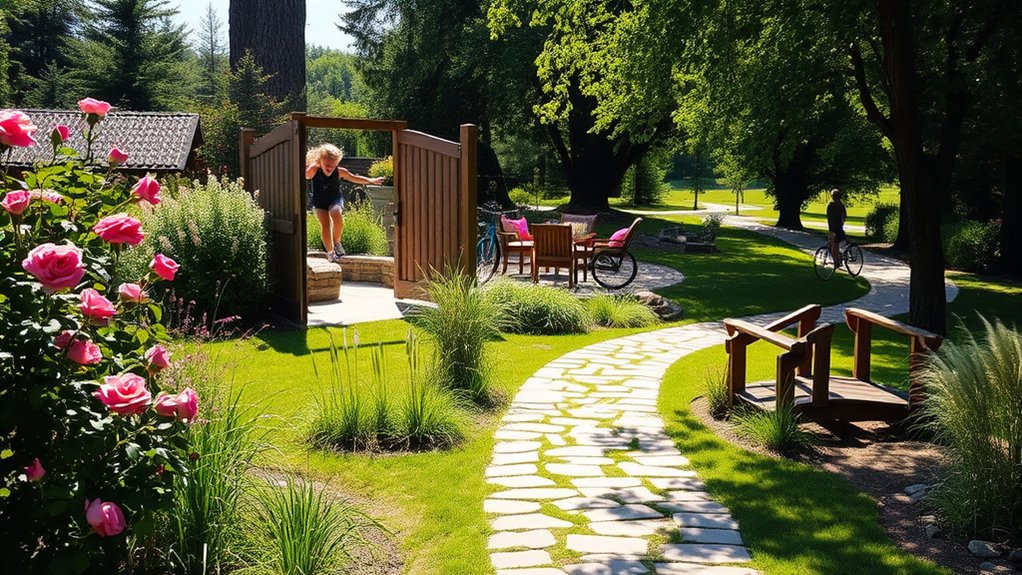

Accessible outdoor spaces naturally invite you to move daily by making activities like walking, biking, or stretching effortless and enjoyable. Small choices, like strolling to the store or taking breaks outside, add up to better physical health and mental clarity. Fresh air and nature sounds help reduce stress and stimulate creativity. By creating inviting outdoor environments, you’ll find it easier to incorporate regular movement into your routine—plus, there’s plenty more to discover about making outdoor access work for you.
Key Takeaways
- Design outdoor spaces with accessible, inviting pathways and trails to encourage spontaneous walking and movement.
- Incorporate features like benches and open areas that promote relaxation and casual outdoor activities.
- Create community-focused environments that host outdoor events, fitness classes, and social gatherings.
- Ensure outdoor spaces are safe, well-maintained, and visually appealing to motivate daily visits.
- Integrate natural elements like gardens and green spaces to stimulate outdoor exploration and physical activity.

Have you ever wondered why outdoor access matters so much? It’s because stepping outside each day fuels your body and mind in ways that indoor routines simply can’t match. When you have easy, inviting access to outdoor spaces, you’re more likely to move regularly, which benefits your health and boosts your mood. Whether it’s a small backyard, a nearby park, or a walking trail, having that connection to nature encourages spontaneous activity. You might find yourself taking a quick walk during lunch or stretching your legs before dinner, simply because the environment invites you to do so.
Daily movement is essential for maintaining physical health, and outdoor access makes it effortless to incorporate it into your day. Instead of feeling like a chore, outdoor activities become a natural part of your routine. For example, you might choose to bike to the store instead of driving, or take your dog for a walk around the block. These small choices add up, helping you stay active without needing a structured workout. Plus, being outside exposes you to fresh air and sunlight, which are crucial for your immune system and vitamin D levels. This natural exposure also improves your sleep patterns, making you feel more rested and alert.
Incorporating outdoor activities effortlessly boosts health and energy through fresh air and sunlight.
Having outdoor access isn’t just about physical health; it’s about mental clarity too. When you step outside, you break free from indoor stressors and experience a sense of freedom. You can breathe deeply, listen to the sounds of nature, and feel more connected to your surroundings. This connection reduces feelings of anxiety and can even improve focus, making you more productive throughout the day. Regular outdoor movement also stimulates your creativity. Many people find that ideas flow more freely when they’re in natural settings, which can lead to better problem-solving and new perspectives.
Furthermore, outdoor access encourages social interaction. Whether you’re chatting with neighbors during a walk or joining a local outdoor fitness class, these moments foster community bonds that boost your overall happiness. When outdoor spaces are welcoming and accessible, they invite daily use, making movement a seamless part of your lifestyle. It’s not about pushing yourself to the limit but about creating opportunities for spontaneous activity that fits naturally into your day. Over time, this consistent outdoor engagement cultivates habits that support your long-term health and well-being.
In essence, outdoor access that invites daily movement transforms how you live. It’s a simple yet powerful way to stay active, improve your mental health, and deepen your connection to the world around you. By making outdoor spaces welcoming and easy to reach, you set yourself up for a healthier, more vibrant life—one step outside at a time.
Frequently Asked Questions
How Can I Create Safe Outdoor Pathways for All Ages?
You can create safe outdoor pathways by choosing smooth, level surfaces like paved or compacted gravel that are easy to walk or wheel on. Install clear signage and adequate lighting to guide all ages, and add ramps instead of steps where needed. Regularly maintain the pathways to fix cracks or obstacles, and incorporate shaded areas for comfort. These steps make certain everyone feels secure and encouraged to enjoy daily outdoor movement.
What Are the Best Outdoor Activities to Promote Daily Movement?
Did you know that just 30 minutes of daily activity can markedly boost your health? To promote daily movement, try encouraging activities like brisk walking, cycling, or dancing in your outdoor space. These options are accessible for all ages and skill levels. You can also set up simple equipment like jump ropes or hiking trails. By making these activities enjoyable and easy, you motivate everyone to stay active every day.
How Does Outdoor Access Impact Mental Health?
You boost your mental health when you have outdoor access because it reduces stress, lifts your mood, and enhances your overall well-being. Being outside helps you connect with nature, which promotes relaxation and mindfulness. It also encourages physical activity, releasing endorphins that fight anxiety and depression. Regular outdoor time can improve your focus, boost self-esteem, and give you a sense of calm, making it a essential part of mental health care.
What Considerations Are Needed for Accessible Outdoor Spaces?
You need to guarantee outdoor spaces are accessible to everyone by considering pathways that are smooth and wide enough for wheelchairs or mobility aids. Incorporate sensory elements like textured surfaces or fragrant plants to engage different senses. Think about seating areas, shade, and safety features such as good lighting and clear signage. Regular maintenance is essential to keep the space welcoming and usable for all, encouraging daily outdoor activity and inclusivity.
How Can Urban Design Encourage More Outdoor Movement?
You can encourage more outdoor movement by designing cities with walkable neighborhoods, safe crossings, and inviting green spaces. Studies show that people living near parks are 45% more likely to be active daily. By making outdoor areas accessible, connected, and aesthetically pleasing, you motivate residents to walk, bike, and engage with their environment regularly. This approach promotes healthier lifestyles, reduces traffic, and fosters vibrant community interactions.
Conclusion
By opening your door to the outdoors, you release a world bursting with endless movement and vitality. Every step you take outside fuels your body and clears your mind, transforming mundane routines into exhilarating adventures. Imagine your outdoor space as a gateway to unstoppable energy—like a rocket launching into the sky. So, step outside today and embrace the limitless power of outdoor access; your life will never be the same, and you’ll feel invincible every single day.