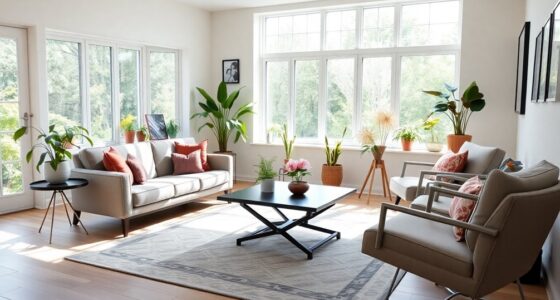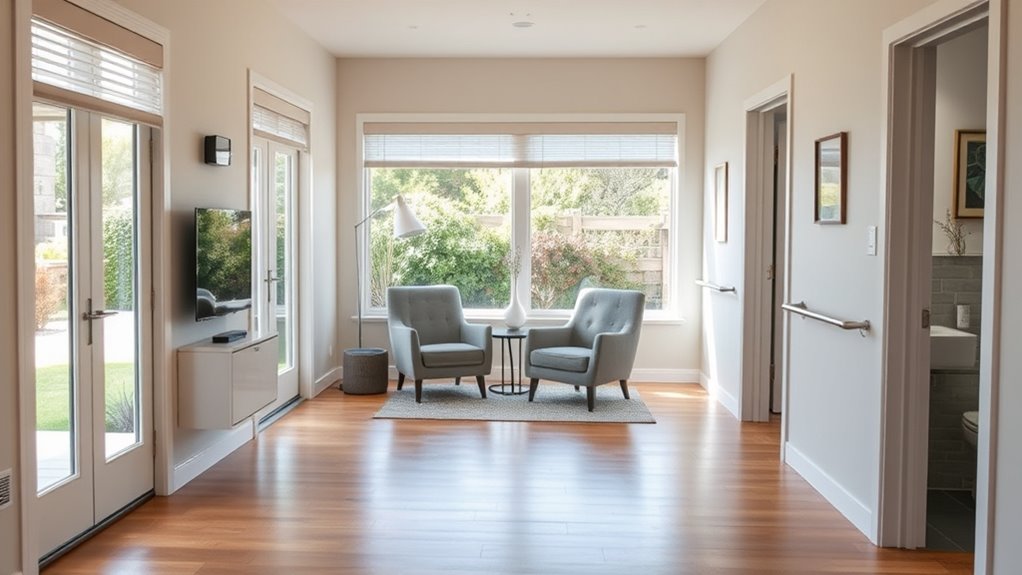

To design a future-proof home for aging in place, incorporate smart technology like automated lighting, thermostats, and sensors for safety and convenience. Use universal design features such as wide doorways, lever handles, and no-step entrances to guarantee accessibility for all abilities. Plan ahead by choosing adaptable solutions and thoughtful layouts that accommodate future mobility needs. This proactive approach creates a safe, comfortable, and flexible space that grows with you, and exploring these strategies further can help make your home truly resilient.

Turn the school run and nap time into listening time
- Thousands of audiobooks, podcasts and originals
- Listen on your phone, tablet or Echo — also offline
- Cancel anytime
Key Takeaways
- Incorporate universal design features like wide doorways and no-step entrances for accessibility and flexibility.
- Integrate smart home technology to automate lighting, temperature, and security for safety and convenience.
- Use sensors and alerts to detect hazards, enabling immediate response and enhancing safety.
- Plan for future mobility needs by selecting adaptable, aging-in-place-friendly fixtures and layouts.
- Ensure the home’s design supports aging in place, reducing the need for costly renovations later.
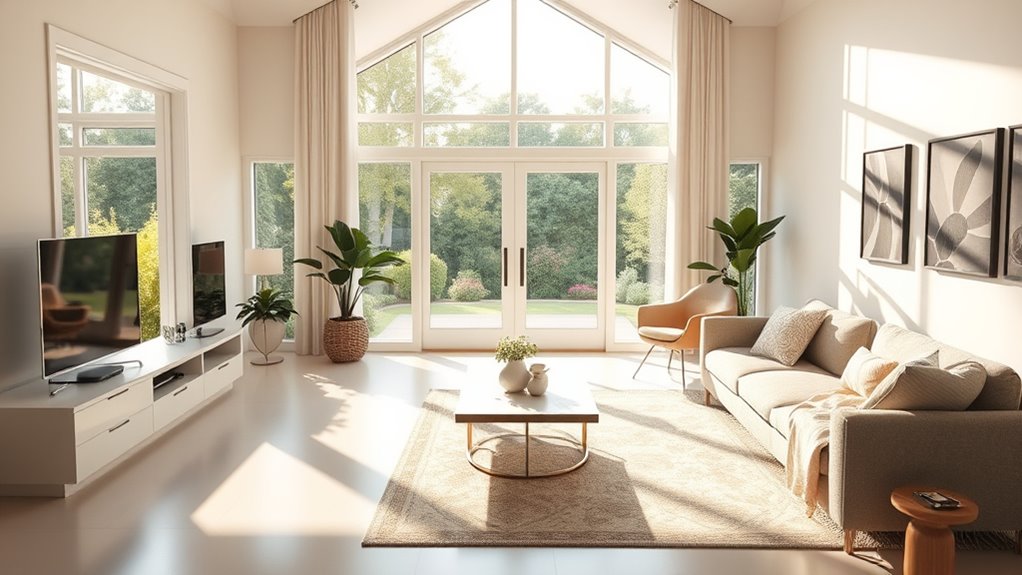
Are you wondering how to create a home that adapts effortlessly to future changes? If so, focusing on smart technology and universal design can set the foundation for a space that evolves with your needs. Smart technology is a game-changer because it allows you to automate and control various aspects of your home, making daily routines simpler and safer. Imagine being able to adjust lighting, temperature, or security systems remotely, or having voice-activated controls that respond instantly. These features not only enhance convenience but also promote safety, especially as mobility or vision might become challenging over time. Incorporating smart technology early on guarantees your home remains compatible with emerging trends, giving you peace of mind that you won’t need costly upgrades down the line.
Create a future-ready home with smart tech and universal design for safety, convenience, and lasting adaptability.
Alongside smart tech, universal design principles help you create a home that’s accessible and comfortable for everyone, regardless of age or ability. Universal design emphasizes creating spaces that are easy to navigate and use without specialized modifications. Think wide doorways and hallways, no-step entrances, and lever handles instead of knobs—all of which make your home more functional now and adaptable in the future. When you incorporate universal design into your plans, you’re not just preparing for aging in place; you’re making your home more inclusive for visitors, family members, or anyone with mobility challenges. It’s about designing a space that feels natural and intuitive, reducing barriers without sacrificing style. Additionally, integrating assistive technologies can further enhance your home’s adaptability and support independence.
Blending smart technology with universal design means your home becomes a seamless environment that anticipates your changing needs. For instance, installing smart lighting that automatically adjusts based on natural light or occupancy can improve safety and energy efficiency. Smart sensors placed around your home can alert you to potential hazards, like leaks or fires, giving you immediate control or alerts via your smartphone. Meanwhile, universal design features ensure you won’t need to retrofit or make disruptive modifications later. Implementing accessible features early can prevent the need for costly renovations and make your home more adaptable to future requirements. When you plan with these concepts in mind, you’re creating a flexible, resilient space that can accommodate everything from minor aging-related adjustments to more significant mobility needs without losing its aesthetic appeal.
In essence, designing a future-proof home involves thinking ahead and choosing adaptable, innovative solutions. By combining smart technology with universal design principles, you guarantee your space remains functional, safe, and welcoming for years to come. It’s about creating a home that adapts to your life, not the other way around—making aging in place a smooth, comfortable transition rather than a challenge. Starting today, these thoughtful choices will help you build a residence that truly grows with you, offering peace of mind and independence for the future. Additionally, understanding the support hours of relevant services can ensure prompt assistance when needed.
Products Worth Considering

Bose SoundLink Max Portable Bluetooth Speaker, IP67 Waterproof, Black

Sonos Arc Ultra Soundbar with Dolby Atmos, Black

Bose TV Speaker Compact Soundbar with Bluetooth and HDMI-ARC, Black
As an affiliate, we earn on qualifying purchases.
Frequently Asked Questions
How Can Smart Home Technology Enhance Aging-In-Place Safety?
Smart home technology can profoundly boost your safety as you age in place. With voice control, you can easily operate devices and access help hands-free, reducing fall risks. Emergency alerts automatically notify you or caregivers if there’s a problem, ensuring quick response. These features work together to create a safer, more convenient environment, giving you peace of mind and supporting your independence in your own home.
What Are Cost-Effective Modifications for a Future-Proof Home?
Think of your home as a garden, needing careful tending to stay vibrant. You can start with affordable upgrades like grab bars, non-slip mats, and improved lighting—simple DIY modifications that make a big difference. These tweaks act as sturdy roots, supporting safety and independence without breaking the bank. Investing in these cost-effective changes creates a sanctuary where you can age in place comfortably and confidently, nurturing your independence for years to come.
How Can Universal Design Principles Be Integrated Into Existing Homes?
You can integrate universal design principles into your existing home by improving interior lighting with bright, even illumination and installing motion sensors for safety. Focus on outdoor accessibility by adding ramps, wide doorways, and slip-resistant surfaces. These modifications make your home more functional and safe for everyone, especially as needs change over time. Small changes like lever handles and lowered switches also support ease of use and inclusivity.
What Legal Considerations Should Homeowners Be Aware Of?
You might think legal considerations are minor, but ignoring them can lead to disaster! You must guarantee legal compliance with local building codes and regulations, or risk hefty fines and delays. Liability concerns are real—if someone gets injured due to non-compliance, you could face lawsuits. Always consult a legal expert before making modifications, and document everything to protect yourself. Don’t underestimate the power of following the law—your home’s safety depends on it!
How Can Homes Be Customized for Specific Health Conditions?
When customizing homes for specific health conditions, you should focus on personalized adaptations that address your unique needs. Incorporate features like medical integration systems, such as emergency alerts or health monitoring devices, to enhance safety and convenience. Consider modifying your space with accessible fixtures, tailored lighting, or specialized equipment. These adjustments help create a supportive environment, ensuring your home adapts seamlessly to your health requirements and promotes independent living.
Conclusion
By thoughtfully designing your home today, you’re planting seeds for a future that blooms with independence and comfort. Think of your space as a sturdy oak tree, growing stronger and more resilient with each thoughtful update. When you create a home that adapts with you, you’re building a sanctuary that ages like fine wine—rich, warm, and enduring. Embrace these changes now, and watch your home become a timeless haven where you’ll always feel safe and supported.