To stand up smoothly, adjust your chair to a slight recline between 100 and 110 degrees, which reduces pressure on your hips, knees, and lower back. Make sure your seat height is set so your knees are level with your hips, and your feet are flat on the ground. An adjustable tilt tension helps you lean back comfortably without slipping. Paying attention to these angles and positions will support easier movement—and if you explore further, you’ll learn more ways to optimize your posture.
Key Takeaways
- A slight recline of 100 to 110 degrees reduces lumbar pressure and facilitates easier standing transitions.
- Adjust seat tilt tension to support a balanced, stable recline that aids smooth standing motion.
- Proper seat height, with knees at approximately 90 degrees, provides leverage for easier standing.
- Opening hips slightly by a minor backward tilt improves muscle engagement and standing comfort.
- Maintaining proper foot placement with flat feet and aligned knees enhances stability when rising.
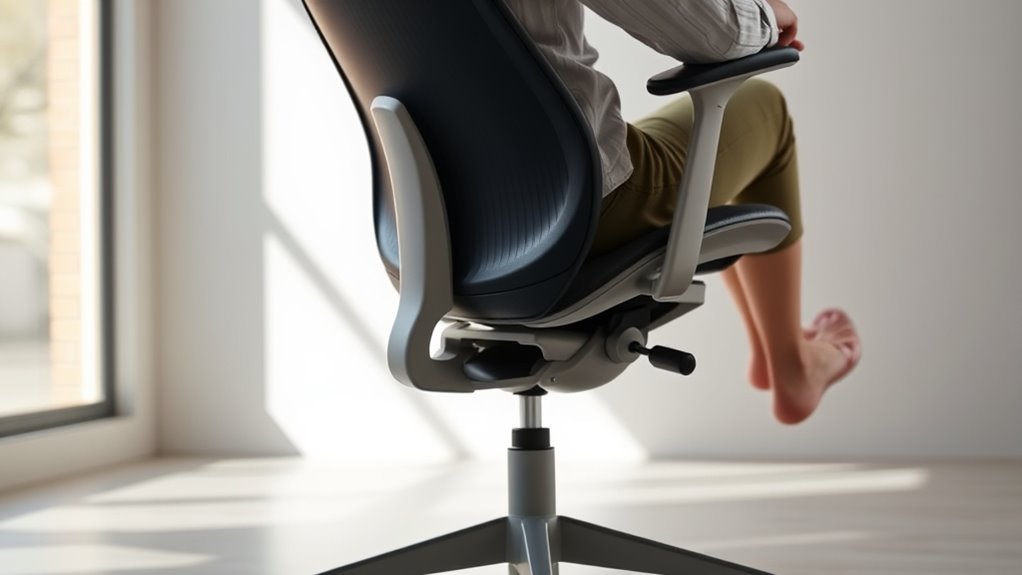
Have you ever wondered how your seating angle impacts comfort and posture? The way you position yourself in a chair can considerably influence your ability to stand up smoothly and without strain. When you sit at the right angle, you reduce unnecessary pressure on your hips, knees, and lower back, making transitions from sitting to standing much easier. Conversely, poor seating angles can cause stiffness, discomfort, and even long-term issues with mobility.
To optimize your sitting position, focus on a slightly reclined angle—around 100 to 110 degrees—rather than a fully upright posture. This slight tilt helps distribute your weight more evenly across your pelvis and thighs, which lessens the effort needed to shift your body upwards. When your hips are positioned at this comfortable angle, your lower back maintains a natural curve, supporting your spine and reducing the risk of strain during movement. It’s important to avoid sitting too upright, which can tighten your hip flexors and create resistance when you try to stand up. A too-vertical seat height also forces your knees to be higher than your hips, increasing tension in your thighs and making the transition more difficult.
Adjusting your seat’s tilt can also help with muscle engagement. A slight backward tilt relieves pressure on your lumbar region and encourages you to sit back with your core engaged, preparing your muscles for standing. This position allows your hips to open slightly, which is beneficial when you want to rise smoothly. If your chair has adjustable tilt tension, set it to a level that allows you to lean back comfortably without feeling like you’re sliding downward or fighting against the recline. A balanced tilt tension supports a natural posture, making it easier to initiate movement without sudden jerks or muscular strain.
Additionally, your foot placement plays a key role. When you’re seated at the right angle, ensure your feet are flat on the ground with your knees bent at roughly 90 degrees. This position provides a sturdy base that helps you leverage your leg muscles when standing. If your seat is too high or too low, or if your knees are elevated or dangling, you’ll notice more difficulty rising and increased discomfort. Making small adjustments to your seat height and tilt can create a more stable and ergonomic setup, allowing you to stand up with less effort and more control.
Being mindful of ergonomic principles can further enhance your sitting posture and ease of movement. In essence, the right seating angle isn’t just about comfort—it’s about creating a supportive environment that promotes ease of movement. By paying attention to these details, you can stand up smoothly and reduce strain, keeping your body healthier and more functional over time.

Momcozy Universal Stroller Organizer with Insulated Cup Holder Detachable Phone Bag & Shoulder Strap, Fits for Stroller Like Uppababy, Baby Jogger, Britax, BOB, Umbrella and Pet Stroller
- Structured Organizer with Multiple Pockets: Internal multi-functional partition design
- Insulated Cup Holders: Includes 2 insulated cup holders
- Large Capacity Storage: Fits essentials like phone, wallet, and more
As an affiliate, we earn on qualifying purchases.
Frequently Asked Questions
How Do Seating Angles Affect Lower Back Health?
Seating angles directly impact your lower back health by influencing spinal alignment and reducing strain. When you sit at the right angle, usually between 90 and 110 degrees, you help maintain your lower back’s natural curve, preventing pain and discomfort. If you sit too upright or too reclined, it can cause muscle tension or pressure on your lumbar spine. Adjust your seat to support proper posture and protect your lower back.
What Is the Ideal Seat Angle for Elderly Individuals?
You should set the seat angle around 90 to 100 degrees for elderly individuals. This position provides enough support and encourages better posture, making it easier to stand up without strain. Avoid reclined or overly upright angles, which can cause discomfort or difficulty. Adjust the seat so your hips are slightly higher than your knees, helping you stand smoothly and reducing pressure on your lower back.
Can Seating Angles Reduce Hip Strain?
Seating angles can definitely reduce hip strain, much like adjusting a saddle makes a ride smoother. When you sit at a slightly reclined angle—around 100 to 110 degrees—you take pressure off your hips, easing discomfort. I know someone who switched to this angle and found standing up easier and less painful. Proper positioning distributes weight evenly, preventing unnecessary strain and promoting better joint health over time.
How Do Different Angles Impact Circulation?
Different seating angles markedly impact your circulation. When you sit at a slight forward tilt, it encourages better blood flow by reducing pressure on your thighs and hips. Conversely, a reclined position can restrict circulation, causing discomfort and numbness over time. To improve circulation, adjust your chair to an upright or slightly inclined angle that keeps your feet flat on the ground and promotes healthy blood flow.
Are There Specific Angles Recommended for Office Chairs?
Yes, there are specific angles recommended for office chairs. You should set your chair’s backrest between 100 and 110 degrees for comfort and support. The seat itself should be slightly tilted or flat, around 0 to 5 degrees, to promote proper posture. A slight recline helps reduce strain, encourages circulation, and supports your back. Adjust your chair to find the perfect position that keeps you comfortable and promotes productivity.
Conclusion
By adjusting your seating angles, you set the stage for a smoother stand-up, like gently rising from a calm lake rather than a stormy sea. Imagine the difference between fighting against resistance and gliding effortlessly into motion. Small changes in your posture can transform your day—from stiff and strained to fluid and free. So, try different angles and find your perfect balance, turning what once felt like a challenge into a graceful, easy passage.