
Choosing between a top-load washer with or without an agitator depends on your priorities. Agitator models clean deeply but use more water and electricity and can be louder or rougher on fabrics. No agitator, or impeller models, offer gentler, more efficient cleaning, saving water and energy while being quieter and easier on delicate clothes. If you want to learn how to pick the right one for your needs, keep exploring the differences.
Key Takeaways
- Agitator washers excel at deep cleaning but use more water and energy, while impeller models are more efficient and fabric-friendly.
- Impeller washers operate quieter and are gentler on clothes, reducing wear and tear on delicate fabrics.
- Traditional agitator models may require more water, leading to higher utility bills and environmental impact.
- Modern impeller washers automatically optimize water levels and cycles for better efficiency and fabric care.
- The choice depends on balancing cleaning performance, energy efficiency, noise levels, and fabric preservation.
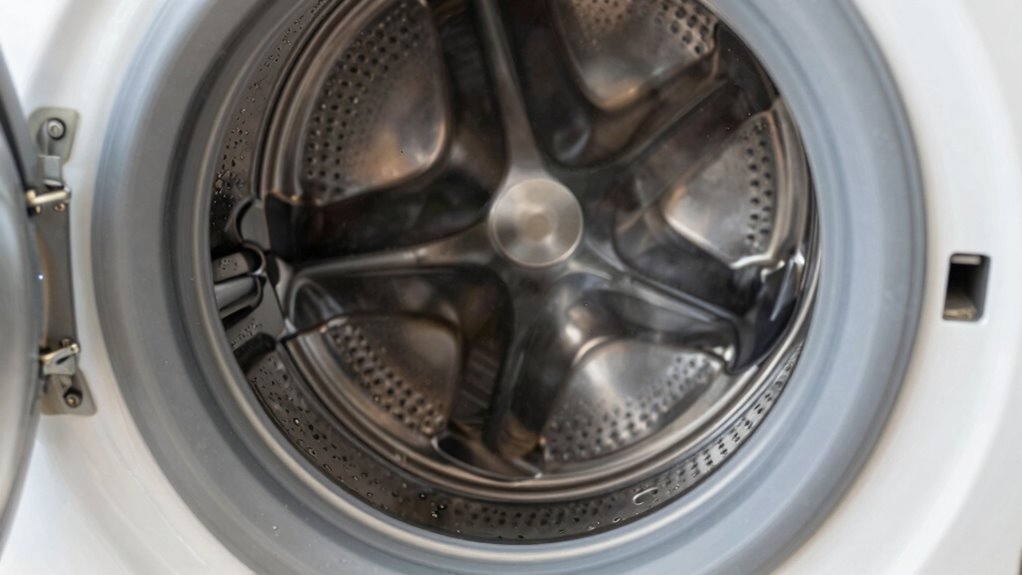
When choosing a top-load washer, one of the key decisions you’ll face is whether to opt for an agitator or go without one. This choice influences not only how well your laundry gets cleaned but also impacts energy efficiency and noise levels. An agitator is the central post with fins that moves clothes around vigorously, providing a traditional and often more aggressive wash. Without an agitator, washers typically use an impeller system—low-profile rotating plates that gently move clothes.
Choosing between an agitator and no agitator impacts cleaning, efficiency, and noise in your top-load washer.
If you’re concerned about energy efficiency, going without an agitator might be the better choice. Modern impeller washers tend to use less water and electricity because they operate with gentler, more efficient cycles. They also often include advanced wash features that optimize water levels automatically, saving resources over time. On the other hand, traditional agitator models can consume more water and energy, especially if they rely on filling the drum fully for each cycle. So, if energy savings are a priority, an impeller washer can help reduce your utility bills and environmental footprint.
Noise levels are another important consideration. Agitator machines tend to be louder because of the vigorous motion created to clean clothes thoroughly. If your laundry area is near bedrooms or quiet spaces, noise might be a significant factor. Many newer models with impellers operate more quietly, thanks to their smoother, less forceful movements. They generate less vibration and sound, making them ideal for homes where minimizing noise is essential.
Additionally, the choice between an agitator and no agitator can influence how gentle your laundry process is. Impeller washers tend to be gentler on clothes, reducing wear and tear over time. This can be especially important if you regularly wash delicate fabrics or expensive garments. Conversely, traditional agitator washers, while effective at deep cleaning, can sometimes be rougher on fabrics, which might lead to faster wear. Understanding the impact on fabric care**** of each type can help you make a better decision.
Ultimately, your decision hinges on balancing cleaning power, energy efficiency, noise levels, and fabric care. If you want the traditional deep-cleaning performance and don’t mind slightly higher energy use and noise, an agitator model could suit you. But if you prefer a quieter, more efficient wash that’s easier on your clothes, an impeller washer may be the smarter choice. Either way, understanding these differences helps you pick a washer that fits your lifestyle and priorities.
top load washing machine with agitator
As an affiliate, we earn on qualifying purchases.
As an affiliate, we earn on qualifying purchases.
Frequently Asked Questions
Which Type Is More Energy-Efficient: Agitator or No Agitator?
No-agitator washers tend to be more energy-efficient because they use less water and generate lower noise levels. Since they require less water, they save energy during the heating process, making them more eco-friendly and cost-effective over time. If you’re looking to reduce water consumption and noise, choosing a no-agitator model is a smart move, especially if energy efficiency is your priority.
Do Agitator Washers Clean Clothes Better Than High-Efficiency Models?
Agitator washers clean clothes better than high-efficiency models, like a tornado swirling through debris. They use more water, which helps remove dirt more effectively, but can be noisier. If you want a thorough clean, an agitator is your best bet. However, if you prefer quieter operation and less water use, a high-efficiency washer might be better. Consider your priorities: deep cleaning versus water conservation and noise.
Are There Significant Maintenance Differences Between the Two Types?
You’ll find that agitator washers typically require more maintenance due to their moving parts, which can lead to more repairs over time. They often use more detergent, so you need to adjust your detergent usage accordingly. They also tend to be noisier during operation. Without an agitator, high-efficiency models usually need less maintenance, run quieter, and use less detergent, making them more convenient for daily use.
How Does Load Size Affect Washing Performance in Each Type?
When it comes to load size, you get what you pay for—bigger loads mean longer cycle durations and increased water consumption, whether with or without an agitator. Larger loads can strain washing performance, especially if the washer isn’t designed for heavy duty. In agitator models, bulky items may not tumble freely, reducing cleaning efficiency. Without an agitator, larger loads often wash better, but be mindful of the machine’s capacity to avoid overloading.
Which Washer Type Is Gentler on Delicate Fabrics?
Without an agitator, a top-load washer is gentler on delicate fabrics because it uses a less aggressive wash action. You can optimize fabric care by choosing gentle cycles and using mild detergent, which reduces wear and tear. With or without an agitator, always check fabric labels and avoid overloading to protect delicate items. This way, you guarantee your fabrics stay soft and undamaged over time.
Conclusion
So, whether you opt for a top-load washer with or without an agitator, remember that your choice often comes down to what fits your laundry routine best. Funny how a simple decision can surprise you—sometimes, the best option is the one you didn’t initially consider. Just like discovering that a small tweak can make your chores smoother, choosing the right washer might unexpectedly make laundry day a little easier and even enjoyable.