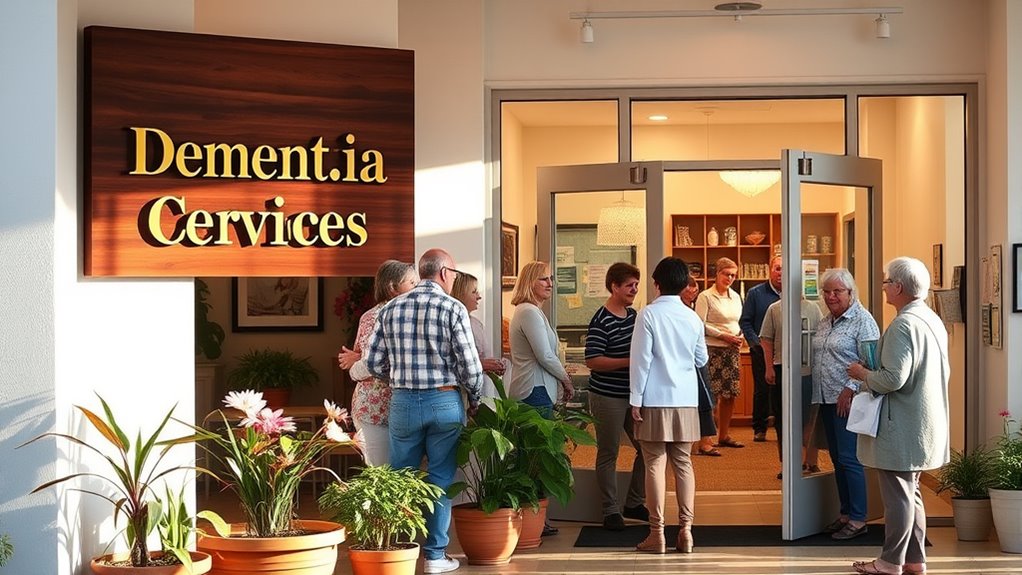

To find local dementia care services, start by exploring directories from your local health department or aging agency. Look for community programs that offer day care, respite, and transportation options. You can also check nonprofit organizations that specialize in dementia support. Connecting with these services early helps improve quality of life for your loved one and eases caregiver stress. Keep going to discover even more ways to access tailored support nearby.
Key Takeaways
- Use local health department or aging agency directories to locate nearby dementia care services.
- Search online resources and nonprofit organizations specializing in dementia support and care options.
- Contact community-based programs offering day care, respite, and transportation services for dementia patients.
- Connect with memory clinics and caregiver support groups for tailored local assistance and resources.
- Prioritize early engagement with available services to enhance quality of life and caregiver support.

Caring for a loved one with dementia can feel overwhelming, but finding the right local services can make a significant difference. One of the first steps is to locate nearby memory clinics, which specialize in diagnosing and managing cognitive decline. These clinics often have multidisciplinary teams including neurologists, psychologists, and social workers who can provide accurate assessments and tailored treatment plans. Visiting a memory clinic can also connect you with resources and support networks that are crucial in steering through the challenges of dementia. They can help you understand the progression of the disease and suggest appropriate therapies, medications, or lifestyle changes to improve your loved one’s quality of life.
In addition to medical support, caregiver support groups are an essential resource. These groups offer a safe space where you can share experiences, gain practical advice, and find emotional reassurance from others who understand what you’re going through. Many local organizations or community centers host these groups regularly, often led by trained facilitators or healthcare professionals. Participating in caregiver support not only alleviates feelings of isolation but also provides insights into managing daily routines, behavior challenges, and self-care. It’s important to seek out these services early, as they can help you develop coping strategies and build resilience over time. Additionally, engaging with community-based programs can expand your support network and offer tailored assistance suited to your loved one’s needs.
Finding the right local services also involves exploring community-based programs that provide day care, respite care, or home support. These services give you vital breaks and ensure your loved one receives proper care in a safe environment. Many communities offer transportation to appointments or adult day centers, making it easier to access ongoing support. When searching for services, consider reaching out to local health departments or aging agencies—they often maintain directories of available resources. Online resources, like local directories or nonprofit organizations specializing in dementia care, can also guide you toward trusted providers.
Frequently Asked Questions
How Do I Verify the Credentials of Dementia Care Providers?
You verify dementia care providers by checking their credentials, including provider certifications relevant to dementia care. Ask for proof of these certifications and make certain they’re current. Additionally, confirm they’ve undergone thorough background checks for safety and trustworthiness. Contact licensing boards or professional associations to validate credentials, and don’t hesitate to ask providers directly about their experience and training in dementia care to ensure you choose qualified, reliable caregivers for your loved one.
What Are the Costs Associated With Local Dementia Care Services?
Think of costs like a puzzle—you need to see the pieces clearly. Local dementia care services vary widely, with costs depending on service inclusions like medical support, personal care, and activities. Do a cost comparison to find options that fit your budget and needs. Remember, some services may offer sliding scales or financial aid, helping you balance quality care with affordability. Always ask for detailed fee breakdowns upfront.
Are There Specialized Programs for Early-Stage Dementia?
Yes, there are specialized programs for early-stage dementia that focus on memory enhancement and caregiver training. These programs aim to support your loved one’s cognitive health while equipping you with the skills needed to manage daily challenges. By participating, you’ll learn strategies to improve memory, promote independence, and reduce stress. Check local community centers or healthcare providers for tailored early-stage dementia programs designed to meet your specific needs.
How Can I Access Transportation for Dementia Patients?
Did you know nearly 30% of caregivers say transportation is a major obstacle? To access transportation for dementia patients, you can explore community transportation programs specifically designed for seniors and disabled individuals. Many areas offer caregiver transportation services that help families attend appointments or run errands. Contact local agencies or senior centers to find available options, ensuring your loved one stays connected and receives necessary care without transportation stress.
What Legal and Financial Planning Support Is Available?
You can access legal assistance and financial planning support through elder law attorneys or financial advisors specializing in dementia care. They help you create advance directives, power of attorney, and estate plans to safeguard your loved one’s future. Local community organizations and senior centers often offer workshops or referrals. Start early to ensure legal and financial arrangements are in place, giving you peace of mind and clarity during challenging times.
Conclusion
Finding local dementia care services can feel overwhelming, like searching for a needle in a haystack. But remember, just as hope shines through in the darkest moments, these services are here to support you and your loved ones. While the journey may be challenging, knowing you’re not alone offers comfort. Reach out, explore options, and trust that compassionate help is nearby—bringing light to even the most uncertain days.