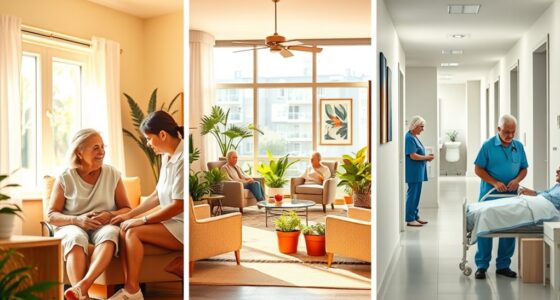

Exploring senior community cohousing shows you a vibrant way to live where older adults actively share spaces, responsibilities, and social activities. You’ll find designs that promote accessibility and encourage interaction, helping you stay independent while building genuine friendships. These communities reduce loneliness and foster a sense of belonging through shared meals, chores, and events. If you want to discover how this supportive approach can enhance your lifestyle, keep exploring what it has to offer.
Key Takeaways
- Senior community cohousing involves residents collaboratively designing shared spaces to foster belonging and mutual support.
- It encourages shared responsibilities like cooking, chores, and organizing social activities, promoting independence and companionship.
- Designed with accessible layouts, communal spaces such as kitchens, gardens, and lounges facilitate interaction and spontaneous socialization.
- Community activities like gardening, clubs, and celebrations strengthen bonds and create a vibrant, family-like environment.
- Benefits include reduced loneliness, enhanced social engagement, collective ownership, and a supportive environment for aging independently.

Have you ever wondered how seniors are transforming aging into a more connected and supportive experience? One way they’re doing this is through senior community cohousing, where residents intentionally design their living spaces to foster a sense of belonging and mutual support. Instead of living alone or in large, isolated facilities, seniors come together and share responsibilities, creating a community that values collaboration and companionship. Shared responsibilities become a natural part of daily life, whether it’s cooking meals, managing household chores, or organizing social events. This approach not only reduces individual burdens but also builds a sense of collective ownership and purpose. You might find yourself taking turns preparing dinner or helping a neighbor with errands, knowing that your efforts are reciprocated. It’s a system that promotes independence while ensuring no one feels they’re going through aging alone. Additionally, the design of shared spaces often incorporates accessible layouts that accommodate mobility needs and encourage participation.
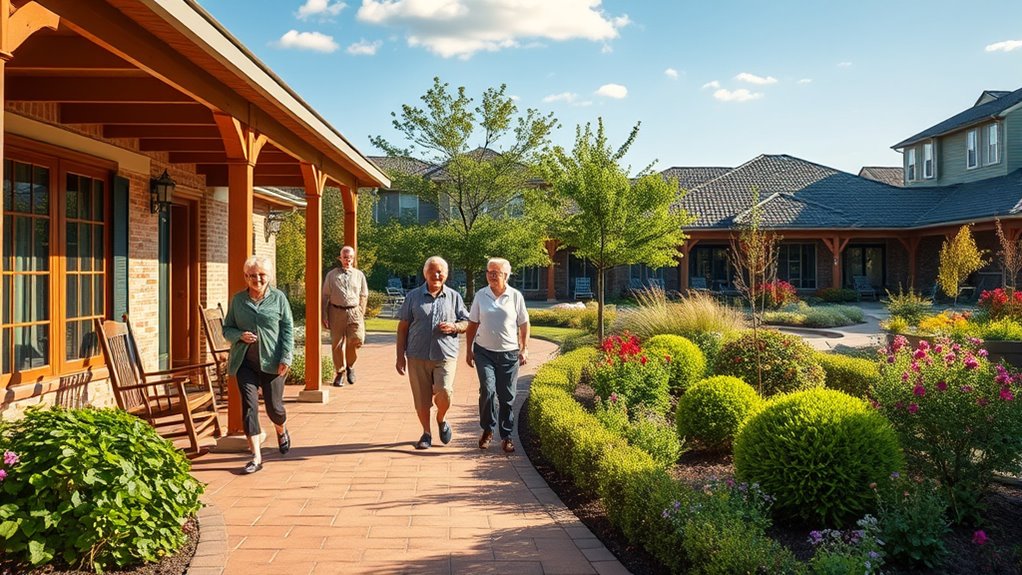
Communal activities are at the heart of cohousing communities, offering opportunities for social engagement and meaningful interaction. These activities are often planned collectively, giving everyone a say in what they want to do. Whether it’s group gardening, exercise classes, book clubs, or shared celebrations, these activities help strengthen bonds and create a vibrant community atmosphere. You’ll likely find that participating in communal activities isn’t just about passing the time; it’s about building genuine relationships and creating a support network that feels like family. The shared spaces, such as communal kitchens, gardens, or lounges, encourage spontaneous interactions and give residents a chance to connect effortlessly. These spaces become more than just physical areas—they transform into hubs of friendship and mutual encouragement.
Frequently Asked Questions
How Are Costs Typically Shared Among Residents?
You share costs among residents through a combination of pooled funds and individual fees. Financial planning is key, as residents often contribute to common expenses like shared amenities, maintenance, and utilities. Some communities use a monthly fee or buy-in model to cover these costs, ensuring everyone contributes fairly. This approach helps maintain the community’s infrastructure while allowing residents to enjoy shared spaces without individual burden, fostering a collaborative living environment.
What Legal Structures Govern Senior Cohousing Communities?
Did you know over 80% of senior cohousing communities operate under shared ownership or cooperative legal structures? These legal frameworks guarantee legal compliance and support community governance, giving residents a say in decision-making. Most communities are organized as cooperatives or condominiums, which protect residents’ interests, clarify responsibilities, and promote a collaborative environment. Understanding these structures helps you navigate legal aspects and actively participate in shaping your community’s future.
How Is Healthcare Managed Within These Communities?
In senior cohousing communities, healthcare is managed through coordinated efforts that guarantee residents access medical services easily. You’ll find on-site or nearby healthcare coordination, which helps organize appointments, medication management, and emergency responses. Many communities partner with local providers to offer regular medical services, ensuring seniors receive necessary care without leaving the community. This setup promotes independence while providing essential medical support, creating a safe, connected environment for aging in place.
What Are the Eligibility Criteria for Residents?
You’re likely eligible if you’re 55 or older, planning your retirement, and eager to join vibrant social activities. Many communities prioritize residents who are independent but value community living. Your retirement planning should include evaluating your health, financial stability, and desire for social engagement. It’s a coincidence that this shared goal of connection and independence often brings residents together, making community cohousing a fulfilling choice for those seeking companionship and support.
How Do Communities Handle Conflicts Between Residents?
Communities handle conflicts through effective mediation strategies and clear communication protocols. You’re encouraged to express concerns openly but respectfully, knowing that trained mediators or community groups facilitate discussions. These strategies help resolve disagreements amicably, ensuring everyone feels heard. By following established communication protocols, residents work collaboratively to find solutions, maintaining a harmonious environment. Active listening and mutual respect are key, making conflicts manageable and fostering a supportive senior community.
Conclusion
As you consider senior community cohousing, imagine a vibrant neighborhood where neighbors share meals and support each other daily. For instance, Jane, a widow, found companionship and independence in her cohousing community, transforming her retirement into an active, connected life. Embracing this model means you gain more than just a home—you join a caring, engaged community that enriches your golden years. So, take the step toward a fulfilling, supportive lifestyle today.