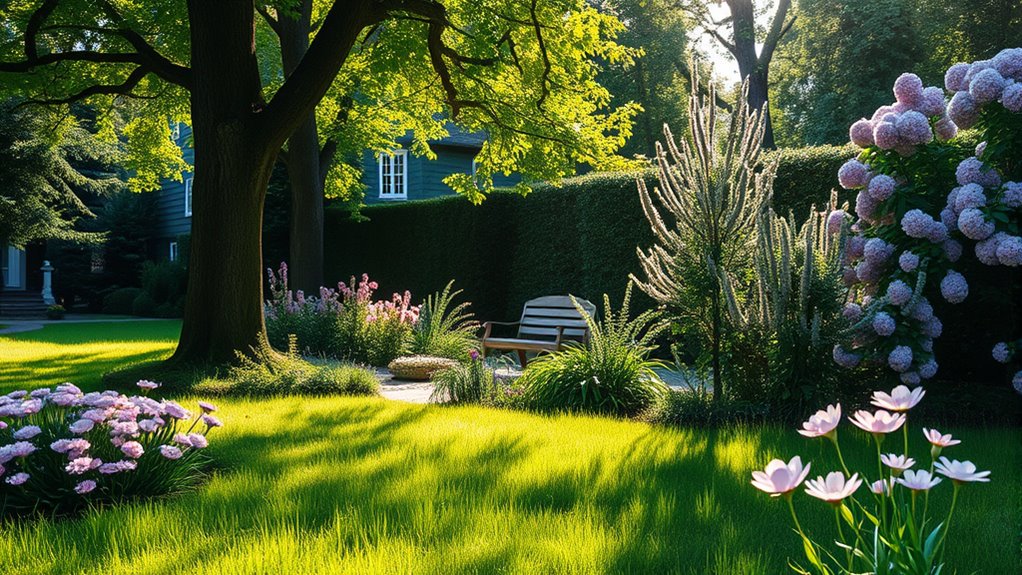

To create a peaceful outdoor space, focus on soothing colors like blues and greens, which promote relaxation and help lower stress. Blue, resembling skies and water, calms your mind, while green connects you with nature and fosters harmony. Adding warm accents occasionally can boost happiness without overwhelming the senses. Balancing these colors with neutral tones creates a serene environment perfect for unwinding. Keep exploring to discover how to design your garden for maximum tranquility.
Key Takeaways
- Incorporate soothing blue and green hues to promote relaxation and reduce stress in garden spaces.
- Use warm colors sparingly to add happiness and energy without disrupting tranquility.
- Apply neutral tones like whites and beiges to create calming backdrops and highlight features.
- Balance cool and warm colors to foster emotional harmony and a peaceful environment.
- Design with color coordination to enhance the garden’s restorative qualities and encourage restful outdoor time.
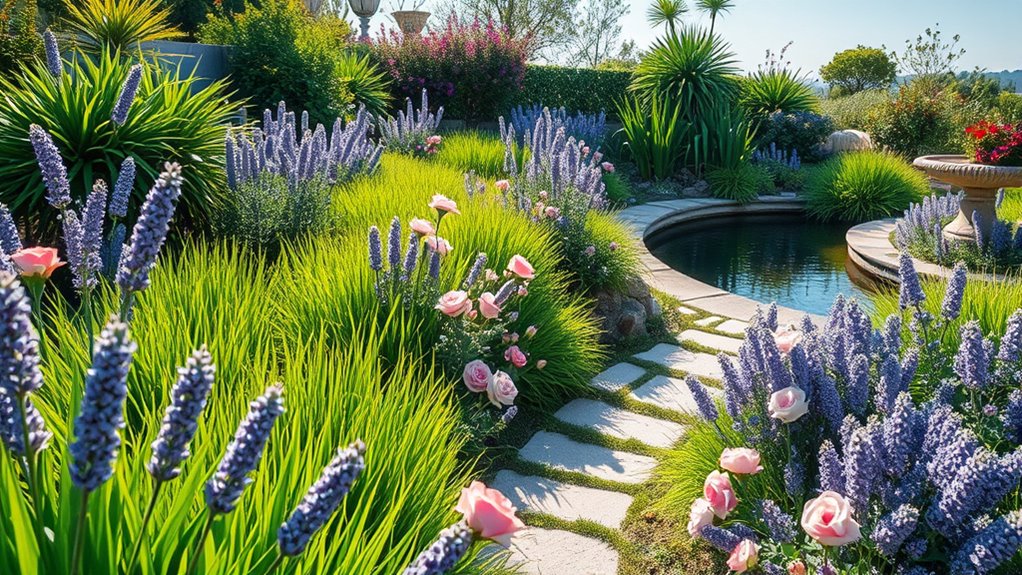
The colors you choose for your garden can have a powerful impact on your mood and overall well-being. When designing your outdoor space, selecting the right hues isn’t just about aesthetics—it’s about creating an environment that promotes relaxation and rejuvenation. Soft, soothing colors like blues and greens are especially effective at fostering a sense of calm. Blue, reminiscent of clear skies and tranquil waters, can help slow your heart rate and reduce stress, making it easier to unwind after a busy day. Green, the color of nature and growth, has been shown to lower anxiety levels and promote feelings of harmony. Incorporating these shades into your garden—whether through flowers, foliage, or decor—can turn your outdoor space into a sanctuary of peace. Additionally, understanding the emotional impact of color can help you choose hues that better support your mental well-being.
Choosing calming blues and greens in your garden can transform it into a peaceful sanctuary for relaxation and well-being.
Warm colors, such as yellows and gentle oranges, can also influence your mood but in a different way. These hues evoke feelings of happiness and energy, which can be uplifting without overwhelming your senses. When used sparingly or in combination with cooler tones, they add a touch of brightness that encourages positive emotions. For a restful environment, it’s best to keep these warmer colors in moderation, ensuring they don’t disrupt the tranquility you’re aiming to establish. Think about adding soft yellow cushions, sunflowers, or terracotta accents that catch your eye without dominating the space. When balanced correctly, they contribute to a welcoming atmosphere that still feels peaceful.
Neutrals, such as whites, beiges, and soft browns, serve as the perfect backdrop in your garden. They help to tone down more vibrant colors and create a subtle, restful environment. White flowers or light-colored stones can reflect natural light, making your garden feel more open and airy. These neutral tones can also serve as a calming canvas, allowing your favorite plants and decorative elements to stand out without cluttering the senses. Using neutral colors in your furniture, pathways, or garden ornaments can anchor your space, making it feel organized and serene.
Ultimately, the key to designing a restful outdoor space lies in harmonizing these colors thoughtfully. You want a balance that invites you to relax without overstimulation. By choosing calming blues and greens as your foundation, adding gentle touches of yellow or orange for warmth, and grounding everything with neutral tones, you craft a garden that promotes peace and well-being. When you pay attention to how colors influence your emotions, your garden becomes more than just a pretty view—it becomes a true retreat where you can unwind, breathe, and reconnect with nature.
Frequently Asked Questions
How Do Different Colors Affect Outdoor Relaxation?
Different colors influence your outdoor relaxation by evoking specific moods. Soft blues and greens promote calmness and tranquility, helping you unwind. Warm shades like yellows and oranges energize and uplift your spirits. Cool tones tend to reduce stress, while vibrant hues boost positivity. By choosing soothing colors for your garden, you create a peaceful environment where you can truly relax and recharge.
Can Color Choices Influence Outdoor Social Interactions?
Studies show that color can boost social interactions by up to 25%. You can influence outdoor gatherings by choosing vibrant reds and oranges, which energize conversations, or calming blues and greens to create a relaxed atmosphere. When you select colors thoughtfully, you encourage openness and engagement, making your outdoor space more inviting for friends and family. Your color choices can truly shape the mood and dynamics of your social time outside.
What Colors Promote Tranquility in Garden Design?
You should incorporate soft blues, gentle greens, and soothing lavenders into your garden design to promote tranquility. These colors naturally evoke calmness and relaxation, helping you unwind more easily. Use blue flowers, green foliage, and lavender accents to create a serene atmosphere. Avoid overly bright or harsh hues, which can stimulate activity rather than promote rest. These calming colors will make your outdoor space a peaceful retreat.
Are Certain Colors Better for Small Garden Spaces?
Bright, bold colors can overwhelm small garden spaces, so you should opt for soft, calming hues like pastel blues, gentle greens, and subtle lavenders. These shades make your space feel more open and peaceful without overpowering it. You might also incorporate reflective surfaces or light-colored furniture to enhance the sense of spaciousness. By choosing these colors, you create a tranquil environment perfect for relaxation even in a compact outdoor area.
How Does Lighting Alter Color Perception at Night?
Lighting at night is like a painter’s brush, transforming how colors in your garden appear. Soft, warm lights make reds and oranges glow warmly, creating cozy vibes. Cool, bluish lighting highlights greens and purples, giving your space a tranquil feel. Bright, direct lights can wash out colors, while dimmer lights enhance subtle shades. Adjusting your lighting helps you craft the perfect mood, making your garden inviting and serene after sunset.
Conclusion
So, next time you’re lounging in your garden, remember the colors you chose. Maybe bright reds and yellows seem cheerful, but they can actually energize you—hardly the restful retreat you imagined. Perhaps calming blues and greens are more your style, yet even they can’t fully drown out the chaos of everyday life. Ironically, the colors meant to soothe might just remind you of how much you need that peaceful outdoor escape in the first place.