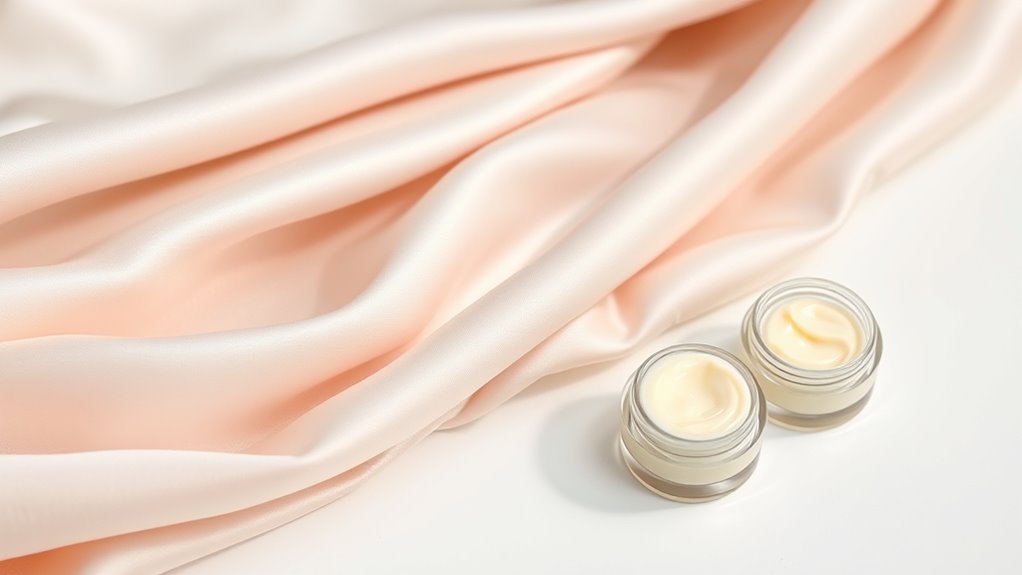

To care for fragile skin, choose soft, breathable fabrics like cotton, bamboo, or silk for your clothing and bedding, avoiding coarse or synthetic materials that can cause irritation. Use gentle, fragrance-free detergents and wash linens thoroughly. Opt for skincare products labeled as hypoallergenic, fragrance-free, and free of irritants, applying moisturizers immediately after cleansing. Creating a gentle environment and handling your skin with care helps prevent discomfort. Keep exploring tips to improve your skin’s comfort and resilience.

Turn the school run and nap time into listening time
- Thousands of audiobooks, podcasts and originals
- Listen on your phone, tablet or Echo — also offline
- Cancel anytime
Key Takeaways
- Use natural, breathable fabrics like cotton, bamboo, or silk for bedding and clothing to reduce irritation.
- Choose hypoallergenic, fragrance-free skincare products with soothing ingredients such as ceramides or colloidal oatmeal.
- Wash linens with gentle, fragrance-free detergents and rinse thoroughly to remove residual chemicals.
- Pat skin dry gently and apply moisturizers immediately after cleansing to preserve skin barrier integrity.
- Avoid rough fabrics and tight clothing to minimize friction and prevent skin flare-ups.
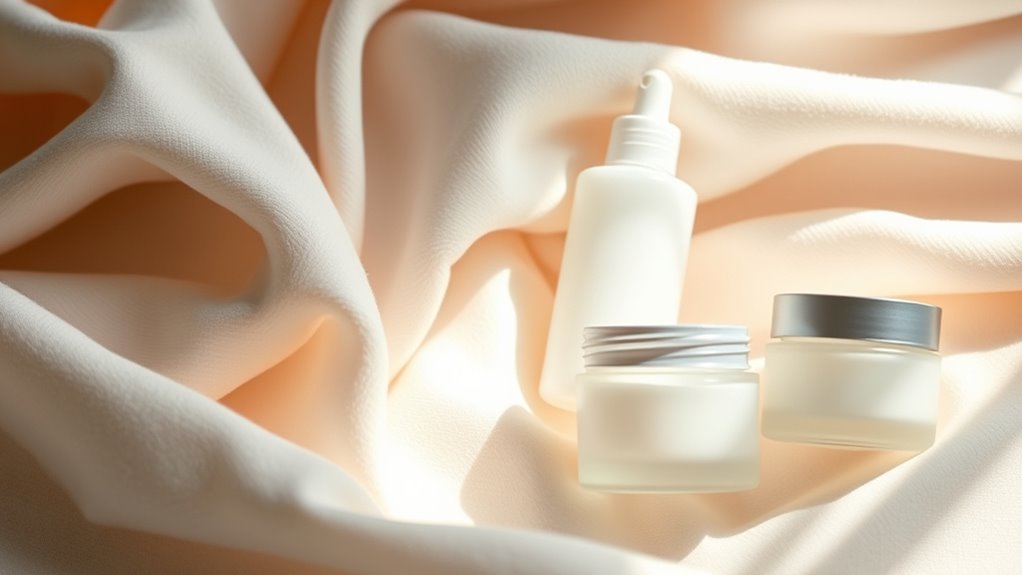
If you have fragile skin, gentle care becomes essential to keep it healthy and protected. The fabrics you choose for your clothing and bedding play a vital role in preventing irritation and maintaining comfort. Opt for natural, soft materials like cotton, bamboo, or silk, which are gentle against sensitive skin. These fabrics tend to be breathable, reducing sweat and irritation that can worsen skin fragility. Look for clothing labeled as hypoallergenic or designed specifically for sensitive skin, as these are less likely to contain dyes, chemicals, or synthetic fibers that may cause reactions.
Choose soft, breathable fabrics like cotton, bamboo, or silk to protect fragile skin and prevent irritation.
When selecting bedding and linens, prioritize smooth, high-quality fabrics that won’t cause friction or roughness. Cotton and bamboo sheets are excellent options—they’re breathable, soft, and less likely to trap moisture or dirt, which can irritate delicate skin. Avoid rough or coarse materials like wool or certain synthetic blends, as they can cause scratching or discomfort, especially if your skin is prone to redness or soreness. Washing your linens with gentle, fragrance-free detergents can further reduce the risk of irritation, as many detergents contain harsh chemicals or added fragrances that irritate sensitive skin. Always rinse thoroughly to remove any residual soap.
In terms of products, choose skincare formulations specifically designed for sensitive or fragile skin. Look for labels indicating that the product is fragrance-free, hypoallergenic, and free of alcohol, dyes, and irritants. Ingredients like ceramides, glycerin, and colloidal oatmeal can help reinforce your skin’s natural barrier, locking in moisture and reducing inflammation. Avoid harsh cleansers or scrubs, which can strip away natural oils and leave your skin more vulnerable. Instead, opt for gentle cleansers that cleanse without stripping, and always use lukewarm water rather than hot, which can dry out and irritate your skin further. Incorporating moisturizing ingredients into your routine can also provide extra protection and support skin resilience.
In addition to choosing the right fabrics and products, pay attention to how you handle your skin daily. Pat your skin dry gently after washing rather than rubbing, and apply moisturizers immediately to lock in hydration. Regularly replacing worn or rough fabrics and avoiding tight-fitting clothing can also minimize friction and irritation. The goal is to create a soothing environment that respects your skin’s fragility, helping you avoid flare-ups and maintain comfort. By selecting the right fabrics and gentle products, you give your skin the best chance to stay healthy, resilient, and comfortable every day.
Frequently Asked Questions
Are Synthetic Fabrics Safe for Fragile Skin?
Synthetic fabrics can be safe for fragile skin if they are made from high-quality, breathable materials like polyester or nylon that are soft and smooth. However, some synthetics may cause irritation or trap moisture, leading to discomfort. You should choose hypoallergenic options and avoid rough or heavily processed synthetics. Always test new fabrics on a small skin area first, and opt for natural fibers when possible to minimize irritation.
How Often Should I Change My Skincare Routine?
You should change your skincare routine whenever your skin shows signs of irritation, dryness, or breakouts. It’s like watching for storm clouds on the horizon; stay alert to subtle shifts. Usually, every few months, reassess your products, especially with changing seasons or skin needs. Don’t wait until skin reacts badly—proactively update your routine to keep your skin calm, protected, and glowing, no matter what’s around the corner.
Can Natural Oils Replace Moisturizers for Fragile Skin?
Natural oils can sometimes replace moisturizers for fragile skin, but it depends on your skin’s needs. You might find oils like jojoba or argan moisturizing, but they may not provide enough hydration on their own. Test how your skin responds and consider layering a gentle, fragrance-free moisturizer for extra protection. Always patch-test new oils to avoid irritation, and consult a dermatologist if you’re unsure about your skin’s specific requirements.
What Are Signs of Skin Irritation From Fabrics?
You notice redness, itching, or a burning sensation after wearing certain fabrics—that’s a clear sign of irritation. You might also see dry patches, swelling, or small bumps appearing on your skin. Sometimes, the irritation worsens with continued contact, making you feel uncomfortable and aware of the fabric’s impact. Pay close attention to these symptoms, and consider switching to softer, hypoallergenic fabrics to soothe your fragile skin.
Do Hypoallergenic Labels Guarantee Safety?
Hypoallergenic labels don’t guarantee safety, but they signal that the product is less likely to cause allergic reactions. You should still check ingredients and fabric details, especially if you have sensitive skin. Look for products free from common irritants like fragrances and dyes. When in doubt, test a small area first. Always trust your skin’s reactions and consult a dermatologist if you experience irritation despite the label.
Conclusion
Taking care of fragile skin means choosing gentle fabrics and products that soothe rather than irritate. Did you know that over 50% of skin sensitivity issues are caused by harsh textiles and chemicals? By selecting soft, breathable fabrics and hypoallergenic skincare, you can markedly reduce irritation and improve skin health. Remember, your skin deserves kindness—prioritize gentle options to keep it healthy, comfortable, and protected every day.
Fall Picks
fall essentials
As an affiliate, we earn on qualifying purchases.