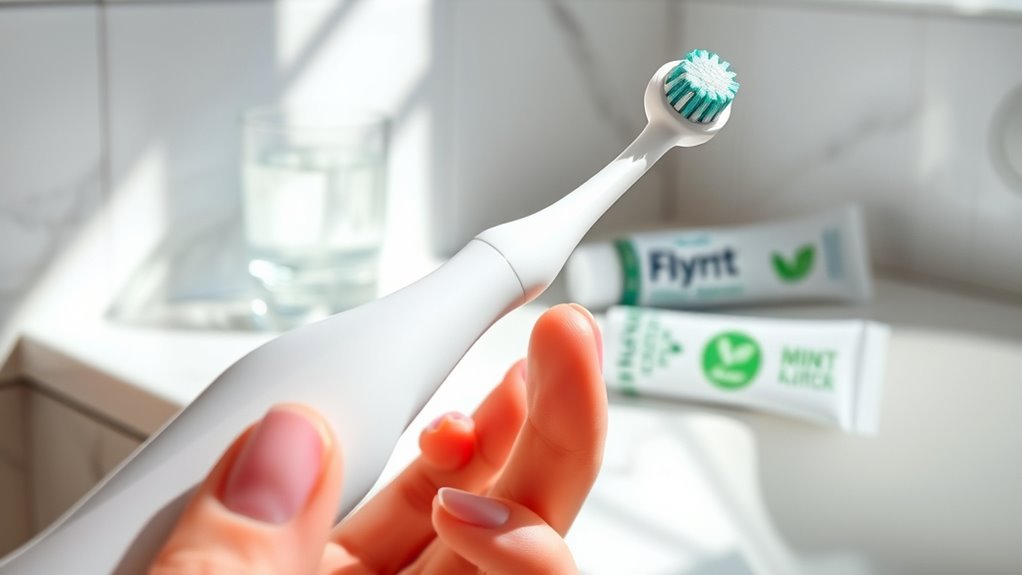

To protect your heart through daily oral care, brush your teeth at least twice a day with fluoride toothpaste, making sure to clean all surfaces to remove plaque. Floss daily to reach between teeth and reduce bacteria that can cause inflammation. Limit sugary foods and drinks, eat a balanced diet, and stay hydrated to support oral and heart health. Regular dental visits are essential for early detection of issues—keep going to discover more simple habits that make a big difference.
Open a free Amazon Business account
Business pricing, bulk buying and tax-exempt orders.
As an affiliate, we earn on qualifying purchases.
Key Takeaways
- Brush teeth twice daily with fluoride toothpaste, covering all surfaces to remove plaque and prevent gum disease.
- Floss daily to eliminate debris and plaque between teeth, reducing inflammation linked to heart health issues.
- Use an antimicrobial mouthwash as directed to decrease harmful bacteria and lower inflammation risks.
- Maintain a balanced diet low in sugar, rich in fruits, vegetables, and nutrients supporting gum and tooth health.
- Visit the dentist at least twice a year for routine checkups and early detection of oral health issues impacting the heart.
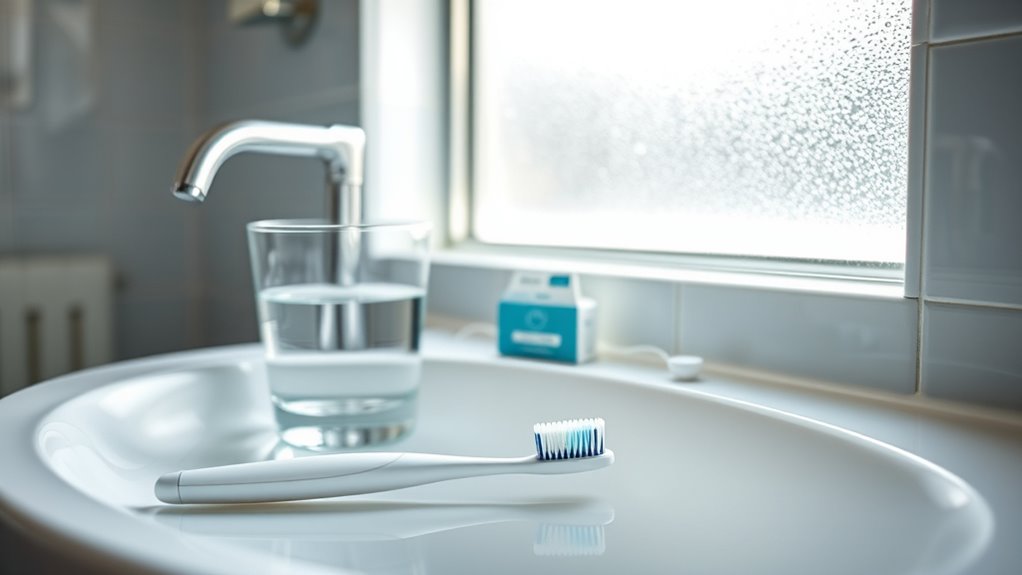
Your oral health plays a more important role in your overall well-being than many people realize. What happens in your mouth can influence your heart health in ways you might not expect. Keeping your mouth clean and healthy isn’t just about fresh breath or bright teeth; it’s also a key step in reducing the risk of cardiovascular problems. Daily habits at home can considerably lower your chances of developing gum disease, which has been linked to heart issues like strokes and heart attacks.
Start with brushing your teeth at least twice a day. Use a fluoride toothpaste and make sure you reach all surfaces—front, back, and chewing surfaces. Brushing helps remove plaque, a sticky film of bacteria that forms on your teeth and gums. If plaque isn’t cleaned regularly, it can harden into tartar, leading to inflammation and gum disease. This inflammation releases toxins into your bloodstream, which can contribute to the narrowing of arteries and increase your risk of cardiovascular events.
Flossing daily is equally important. Even if you brush thoroughly, plaque and food particles can hide between your teeth and under the gumline. Flossing dislodges these debris and helps prevent the buildup of tartar and bacteria. Make it a part of your routine—spend about two minutes each day gently sliding the floss between your teeth, reaching below the gumline. This simple habit not only improves your oral health but also reduces the inflammatory response that can impact your heart.
In addition to brushing and flossing, rinsing with an antimicrobial mouthwash can further reduce bacteria in your mouth. Look for a product approved by dental associations, and use it as directed. Mouthwash helps reach areas that brushing and flossing might miss, providing an extra layer of defense against harmful bacteria.
You should also be mindful of your diet. Limit sugary snacks and drinks, as sugar fuels the bacteria that produce acids damaging to your gums and teeth. Instead, eat a balanced diet rich in fruits, vegetables, lean proteins, and whole grains. These foods support healthy gums and teeth by providing essential nutrients like vitamin C and calcium. Staying well-hydrated also helps wash away food particles and bacteria, maintaining a cleaner mouth throughout the day.
Finally, don’t forget regular dental checkups. Visiting your dentist at least twice a year allows early detection and treatment of any oral issues. Your dentist can spot signs of gum disease before they escalate, helping you maintain ideal oral health and reduce your risk of heart-related complications. Incorporating proper oral hygiene practices into your routine can significantly benefit your heart health, as research shows a strong link between gum disease and cardiovascular problems. By adopting these daily habits, you’re not only caring for your smile but also safeguarding your heart’s health.
Frequently Asked Questions
Can Mouthwash Replace Brushing and Flossing?
No, mouthwash can’t replace brushing and flossing. While mouthwash helps reduce bacteria and freshens your breath, it doesn’t remove plaque or food particles like brushing and flossing do. To protect your oral and heart health, you need a thorough routine that includes brushing twice daily and flossing regularly. Mouthwash is a helpful supplement but shouldn’t be relied on as your primary cleaning method.
Are Electric Toothbrushes Better for Heart Health?
Electric toothbrushes can be better for your heart health because they often remove plaque more effectively than manual brushes, reducing gum inflammation and bacteria that contribute to cardiovascular issues. You might find that their consistent, gentle cleaning helps you maintain healthier gums and teeth. Using an electric brush regularly, along with flossing and good overall oral hygiene, can support your heart by lowering infection risks linked to poor oral health.
How Often Should I Replace My Toothbrush?
You should replace your toothbrush every three to four months. Imagine Sarah, who kept using her old brush and developed gum irritation; switching it out helped her improve her oral health and reduce inflammation. Regularly replacing your toothbrush prevents bacteria buildup and guarantees effective cleaning, which is crucial for heart health. Keep an eye on frayed bristles and change your brush promptly to maintain essential oral hygiene daily.
Do Certain Toothpaste Ingredients Impact Heart Health?
Certain toothpaste ingredients can impact your heart health. For example, some whitening toothpastes contain sodium lauryl sulfate, which may cause inflammation, potentially affecting your cardiovascular system. Additionally, avoid toothpastes with high levels of triclosan, linked to hormonal disruptions and heart issues. Look for natural or fluoride-based options without harsh chemicals. Reading labels helps you choose a toothpaste that supports your oral and heart health, promoting overall wellness.
Is There a Link Between Gum Disease and Heart Disease?
Yes, there’s a strong link—people with gum disease are nearly 3 times more likely to develop heart disease. This connection exists because bacteria from inflamed gums can enter your bloodstream, causing inflammation and clogging arteries. To protect your heart, you should prioritize good oral hygiene, like brushing twice daily, flossing, and visiting your dentist regularly. Taking care of your gums directly benefits your heart health.
Conclusion
Taking good care of your teeth isn’t just about a bright smile—it’s also essential for your heart health. Did you know that people with gum disease are nearly twice as likely to develop heart problems? By brushing twice daily, flossing, and visiting your dentist regularly, you’re actively reducing that risk. Make these daily habits part of your routine, and you’ll not only enjoy healthier teeth but also support your heart’s well-being in the long run.
Flea & tick season Picks
flea and tick prevention
As an affiliate, we earn on qualifying purchases.