

To prep like a pro for your vision and hearing appointments, start by listing any current symptoms and recent changes to your senses. Bring your glasses or hearing aids, review your medical history, and gather past test results if available. Arrive early, get a good night’s sleep, and be honest about how your senses affect your daily life. Staying prepared helps guarantee quick, accurate results—keep going to discover more tips for a successful visit.
Key Takeaways
- Prepare a list of current symptoms and concerns to discuss with your provider.
- Bring all relevant medical records, glasses, or hearing aids for review and adjustments.
- Arrive early to complete paperwork and reduce appointment stress.
- Follow specific instructions on wearing glasses or contact lenses during tests.
- Be honest and active during the appointment to ensure accurate results and appropriate care.
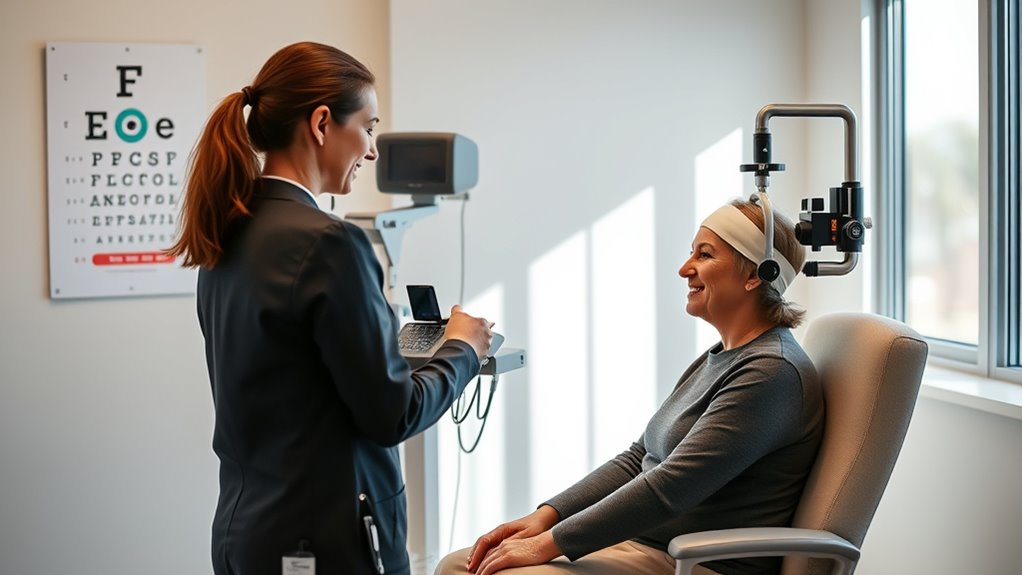
Regular vision and hearing appointments are essential for maintaining your overall health. These checkups aren’t just about updating your prescription or confirming you hear well—they’re vital for catching potential issues early, before they become more serious. When you schedule your appointments, you’re taking a proactive step toward preserving your quality of life. Preparing well can make the experience smoother and more productive.
First, know what to bring to your appointment. Make a list of any current symptoms or concerns. Are you experiencing blurred vision, headaches, ringing in your ears, or difficulty hearing certain sounds? Write these down, along with any recent changes in your vision or hearing. This information helps your provider identify patterns and possible underlying causes. Also, bring your current glasses or hearing aids, if you have them, so the specialist can evaluate their effectiveness and make necessary adjustments.
Be prepared by listing symptoms and bringing your glasses or hearing aids for your appointment.
Next, review your medical history. Be ready to discuss any chronic conditions like diabetes, hypertension, or neurological issues, as these can impact your vision and hearing health. Also, note any medications you’re taking, especially those known to affect your sensory functions. This background provides context that can influence diagnosis and treatment options. If you’re visiting a new specialist, consider bringing previous test results or reports, which can offer valuable insights into your health trajectory.
Arriving early is a simple yet crucial step. It allows you to complete any required paperwork without rushing and gives you time to relax before the exam begins. Stress and fatigue can influence test results, so try to get a good night’s sleep before your appointment. If you wear contact lenses, ask your provider whether you should wear glasses instead on the day of your exam, as some tests require your eyes to be free of lenses. Additionally, being aware of vision and hearing health can help you understand the importance of these checkups and encourage regular attendance.
During the appointment, listen carefully to the instructions your healthcare professional provides. Be honest about your symptoms and how they’ve affected your daily life. If you don’t understand a question or instruction, don’t hesitate to ask for clarification. Your active participation ensures the tests are accurate and the recommendations appropriate. After the exam, follow any advice or treatment plans precisely, and schedule follow-up visits if needed.
Ultimately, preparing thoroughly for your vision and hearing appointments helps you get the most out of each visit. It demonstrates your commitment to your health and ensures your provider has all the information necessary to support your well-being. Regular checkups, combined with proper preparation, keep your senses sharp and your overall health on track.
Frequently Asked Questions
How Early Should Children Have Their First Vision or Hearing Test?
You should schedule your child’s first vision or hearing test by age one, or sooner if you notice any concerns. Early screening helps detect issues early, ensuring proper development. Regular checkups are vital, especially if your child has risk factors like a family history or developmental delays. By staying proactive and following your healthcare provider’s recommendations, you give your child the best chance for healthy sight and hearing.
What Should I Do if My Child Is Nervous About the Appointment?
Think of yourself as a calming lighthouse guiding your child through a storm. If they’re nervous, reassure them with gentle words, explaining the appointment as an adventure rather than a test. Bring along their favorite toy or comfort item to create familiarity. Stay positive and patient, offering hugs and praise. Your calm presence helps ease their fears, turning the experience into a safe, friendly journey rather than something to worry about.
Are There Specific Preparations Needed for Special Needs Patients?
Yes, for special needs patients, you should communicate with the healthcare provider beforehand to discuss your child’s specific needs and any accommodations needed. Bring familiar items or comfort objects to ease anxiety, and plan for extra time to avoid rushing. Use clear, simple language to explain what will happen, and stay calm and reassuring throughout the appointment. Your preparation helps make the experience smoother and less stressful for your child.
How Often Should Adults Get Their Vision and Hearing Checked?
You should get your vision and hearing checked at least once every two years, but if you notice changes or have risk factors, more frequent visits are advisable. Regular screenings help catch issues early, ensuring better treatment outcomes. Keep track of your symptoms and discuss any concerns with your healthcare provider during your appointments. Staying proactive with these checkups maintains your overall health and quality of life.
Can I Eat or Drink Before a Vision or Hearing Exam?
Did you know that nearly 60% of adults skip proper prep for their exams? You can usually eat and drink before a vision or hearing test, but it’s best to verify with your provider first. Some tests, like certain eye exams, may require fasting or avoiding caffeine. To guarantee the most accurate results, follow any specific instructions your doctor provides, and don’t hesitate to ask questions beforehand.
Conclusion
Now that you’re prepared for your vision and hearing appointments, remember, a little preparation goes a long way. Bring your questions, arrive early, and stay relaxed. These appointments help keep you at your best, so don’t forget to take care of yourself. As the saying goes, “An ounce of prevention is worth a pound of cure.” Embrace the process, stay positive, and you’ll leave feeling confident and ready to see and hear the world clearly.