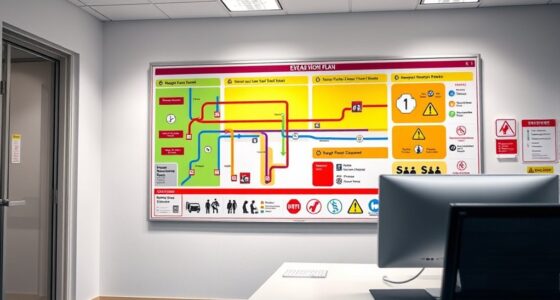
To develop a disaster preparedness checklist, start by identifying essential supplies like water, food, medications, and hygiene items. Include emergency communication tools such as radios and chargers, and plan evacuation routes and shelter options. Engage your community by participating in drills and learning basic first aid. Regularly update and review your supplies and plans to stay ready. Building strong communication and community networks enhances your overall response. Keep exploring to learn how to create a thorough and effective plan.
Key Takeaways
- Identify essential emergency supplies, communication tools, and evacuation plans tailored to your community’s risks.
- Incorporate community training, drills, and education to enhance collective response capabilities.
- Establish reliable communication methods, including backup options like radios and emergency contact lists.
- Regularly review, update, and practice your disaster plan and supplies to ensure preparedness.
- Foster community engagement and awareness to build resilient networks and improve overall disaster response.
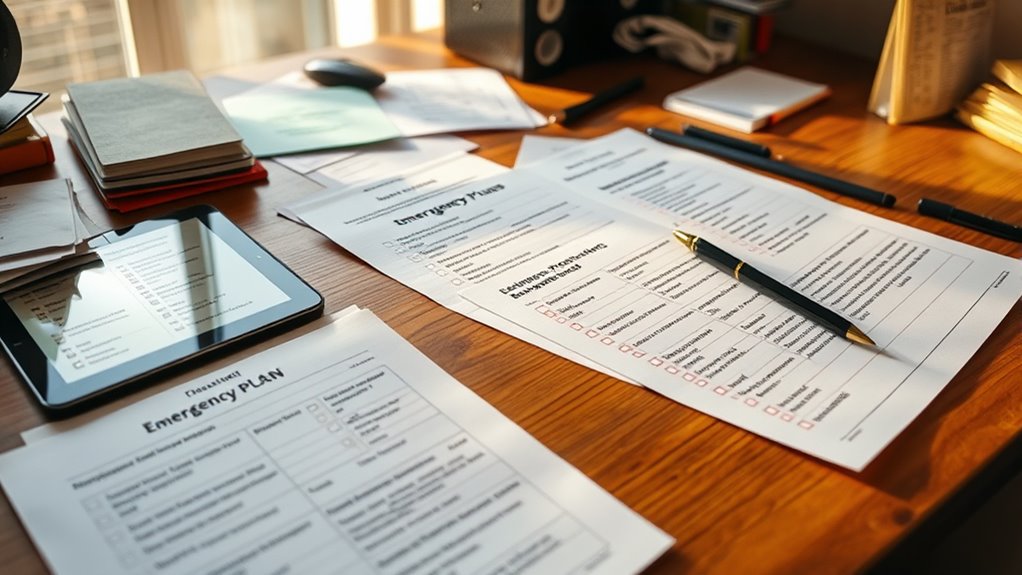
Are you truly prepared for a disaster? The truth is, many people overlook critical steps that can make a significant difference when emergencies strike. Developing a disaster preparedness checklist is your first line of defense, and it should include essential elements like emergency communication and community training. These components ensure you’re not only ready yourself but also capable of coordinating effectively with others during a crisis. Without a clear plan for communication, you risk confusion, delays, or even isolation when disaster hits. That’s why establishing reliable emergency communication methods—such as battery-powered radios, cell phone chargers, and emergency contact lists—is essential. Make sure everyone in your household or community knows how to reach each other, especially if traditional channels fail. Consider alternative communication tools like walkie-talkies or designated meeting points to stay connected when power or internet outages occur. Incorporating emergency communication strategies into your plan can greatly enhance your response capabilities.
Community training plays an indispensable role in reinforcing your preparedness efforts. Participating in local disaster response drills or safety workshops helps you recognize potential hazards and learn how to respond effectively. When neighbors understand basic first aid, evacuation procedures, or how to operate emergency equipment, it creates a resilient network that can support each other through difficult times. Encourage your community to organize or join training sessions, because collective knowledge reduces chaos and saves lives. Being familiar with local emergency plans, evacuation routes, and shelter locations should be part of your checklist. It’s not enough to have supplies if you’re unsure of what steps to take or how to communicate your needs during an emergency.
In addition, your preparedness checklist should include creating an emergency kit with essentials like water, food, medications, and hygiene items. Regularly update your supplies and review your plan with everyone involved to guarantee familiarity. Practice your evacuation routes and communication protocols periodically so they become second nature. Remember, disasters can strike unexpectedly, and the more prepared you are, the faster you’ll adapt. A well-rounded approach combines physical supplies with knowledge and community engagement. Prioritize building strong communication networks and community training programs, because these elements empower you to act swiftly, stay informed, and support those around you. When everyone is prepared and understands their role, your chances of navigating a disaster safely increase exponentially.
Frequently Asked Questions
How Often Should I Update My Disaster Preparedness Checklist?
You should update your disaster preparedness checklist at least once a year for a maintenance review, ensuring all information remains accurate and current. After significant events or changes in your circumstances, customize the checklist to reflect new risks or resources. Regular updates help you stay prepared, so set reminders to review and tailor your plan periodically, keeping it effective and relevant for any emergency situation.
What Are the Most Common Disasters to Prepare for in My Area?
You should prepare for the most common disasters in your area based on your community risk and local hazards. Typically, these include hurricanes, floods, earthquakes, wildfires, or winter storms. Check with local authorities or emergency management agencies to understand your area’s specific risks. Regularly reviewing and updating your disaster preparedness plan guarantees you’re ready for these events, minimizing panic and damage when emergencies occur.
How Can I Involve Children in Disaster Preparedness Planning?
Did you know children are 40% more likely to stay calm during a disaster when they’re involved in safety planning? You can include them in family involvement by doing educational activities like emergency drills or creating a family communication plan together. This makes preparedness fun and memorable, helping kids understand their role and feel more confident in emergencies. Engaging children early fosters responsible, informed family members capable of staying safe.
What Are Cost-Effective Ways to Build a Disaster Supplies Kit?
To build a disaster supplies kit affordably, use DIY solutions like repurposing containers for storage. Look for affordable storage options such as plastic bins or sturdy backpacks to keep your supplies organized. You can also save money by purchasing non-perishable food and water in bulk, and collecting essential items over time. These cost-effective methods guarantee you’re prepared without overspending, making safety accessible and manageable.
How Do I Ensure My Emergency Plan Is Accessible During a Crisis?
You should store your emergency plan digitally on your phone or cloud storage for quick access during a crisis. Make sure it’s easily reachable even if your device is offline. Share copies with family members or neighbors, and include emergency contacts and communication strategies. Test your digital access regularly, so you’re confident in using it during an emergency, ensuring effective emergency communication when it matters most.
Conclusion
By now, you’re equipped with a powerful shield—your disaster preparedness checklist. Think of it as your trusted lighthouse guiding you safely through stormy waters. When emergencies strike, your readiness acts like a sturdy anchor, keeping you grounded amid chaos. Keep updating and practicing your plan, so you’re never caught off guard. Remember, a well-prepared mind and kit are your best sails—ready to carry you safely to calmer seas, no matter what storms arise.