
To build emergency food and water stores, focus on stocking non-perishable items like canned goods, dried grains, freeze-dried meals, and energy bars that last long and are easy to prepare. Store water in food-grade containers, aiming for at least a three-day supply per person, and learn purification methods like boiling or using filters. Proper storage, labeling, and regular updates keep your supplies safe and ready. Keep exploring for more strategies to guarantee your preparedness plan is thorough.
Key Takeaways
- Select long-lasting, non-perishable foods like canned goods, dried grains, and energy bars, and rotate stock regularly.
- Use airtight, vacuum-sealed containers stored in cool, dark locations to extend shelf life and prevent spoilage.
- Store at least one gallon of potable water per person daily for a minimum of three days, and periodically refresh supplies.
- Employ purification methods such as boiling, filters, or chemical treatments to ensure water safety from natural sources.
- Label all supplies clearly, keep storage areas protected from extreme conditions, and conduct regular inspections for safety and freshness.

In times of unexpected crises, having a well-stocked emergency food and water reserve can make all the difference. When disaster strikes, access to fresh supplies may be cut off, and you’ll need to rely on your stored resources. Building these reserves requires careful planning, especially when it comes to food preservation and water purification methods. You want your supplies to last, stay safe, and remain as nutritious as possible during an emergency.
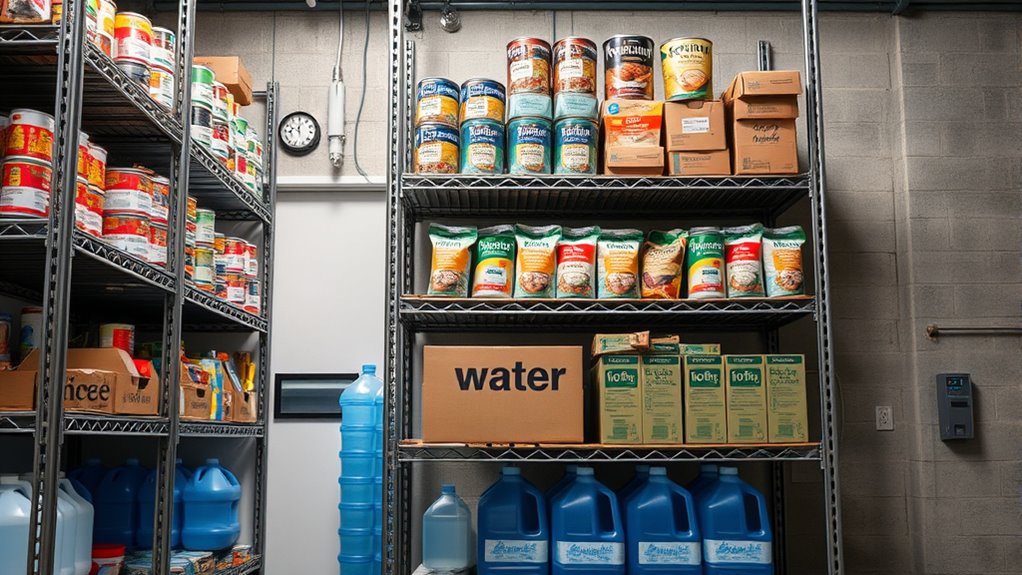
Start by selecting non-perishable foods that have a long shelf life. Canned goods, dried grains, freeze-dried meals, and energy bars are excellent choices. Once you have your supplies, focus on food preservation techniques to extend their usability. Proper storage in airtight containers, vacuum-sealing, and keeping foods in cool, dark places help prevent spoilage and pest infestation. Rotate your stock regularly, replacing older items with fresh ones, so your supplies stay current and safe to consume.
Water is just as critical as food, and you should plan for purification methods that suit your situation. Invest in water purification devices like filters, purifiers, or tablets that can quickly make contaminated water safe to drink. Boiling water remains one of the most reliable water purification methods, especially when other devices aren’t available. Keep a supply of clean, potable water on hand—generally a gallon per person per day for at least three days—and store it in food-grade containers. Remember, stored water can become contaminated over time, so refresh your supplies periodically.
In addition to storing water, learn how to purify water from natural sources if needed. Collect rainwater, use portable filters, or employ chemical treatments to ensure your water remains safe. Proper water purification methods are essential to avoid waterborne illnesses during a crisis. Label your stored water and supplies clearly, and keep them in a location that’s easily accessible but protected from extreme temperatures and sunlight, which can degrade both food and water. Proper storage techniques are crucial for maintaining the safety and longevity of your supplies.
Building your emergency food and water stores is a proactive process. It requires understanding the importance of food preservation and water purification methods to keep your supplies safe and usable for the long haul. By selecting the right foods, storing them properly, and knowing how to purify water, you ensure your preparedness is effective. Remember, the goal isn’t just to have supplies but to maintain their quality and safety over time. This preparation can give you peace of mind, knowing you’re ready to face unforeseen challenges confidently.
Frequently Asked Questions
What Are the Most Compact Emergency Food Options?
You should choose dehydrated meals and energy bars for the most compact emergency food options. Dehydrated meals are lightweight, easy to pack, and have a long shelf life, making them perfect for emergencies. Energy bars are even more portable, providing quick nutrition and energy. Both options require minimal space and are convenient to carry, ensuring you’re prepared without taking up much room in your emergency kit.
How Long Can Stored Water Remain Safe to Drink?
Stored water can remain safe to drink for about six months if you use proper water purification methods and maintain good storage practices. To extend its lifespan, keep the water in a cool, dark place, and use food-grade containers. Regularly rotate and inspect your supply, and consider adding small amounts of stored water to your purification system periodically. This way, you guarantee your water stays safe when you need it most.
What Are the Best Containers for Long-Term Food Storage?
Imagine sturdy, airtight containers stacking neatly in your pantry—these are your best bet for long-term food storage. Opt for food-grade plastic, glass, or metal containers, considering food preservation techniques that prevent spoilage and contamination. These materials resist pests and moisture, ensuring your supplies stay fresh. Choose containers with tight-fitting lids, and avoid those that can leach chemicals, so your stored food remains safe and ready when you need it most.
How Often Should Emergency Supplies Be Rotated or Replenished?
You should rotate your emergency supplies at least every 6 to 12 months to maintain ideal storage shelf life and guarantee freshness. Regular inventory management helps you identify expired items and replace them promptly. Check expiration dates, reseal packages properly, and update your stock list. This way, you stay prepared with reliable, safe supplies, reducing waste and ensuring your emergency kit remains effective whenever you need it.
Are There Allergy-Friendly Emergency Food Options Available?
Think of your emergency stash as a well-tended garden; you want it to flourish with diversity. Yes, allergy-friendly options exist, including gluten-free choices and nut-free snacks, so everyone stays safe. You can find these specially marked foods at most stores or online. Keep an eye out for labels and certifications, ensuring your supplies are both nutritious and allergy-conscious, ready to support you during tough times.
Conclusion
Building emergency food and water stores is essential for your safety and peace of mind. Did you know that during natural disasters, access to clean water drops by 40% within the first 72 hours? By taking steps now, you guarantee you’re prepared for unexpected disruptions. Stocking up not only protects you and your loved ones but also gives you confidence to face emergencies head-on. Start small today; your future self will thank you for being ready.