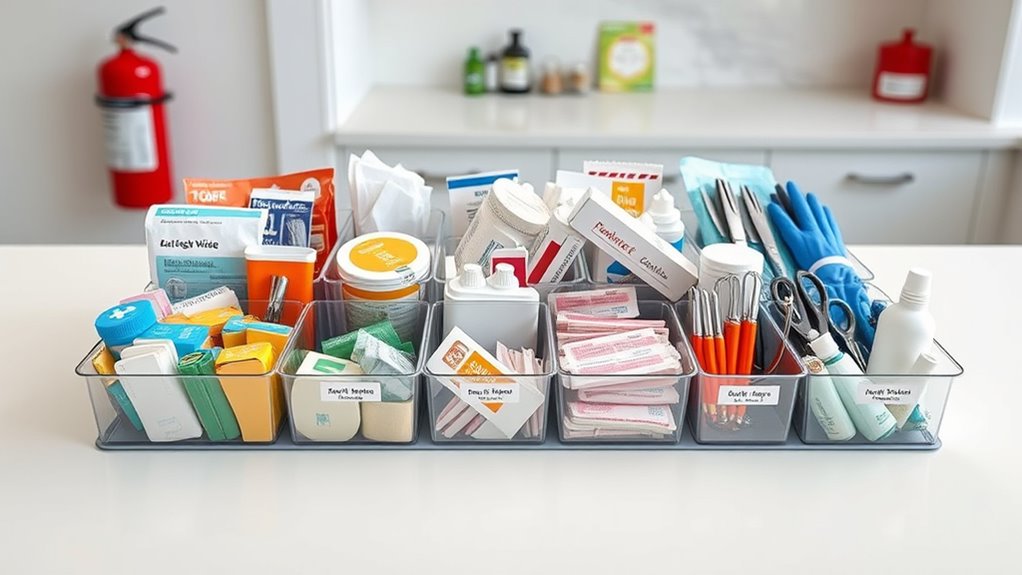

To set up your home first aid station, choose a sturdy, accessible container and organize supplies like bandages, antiseptic wipes, antibiotic ointments, scissors, gloves, and cold packs. Store it in a cool, dry spot such as the kitchen or laundry room, keeping everything labeled and current. Regularly check your supplies for expiration. If you keep these tips in mind, you’ll be ready to handle common injuries quickly—learn more about optimizing your station ahead.
Key Takeaways
- Choose a sturdy, accessible container placed in a central, cool, dry location like the kitchen or laundry room.
- Stock with various bandages, antiseptic wipes, antibiotic ointments, scissors, tweezers, and disposable gloves.
- Include over-the-counter medications, emergency contacts, prescribed medicines, and a small flashlight.
- Organize supplies into categories, label everything clearly, and store in small containers for easy access.
- Regularly check and replace expired items to ensure the station remains fully stocked and functional.
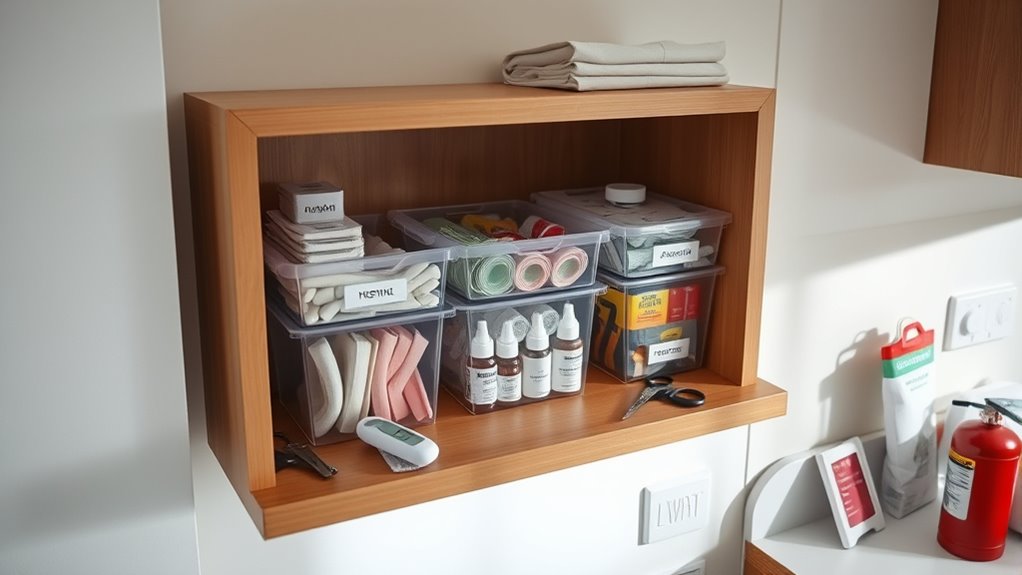
Having a well-organized first aid station at home can make all the difference during an emergency. When accidents happen or someone falls ill, quick access to supplies can prevent minor injuries from becoming serious. You want to set up a dedicated spot that’s easy to reach, well-stocked, and clearly organized so you can respond swiftly. The key is to have everything you need in one place, so you don’t waste precious time searching through drawers or cabinets.
Start by choosing a container or a small cabinet that’s sturdy and easily accessible, ideally at a height that everyone in your household can reach. Make sure it’s stored in a cool, dry location away from moisture or heat, which can damage supplies. Inside, organize your items into categories: wound care, medications, tools, and personal protective equipment. Use small containers or pouches to keep supplies tidy and easy to locate. Label everything clearly, so even if you’re in a hurry, you can grab what you need quickly.
Stock your first aid station with the essentials. Bandages of various sizes are a must, along with sterile gauze and adhesive tape. Include antiseptic wipes or solution to clean wounds thoroughly and prevent infection. Have antibiotic ointments on hand for minor cuts and abrasions. Scissors, tweezers, and disposable gloves are indispensable tools that help you treat injuries safely and efficiently. Don’t forget ice packs or instant cold compresses for swelling and pain relief. It’s also wise to keep a digital or printed list of emergency contacts, including your doctor, poison control, and local emergency services.
In addition to injury supplies, include over-the-counter medications like pain relievers, antihistamines, and antacids, but store them out of children’s reach. If anyone in your household has specific medical needs or allergies, make sure to include their prescribed medications and detailed instructions. Remember to check your supplies regularly and replace any expired items. Keeping a small flashlight nearby is helpful during power outages or when you need better visibility. Implementing a first aid inventory management system can help ensure your supplies stay current and well-stocked.
Where you place your first aid station matters just as much as what’s inside. Keep it in a central, easy-to-access location, such as a kitchen closet or laundry room. Avoid placing it in areas prone to humidity or extreme temperatures, like bathrooms or garages, which can compromise your supplies. By dedicating a specific spot for your first aid kit and keeping it organized, you’re prepared to respond swiftly and confidently during emergencies, potentially saving lives and reducing injury severity.
Frequently Asked Questions
How Often Should I Update My Home First Aid Kit?
You should check and update your home first aid kit at least every six months. Regularly inspect supplies for expiration dates, damaged packaging, or missing items. After any injury or illness, replenish used or expired supplies promptly. Keeping your kit current guarantees you’re prepared for emergencies. Additionally, consider reviewing your kit after seasonal changes or when family members’ needs evolve to maintain its effectiveness.
What Are the Most Essential Items for Children’s First Aid?
They say “better safe than sorry,” and that’s especially true for children’s first aid. You should include adhesive bandages in fun shapes, antiseptic wipes, child-safe pain relievers, a digital thermometer, and allergy medications. Also, keep a cold pack, tweezers, and a gentle ointment for minor cuts or stings. Always check expiration dates, and keep these items in an accessible, clearly labeled spot to react swiftly in emergencies.
Can I Use Household Items as First Aid Supplies?
Yes, you can use household items as first aid supplies in emergencies. For example, a clean cloth can serve as a bandage, while honey or sugar can help stop bleeding. Rubbing alcohol or hydrogen peroxide can disinfect wounds. Just make certain these items are clean and used appropriately. Keep in mind, though, that for serious injuries, professional medical help is essential. Never rely solely on household items for severe issues.
Where Is the Safest Place to Store My First Aid Kit?
You should store your first aid kit in a cool, dry, easily accessible spot, like a kitchen cabinet or bathroom shelf. Avoid areas prone to moisture, heat, or heavy traffic. Make sure everyone in your household knows where it is, so you can quickly grab it during emergencies. Keep it out of reach of children but within arm’s reach for adults, ensuring safety and quick access when needed.
How Do I Know if My First Aid Supplies Are Expired?
A stitch in time saves nine, so regularly check your supplies. To know if your first aid items are expired, examine the expiration dates on packaging. Look for changes in color, texture, or smell, which can indicate deterioration. Replace anything past its expiry date or if you notice any damage. Staying proactive guarantees your supplies are effective and safe when you need them most.
Conclusion
Setting up a first aid station at home is like planting a safety net beneath your family’s feet. Keep it well-stocked and easily accessible, so when emergencies strike, you’re ready to act swiftly. Think of it as building a fortress of preparedness—each item a brick in your protection. With a little effort now, you’ll create a haven where quick, confident care can turn chaos into calm. Your peace of mind starts with the right supplies, right where you need them.