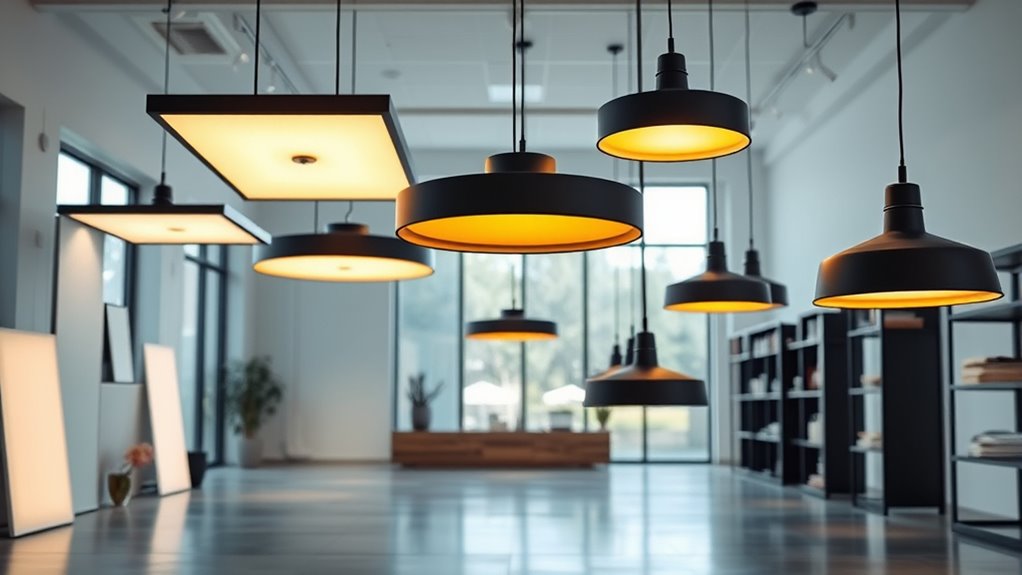

When selecting energy-efficient lighting fixtures, choose LED options for higher efficiency and longer lifespan. Match the fixture’s wattage, socket type, and compatibility to guarantee safe installation and ideal performance. Consider the space and purpose when selecting color temperature and brightness; warmer tones create cozy environments, while cooler tones suit task lighting. Use fixtures with heat sinks and proper mounting for safety and durability. To discover more tips for making your lighting even more energy-smart, keep exploring.
Key Takeaways
- Choose LED fixtures with appropriate wattage, lumen output, and color temperature for your specific lighting needs.
- Verify fixture compatibility with LED bulbs and consider adapters or modifications if necessary.
- Opt for fixtures with heat sinks or vents to ensure proper heat dissipation and longer lifespan.
- Use fixtures equipped with motion sensors, dimmers, or timers to enhance energy savings.
- Prioritize safety by securely mounting fixtures, grounding wiring, and following installation procedures.

Are you looking to reduce your energy bills and minimize your environmental impact? Choosing the right lighting fixtures plays a vital role in achieving that goal. One of the most effective options is switching to LED bulbs, which offer numerous benefits. LED bulb benefits include higher energy efficiency, longer lifespan, and better light quality compared to traditional incandescent or fluorescent bulbs. They use a fraction of the energy, which means lower electricity bills, and last considerably longer—sometimes up to 25,000 hours or more. This longevity reduces replacement costs and waste, making them both economically and environmentally friendly. Plus, LED bulbs emit less heat, improving safety and reducing cooling costs during warmer months.
Switch to LED bulbs for energy savings, longer lifespan, and eco-friendly lighting.
When selecting fixtures for LED bulbs, it’s important to keep fixture installation tips in mind. First, make certain that the fixture is compatible with LED lighting. Many fixtures designed for incandescent bulbs can be retrofitted with LED bulbs, but some may require specific adapters or modifications. Check the fixture’s wattage and socket type to match your chosen LED bulb. Proper installation not only guarantees safety but also maximizes the benefits of LED lighting. For example, installing fixtures at appropriate heights and angles helps distribute light evenly and reduces shadows, creating a more inviting and functional space. Additionally, understanding lighting technology can help you choose fixtures that optimize energy savings and light quality.
Pay attention to the fixture’s design and material. LED-compatible fixtures often come with heat sinks or vents to dissipate heat more effectively, which prolongs the lifespan of the bulb and fixture. When installing, make sure the fixture is securely mounted and the wiring is properly grounded. If you’re replacing an existing fixture, turn off the power at the circuit breaker before beginning any work. This safety step prevents accidents and ensures a smooth installation process. Additionally, consider positioning fixtures to optimize energy savings—use motion sensors or dimmers where appropriate to avoid unnecessary energy consumption when spaces are unoccupied.
Choosing the right fixtures also involves considering the color temperature and lumens output to match your needs. For cozy areas, warmer color temperatures (around 2700K to 3000K) create inviting atmospheres, while cooler temperatures (around 4000K to 5000K) suit task lighting or workspaces. The key is selecting fixtures that complement both your aesthetic preferences and energy-saving goals. By understanding LED bulb benefits and following fixture installation tips, you can greatly cut your energy costs while enhancing your home’s lighting quality. Making these informed choices ensures your lighting setup is efficient, safe, and long-lasting, helping you take a step toward a more sustainable lifestyle.
Frequently Asked Questions
How Do I Determine the Appropriate Brightness for My Space?
You determine the appropriate brightness by considering lumens measurement, which indicates the light output you need. First, identify your space’s lighting zones—such as task, ambient, or accent lighting—and then select fixtures that provide the right lumens for each zone. For example, task areas require higher lumens, while ambient zones need fewer. This approach guarantees your space is comfortably and efficiently lit.
Are LED Fixtures Suitable for Outdoor and Wet Environments?
You bet, LED fixtures are a solid choice for outdoor and wet environments. They’re built tough, offering excellent fixture durability, and many models are solar compatible, saving you energy costs. Just make sure you pick ones specifically rated for wet locations to avoid surprises, and look for waterproof seals. With proper installation, LEDs can withstand the elements and keep shining bright, no matter the weather.
What Is the Typical Lifespan of Energy-Efficient Lighting Fixtures?
You can expect energy-efficient lighting fixtures to last around 25,000 to 50,000 hours, depending on the fixture durability and usage. This means fewer bulb replacements and less maintenance over time. LEDs, for example, are known for their long lifespan and sturdy construction, making them ideal for both indoor and outdoor environments. Regularly checking for signs of wear helps guarantee your fixtures perform well and stay energy efficient.
How Do I Compare the Total Cost of Different Lighting Options?
Think of comparing lighting options like choosing a car—initial costs are just part of the story. To do a proper cost comparison, look beyond the purchase price and consider energy efficiency and lifespan. Energy-efficient fixtures may cost more upfront but offer long-term savings through lower energy bills and fewer replacements. By calculating total costs over time, you’ll find the best option that saves money and illuminates your space efficiently.
Can Energy-Efficient Fixtures Be Dimmed or Customized?
Yes, energy-efficient fixtures often come with dimming capabilities and fixture customization options. You can choose fixtures that allow you to adjust brightness levels easily, helping save energy and create the right ambiance. Many modern LED fixtures are compatible with dimmers and can be customized regarding color temperature or design. Just make certain the fixtures you select are compatible with your existing dimming system and customization preferences for maximum performance.
Conclusion
As you choose your lighting fixtures, imagine a warm glow softly illuminating your space, casting gentle shadows that dance with elegance. By opting for energy-efficient options, you not only brighten your surroundings with clarity and grace but also contribute to a sustainable future. Let your choices reflect a mindful elegance, transforming ordinary rooms into inviting sanctuaries of light and life. Embrace this journey toward smarter lighting, where beauty and efficiency seamlessly intertwine.